This is the real question for @PiCoreTeam right now.
It’s not just “wen PiDEX?” — it’s whether the infra + developer stack is actually ready for serious DeFi apps.
Pi has massive distribution, KYC’d users, payments, and a huge community...
But if smart contracts are still early/testnet-level and most apps are still stuck waiting, builders need clarity before putting real capital and business risk on top of it
I do agree this is the sever bottleneck for many many years.. I tried to help when I was part of PCT with launching the first Pi Hackathons.
But it seems more so stuck on the infrastructure side and network level. Rather than the developers. There are so many developers wanting to build and launch Pi-based dapps..
Things do need to change & improve... don't have the answer - yet
#pinetwork $pi
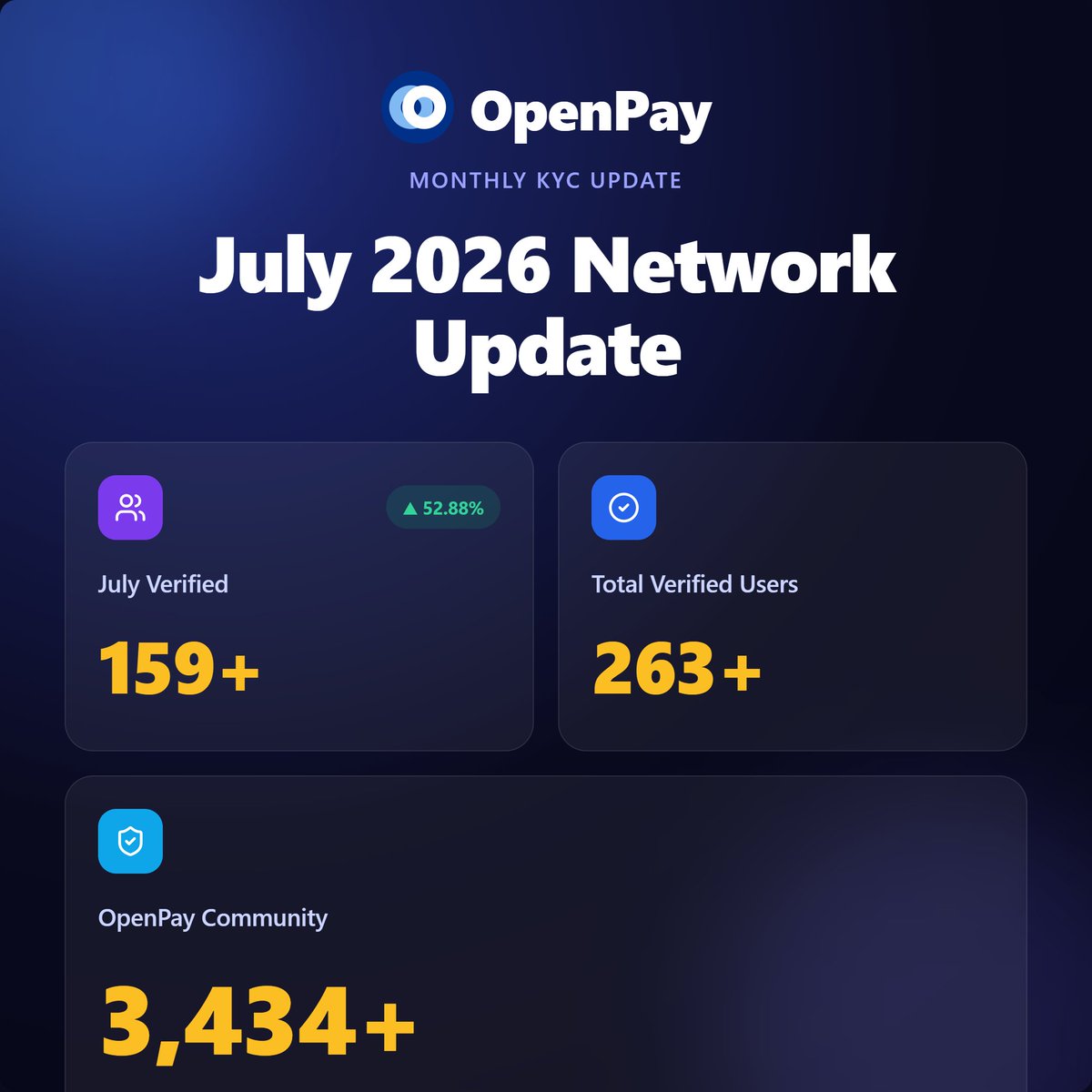
🚀 OpenPay July 2026 Network Update is here! @OpenPayTeam@PiCoreTeam
Our ecosystem continues to grow with stronger community adoption and KYC expansion. Thank you to everyone building the future of secure, borderless, and decentralized payments with us. 💙🌐
📊 Network Highlights:
✅ 159+ July Verified Users
✅ 263+ Total Verified Users
✅ 3,434+ OpenPay Community Members
Explore OpenPay and learn more:
📖 Pi Whitepaper: https://t.co/JsRPlybLrN
💙🌐 Testnet: https://t.co/7GOE6WJWoj
🌐 Mainnet: https://t.co/ORrh1053iq
📖 OpenPay Whitepaper: https://t.co/p3KAMT3aBc
📊 Pitch Deck: https://t.co/QiMevfh7VF
Building a trusted and open financial future for everyone.
#OpenPay #OpenPayNetwork #Web3 #Crypto #Payments #Blockchain #PiNetwork #Fintech #DigitalPayments 🚀
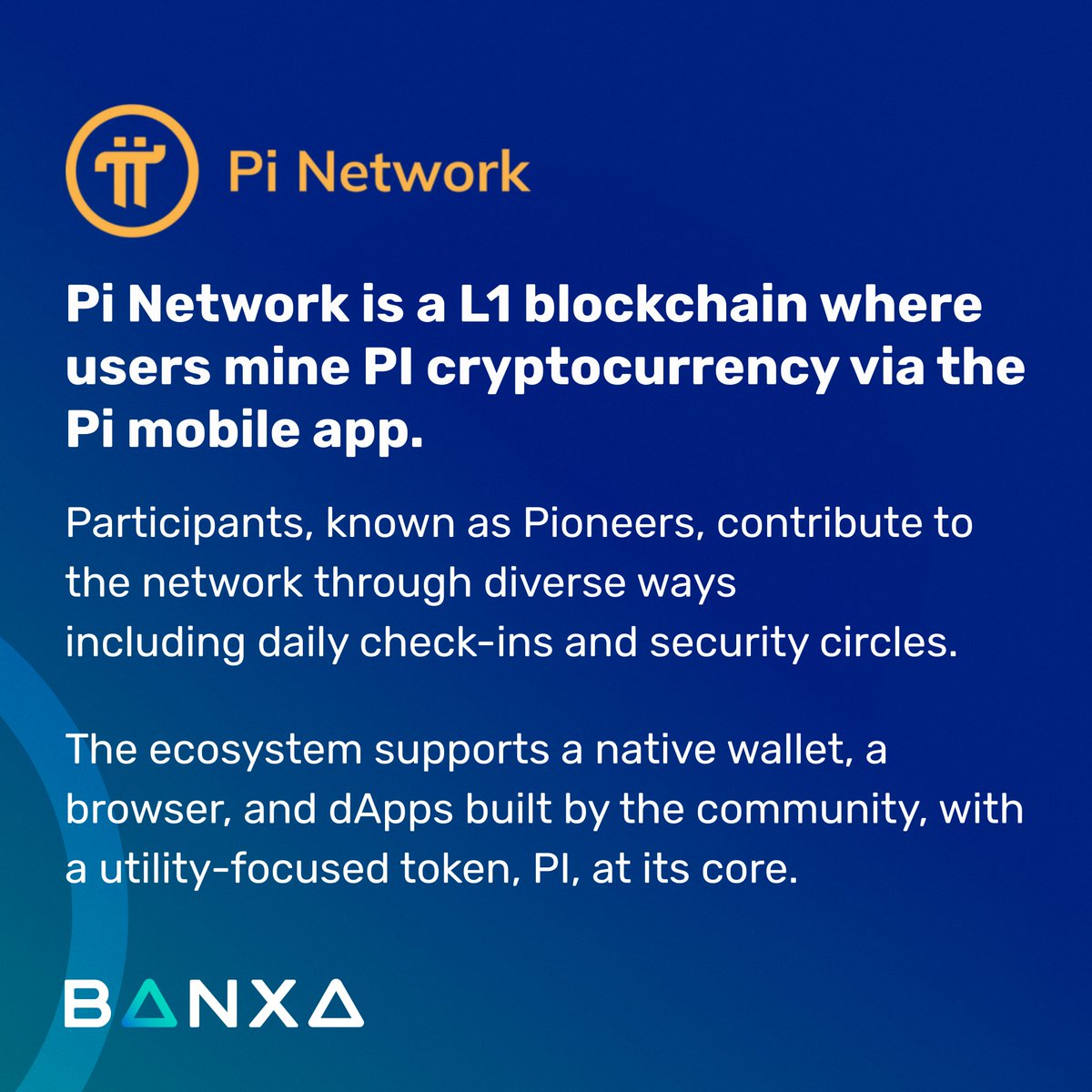
Pi Network (@PiCoreTeam) is a mobile-first L1 blockchain founded by two Stanford PhDs.
Pi’s vision: to create an inclusive, utility-driven, and widely adopted cryptocurrency that is broadly accessible.
For the first time, OKX has made Pi available to millions of people in the US through its platform, adding another access point to the Pi ecosystem for US users.
Pi continues to expand its global network of Pioneers and partners, and strengthen ecosystem participation, utility, and real user adoption across the world.
More users. More usage. Stronger network
Big kudos to Mainnet Node operators for upgrading to v23.
Most major Nodes have now been upgraded, and the protocol is expected to move to v23 soon.
This was one of the most challenging upgrades to date, as it involved multiple subsystem upgrades and optimizations that required internal data reprocessing.
Protocol 22 -> 23, Ubuntu 20 -> 24, PostgreSQL 12 -> 16
Protocol23 Updates
1. Unified events
Classic operations and smart contract calls now emit standardised events on the execution layer, so a payment operation and a contract transfer both appear as a "transfer" event.
2. Live state prioritization
The ledger is now split into a live state and an archived state which improves node performance
3. Parallel transaction execution.
Transactions can be processed in parallel instead of strictly sequentially. Transactions can be processed faster but the ledger limit still remains
4. Various smart contract performance improvements
5. New smart contract host functions
6. Configurable consensus timing
Allows validators to adjust timing parameters such as ledger close time.
7. Data format updates + various small updates
There's no item relating to Pidex or smart contracts on mainnet as those are User Interface/dev updates.
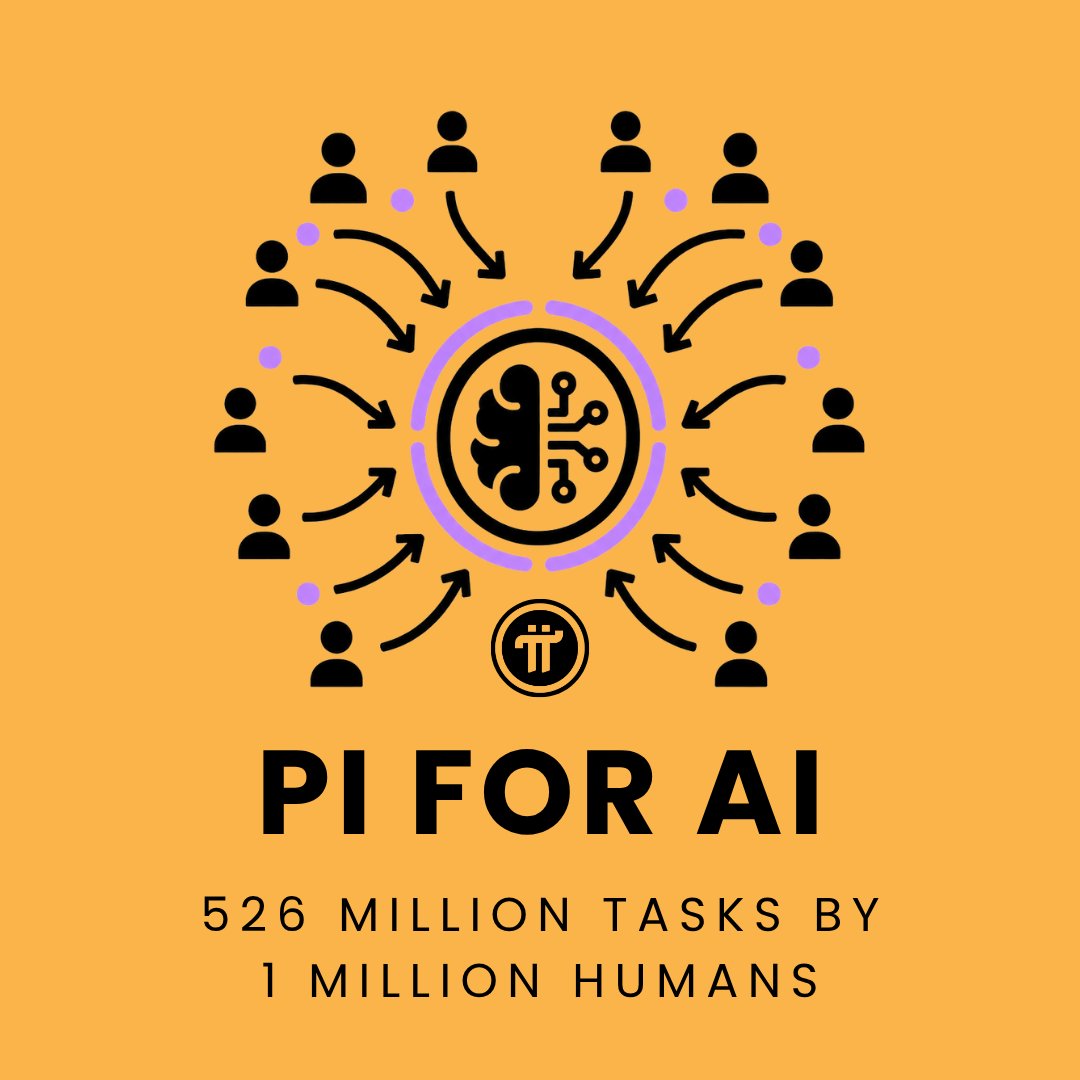
526 million human KYC validation tasks have already been completed on Pi.
By over 1 million verified people.
AI is advancing quickly.
But the hardest part of building reliable systems is still deeply human.
Models don’t improve from compute alone.
They improve from:
Judgment
Correction
Context
Nuance
Pi represents something different.
A globally distributed, identity-verified human workforce that has already demonstrated coordination at scale, already active in the Pi ecosystem.
This is real infrastructure, it’s already been used to process hundreds of millions of real tasks.
For AI systems, that changes what’s possible.
Go to the Pi mining app home screen to learn more.
To open the Testnet subscription smart contract to technical review and community feedback, Pi has released the second Pi Request for Comment (PiRC2).
Developers are encouraged to try integrating subscriptions in their own apps, review the subscription contract design, and test for bugs or edge cases, if any.
https://t.co/nLpGQQngvs
Pi Network has released an RPC server, currently available on Testnet, supporting the development, testing, and future deployment of smart contracts within the Pi ecosystem.
The RPC server enables developers to build responsive applications, test contract behavior, and integrate services using real-time blockchain data.
Node operators and third-party services can also run their own RPC servers.
Read the blog to learn more, and explore the RPC capabilities as a developer.
https://t.co/a7s7zHVREm
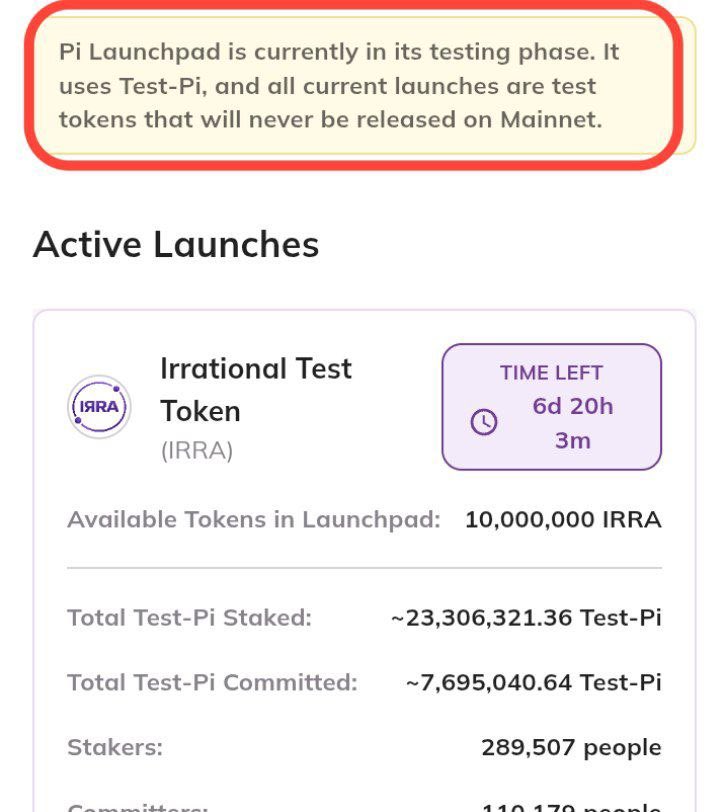
As announced on Pi Day 2026, the initial version of the Token Launchpad has been released as a Pi App on the Testnet with a test token! Watch the video walkthrough to learn the implemented design in action, and read the blog—originally published in the Pi Day announcement—to understand its deeper meaning. https://t.co/tHRFMspF5x
Pi believes financial literacy is necessary for people to live in an AI-pervasive economy, so Pioneers should start learning today by testing the Testnet Launchpad app through the Pi Browser.
Pi Network is already preparing to start upgrading to protocol v21. Things are moving fast (for a reason). Don't be left behind. Node operators should be on standby.
The Pi Mainnet has successfully upgraded to Protocol 20, laying the foundation for supporting smart contracts. Node operators, please ensure your systems are up to date and stay tuned for instructions regarding the upcoming v21 upgrade.
PI NETWORK PROTOCOL V20&V21
https://t.co/FAiIxaDen3
Việc Pi Network đang chạy mạng chính Mainnet dùng protocol v20 thì đã rõ. Vậy Pi Network sử dụng stellar protocol v20 và API layer hỗ trợ v21 hãy cùng xem tính năng:
- Protocol 20 (tính năng cốt lõi active trên Pi Mainnet hiện tại)
• Tính năng chính:
• Ra mắt Soroban smart contracts (dựa trên WebAssembly - Wasm, viết bằng Rust).
• Hỗ trợ giao dịch smart contract bên cạnh classic tx.
• State archival cơ bản (TTL - Time To Live để quản lý dữ liệu ledger, tránh state bloat).
• Cơ chế phí metering chi tiết cho resources (CPU, RAM, ledger reads/writes).
• Tích hợp liền mạch với các tính năng Stellar cũ (payments, anchors, multi-sig, AMM liquidity pools).
• Điểm mạnh:
• Biến Stellar thành blockchain hỗ trợ DeFi/dApps đầy đủ (từ chỉ payments sang programmable).
• Phí thấp, scalable, tập trung vào real-world finance (cross-border, tokenized assets).
• An toàn cao (thiết kế ưu tiên security từ đầu, không cần retro-fix).
• Developer-friendly: SDKs, CLI, local sandbox, built-in contracts.
- Protocol 21 (đã hỗ trợ qua API/Horizon trên Pi, sẵn sàng activate)
• Tính năng chính (5 CAPs mới):
• CAP-0051: Hỗ trợ secp256r1 verification → passkey signing (ký tx bằng biometric như vân tay/mặt qua WebAuthn, thay seed phrase).
• CAP-0053: Host functions riêng để extend TTL cho contract instance/code → quản lý state archival linh hoạt hơn.
• CAP-0054: Tinh chỉnh cost model VM instantiation → chính xác hơn.
• CAP-0055: Giảm phí bằng cách link ít host functions hơn khi khởi tạo VM.
• CAP-0056: Cache parsed Wasm modules → giảm chi phí invoke lặp lại.
• BucketListDB (database backend mới): Thay SQL cũ, nhanh hơn (reads/writes), tiết kiệm memory/disk, hỗ trợ parallel IO cho upgrade tương lai.
• Điểm mạnh (so với v20):
• UX bảo mật hiện đại: Passkey → dễ dùng, an toàn hơn (Stellar đi trước nhiều chain về tính năng này).
• Giảm phí Soroban đáng kể (re-upload Wasm contracts để hưởng cost rẻ hơn).
• Performance lớn: BucketListDB tối ưu node, scalability cao hơn.
• Tối ưu hóa Soroban: Rẻ hơn, nhanh hơn, quản lý state tốt hơn → dễ build dApps mass-adoption.
So sánh nhanh:
• v20: Foundation cho smart contracts (Soroban live).
• v21: Optimization pack – rẻ hơn, bảo mật/UX tốt hơn, performance cao hơn.
Pi Network đang ở v20 (smart contracts cơ bản sẵn sàng), nhưng hỗ trợ v21 nghĩa là có thể activate nhanh để hưởng lợi ích trên mà không downtime lớn. Đây là bước tiến tích cực cho ecosystem Pi (hướng tới dApps, DeFi, user-friendly wallets).
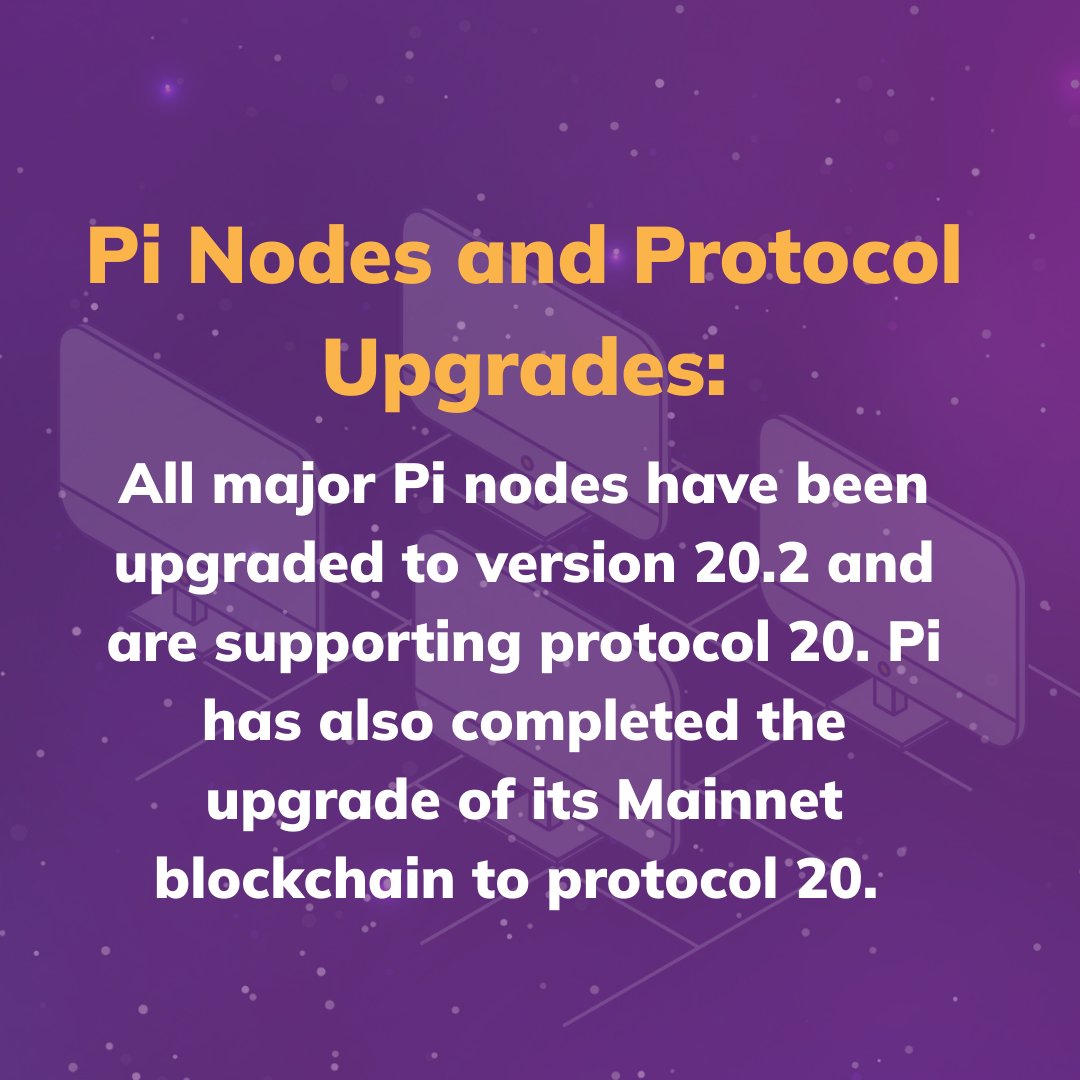
All major Pi nodes have now been upgraded to version 20.2 and are supporting protocol 20. Pi has also completed the upgrade of its Mainnet blockchain to protocol 20.
Protocol 20 provides the foundation to enable smart contract capabilities, and the rollout of smart contracts will occur gradually, prioritizing categories that align with utility-based product innovation and operations. The specific types of smart contracts featured will depend heavily on the needs arising from the utility creation process.
Read the Pi Day 2026 blog to learn more about protocol 20 and smart contracts https://t.co/6cUmVcjOos