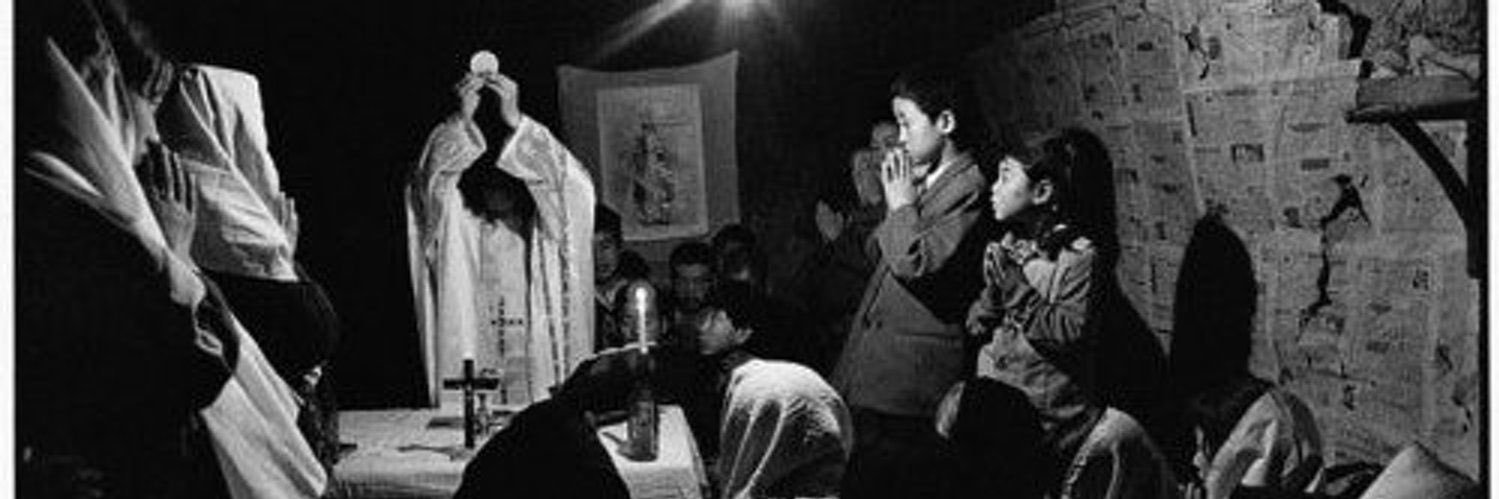
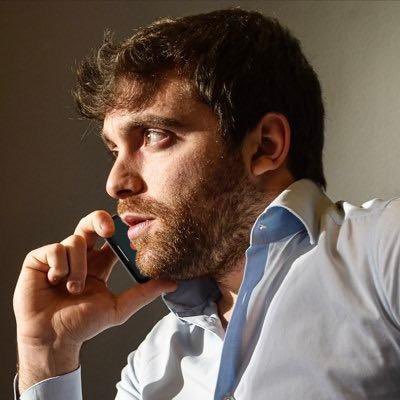
THANK YOU @BishStrickland and @ArchCordileone for speaking up for @CardJosephZen & @SupportJimmyLai
A nation that forget & despise her martyrs are doomed
This Father’s Day, Strickland & Gracida, the two most prophetic fathers of the Church will meet for the 1st time
Stay tuned
If Richard Gere had shut up about the CCP and Tibet, he would not have found himself cancelled in Hollywood, where Chinese investment holds huge sway. Respect for his principled and long-standing defence of a persecuted people.
The world’s attention to the Tibetan cause has waxed and waned, but Richard Gere’s commitment has remained steadfast. He has paid dearly for that, as Hollywood executives seeking access to the Chinese market have largely blacklisted him.
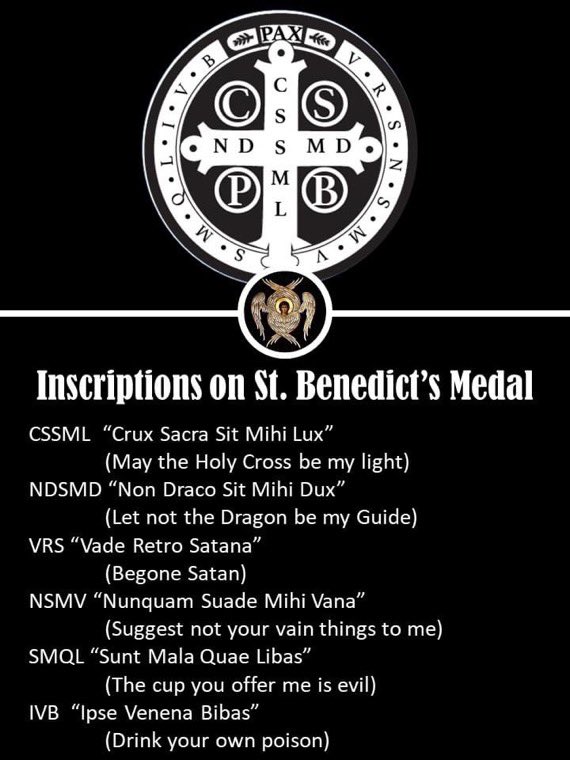
St. Benedict’s Medal:
The purpose of this sacramental is to call down God's blessing and protection upon us, wherever we are, and upon our homes and possessions, especially through the intercession of St. Benedict. By the conscious and devout use of the medal, it becomes, as it were, a constant silent prayer and reminder to us of our dignity as followers of Christ.
The medal is essentially a prayer of exorcism against Satan, a prayer for strength in time of temptation, a prayer for a peaceful death in the Lord, a prayer for peace among ourselves and among the nations of the world, a prayer that the Cross of Christ be our light and guide, a prayer of firm rejection of all that is evil, a prayer of petition that we may with Christian courage "walk in God's ways, with the Gospel as our guide," as St. Benedict urges us.
A profitable spiritual experience can be ours if we but take the time to study the array of inscriptions and representations found on the two sides of the Medal. The lessons found there can be pondered over and over to bring true peace of mind and heart into our lives as we struggle to overcome the weaknesses of our human nature and realize that our human condition is not perfect, but that with the help of God and the intercession of the saints our condition can become better.
The Medal of St. Benedict can thus serve as a constant reminder of the need for us to take up our cross daily and "follow the true King, Christ our Lord," and thus learn "to share with patience in the sufferings of Christ so that we may one day share in his heavenly kingdom," as St. Benedict urges us in the Prologue of his Rule.
Front Side of Medal:
On the face of the medal is the image of St. Benedict. In his right hand he holds aloft the cross as the symbol of our salvation, also reminding us of the vast work of evangelizing and civilizing England and Europe carried out mainly by the Benedictine monks and nuns, especially from the sixth to the ninth/tenth centuries. In Benedict's left hand is his Rule for Monks, which could well be summed up in the words of the Prologue exhorting us to "walk in God's ways, with the Gospel as our guide."
On a pedestal to the right of St. Benedict is the poisoned cup, shattered when he made the sign of the cross over it.
On a pedestal to the left is a raven about to carry away a loaf of poisoned bread that a jealous enemy had sent to St. Benedict.
Above the cup and the raven are the Latin words: CRUX S. PATRIS BENEDICTI (The Cross of Our Holy Father Benedict).
On the margin of the medal, encircling the figure of St. Benedict, are the Latin words: EIUS IN OBITU NOSTRO PRAESENTIA MUNIAMUR! (May we be strengthened by his presence in the hour of our death!). Benedictines have always regarded St. Benedict as a special patron of a happy death, He himself died in the chapel at Montecassino while standing with his arms raised up to heaven, and supported by the brethren, shortly after having received Holy Communion.
Below the figure of St. Benedict is a Latin inscription giving the origin and date of the Jubilee Medal: Abbey of Montecassino, 1880.
Reverse Side of Medal:
On the back of the medal, the cross is dominant. On the arms of the cross are the initial letters of a rhythmic Latin prayer: CRUX SACRA SIT MIHI LUX! NUNQUAM DRACO SIT MIHI DUX! (May the holy Cross be my light! The dragon never be my guide!).
In the angles of the cross, the letters C S P B stand for CRUX SANCTI PATRIS BENEDICTI (The cross of our holy father Benedict).
Above the cross is the word PAX (Peace), which has been a Benedictine motto for centuries.
Around the margin of the back of the medal, the letters V R S N S M V -- S M Q L I V B are the initial letters, as mentioned before, of a Latin prayer of exorcism against Satan: VADE RETRO SATANA! NUNQUAM SUADE MIHI VANA! SUNT MALA QUAE LIBAS. IPSE VENENA BIBAS! (Begone, Satan! Tempt me not with your vanities! What you offer me is evil. Drink the poisoned cup yourself!).
Bishop Robert Barron has repeatedly warned about the rise of so-called "democratic socialism" in the United States.
New York City Mayor Zohran Mamdani has emerged as one of the country's most prominent democratic socialists and has helped propel other Democratic Socialists to electoral victories in New York.
Similar candidates have also won primaries in Colorado, Washington, D.C., and elsewhere, signaling a broader shift on the political left.
Responding to Mamdani's remarks about "the warmth of collectivism," Bishop Barron issued a stark warning:
"Collectivism in its various forms is responsible for the deaths of at least one hundred million people in the last century. ... For God's sake, spare me the 'warmth of collectivism.'"
The bishop's concern is rooted in history. Karl Marx argued that religion had to be abolished for his revolutionary vision to succeed:
"The abolition of religion as the illusory happiness of the people is the demand for their real happiness."
Communist regimes inspired by Marxist ideology have persecuted religious believers across the world, and historical estimates attribute more than 100 million deaths to communist governments during the twentieth century.
Bishop Barron argues that collectivist ideologies ultimately undermine the dignity of the human person by subordinating the individual to the state or the collective, replacing God as society's highest authority.
The Church offers a different vision, one rooted in the dignity of every human person, objective moral truth, and the freedom that comes from God, not the state.
As Bishop Barron put it:
"What we have to fight for is a democratic civilization predicated upon objective moral value and finally upon God who presides over the very freedom that we exercise. Fight for that culture in entertainment and in politics and in communication and in every aspect of life. That is a cultural war worth fighting."
This competing vision of God, man, and human flourishing needs to be challenged before it takes deeper root.
CatholicVote is ready for that battle, especially at the ballot box. Join us in this fight for the soul of our nation. 👇
https://t.co/M4ujcLetmq
The recent consecration of four bishops by the Society of St. Pius X manifests a growing lack of trust that has been simmering for a very long time. Let us pray that an ardent effort toward sincere and honest dialogue will soon start up, and that easier access to the Traditional form of the Mass will be available to our people, so they will not feel as if they are constrained to seek spiritual nourishment outside of the family in union with Rome.
In His Passion, Jesus Christ suffered greatly for the sins of man. He wore the crown of thorns, was scourged at the pillar, and had the Five Holy Wounds inflicted upon Him. While most Catholics know of these, few are familiar with the shoulder wound of Jesus, and the miraculous story behind its devotion.
Tradition says as Jesus walked the three miles from Pontius Pilate’s courtyard to His Crucifixion at Calvary, the Cross dug through His shoulder
ripping flesh from bone. According to a pious legend, Saint Bernard of Clairvaux prayed and asked of Christ what was his greatest unknown suffering, and what wound suffered in His Passion was most painful. Christ replied to him:
“I had on My Shoulder while I bore My Cross on the Way of Sorrows, a grievous Wound which was more painful than the others, and which is not recorded by men.”
Christ asked that Saint Bernard and other members of the Faithful keep a devotion to his shoulder wound, and that those who do will receive God’s grace.
“Honor this Wound with thy devotion, and I will grant thee whatsoever thou dost ask through its virtue and merit. And in regard to all those who shall venerate this Wound, I will remit to them all their venial sins, and will no longer remember their mortal sins.”
Saint Bernard heeded Christ’s call, composing a beautiful devotional prayer to honor the shoulder wound of Our Savior:
“O Loving Jesus, Meek Lamb of God, I, a miserable sinner, salute and worship the most Sacred Wound of Thy Shoulder on which Thou didst bear Thy heavy Cross, which so tore Thy Flesh and laid bare
Thy Bones as to inflict on Thee an anguish greater than any other wound of Thy Most Blessed Body. I adore Thee, O Jesus most sorrowful; I praise and glorify Thee and give Thee thanks for this most sacred and painful Wound, beseeching Thee by that exceeding pain and by the crushing burden of Thy heavy Cross, to be merciful to me, a sinner, to forgive me all my
mortal and venial sins and to lead me on towards Heaven along the Way of Thy Cross. Amen.”
While Saint Bernard was the first to venerate the shoulder wound, he was not the last. Saint Padre Pio kept a devotion and also suffered the same wound himself as a stigmata. When Pope Saint John Paul II was still a priest he visited Padre Pio and asked him which wound was his most painful. Father Wojtyła expected that it was his chest wound, but the saint replied:
“It is my shoulder wound, which no one knows about and has never been cured
or treated.”
Prior to his death, Padre Pio confided to Brother Modestino Fucci at his friary in San Giovanni Rotondo that his greatest pains happened when took off his shirt. At the time, Fucci believed it to be his chest wounds much like John Paul II. When he was later assigned the task of inventorying all the items inside the cell of the late Padre Pio, he noticed his undershirts had blood stains on the right shoulder.
That night, Brother Fucci prayed asking Padre Pio for a sign if he truly bore the shoulder wound of Christ. At 1 A.M., he awoke with an excruciating pain in his right shoulder and the room was filled the aroma of flowers, the sign Padre Pio’s spiritual presence, and he heard a voice call out: “This is what I had to suffer!”
Political prisoner Joshua Wong is scheduled to be sentenced in September for the second time in a case brought under the Beijing-imposed National Security Law (NSL). And right now, we know very little about what is going to happen.
The regime has imposed heavy restrictions on reporting around his case and other NSL proceedings. That lack of transparency is not incidental; it's precisely how the law works — it's vague enough to be stretched and opaque enough to avoid scrutiny.
The authoritarians want the world to forget Joshua Wong.
Do not let them.
Share this reel. Tag your elected representatives. Demand that they publicly call for Joshua Wong’s immediate and unconditional release and for the release of every political prisoner in Hong Kong. Your silence is exactly what they're counting on. #JoshuaWong
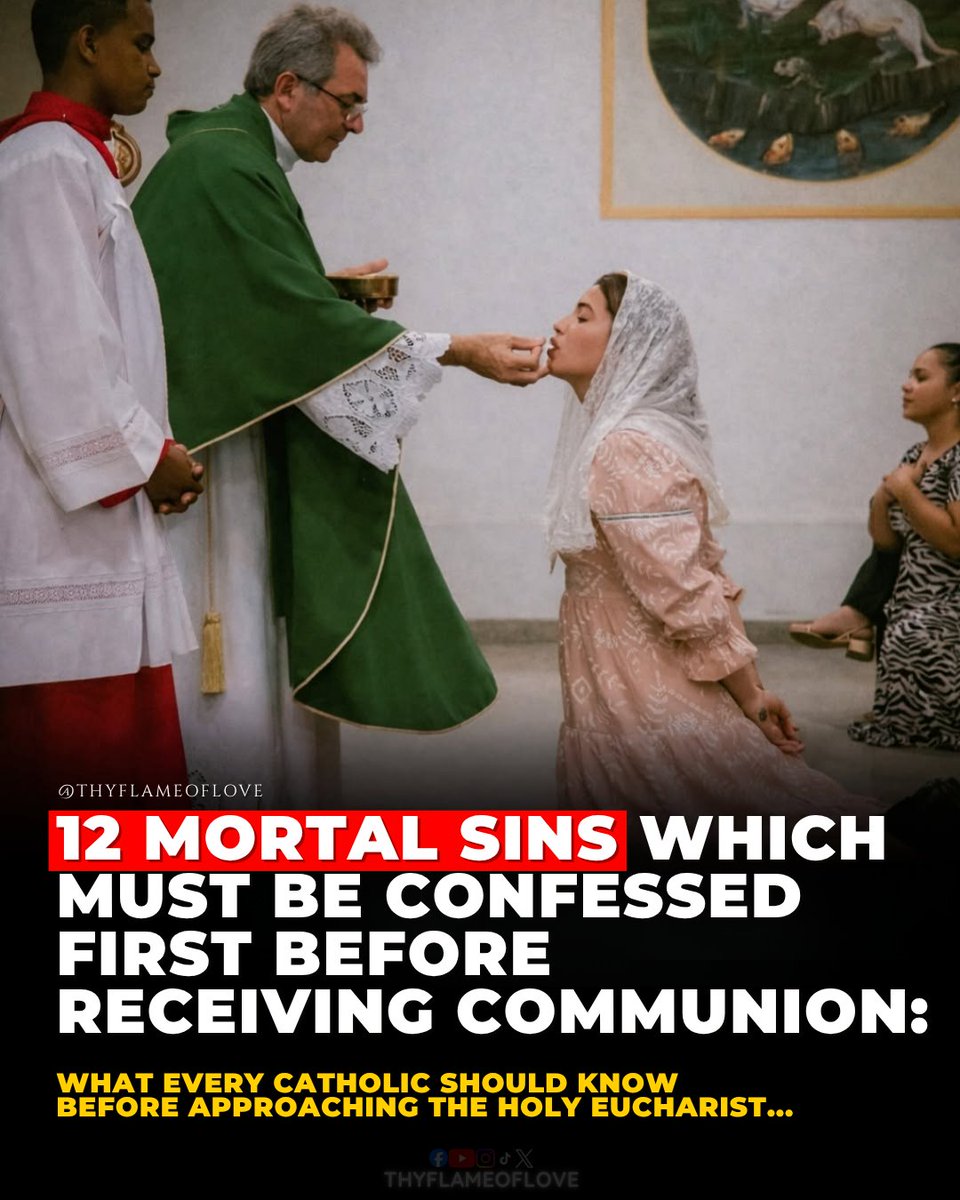
12 Serious (Mortal) Sins That Must Be Confessed Before Receiving Holy Communion 👇
Receiving Jesus in Holy Communion is not a reward for attending Mass. It is not a right or a prize. The Eucharist is Jesus Himself. Because of that, the Church teaches that we should receive Him with reverence and with a soul in the state of grace.
At the Last Supper, Jesus made this clear when Peter resisted being washed.
Jesus answered him, “If I do not wash you, you have no part in me.”
(John 13:8)
Before giving the Eucharist, Jesus spoke about being clean, pointing to something deeper than washing feet. Our souls must be purified from serious sin before receiving Him.
St. Paul warned the early Christians about this as well:
→ “Whoever eats the bread or drinks the cup of the Lord in an unworthy manner will be guilty of profaning the body and blood of the Lord.”
(1 Corinthians 11:27)
Because of this, the Church teaches that anyone aware of committing a mortal sin must first go to Confession before receiving Holy Communion.
A sin is mortal when three things are present:
→ Grave matter – the act itself is seriously wrong.
→ Full knowledge – the person knows the act is seriously sinful.
→ Deliberate consent – the person freely chooses to do it.
If someone knowingly commits one of the following grave sins and has not gone to Confession, they should not receive Holy Communion yet.
Here are some examples.
1. Missing Sunday Mass or a Holy Day of Obligation without a serious reason
→ Choosing sports, shopping, sleep, or entertainment over Mass.
2. Sexual sins
→ Sexual sins such as masturbation, pornography, or sexual acts outside marriage
3. Living together as spouses without being married in the Church
→ Cohabiting and acting like husband and wife without a valid sacramental marriage.
4. Sacrilege against the Eucharist
→ Receiving Holy Communion while knowingly in mortal sin or deliberately disrespecting the Blessed Sacrament.
5. Using contraception
→ Such as pills, condoms, IUDs, patches, or other methods that deliberately block the gift of life.
6. Abortion
→ Having an abortion, encouraging one, or helping it happen.
7. Murder or the deliberate destruction of human life
→ Including euthanasia, violence, or serious abuse against others.
8. Serious injustice toward others
→ Unjust wages, corruption, false accusations, defamation, or abusing power at work or in authority.
9. Refusing to repay debts when you are able to do so
10. Stealing valuable property or money
11. Holding deep hatred or refusing to forgive someone
12. Grave sins driven by pride, greed, envy, or serious laziness
If we fall into mortal sin, the answer is not despair. The answer is Confession. God’s mercy is waiting there. The Sacrament of Reconciliation restores our soul so we can receive Jesus worthily again.
But knowingly receiving Communion while in mortal sin adds another serious sin: sacrilege.
The Eucharist is not ordinary bread. It is the living Jesus Christ.
If we truly believe that…
→ should we approach Him casually, or prepare our souls with the reverence He deserves?
💬 Do you think most Catholics today understand what it means to receive Communion in a state of grace?
#Tibetan activists gathered outside the #UN Headquarters in #Manhattan on Thursday, chanting slogans such as "𝐅𝐫𝐞𝐞 𝐓𝐢𝐛𝐞𝐭," "𝐉𝐮𝐬𝐭𝐢𝐜𝐞 𝐟𝐨𝐫 𝐋𝐨𝐛𝐠𝐚 𝐑𝐚𝐧𝐠𝐳𝐞𝐧," 𝐚𝐧𝐝 "𝐂𝐡𝐢𝐧𝐚 𝐎𝐮𝐭 𝐨𝐟 𝐓𝐢𝐛𝐞𝐭. 𝐍𝐨𝐰." The demonstration was a powerful display of solidarity and protest.
#JusticeforLobgaRangzen #FreeTibet #Tibet #CCPGenocide #CCPRepression #ChineseCommunistParty
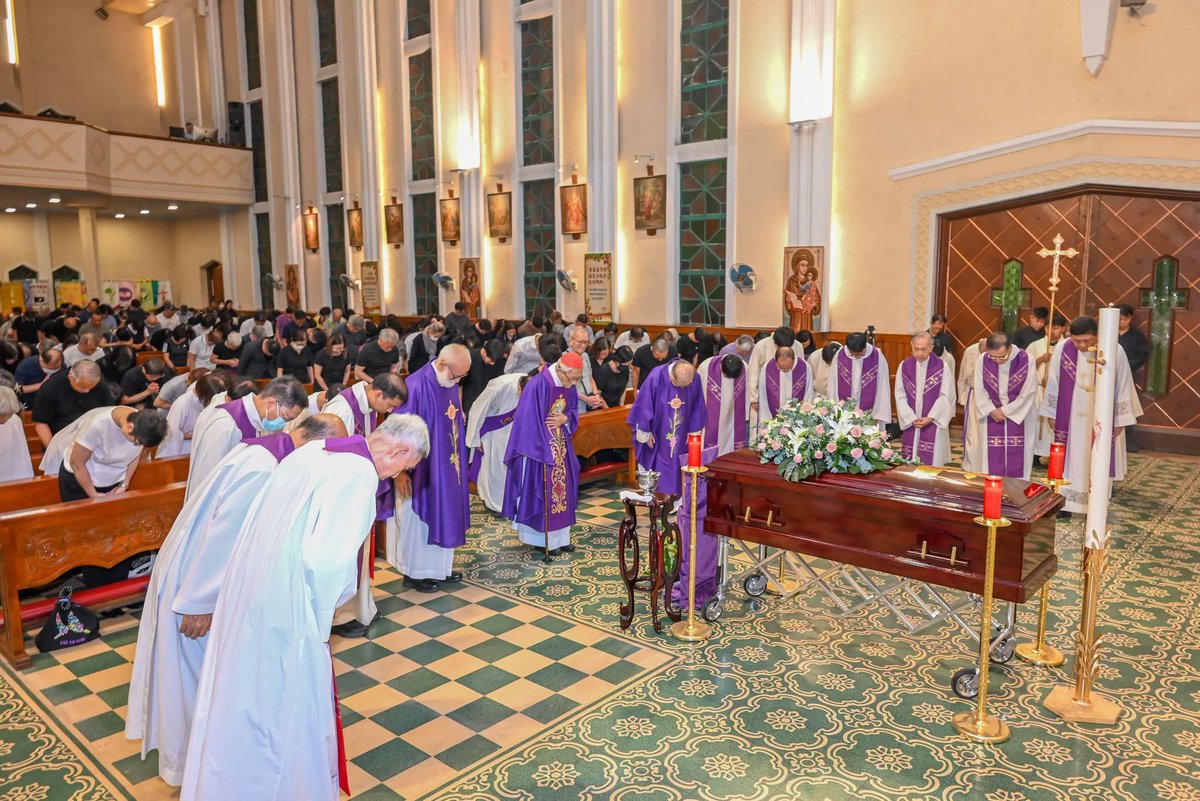
今晚本人主持吳希義神父守靈彌撒。感謝吳神父一生忠信事主,求主仁慈接納他的靈魂。讓我們繼續為中華會省的慈幼會司鐸及修士聖召祈禱,使更多青年慷慨回應祂的邀請,獻身服務青年。
This evening I presided over the Vigil Mass for Fr. John Baptist Ng.
We give thanks for Fr. John Baptist Ng’s lifetime of faithful service to the Lord, and we pray that God, in His mercy, may welcome him into eternal life.
Let us continue to pray for more Salesian vocations in this province, that more young people may generously respond to the Lord’s call and dedicate their lives to the service of the young.
When you see these "I'm just a poor girl living in Shanghai" Youtube channels, remember that they are Government approved and usually part of a propaganda push. Chinese people are not allowed to use Youtube without express government permission. You will be arrested otherwise
Marcel Nguyen Tan Van, known as Servant of God Brother Marcel Van, was a Vietnamese Redemptorist brother whose brief life embodied profound love, suffering, and mystical union with God. Born on March 15, 1928, in the Catholic village of Ngam Giao in northern Vietnam, he entered the world as Joachim Nguyen Tan Van into a family marked by hardship. From an early age, he faced abandonment, abuse, and poverty, experiences that shaped his deep reliance on divine grace rather than worldly comfort.
As a young boy, Marcel developed a fervent devotion to prayer, particularly the Rosary, and longed to become a priest. His path proved difficult and circuitous. He spent time as a beggar and endured mistreatment in various settings before joining the Redemptorists as a brother. What defined his spiritual journey most vividly was his reported encounter with Saint Therese of Lisieux, whom he came to regard as his big sister in heaven. Through interior locutions and dialogues, Therese guided him along her Little Way of spiritual childhood, teaching him to offer every small act and suffering with love. Marcel embraced this calling fully, becoming known as the Apostle of Love. He filled notebooks with conversations involving Jesus, Mary, and Therese, writings that later revealed his childlike trust and desire to console the heart of Christ.
In the turbulent years following World War II and the rise of communism in Vietnam, Marcel volunteered to remain in the north after the partition. Arrested by communist authorities in 1955, he endured four years of imprisonment marked by torture, starvation, and isolation. Even in the camps, he sought to radiate joy and love, comforting fellow prisoners and transforming his agony into prayer. He died on July 10, 1959, at the age of thirty-one, weakened by illness and mistreatment.
Marcel Van's cause for sainthood opened in 1997, earning him the title Servant of God. His life continues to inspire many as a model of how ordinary weakness, united to Christ's love, can become a powerful witness.