𝐓𝐇𝐄 𝐂𝐂𝐏’𝐒 𝐅𝐈𝐑𝐒𝐓 𝐒𝐄𝐂𝐔𝐑𝐈𝐓𝐘 𝐖𝐇𝐈𝐓𝐄 𝐏𝐀𝐏𝐄𝐑🇨🇳📰
𝐅𝐄𝐀𝐑 𝐎𝐕𝐄𝐑 𝐅𝐑𝐄𝐄𝐃𝐎𝐌, 𝐏𝐀𝐑𝐓𝐘 𝐎𝐕𝐄𝐑 𝐏𝐄𝐎𝐏𝐋𝐄
On May 12, 2025, the People’s Republic of China released its first-ever White Paper on national security, a document that lays bare the regime’s priorities with chilling clarity. At its core, the White Paper is not about national security in the conventional sense. It is an open declaration that the survival of the Chinese Communist Party (CCP) is the bedrock of China’s security. Political loyalty to Xi Jinping Thought is not only encouraged—it is demanded.
The full text, available only in Chinese, makes no effort to hide this fact. It clearly states that “safeguarding the leadership and ruling position of the Communist Party of China” is the fundamental essence of national security. Translated plainly: the CCP’s grip on power supersedes all else—rights, liberties, even the unity of the people. Political security, defined as the regime’s stability, takes precedence over any real notion of public welfare or international cooperation.
The sanitized English abstract, tailored for foreign eyes, avoids such authoritarian bluntness. Instead, it peddles soft phrases like “people’s security” and “holistic approaches.” This dual messaging underscores the purpose of the White Paper: reassure the domestic audience of the CCP’s control and deceive the international community with platitudes.
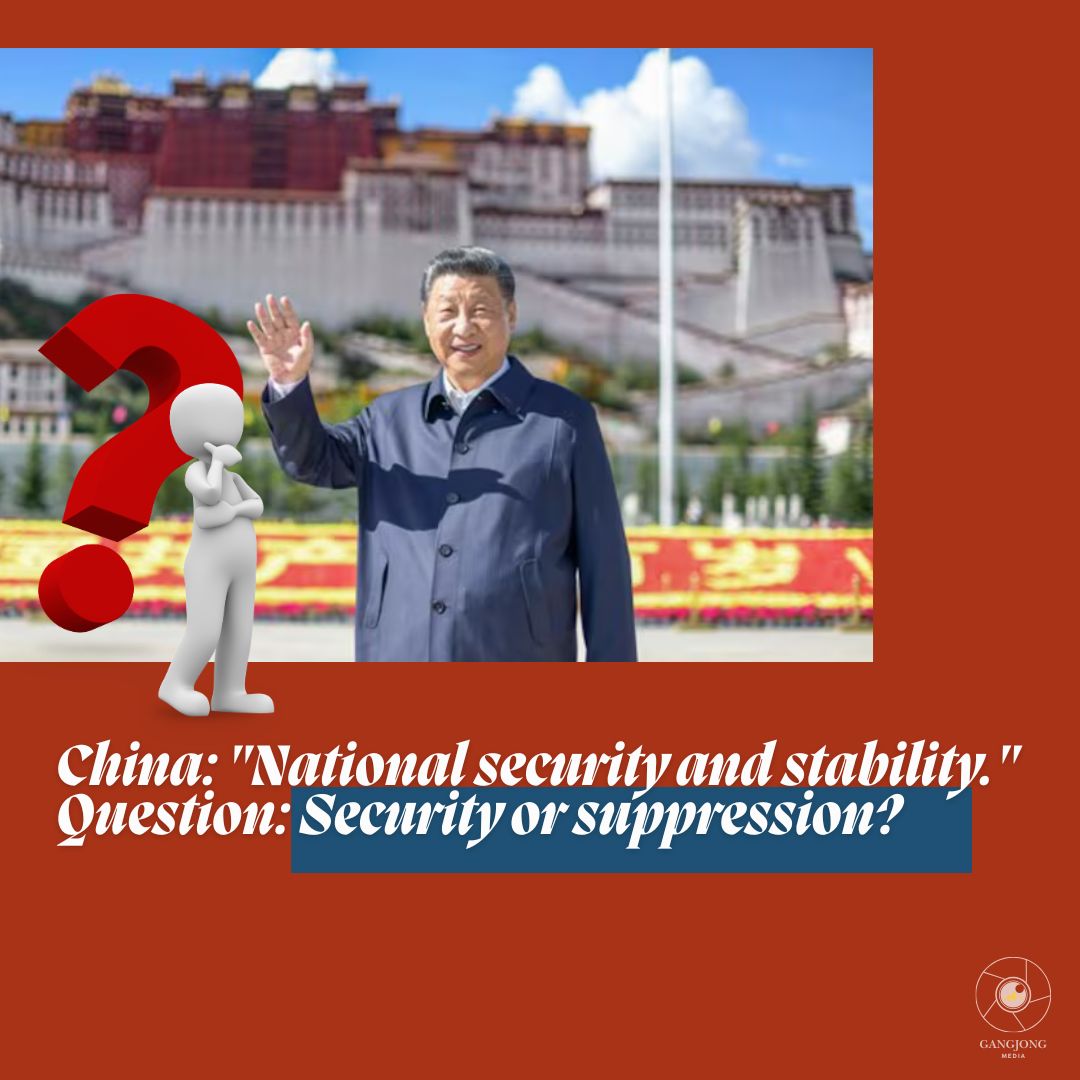
The full text goes further, warning that if the CCP’s rule is not protected, China will collapse into chaos, and its so-called “great rejuvenation” will become impossible. This is the rhetoric of fear, the same justification used to crush dissent, censor media, and erase cultural identities in Tibet and Xinjiang. At the heart of this narrative lies the psychology of one man: Xi Jinping. Obsessed with preserving his grip on power, Xi has restructured the CCP into a vehicle for personal authority rather than collective leadership. Unlike his predecessors, who allowed for limited institutional checks and factional balance, Xi has eliminated rivals, dismantled internal dissent, and rewritten constitutional norms to crown himself as the unchallengeable core of the Party. Far from a reformer or a visionary, Xi represents regression, a man so consumed by insecurity that he must equate his own political survival with that of the entire nation. His paranoia fuels policy, and his need for control now defines China’s national security doctrine. In truth, Xi Jinping’s legacy, compared to past leaders, is one of tightening chains and shrinking space - internally and globally.
Tellingly, Tibet is never mentioned in the English summary, but the full Chinese version reveals the true target: any and all threats to the CCP’s authority, including what it brands “separatist” activity in Tibet and Xinjiang. Tibetans, Uyghurs, and advocates for their rights are lumped together with “religious extremists” and “overseas anti-China forces.” The White Paper declares it will “fully implement the Party’s strategies for governing Tibet and Xinjiang,” a euphemism for ongoing assimilation, surveillance, and repression.
The document also revives the CCP’s favorite scapegoat—the “foreign devils” of the West—claiming that movements for Tibetan or Uyghur autonomy are foreign-instigated plots. This narrative absolves the regime of responsibility for its failures and stokes nationalism to consolidate support. In classic CCP fashion, the party cloaks cultural destruction in the garb of security and sovereignty.
The paper’s assault on universal values is equally alarming. Human rights, democracy, and freedom are labeled as “weapons” of Western subversion. These are not aspirational goals to the CCP, they are threats to be neutralized. It declares them “red lines” that no foreign power can cross, directly challenging global norms.
Border issues, too, are spun for propaganda. The CCP claims it has resolved disputes with 12 of its 14 land neighbors, conveniently glossing over active tensions with India and Bhutan. It even falsely includes Nepal among the “resolved,” ignoring ongoing disputes documented by Nepalese media. The aim is to project confidence and stability while masking the truth of simmering regional frictions.
This White Paper is not a document of national defense, it is a manifesto of political dominance. Its goal is not to protect China, but to protect the CCP from China’s people, history, cultures, and dissent. It codifies repression as policy and enshrines fear as governance.
This is Xi Jinping’s China: where the Party is the state, the truth is propaganda, and security means submission.
Source: ITC @SaveTibetOrg
White Paper Full Text: https://t.co/5LGZ4aisRf
#ChinaWhitePaper #ChinaNationalSecurityWhitePaper #CCPPropagandas #CCPAgainstHumanRights #CCPAgainstDemocracy #CCPAgainstFreedom #CCPAgainstFreePress #CCPRepressionManual #CCPRepression #HumanRightsViolationInTibet #HumanRightsViolationInEastTurkestan #ChinaPolicy
@kridthoejG@friendsoftibet@TibetHeritage@AllianceTibet@JohnfromSidney@BAFoTTibet@dorjecat@HKokbore@wangtiancheng01@wlixiong@SophieDRich@CECCgov@UnderSecStateJ@LantosFndn@USAmbHRC@CHRDnet@KelleyCurrie@SamuelBrownback@Myopinion46438@susancrabtree@MayankChhaya@jenniferzeng97@MauraRMoynihan @committeeonccp @USAmbKeshap@RepJoeWilson @jooeysiiu @Chloe_chc_25@jltib88@Chellaney@freetibetorg@SFTHQ@TibetPeople@CYS4T@degewa@SikyongPTsering@vtag_tibet
Hundreds of #Tibetans, #Uyghurs, #Taiwanese, #HongKongers and #humanrights supporters are expected to gather outside the Chinese Consulate in #SanFrancisco on July 1 to protest China's new Law on Promoting #EthnicUnity and Progress, which takes effect the same day.
#CondemnEthnicUnityLaw
Know more at 👇
https://t.co/h8qzBxDwM4
In 🇨🇳China, even your next life requires "approval" from #ChineseCommunistParty. Nothing says "control freak" quite like the #CCP regulating reincarnation.
Here is the media release from the #CentralTibetanAdministration 👇
https://t.co/2cMJqUYttT
Know more at 👇
https://t.co/T8yzNJqzJe
#DalaiLamaReincarnation #GadenPhodrang #15thDalaiLama
151 Tibet groups. Lawmakers from the Baltics. Voices across Europe.
The warning is getting louder: China’s new Ethnic Unity Law is being condemned by critics as an attempt to turn forced assimilation into law.
Under the language of “unity,” Tibetans fear more pressure on language, religion, culture, education, and identity itself.
You cannot protect diversity by erasing it. You cannot create unity by forcing conformity.
https://t.co/b5kv4ttJzm
#FreeTibet #StandWithTibet #HumanRights #StopForcedAssimilation #Tibet #ReligiousFreedom #CCP #EU #HumanRightsDefenders
Days before China’s Ethnic Unity Law comes into force on July 1, CTA President Penpa Tsering warned that what Beijing presents as “unity” risks turning decades of assimilation policies into legal doctrine.
He argued the law could further weaken Tibetan language, culture, religion, and identity while replacing diversity with a single state defined national identity.
History shows that some of the greatest injustices are carried out in the language of harmony and progress.
For Tibetans, the question is becoming harder to ignore: when identity must conform to survive, what remains of freedom?
https://t.co/nYtxabKTje
#Tibet #FreeTibet #EthnicUnityLaw #HumanRights #StandWithTibet #ProtectTibetanCulture
A Tibetan school that refused to replace education with CCP political ideology has been forced to shut down.
After years of pressure and a ban on new admissions, the Ganjong Sherig Academy founded by Tulku Hungkar Dorje closed after graduating its final students.
The timing is impossible to ignore. Days before China’s new Ethnic Unity Law takes effect on July 1, critics warn the law will deepen state control over education, promote ideological conformity, and accelerate the assimilation of Tibetans and other non Han communities under a single state defined identity.
When schools teaching language, culture, and independent thought disappear, the loss is bigger than one institution.
https://t.co/iBW1ksXppi
#Tibet #FreeTibet #EthnicUnityLaw #HumanRights #CCP #CulturalRights #ReligiousFreedom
A new House bill would cut federal intelligence funding to universities linked to CCP affiliated organizations.
Open societies cannot keep treating national security, sensitive research, and foreign influence as separate issues. Academic exchange cannot become a back door for strategic infiltration.
Protect research. Protect institutions. Protect national security.
https://t.co/X0OJE4VmYC
#CCP #China #NationalSecurity #ResearchSecurity #CounterEspionage
China’s new ethnic unity law claims the right to pursue people beyond its borders for acts Beijing says undermine “ethnic unity” or promote “separatism.”
This will expand transnational repression and deepen fears among Tibetans, Uyghurs, Taiwanese, and diaspora communities worldwide. When a state claims authority far beyond its borders, the world should pay attention.
#Tibet #Uyghur #Taiwan #Uyghurs #HumanRights #China #TransnationalRepression
https://t.co/fpvObU0tFv
China’s barbaric new “Ethnic Unity Law” will come into force on July 1, accelerating the erasure of Tibetan language, culture, and identity.
This is not unity but cultural erasure!
Take action & sign the petition demanding governments publicly condemn China’s assimilation agenda and defend Tibetan language rights: https://t.co/pSVALqYO5p
Save the date: Global Day of Action Against China’s “Ethnic Unity Law” on 1 July.
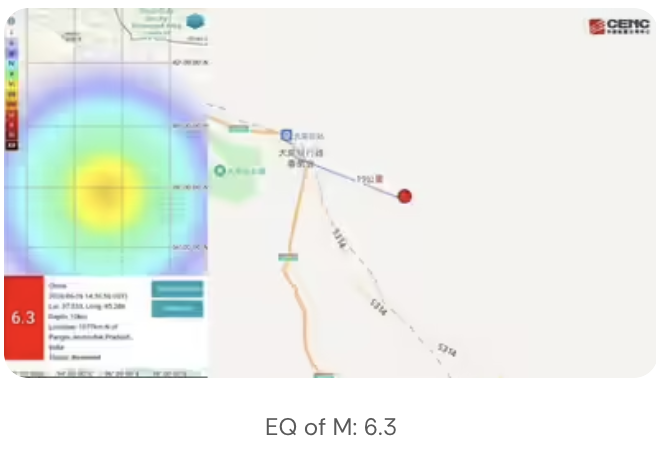
A 6.3 earthquake struck Amdo, Tibet on June 16 near Tsaidam in the Qaidam Basin, an area linked by open source reporting to major Chinese nuclear and missile infrastructure.
With the epicenter close to a heavily militarized corridor, questions remain unanswered: Were command facilities affected? Is the missile network operational? Beijing’s silence only deepens concerns.
Transparency matters especially where nuclear risks exist.
#Tibet #Amdo #Qinghai #China #NuclearSecurity #HumanRights #Earthquake #Geopolitics
The decision to host the 2026 UN Day of Vesak Conference in Beijing raises profound questions. A government long criticized for restrictions on religious freedom, the destruction of Buddhist institutions, and the suppression of Tibetan spiritual life now seeks to present itself as a steward of Buddhist values.
Know more at 👇
https://t.co/oxsTu6aQl0
#UNDV #VesakDay2026 #UnitedNations #Buddhism
China says its Ethnic Unity Law promotes cohesion. The UN Human Rights Chief warned it risks institutionalising restrictions on minority communities.
From Tibet to East Turkistan and Inner Mongolia, concerns remain the same: language loss, cultural erasure, religious restrictions, and expanding state control.
https://t.co/UWZ1u6RZJb
#HumanRightsCouncil #Tibet #Uyghur #ProtectCulture #MinorityRights #EndAssimilation
France’s shutdown of 9 alleged Chinese secret police stations is a warning to every democracy.
When the CCP’s reach extends beyond its borders to surveil dissidents, pressure exiles, collect intelligence, and intimidate communities abroad, sovereignty itself is at risk.
This is not an isolated case. Democracies cannot afford complacency. Investigate, expose, and dismantle foreign interference networks before repression becomes global.
https://t.co/kmIcGPZHBd
#CCP #China #France #HumanRights #Espionage #TransnationalRepression #Democracy
Mongolia’s public endorsement of Beijing’s position on Tibet marks a difficult and symbolic moment. A country bound to Tibet through centuries of history, Buddhism, and cultural connection now echoes language that reduces Tibet to an internal matter of the Chinese state.
Political pressure may shape statements but it cannot rewrite history or erase a people’s identity. Tibet’s language, faith, and aspirations remain real no matter how they are described in diplomatic declarations.
The world should not confuse political alignment with historical truth. Tibet deserves to be heard not spoken for.
https://t.co/zZ253N1aaH
#FreeTibet #Tibet #StandWithTibet #HumanRights #ProtectTibetanCulture #ReligiousFreedom #SaveTibet #JusticeForTibet #China #CCP #Freedom #HumanDignity #Tibetan