Driving home from Nashville a few days ago, the wife wanted to stop in Franklin to do a bit of Christmas shopping. Obedient to her wishes as I am, I make the detour and park. As we strolled along the square, I see an older man sitting alone on a bench. Being the sort who initiates conversation with strangers, I say jokingly:
“You look like a man who is waiting for his wife while she spends his money.”
He gives me a wan smile and replies: “I wish I was.” His voice cracks. “She passed away last November.”
We stop. I extend a sympathetic hand. He shakes it and rises to greet us. Lauri asks him about his wife, and he tells us what a wonderful woman she was and of their 50 years of marriage. His eyes welling with tears, he says he comes to the square and sits on that bench daily to reminisce about her because it was their spot for decades. He seems glad to have someone, even strangers, with whom he can talk.
We chat a bit longer, exchange numbers, and I ask him if we can pray for him. A believer, he readily accepts the offer. So, right there on the square in Franklin we pray for the Lord’s comforting presence and peace in his loss. We open our eyes and, at that very moment, a woman walks by hurriedly and reaches for the bench behind this fellow. Only I see it, and I think she might be stealing his phone which he had left on the bench when he rose to speak with us.
I walk to the bench to investigate and see that she’s left a card, a little plastic dove glued on it, proclaiming the hope of John 3:16. I look up to see her far down the sidewalk, her brisk pace undiminished, placing them everywhere in her own evangelistic endeavor. God bless her for it.
Lauri and I wished our new friend well and proceeded to shop. I bought a new vest at her encouragement — “It looks good on you” — and she bought some aromatic candles — “cinnamon vanilla.” But all the while we were thinking of this man and the seemingly coincidental nature of our meeting. The Lord had used us to visibly encourage him.
I cannot tell you the number of times I have had such encounters simply because I spoke to a stranger: a taxi driver who told me someone had murdered his daughter; a waitress who cried when I told her she was doing a good job; a contractor who, just last week, revealed to me how the Lord had delivered him from meth addiction when I was sharing the Gospel with him; and a young woman who looked unsettled and I simply asked her what troubled her so.
There are people all around you who carry secret burdens, and the Lord puts you in their path for a reason. Do you notice them? Or do you press on to “more important” things? Pray that the Lord gives you eyes to see them and the heart to minister to them. It will do you as much good as you do them.
For fourteen years, everyone thought U.S. Air Force Technical Sergeant John Chapman died in the first two minutes on top of a freezing 10,000-foot mountain in Afghanistan.
Then modern image technology unlocked the thermal camera footage recorded by a Predator drone circling high in the clouds on March 4, 2002.
When Pentagon investigators watched the enhanced screen, hardened combat generals broke down in tears. Because the video proved that after everyone else had left the mountain peak, John Chapman woke up alone in the snow and fought an entire army by himself.
That night on the peak of Takur Ghar, thirty-six-year-old Chapman, a father of two little girls from Connecticut, had charged uphill through thigh-deep snow alone to silence an enemy bunker and save his pinned-down team. Hit from a second bunker, he fell motionless. Believing he was dead, the surviving team was forced to retreat down the ridge.
Chapman was not dead.
The drone footage showed him regaining consciousness in the pitch-black snow, surrounded on three sides by enemy fighters, with nine separate wounds in his body.
In total darkness, with no comrade beside him and nobody on earth watching except a silent camera in the sky, he refused to surrender. For more than an hour, he fought from inside the bunker, killing an enemy fighter in bare-handed close combat when they tried to rush him.
Then, at dawn, Chapman heard the heavy thump of rotor blades in the mist.
An American Chinook helicopter carrying twenty-three U.S. Army Rangers was flying straight toward the peak to rescue him, right into the sights of an enemy rocket launcher.
Chapman knew that if he stayed safe inside the rock bunker, those twenty-three young Americans in the helicopter would be blown out of the sky.
So on the thermal video, investigators watched John Chapman deliberately climb out of the bunker, stand up tall in the open snow, and fire into the enemy positions to draw every machine gun on the mountain onto his own chest.
He died in the snow as the sun rose, shielding the incoming helicopter with his life.
True bushido is what a warrior does when he thinks nobody will ever know his story. The sky was watching, John. And America will remember your name forever.
If someone asks you how much a single family's life is worth to the United States Navy, tell them the exact price: ten million dollars of steel.
On April 29, 1975, as Saigon fell, a tiny two-seat wooden-and-fabric Cessna plane with almost no fuel left circled desperately above the American aircraft carrier USS Midway.
Inside that tiny cockpit, a father named Major Buang-Ly had crammed his wife and five small children, including a baby. He scribbled a note on a map, wrapped it around his pistol so it would not blow into the ocean, and dropped it onto the carrier deck.
A young American sailor picked up the crumpled paper and ran it up to Captain Lawrence Chambers.
The note read: "Can you move these helicopter to the other side, I can land on your runway, I can fly 1 hour more. Please rescue me. Major Buang, Wife and 5 child."
The flight deck of the USS Midway was completely jammed from bow to stern with military helicopters. A Cessna has no tailhook to catch carrier wires, and its pilot had never landed on a ship in his life.
By every military regulation, Captain Chambers had been in command for only five weeks. Throwing millions of dollars of U.S. government aircraft into the sea without permission from Washington could end his career in a court-martial.
Chambers looked up at the tiny plane circling in the wind with five children inside. He did not call an accountant in Washington.
"Clear the deck," the captain ordered.
Hundreds of young American sailors in yellow and green jerseys ran to the edge of the ship, put their shoulders against massive Huey helicopters, and shoved ten million dollars worth of machinery straight off the cliff into the South China Sea.
Captain Chambers turned the giant carrier into the wind at twenty-five knots. The tiny Cessna came down, bounced once on the steel runway, and rolled to a safe stop with feet to spare.
When the cockpit door opened and five small children stepped out onto the deck, three thousand American sailors roared so loud it drowned out the engines, and immediately passed around a hat to collect cash for the family's new life in America.
When the math says a child's life is too expensive, an American throws the math into the ocean.
Pou chèf gang yo ak manm gang yo k ap kenbe kat konpatriyòt nou yo an otaj ann Ayiti:
Mesye nou kidnape yo pa konbatan. Yo se teknisyen nan domèn avyasyon ki fè pati misyon nou ann Ayiti, nan kad yon misyon entènasyonal. Misyon nou an gen sèlman pilòt ak pèsonèl teknik, ki gen kòm travay prensipal fè evakyasyon medikal epi sove lavi moun, pa fè lagè.
Men, nou te kidnape yo yon fason lach pandan yo t ap retounen apre yo te fin achte manje nan yon makèt nan zòn nan.
Se poutèt sa, jodi a nou te lanse yon operasyon militè pou pote yo sekou. Nou gen yon sèl objektif: fè kat konpatriyòt nou yo retounen lakay yo vivan, san okenn mal.
Men, mwen vle pou nou menm, chèf gang yo, konprann yon bagay byen klè: atak jodi a pa anyen devan sa k ap vini si nou pa remèt toule kat otaj yo vivan.
Epi pa pran pawòl nou yo pou menas san fondman. Nou deja fini ak gang yo nan El Salvador, e nou kapab fini ak nou tou.
Nou toujou gen tan pou evite sa.
Remèt nou kat konpatriyòt nou yo vivan, san okenn mal, epi tout bagay ap retounen jan sa te ye anvan kidnaping lan.
Desizyon an nan men nou.
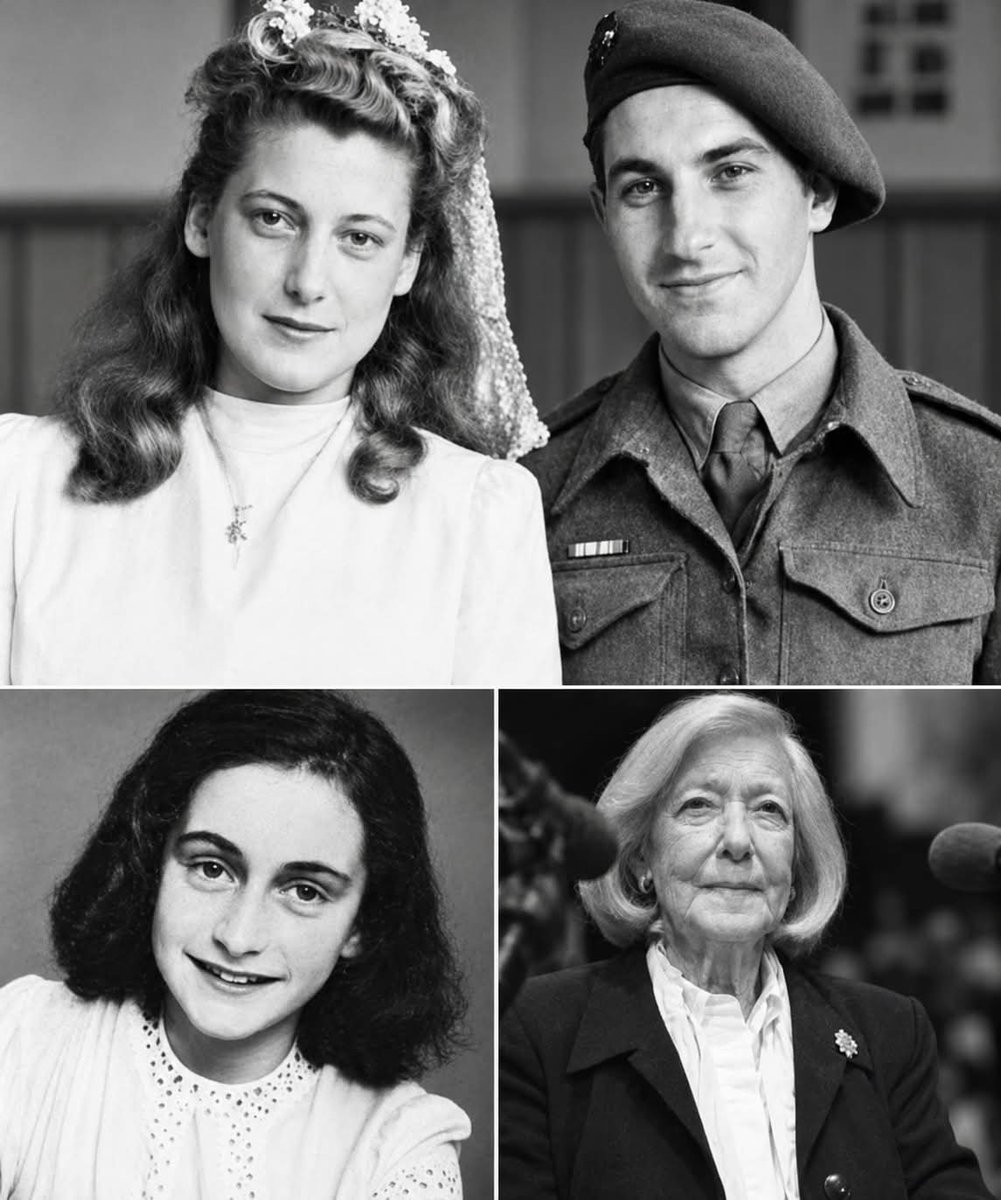
She stood naked among hundreds of other women, waiting for death. The heavy iron doors slammed shut. During the freezing winter of 1944, Gena Turgel found herself inside a gas chamber at Auschwitz-Birkenau, waiting for the Zyklon B gas. Minutes passed in complete darkness. Women whispered prayers and quietly cried. But the gas never arrived. When the guards finally opened the doors, they were stunned to find that the women were still alive. Gena walked out on her own feet. Years later she said simply, “God must have protected me.”
She was later transferred to Bergen-Belsen. It was there that she encountered Anne Frank, who was gravely ill with typhus. Despite the danger, Gena brought her water, washed her face, and held her hand. Anne died just weeks before the camp was liberated. Gena later recalled, “Her eyes, they were screaming.”
On April 15, 1945, British troops liberated Bergen-Belsen. Amid the devastation Gena met Norman Turgel, a British intelligence officer. Six months later they were married. Her wedding dress was made entirely from the silk of a British Army parachute. The dress is now preserved at the Imperial War Museum in London.
Gena Turgel lived to the age of ninety-five and became a respected voice in Holocaust education. For decades she visited schools and spoke about what she had endured, without allowing hatred to define her message. She wanted future generations to understand the importance of compassion and respect. Her life had taken her through unimaginable loss, yet she continued to speak about the value of kindness.
🚨#BREAKING: Outrage is erupting in Virginia after police showed up at a mother’s home at 2 A.M. and TOWED HER CAR over a SH00TING she had NOTHING to do with...
...because a FLOCK CAM pointed them to the WRONG CAR!!!
Now her car is a TOTAL LOSS and she MIGHT LOSE HER JOB!!!!
Yes, you read that right, a Flock camera got it wrong, the cops took her car ANYWAY, and she’s the one paying for it.
Her name is Rosalyn Crump, she’s a mom raising 3 boys in Richmond VA
On July 29th, just before 2 in the morning, Richmond police officers showed up outside her home on Sussex Street.
She was ASLEEP, but someone woke her up and told her police were outside and her car was being towed.
Police say the Flock system had linked her 2012 Hyundai Elantra to a sh00ting near Gilpin Court and body camera footage shows the officers shining flashlights through her windows.
At one point, one of them seemed to doubt they even had the right car.
They noticed her KIDS’ CAR SEATS were buckled in the back, but they towed it anyway.
Rosalyn came outside and told them flat out: “Y’all got the wrong car.”
She told them she’d been at her mom’s house all day, came home at 4, and waited for her kids to get off the bus at 5.
Nobody had driven her car.
An officer decided her story didn’t match the Flock data and said on camera that she was, “definitely not telling the truth.”
Minutes later, Seibert’s Towing hauled her car away.
If you think that was insane... well, IT GETS WORSE.
About FOUR DAYS later, she finally got a phone call.
Her car had been released FOUR HOURS after they took it... because police had already found the person they were actually looking for.
NOBODY FROM THE POLICE TOLD HER!!!!!
When she went to get her car back, she found it DAMAGED from the tow.
The towing company’s VP admitted fault in writing.
Then the claim went to insurance, and the company said it could no longer settle with her directly.
Her mechanic’s verdict:
TOTAL LOSS.
Richmond police now admit Flock cameras led them to the wrong vehicle.
Meanwhile, Rosalyn has lost wages, can’t get to work on time, and is paying for a RENTAL CAR out of her own pocket just to get her boys where they need to go.
She literally did nothing wrong and was home with her kids.
THIS IS INSANE!!!!!!!!
@GretchenPSmith Love my HK too, but my .365 slips right in my pocket. Just a bit smaller than my Shield. And Crimson Trace makes a great laser for it. Double tap from under the table. Line up the dot, Gretchen.
@OriginalRoddick I used to own multiple retail business locations in South Carolina and the only way those losers scumbags would do that to me would be over my cold dead body, and that would be after my double taps had emptied my magazines.
@carolmswain They take up very little space, easy to keep them. I find it when it’s time to throw something away, I’m not conflicted. If it’s too soon, I feel it. I guess we’re all different.
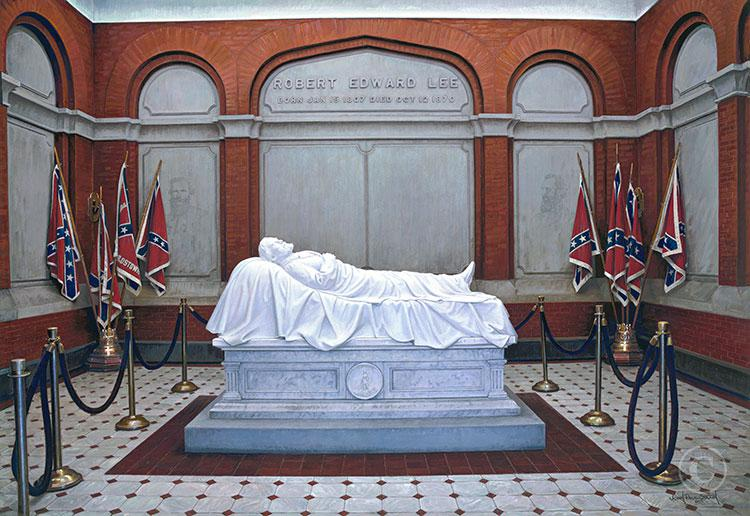
Oct 12, 1870: Robert E. Lee died in Lexington, Virginia, five and a half years after he surrendered at Appomattox.
When the war ended, Lee was the most famous man in the South and he had nothing. His family home at Arlington had been seized by the federal government and turned into a cemetery for Union dead. He was 58, his health was failing, and he was under indictment for treason, though he was never tried.
Offers came in. Businesses wanted to put his name on their letterhead for big salaries. He turned them down. Instead he took a job as president of Washington College, a tiny school in the Shenandoah Valley that had been looted by Union troops during the war. It had a few dozen students and a handful of professors. The salary was $1,500 a year.
He threw himself into it. He knew most of the students by name. He added courses in engineering, business, and journalism, which were unusual for the time. He replaced a long list of rules with an honor system and told students the school had only one rule: every student must be a gentleman.
He spent those years telling Southerners to accept the result of the war. He told former soldiers to go home and rebuild. According to an often-told story, when a widow complained bitterly to him about the Union, he told her not to raise her sons to hate the United States and to make them Americans. In 1869 he paid a short visit to President Ulysses S. Grant at the White House.
His heart was giving out. In the spring of 1870 he took a long trip south, partly for his health. Crowds met him at every stop. On Cumberland Island in Georgia he visited the grave of his father, Revolutionary War hero Light-Horse Harry Lee.
On Sept 28, a cold, rainy day, he went to a long meeting at his church about raising money for the minister's salary. When they came up short, Lee pledged the difference himself. He walked home in the rain and sat down to dinner with his family. When he tried to say grace, no words came out.
He had suffered a stroke. They made a bed for him in the dining room. For two weeks he lay there, mostly silent, while one of the worst floods in Virginia history swept through the region outside.
He died around 9:30 in the morning on Oct 12. He was 63.
Accounts written later said his last words were "Strike the tent," along with an order for A.P. Hill to come up, as if he were back on the battlefield. Doctors who have studied the case think the stroke had taken his ability to speak, and many historians doubt those words were ever said.
The flood had washed away the town undertaker's stock of coffins. Some were found downriver, and the only usable one was too short. Lee was buried in his suit without shoes.
He was laid to rest in a crypt beneath the chapel on the college grounds. Within days the school's trustees voted to rename it Washington and Lee. His horse Traveller, who walked behind the funeral procession, is buried just outside.
After the war Lee had signed an oath of allegiance and applied for a pardon. The oath was lost and never acted on. It was found in the National Archives a century later, and in 1975 Congress restored his citizenship.
Americans still argue over how to remember him and the cause he fought for, and they probably always will. But in the last five years of his life, he chose to spend what he had left teaching young men, rebuilding a broken school, and telling a defeated people to put down their anger and become Americans again.
156 years ago today. Rest easy General.
Imágenes aterradoras en las que dos niñas pequeñas corren por sus vidas, mientras un palestino las persigue, como si fueran presas.
Él disparó a la primera niña en la espalda, cuando ella desesperadamente intentaba escapar. La segunda se quedó paralizada, se dio la vuelta y le suplicó que no la matara.
Él de todos modos la ejecutó, sin mostrar la más mínima vacilación.
Esto es lo que los palestinos de Gaza hicieron el 7 de octubre.
Nunca lo olviden.