🚨AFTER 56 HOURS SWIMMING THE BALTIC SEA FROM SWEDEN TO POLAND WITHOUT SLEEP, POLISH MAN’S FIRST MEAL IN HOSPITAL: KOTLETY MIELONE AND PICKLES 🇵🇱🔥
Bartłomiej Kubkowski just became the first person in history to swim non-stop from Sweden to Poland — 160 km across the Baltic Sea.
56 hours in cold water.
No sleep.
Hallucinations.
Complete exhaustion.
And the first thing he ate after reaching the shore?
Classic Polish kotlety mielone with ogórek małosolny.
In the hospital bed, barely conscious, he still smiled and kept saying “thank you” while being fed.
This is pure Polish character.
After conquering the sea, the only thing he wanted was the taste of home.
Respect. 🇵🇱
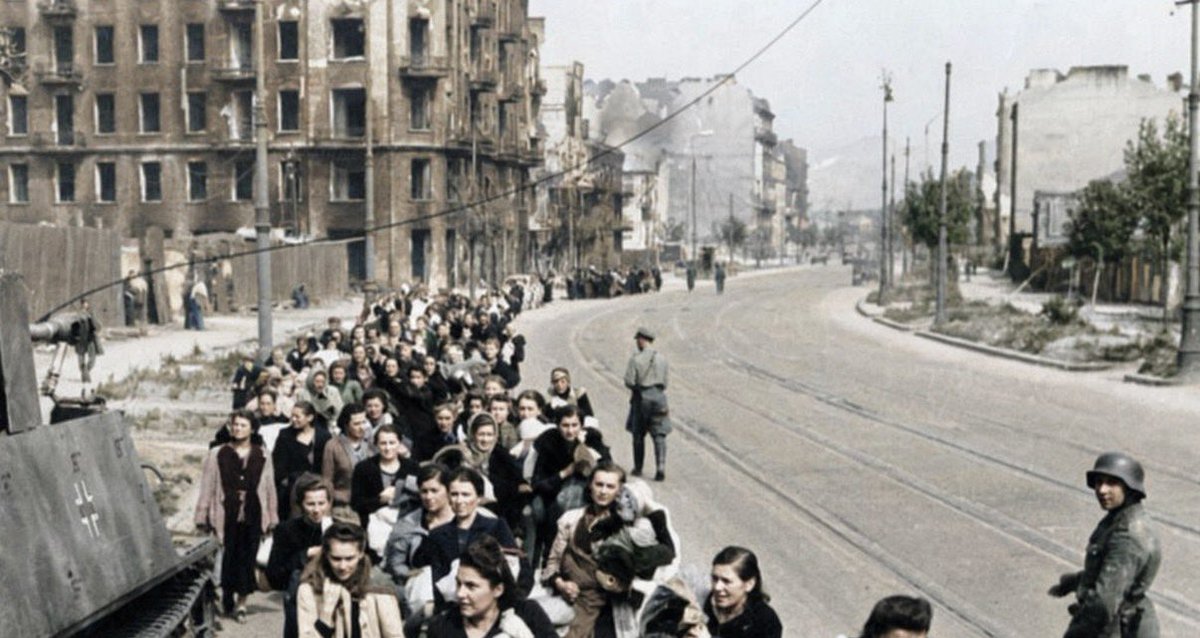
August 5, 1944. Yesterday I told you the killers were at the edge of Warsaw and the order to exterminate everyone had already been given. Today it happens. This is Black Saturday, the start of the Wola massacre, and it is one of the largest deliberate slaughters of civilians in the entire war.
The German counterattack into the Wola district on the western side of the city began this morning, led by two of the most notorious units in the German arsenal, the SS penal brigade under Oskar Dirlewanger, made up of convicts and killers, and Kaminski's collaborator troops. Their orders, straight from Hitler, were not to fight the uprising in the ordinary sense. Their orders were to kill every inhabitant of Warsaw, fighter or not, and to level the city.
So they did not attack the barricades so much as attack the people. They went building by building, block by block, dragging out everyone they found, and shooting them. Not soldiers, not just captured fighters, but civilians, whole families, herded into courtyards and factory yards and gardens and machine-gunned in batches. They murdered patients in their hospital beds and shot the doctors and nurses tending them. They killed the elderly, women, and infants on the spot. Some were tortured or raped first. Bodies were piled and burned to hide the numbers.
On this first day alone, Black Saturday, the estimates of the murdered run as high as ten thousand people in Wola. Over the following week the total for the district reaches somewhere between 40,000 and 50,000 dead, almost none of them combatants. It was not a battle. It was mass murder carried out to a plan, meant, as the order said, to make Warsaw a terrifying example for all of Europe.
The grotesque irony is that the massacre did not break the uprising. If anything it stiffened it, because now the people of Warsaw understood there was no surrender that saved you, that to be caught was to be killed regardless, and so they fought on. But the human cost of these August days in Wola is almost beyond comprehension. Tens of thousands of ordinary people, murdered where they lived, in a matter of days, on the direct order of a head of state. It began this morning.
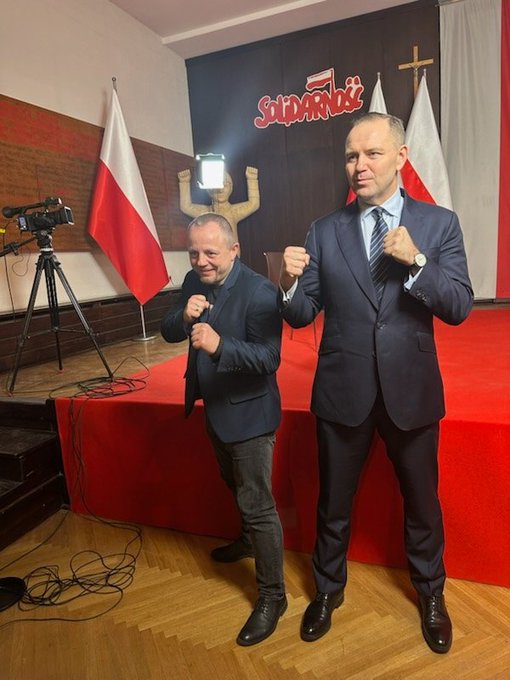
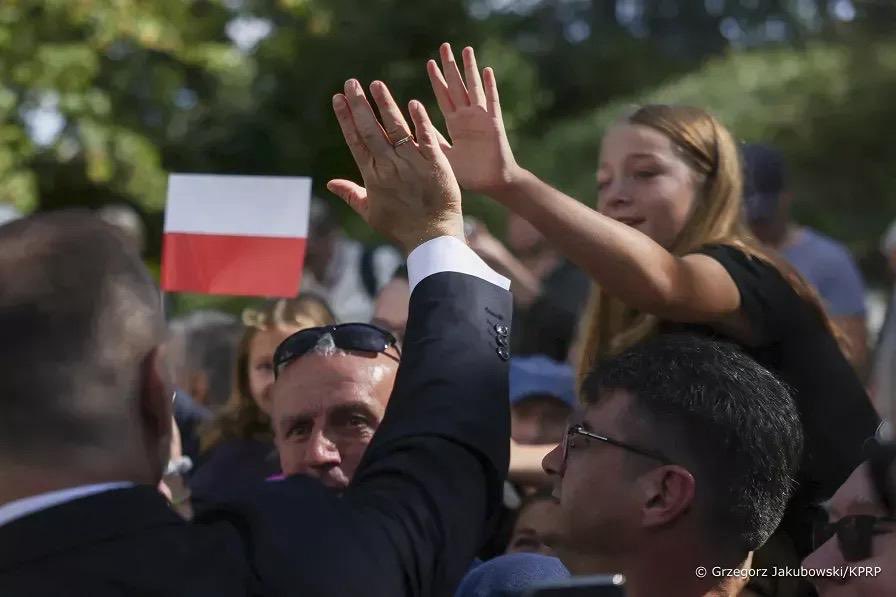
W pierwszą rocznicę zaprzysiężenia Karola Nawrockiego na prezydenta powtórzę słowa, które napisałem na X kilka miesięcy po wyborach: „Głosowałem na Rafała Trzaskowskiego, ale na szczęście przegrał!” 🇵🇱❤️
On August 5th, 1944, the Germans began the systematic massacre of Warsaw’s Wola district.
Following Hitler’s order to destroy Warsaw and kill its inhabitants, units commanded by Heinz Reinefarth, including Oskar Dirlewanger’s notorious SS formation, moved through Wola murdering civilians without distinction.
Men, women, children, hospital patients, doctors, nurses and priests were dragged out from their homes and shelters and shot in courtyards, factories, hospitals and streets. Entire families were gone within minutes.
The killing was carried out on such a scale that the Germans forced surviving Poles to form units whose task was to collect and burn the bodies. August 5 became known as “Black Saturday.” Tens of thousands of civilians were murdered in Wola during the following days, making it one of the largest single massacres of civilians in Europe during the Second World War.
Wola was not destroyed in the heat of battle. This was a deliberate attempt to terrorize Warsaw into submission by brutally exterminating its people. Yet the uprising continued. Today, behind the numbers, we should remember the individual lives: children who never grew older, parents who could not protect them, and entire families whose names vanished from Warsaw forever.
In 1975 schreef de Poolse journalist Krzysztof Kąkolewski een opmerkelijk boek met de titel Co u pana słychać? – vrij vertaald: “Hoe gaat het met u?”. Hij zocht in West-Duitsland (en één keer in Amerika) een groep voormalige hoge nazi’s op die na de Tweede Wereldoorlog gewoon doorleefden alsof er niets was gebeurd.
Kąkolewski begon elk gesprek met een vriendelijke, alledaagse vraag: “Hoe gaat het met u?” Daarna confronteerde hij hen rustig met hun oorlogsverleden.
Wat hij aantrof, was vaak ontluisterend: weinig tot geen berouw, en een leven als gerespecteerde burger – als professor, advocaat, burgemeester of parlementslid.Een van de meest bekende gesprekken was met Heinz Reinefarth.
Deze SS-generaal was in 1944 verantwoordelijk voor de brute onderdrukking van de Opstand van Warschau in de wijk Wola. Tienduizenden Poolse burgers, onder wie vrouwen en kinderen, werden er vermoord. Na de oorlog werd hij burgemeester van een badplaats op het Duitse eiland Sylt en later advocaat. Toen Kąkolewski hem vroeg naar de moord op burgers, antwoordde Reinefarth dat “vrouwen en kinderen ook vochten” en dat soldaten zeiden: “Kinderen schieten op ons, dus wij schieten terug.” Het gesprek eindigde abrupt met de koude opmerking: “De zee is vandaag onrustig.”
Andere mannen die Kąkolewski sprak, hadden in concentratiekampen experimenten gedaan, doodvonnissen uitgesproken of plannen voor massamoord bedacht. Bijna niemand toonde spijt. Ze leefden comfortabel verder.Het boek – en de recente thread op X die het opnieuw onder de aandacht bracht – laat zien hoe veel daders van Duitse oorlogsmisdaden na 1945 ongestraft bleven.
Volgens historici vielen er ongeveer 13 miljoen niet-strijdende slachtoffers. Van de geschatte 200.000 directe daders werden er in West-Duitsland slechts een paar duizend veroordeeld.Het is een verhaal over rechtvaardigheid die uitbleef, en over hoe makkelijk sommige mensen hun verleden achter zich konden laten. Een thema dat ook in Nederland, met zijn eigen herinneringen aan de bezetting, herkenbaar kan zijn.
Rzeź Woli to jest najstraszniejsza masakra w naszych dziejach, a czymś niebywałym jest, że Niemcy do dziś w żaden sposób się z tego nie rozliczyły.
Książkę Piotra Gursztyna bardzo polecam.
#EchoHistorii#PW44#RzeżWoli
5 VIII 1944 - podczas rzezi Woli zamordowano 11 sanitariuszek i harcerek https://t.co/kio8i5WL7s. Janinę Jamiołkowską ps. „Sława”, Alinę Gralewską ps. „Alma”, Zdzisławę Kempską ps. „Strumyk”, Janinę Sławińską ps. „Szczyt” .
Ostrzelana przez niemieckie
moździerze i granatniki.
Symbol niezłomności
i poświęcenia.
Starsza córka Melchiora
Wańkowicza.
Łączniczka i sanitariuszka
Powstania Warszawskiego.
Walczyła w batalionie "Parasol" AK.
Miała 24 lata.
6 VIII 1944
POLEGŁA ZA WOLNĄ 🇵🇱
KRYSTYNA WAŃKOWICZ.