I’m a Product Management enthusiast & Administrative VA with experience in user research, product thinking, data analysis & remote operations support
I’m currently open to remote opportunities & internship roles
Please direct me to any openings or refer me
Thank you very much❤️
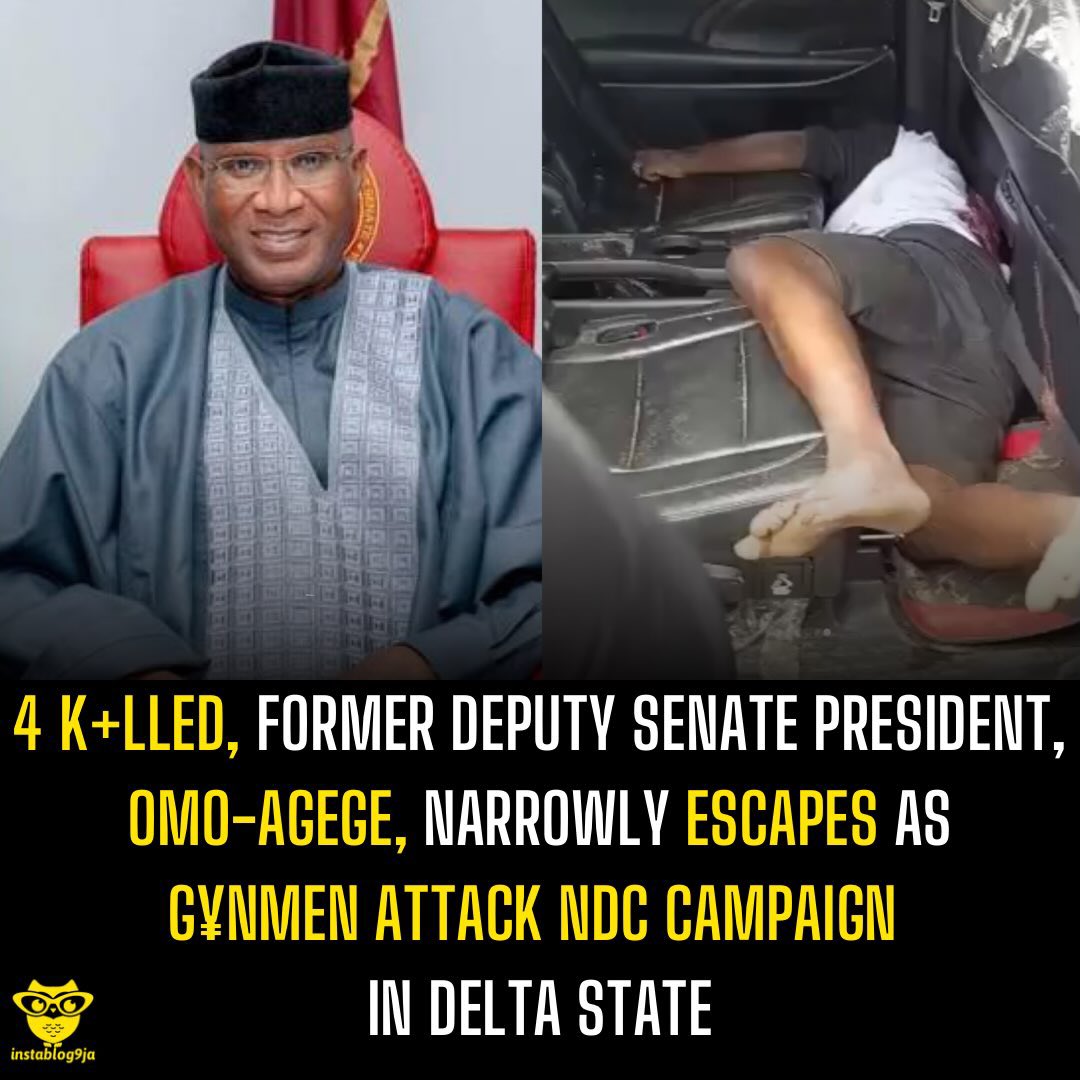
4 k+lled, Former Deputy Senate President, Omo-Agege, narrowly escapes As g¥nmen attack NDC Campaign in Delta State
Four people have reportedly been k+lled and four others inj¥red after g¥nmen attacked the campaign entourage of former Deputy Senate President, Senator Ovie Omo-Agege, in Uduere, Ughelli North Local Government Area of Delta State.
The incident occurred on November 23, 2026, while Omo-Agege, the Nigeria Democratic Congress (NDC) senatorial candidate for Delta Central, was on a campaign tour of the community.
In a statement issued by his campaign organisation, armed men reportedly opened fire at close range on the senator and his team. Omo-Agege escaped unhurt after bullets narrowly missed his head while he was addressing supporters.
However, four persons, including two campaign aides identified as Moses Anaughe and Akima Efemena Umukoro, were reportedly sh%t d+ad.
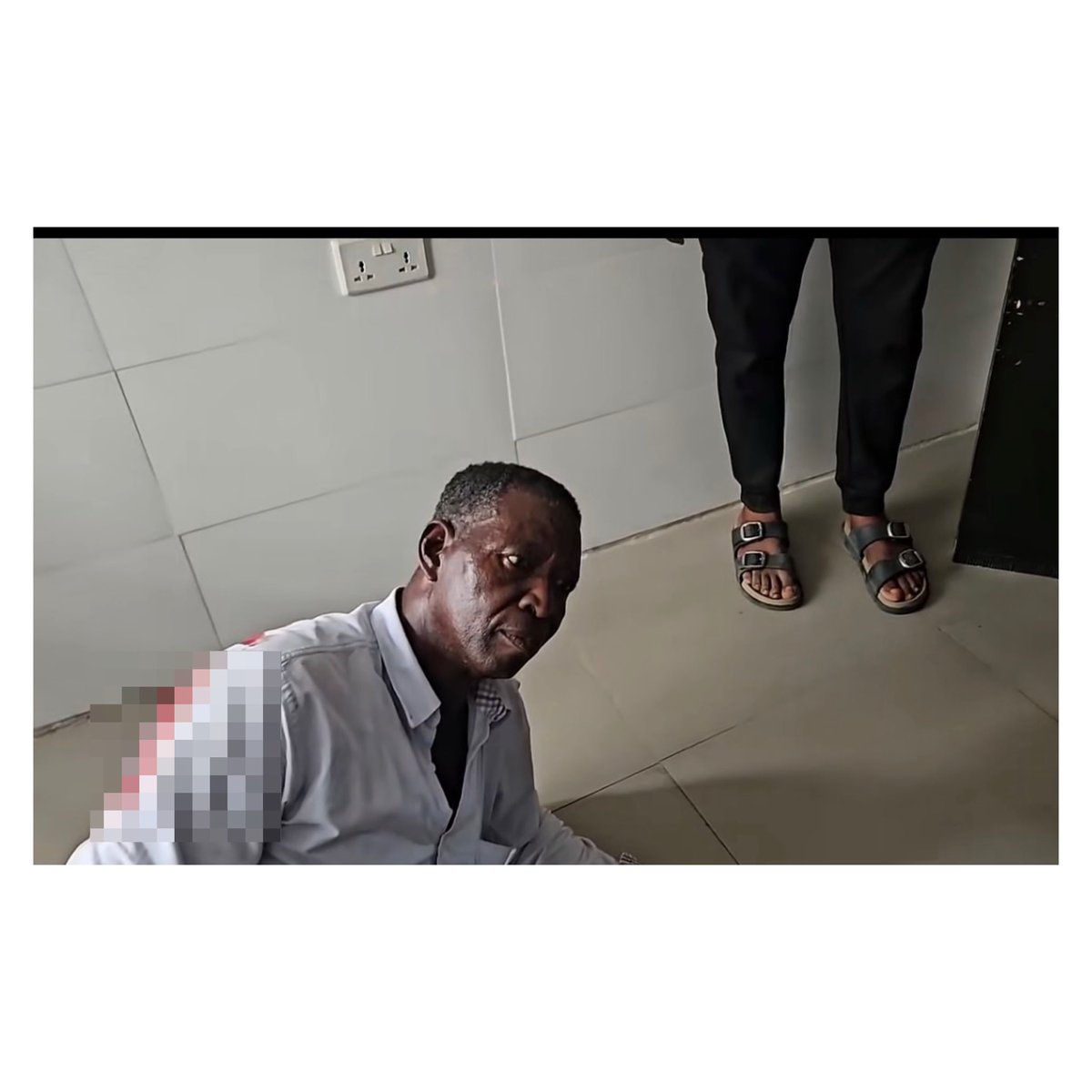
Four others, Chief Evance Ivwurie, Chuks Erhire, Tobore Agba, who sustained a g¥nshot wound to the neck, and Ayodo Wanogho, were critically inj¥red and are receiving medical attention.
According to eyewitnesses cited in the statement, the attackers repeatedly shouted, “It’s Omo-Agege we want to k+ll! It’s Omo-Agege we want to k+ll!”
The campaign organisation described the incident as a deliberate A§§assination attempt, that the operation was led by Ughelli North Local Government Chairman, Barr. Jaro Egbo, acting on the instructions of Governor Sheriff Oborevwori. It called for an immediate and transparent investigation into the allegations.
The group demanded that the governor condemn the att@ck, ensure the arrest and investigation of those implicated and guarantee the safety of opposition candidates across the state.
It also urged the Inspector-General of Police to personally take over the investigation, accusing the Delta State Police Command of failing to prevent the k+llings despite having officers and six trucks at the scene.
While calling on supporters not to seek revenge, the organisation insisted that its campaign activities would continue.
It added, “We refuse to be intimidated. We refuse to be silenced.”
No one in this world, and I mean no one, not family, not friends, not even someone who loves me, will ever fully understand the sadness I carry within me. There are things I've been through that I don't know how to explain, feelings I've kept buried, and battles I've fought
Amazon Kdp terminating my account for abnormal reading activities for my titles is very very funny
Titles wey dey Kindle select but KENP don Dey 0 for one month wey i upload books😂😂😂😂
Sales report sef na $0.00😂😂
Make these people no put me for talk abeg
NIGERIANS, GO AND VERIFY (5)
CONNECTING COMMUNITIES, UNLOCKING PROSPERITY: OUR ROAD INFRASTRUCTURE RECORD
Peter Obi
Another critical foundation of development is infrastructure, particularly road construction and maintenance.
Infrastructure is not just about constructing roads, bridges, and buildings. It is about connecting people, opening up economic opportunities, reducing poverty, and enhancing the well-being of ordinary citizens. A road that connects a farmer to a market, a patient to a hospital, a child to a school, or a manufacturer to a distribution centre is an investment in economic and human development.
This thinking informed our approach under the Anambra Integrated Development Strategy (ANIDS). We set out to connect all 177 communities in the State with motorable roads, paying particular attention to rural communities that had suffered years of neglect. Our objective was to build an interconnected road network that served the entire State, rather than concentrate projects in major cities or politically important locations.
I. The Road Revolution: Over 900 Kilometres of Road Projects
Between March 2006 and March 2014, during my two-term tenure in office, my administration asphalted over 900 kilometers of roads. These projects were deliberately distributed across the three senatorial zones of Anambra State to connect communities, facilitate commerce, and enhance transportation.
I acknowledge that Dr. Chris Ngige started the road revolution in Anambra State, and I commend the efforts his administration made in initiating several road projects. When we assumed office in 2006, we recognised the importance of continuing worthwhile projects rather than abandoning them simply because they had been initiated by a previous administration.
Among the roads we inherited from Ngige and completed were the Owerri–Ezukala–Umunze–Umuchu–Amesi–Uga–Igboukwu Road, where his administration stopped around Umuchu and we continued through Amesi, Uga, and onward to Igboukwu; the Iseke–Orsumoghu–Ukpor–Utu–Nnewi–Awka-Etiti Road, where his administration stopped at Ukpor and we continued towards Awka-Etiti; and the Ideani-Otuocha where work stopped around Awkuzu before our administration continued the project from Nteje to Otuocha.
There were also roads, such as Mmili John and Nkwelle Ezunaka bypass, which had been awarded before we took over, but on which no payment had been made by the time we assumed office. We took over these projects, assessed their status, and proceeded with the work. This was our approach to continuity in governance: acknowledging what had been started, distinguishing between projects merely awarded and those on which work and payment had actually commenced, and ensuring that important infrastructure projects were carried forward.
Some of the major roads and corridors included Amansea–Ebenebe Road; Aguleri–Umueze Anam–Mmiata Road; Nnewi–Ozubulu–Okija Road; and the Old Onitsha–Awka Road.
Other important projects included:
Awka and its Environs: Zik’s Avenue, Awka; Adazi-Nnukwu–Obeledu–Neni Road; 33 Junction–Nwafor Orizu College of Education Road; roads within the Awka Government Reserved Area (GRA); and the Old Nkpor–Amawbia Road.
Nnewi and Surrounding Communities: Nnobi–Nnewi Road; roads within Nnewi town; Akwaeze–Oraeri–Igboukwu Road; and Ekwulobia–Nkpologwu–Akpo–Achina–Umuchu Road.
Onitsha and its Environs: Bridge Head–Umunya Road; over 30 roads in other parts of Onitsha; more than 25 roads within the Onitsha GRA; over 20 stone-based roads within Harbour Industrial Estate, Onitsha; and the Nkwele Ezunaka Bypass.
Other Communities and Strategic Corridors: Awgbu–Amaokpala Road, with the Odor Bridge; Aguluezechukwu–Ogboji–Ajalli Road; Awkuzu–Igbariam Road, passing through the university; Owerri–Ezukala–Umuchukwu Road; Ugwuoba–Obosi Road; and Lilu Road.
CLARIFICATION: MY MEETING WITH US CONGRESSIONAL LEADERS WAS NOT AN ENDORSEMENT-SEEKING MISSION
I wish to address the inaccurate interpretation presented in certain media reports concerning my recent engagements with members of the United States Congress in Washington, DC.
As I expressly noted in my remarks, my visit to the United States was not intended to secure an endorsement, and I did not characterise my meetings as endorsements of my political aspirations by the US Congress or any of its members.
The primary purpose of the visit was to engage with congressional leaders and other influential American stakeholders, exchange perspectives, and discuss matters related to Nigeria’s development, the welfare of our citizens and, most importantly, the consolidation of our democracy.
I am especially concerned with strengthening democratic institutions, advancing accountability, and ensuring that Nigeria’s electoral process produces elections that are free, fair, transparent and credible. These matters should concern every Nigerian who is committed to our country’s future.
I consider engagements of this kind valuable, and I encourage other Nigerian political leaders, especially those seeking public office, to pursue similar discussions with international stakeholders. Our democracy can be strengthened through constructive dialogue, the exchange of experiences and a shared commitment to credible elections.
Nigeria’s democratic future is far too consequential to be distorted by sensational headlines or inaccurate interpretations. My mission centred on Nigeria, its people and the future of our democracy—not on endorsing any individual. -PO
NIGERIANS, GO AND VERIFY (4)
Building a Healthy Nation: Our Health Sector Record in Anambra
Peter Obi
In the previous instalment of this series, I discussed our investments in education and explained why we considered human capital development central to the progress of Anambra State. Another sector that received considerable attention under our administration was healthcare. We understood that education gives people the tools to build their future, while good healthcare enables them to live healthy and productive lives.
When we assumed office in 2006, the healthcare system in Anambra faced serious challenges. Our health institutions required rehabilitation, medical equipment was inadequate, many communities lacked accessible primary healthcare facilities, and several medical training institutions had not secured accreditation. We therefore decided to approach healthcare as a comprehensive development priority, rather than concentrate resources on a few prominent hospitals.
Under our Anambra Integrated Development Strategy (ANIDS), we invested simultaneously in primary, secondary, and tertiary healthcare, medical training, maternal and child health, medical equipment, and partnerships with religious and private institutions.
Our approach was simple: healthcare should be accessible to people wherever they live, and the quality of treatment they receive should not depend on their status or whether they live in a city or a rural community.
Building a Teaching Hospital and College of Medicine
One of our most significant achievements was the establishment of the Chukwuemeka Odumegwu Ojukwu University Teaching Hospital at Awka.
We initiated, constructed, equipped, and secured accreditation for the institution, building it virtually from scratch. When I discovered that the state university was admitting medical students without having a teaching hospital through which they could complete their training, possibly with the intention of assigning them elsewhere, I considered the situation unacceptable. We therefore embarked on the construction of a modern teaching hospital to address this deficiency.
We constructed more than 25 buildings and provided facilities for the College of Medicine, laboratories, pathology, accident and emergency services, pediatrics, male and female wards, special wards, consultant clinics, and other essential departments.
We also provided vehicles, including ambulances and staff buses, to support the hospital and the College of Medicine as part of the accreditation requirements.
The objective was not merely to build another hospital but to establish an institution capable of providing specialist healthcare while training the next generation of Nigerian medical doctors.
Rehabilitating General Hospitals
We also recognized that a teaching hospital alone could not meet the healthcare needs of the population. General hospitals had to function effectively because they provide the essential link between primary healthcare and specialist treatment.
We rehabilitated and resuscitated 15 general hospitals across the three senatorial zones of Anambra State. We undertook substantial improvements in their buildings, wards, equipment, and general facilities.
In 2013, we provided ₦400 million for the ongoing renovation of 11 selected general hospitals, alongside other healthcare interventions.
Our intention was to ensure that people did not have to travel unnecessarily long distances to obtain basic secondary medical care.
Taking Primary Healthcare to the Communities
We believed that the best healthcare system is one that prevents illnesses and treats people early, rather than one that waits until minor health problems become emergencies.
That informed our extensive investment in primary healthcare. We built over 120 primary healthcare centers across communities in the 177 autonomous communities of Anambra State and rehabilitated existing facilities.
2027: we cannot publish election results at the ward, local government, and state collation levels on IReV during the general election – INEC
The Independent National Electoral Commission (INEC) has disclosed that it cannot upload election results from ward, local government and state collation levels to its Result Viewing Portal (IReV) during the 2027 general elections because the required system has not been developed or tested.
INEC’s Director of Information and Communication Technology, Lawrence Bayode, disclosed this on Tuesday at a stakeholder roundtable on election results tabulation organised by Yiaga Africa in Abuja.
He was responding to concerns over why the commission only uploads polling unit results to IReV without extending the process to subsequent levels of collation.
When asked why Forms EC8B, EC8C and EC8D, which contain results from ward, local government and state collation levels, could not also be published, Bayode said the necessary infrastructure was not ready.
“We have not built the system; we have not tested the system,” he said.
Currently, INEC uploads Form EC8A, which contains polling unit results, to IReV, allowing voters, observers, political parties and the media to view results from individual polling units.
However, the absence of the other forms means the public cannot track the progression of results through the different collation stages on the portal.
Meanwhile, Yiaga Africa Executive Director, Samson Itodo, said the organisation had previously recommended publishing the additional forms to improve transparency in election result management.
Other participants also argued that making the forms available would allow stakeholders to compare polling unit results with figures recorded at subsequent levels and identify possible discrepancies during collation.
You’ll see them come out to talk about how they made millions in a month and you’ll be wondering… meanwhile it’s the tutorial money people are paying that is the real oil money gan gan, no be the Automation kini
I pay 250k join your YouTube Automation class.
Since one month now, na only links to YouTube videos you dey send me make I go watch.
I sabi say all those videos dey YouTube before I pay you na. Wetin I come pay 250k for? 😭
Onye YouTube, refund me my money abeg, Make I use am ball this Christmas. I no do again 😭😭
Now is the worst time to be in any debt guy
You’ll be explaining that you don’t have the money yet and asking for more time and patience and all the person is hearing “I will never pay you that money” 😂😂😂
If you snub en para.. still wahala!!!
God abeg o
NIGERIANS, GO AND VERIFY (1)
Introduction: Governance as a Public Trust
Peter Obi
When I took office as Governor of Anambra State, our beloved state was at a critical juncture. Leadership had become increasingly disconnected from the people, and many of the essential institutions needed to support a modern society were weak, ineffective, or absent altogether. We understood that governance could not continue according to established habits. It needed to be reconceived as a solemn public trust founded on transparency, prudence, accountability, and demonstrable results.
Our governing philosophy rested on four principles: character, competence, capacity, and compassion. We understood that leadership was not a platform for self-promotion, political slogans, or the pursuit of personal acclaim. Its purpose was to improve the circumstances of ordinary citizens. It meant converting public resources into concrete benefits and ensuring that government’s foremost responsibility was to serve the people. Achieving this demanded more than good intentions; it required a clear vision, careful planning, and disciplined execution.
Among our earliest findings was that the state lacked a unified development plan to direct its priorities and determine how resources should be allocated. We therefore promptly created the Ministry of Economic Planning to establish the institutional foundation for deliberate, coordinated, and sustainable development. After completing the necessary groundwork and consultations, we launched the Anambra Integrated Development Strategy (ANIDS).
At that time, the Millennium Development Goals (MDGs) were being pursued worldwide across eight clearly defined priorities: eliminating extreme poverty and hunger; achieving universal primary education; advancing gender equality and empowering women; reducing child mortality; improving maternal health; combating HIV/AIDS, malaria and other diseases; promoting environmental sustainability; and fostering a global partnership for development.
We adopted ANIDS as our overarching development philosophy and strategic framework for advancing these objectives, tailoring them to the distinctive circumstances, needs and development priorities of Anambra State. Instead of viewing the MDGs as remote international benchmarks, we worked to convert their aims into practical policies, programs and measurable results that would produce tangible improvements in the lives of our people.
We also undertook a deliberate effort to redefine the state’s identity, changing its public image from ‘Home for All’ to ‘The Light of the Nation’. This was not merely a change in slogan; it reflected our resolve to restore public confidence in government, renew civic pride and show that Anambra could serve as a model of purposeful leadership and development.
The ANIDS Blueprint: A Comprehensive Framework for Development
ANIDS served as the foundation for our commitment to broad-based and balanced development. We did not accept the idea that government could focus on a single sector while leaving others behind. We recognized that education, healthcare, infrastructure, security, agriculture and capable public institutions were mutually dependent. Advancement in one area could not be sustained without commensurate progress elsewhere. Accordingly, we pursued development across every sector, guided by defined priorities, disciplined planning and prudent stewardship of public resources.
Central to this vision was the restoration of the dignity of the Anambra person. We understood that dignity could not be restored through rhetoric alone. It was evident in the condition of roads and other infrastructure, the availability of healthcare, the quality of education, the performance of public institutions and the way government treated its workers, pensioners and traditional institutions.
@softconqueror Yesss… I’ve decided to switch to paperback
It’s way better than ebooks
Heard Daya Borders is working on Amazon and you can verify with your nin