If you ask for pixel art from a frontier image model, it will literally just print at whatever size it feels like. Even with tricks like image edits and references, you can't always get the exact size / aspect ratio you need.
I asked for these frogs and included the size in the prompt: "Exactly 16x16 pixels: the whole image is a 16 by 16 pixel grid, one sprite filling it."
The model I trained does it perfectly. GPT Image 2.5 and Nano Banana are all over the place. What else is crazy about this comparison is that i kinda think my model might be outperforming these frontier models in quality too. kinda nuts if you think about it.
GitHub is a GOLDMINE for AI game developers.
I picked 10 powerful open-source repos that make building 3D games with Claude Code and Codex ridiculously easier.
Save these before your next project:
1. Gamedev Agent Skills
Give Claude Code and Codex reusable game-development skills for engines including Godot, Unity, Unreal, and Three.js.
https://t.co/WudWTsajr7
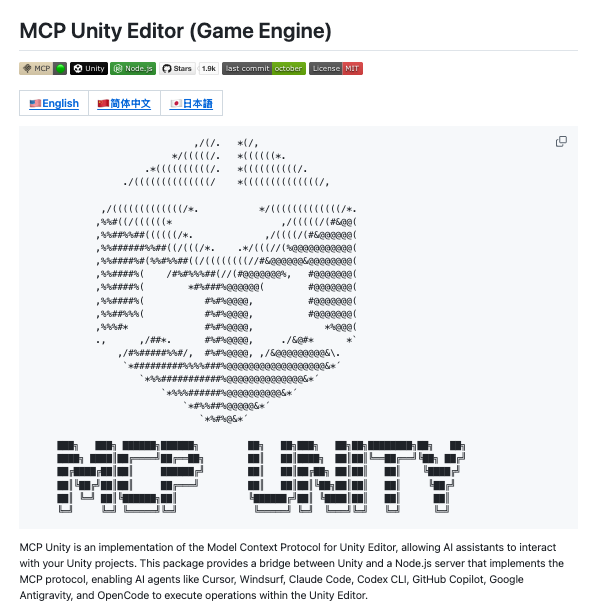
2. MCP Unity
Connect your coding agent to Unity. Create scenes, modify objects, assign materials, run tests, and read console errors through prompts.
https://t.co/cosCfK56AY
3. Godot MCP
Let your AI assistant create scenes, add nodes, run Godot projects, and inspect debug output while building your game.
https://t.co/qXwHTtguqL
4. TripoSR
Turn a single image into a 3D model. Useful for prototyping props and exploring assets before refining them for your game.
https://t.co/E9dR1g43n2
5. Drei
Ready-made helpers for React Three Fiber: camera controls, environments, skies, shadows, and model loading for browser-based 3D games.
https://t.co/eDpvF3mZUm
6. React Three Rapier
Add physics to React Three Fiber games, including rigid bodies, collision detection, and joints, without writing a physics engine yourself.
https://t.co/gkYgrb3cC5
7. Yuka
Build NPC behavior with steering, pathfinding, perception, and state-driven decisions. Give your characters more to do than stand around.
https://t.co/YCw5RHiFiQ
8. Three.quarks
Build particle effects for Three.js games, from sparks and smoke to magical trails. Includes a visual editor for designing effects.
https://t.co/ycVaphWBB4
9. React Postprocessing
Give React Three Fiber scenes a visual upgrade with bloom, depth of field, noise, and vignette effects.
https://t.co/DFjsI0swlP
10. Colyseus
Build multiplayer features with rooms, matchmaking, reconnections, and automatic game-state synchronization between your server and players.
https://t.co/UlH13ZuIQJ
Which one are you using in your next game?
Building casual games will be the next big trend.
No AI costs. No API costs. Just store everything directly in users’ iCloud.
And there are so many ways to monetize: rewarded ads, in-game purchases, remove-ads packages, and more.
But I still have no idea how to market my game lol.
I’ll try organic first before running paid ads.
Google just open-sourced Harness².
(turn any harness into a self-improving system)
a harness is everything wrapped around the model, like the system prompt, tools, memory, skills, and subagents. today a person designs it once, and the agent runs every new task with that same fixed setup.
Harness² lets the agent refine that setup for each new task on its own, with the model weights left untouched.
on every task, the agent proposes edits to its harness, runs a few candidate versions, and composes a better harness by comparing how those runs behaved.
because it learns from the differences between runs, it needs no correct answer or grader for the task.
that covers a single task. Harness² also carries what it learns from one task into the next.
after each task, it saves the harness it settled on along with the lessons that held up across the runs. the next time it refines a harness, it starts from those notes instead of from scratch.
this means every finished task makes the next round of edits more informed.
Google tested this with Gemini 3.5 Flash and GLM-5 on legal, office, and professional work benchmarks. one round of edits was enough to beat their original harnesses, and giving the agent more rounds pushed scores higher.
those extra rounds can go wide or deep. the agent either tries several candidate harnesses at once or keeps refining a single one step by step, using OpenCode or Codex to carry out the work.
you can find the Harness² repo here: https://t.co/i00WLeeFpw
I wrote about a similar idea for agents already running in production, where the harness should repair itself after a failure instead of waiting for someone to debug the trace by hand.
that piece walks through how @Cometml's Opik (open-source) closes this loop, going from a failing trace to a proposed fix to a regression test that stops the same failure from coming back. it's quoted below.
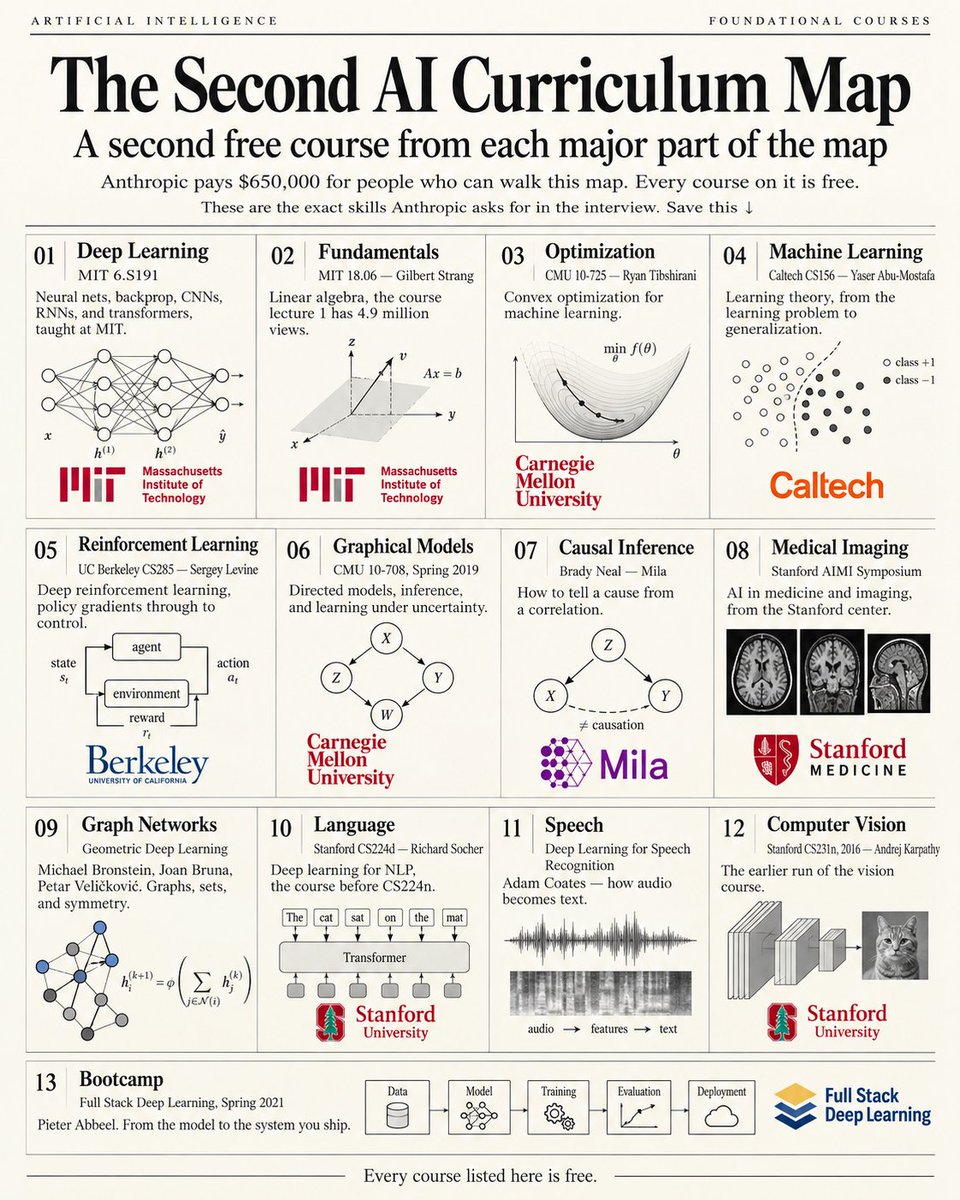
Anthropic pays $650,000 a year for people who can walk this map. Every course on it is free.
A second course from each part of the map.
These are the exact skills Anthropic asks for in the interview.
Every course below is free.
Save this ⭣
01 Deep Learning
MIT 6.S191. Neural nets, backprop, CNNs, RNNs, and transformers, taught at MIT.
▸ https://t.co/l8ZamVaaw2
02 Fundamentals
MIT 18.06. Gilbert Strang. Linear algebra, the course lecture 1 has 4.9 million views.
▸ https://t.co/yXHLAw9QL5
03 Optimization
CMU 10-725. Ryan Tibshirani. Convex optimization for machine learning.
▸ https://t.co/xIXI1RqYWv
04 Machine Learning
Caltech CS156. Yaser Abu-Mostafa. Learning theory, from the learning problem to generalization.
▸ https://t.co/rkWLVttGRU
05 Reinforcement Learning
UC Berkeley CS285. Sergey Levine. Deep reinforcement learning, policy gradients through to control.
▸ https://t.co/P7n1b1Fo9p
06 Graphical Models
CMU 10-708, spring 2019. Directed models, inference, and learning under uncertainty.
▸ https://t.co/MJugpFzRfF
07 Causal Inference
Brady Neal, Mila. How to tell a cause from a correlation.
▸ https://t.co/ZmJmT5ytnD
08 Medical Imaging
Stanford AIMI Symposium. AI in medicine and imaging, from the Stanford center.
▸ https://t.co/YKKKTzzEhe
09 Graph Networks
Geometric Deep Learning. Michael Bronstein, Joan Bruna, Petar Veličković. Graphs, sets, and symmetry.
▸ https://t.co/X3t0NP7gco
10 Language
Stanford CS224d. Richard Socher. Deep learning for NLP, the course before CS224n.
▸ https://t.co/76AsIha0VF
11 Speech
Deep learning for speech recognition. Adam Coates, how audio becomes text.
▸ https://t.co/WJtLEQ4ES2
12 Computer Vision
Stanford CS231n, 2016. Andrej Karpathy. The earlier run of the vision course.
▸ https://t.co/PxxmpW8twE
13 Bootcamp
Full Stack Deep Learning, spring 2021. Pieter Abbeel. From the model to the system you ship.
▸ https://t.co/2Uvm8s1jM7
save this ⭣
this is pure f*cking golddd
how to become an inference engineer in 6 months (zero to deployed model)
if i'd had this a year ago, i would've served my first model in a week instead of losing a month to random gpu tutorials
in the right hands, this changes the entire playing field:
As a personal side project, I've been prototyping a video game.
As a former games founder, the process of making a game is deeply satisfying and creative, don't outsource that to AI. Use AI to work with you to bring your vision to life.
Here's how I'm trying it:
So I've upgraded my chatgpt plan to $500 and asked to Astra Ultra Fast to create this map with blender and tripo assets and then make it playable on my new game.
Guess what? It took away in 1h 50% of my week usage plan, but yeah, created 26 assets and a new make for realm rivals. Idk what to feel.
Astra Ultra Fast -> Tripo -> Blender MCP -> Unity CLI
A strange thing is happening in AI:
The tools are getting better faster than most people can learn how they work.
And that makes deep technical education more valuable, not less.
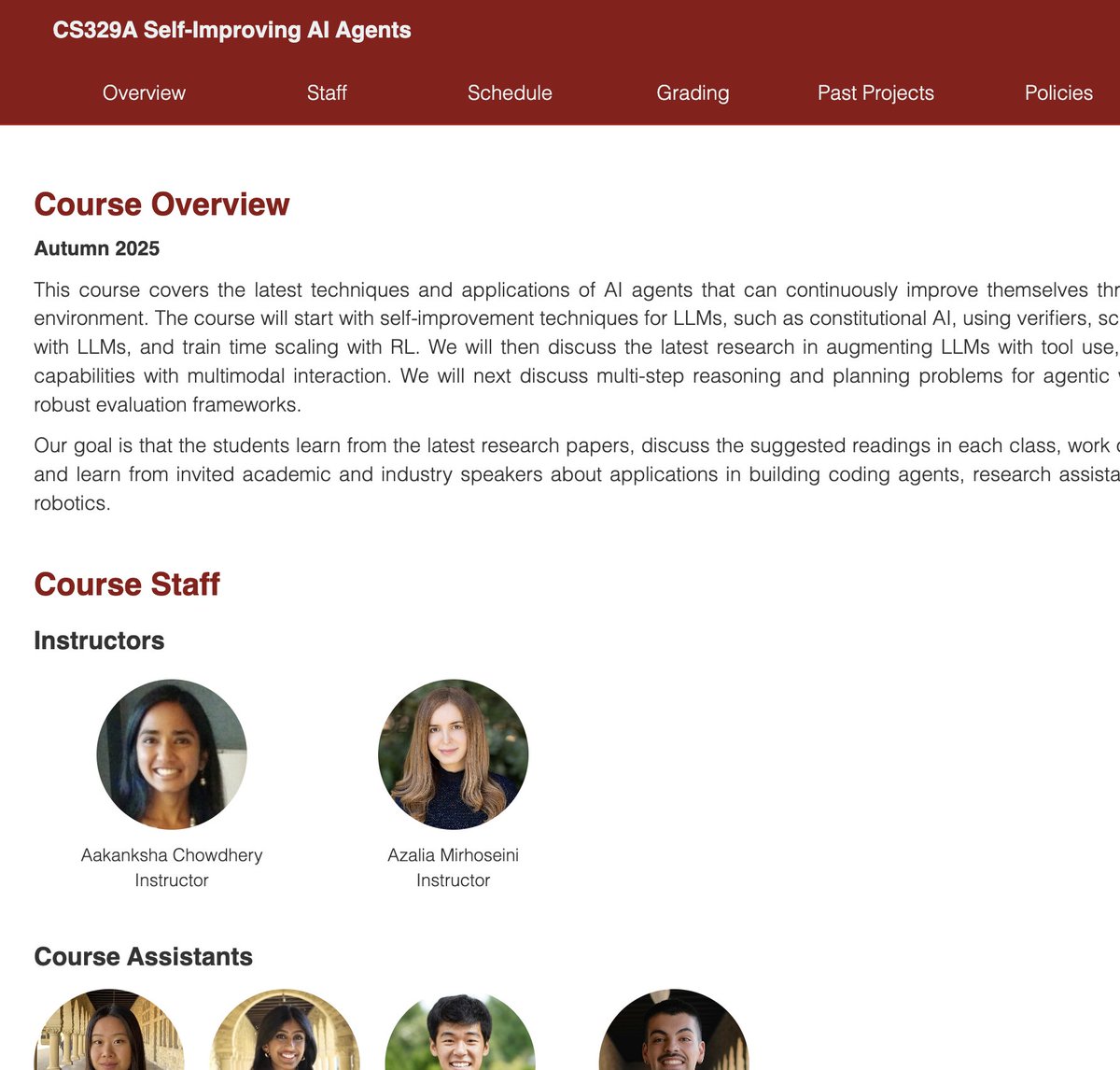
Stanford recently put CS329A: Self-Improving AI Agents online, with all 9 lectures available publicly.
This is exactly the kind of material I think engineers should spend time on right now.
Not another “build an agent in 10 minutes” tutorial.
But the harder questions:
• How do agents improve from experience?
• How should memory and feedback actually work?
• What does evaluation look like for systems that keep changing?
• Where does reinforcement learning fit into modern agent architectures?
• How do we build agents that become better without becoming unpredictable?
We’re entering a phase where calling an LLM API is the easy part.
The real engineering is increasingly in the harness, environment, memory, evaluation, feedback loops, and learning systems around the model.
That’s why courses like this are worth studying even if AI can summarize every lecture for you.
Use AI to accelerate the learning.
Don’t use it to skip the learning.
Stanford CS329A:
https://t.co/qd1ikkfBsa
this is pure f*cking insane
Claude Opus 5.5 and GPT-6 Sol broke the autonomous research ceiling
Standard deep research agents suffer from outline-centric tunnel vision. When an agent locks into predetermined section headings before gathering data, it issues narrow queries, ignores high-signal peripheral entities, and hallucinates text to fill structural gaps
Researchers from Microsoft introduced DualGraph, an architecture that splits agent memory into an Outline Graph for document presentation and a dynamic Knowledge Graph for semantic exploration. Running this system across Claude Opus 5.5 and OpenAI GPT-6 Sol sets an unprecedented 53.08 RACE score on DeepResearch Bench
Outline Graph directives → Topological curiosity search → GPT-6 Luna extraction → Cross-graph attention sync → Claude Opus 5.5 synthesis
Four structural mechanisms driving the dual-memory research engine:
1. Decoupled Presentation and Discovery
The Outline Graph governs section boundaries while the Knowledge Graph maps entities independently. This structural separation stops premature outline locks and eliminates search blind spots
2. Topological Curiosity Engine
The agent calculates graph sparsity and node degree variance to target unmapped concept clusters instead of issuing generic conversational search queries
3. High-Volume Extraction via GPT-6 Luna
High-frequency entity extraction runs on GPT-6 Luna at $0.10 per million tokens. This specialized worker layer slashes exploratory compute expense by 68.2% while maintaining complete factual density
4. Harness Provenance and Factual Verification
Claude Opus 5.5 synthesizes final report sections using verified citations from the Knowledge Graph. Factual grounding reaches 98.6% while $0.20 cache reads reduce inference expense by 40%
The master agent architecture proves that unconstrained prompt loops produce expensive hallucinations. Unifying deterministic harness verification, curiosity-driven loops, and dual-graph memory turns stochastic LLM calls into rigorous research systems
Read the complete breakdown in the article below ↓
My second brain article passed 8 million views. So I put the whole setup, the tools, the learning material and everything around it in one place. Free
A repo and a site. What is in there:
> 109 pages on the site
> The guide: 10 sections and 65 pages, concept through troubleshooting
> 5 tracks on top of it, 44 pages, 15 of them build guides with code that runs
> 18 agent skills, 72 slash commands, 6 subagents
> 5 Python scripts: graph export, link checker, vault stats, chat converter, site builder
> A starter vault template with its own CLAUDE.md
> 87 resources: 28 tools, 26 Obsidian plugins, 15 repos, 12 skills, papers and articles
There is also a track for each of these:
> Knowledge graphs
> Jev engineering
> Agent harnesses
> Loop engineering
> Eval engineering
The Second Brain guide is a good starting point, and I'd recommend that beginners start there.
If you're a more advanced LLM user, move on to the additional resources. I'm sure you'll find a lot of useful information there.
The website and repository are constantly updated. New tooling shows up every week in this space.
Repo: https://t.co/GpYVL1Ogh5
Website: https://t.co/8dSeufUJAJ
this is pure f*cking treasure
these 20 plugins have 6.73M combined downloads and form a real Claude Code stack:
build the product → hold the context → coordinate the work → keep the system under control
BUILD
01 frontend-design-pro
▸ https://t.co/CZoeV58FHT
02 animated-sketch-diagram
▸ https://t.co/EkculbT8H8
03 archcore
�� https://t.co/hxaYxtcy5o
04 shipwright
▸ https://t.co/83smFo9lqA
05 slopmop
▸ https://t.co/HaNujOPldS
MEMORY
06 origin
▸ https://t.co/kQtB3w6Gyr
07 dsh-deepread
▸ https://t.co/ad6TZcgyoU
08 obsidian-skills
▸ https://t.co/RDVbbqrebt
09 claude-md-kit
▸ https://t.co/tn4ocYU54y
10 claude-ops
▸ https://t.co/qCkXx9aCqh
ORCHESTRATE
11 crosstalk
▸ https://t.co/cr9yQ4OWAX
12 claude-wayfinder
▸ https://t.co/q1wzyreUtI
13 backlogd
▸ https://t.co/C9QbVK23mp
14 magic-cc-codex-worker
▸ https://t.co/YAlO15Dn0d
15 vibe-prospecting
▸ https://t.co/9E6A2KIIYp
CONTROL
16 project-boundary
▸ https://t.co/vgC5Kjsmcj
17 tlsradar
▸ https://t.co/rUVMKybG0R
18 claude-hud
▸ https://t.co/CZoeV58FHT
19 claude-pager
▸ https://t.co/tV3UjuXIO7
20 claude-prospector
▸ https://t.co/5QD4mzV7Tv
the loop:
idea → interface → architecture → shared memory → parallel work → checks → ship
ave this to build your own business with the help of an AI employee ⭣
The "High-Level System Design Handbook" by Aayush Soni (2026) is now in @ChapterPal's collection of free books.
The book is a comprehensive guide intended for software engineers, system architects, and technical leaders who design, scale, and maintain large-scale distributed platforms or prepare for technical design interviews.
The text assumes a baseline familiarity with programming, basic operating system mechanics such as processes and threads, fundamental data structures, relational database concepts, and networking protocols such as TCP and HTTP.
From this foundation, the book covers the full architectural lifecycle of distributed software, ranging from single-machine performance limits to planet-scale multi-region topologies and modern artificial intelligence platforms.
Read the book with an AI tutor: https://t.co/X4DoA3zeeS
All book on ChapterPal are free to read with a free account.
The table of contents:
Here’s the ToC with all level-three headings removed.
Chapter 0: Prerequisites
* 0.0 Networking Fundamentals for System Design
* 0.1 Operating System Essentials for System Design
* 0.2 Data Structures for Distributed Systems
* 0.3 Database Fundamentals for System Design
* 0.4 API Design Basics: REST, GraphQL, gRPC, and the Hard Parts
* References
Chapter 1: Core Fundamentals
* 1.0 Scalability: Growing a System Without Breaking It
* 1.1 Latency and Throughput: The Two Numbers That Matter
* 1.2 Availability and Reliability: Nines, SLOs, and Staying Up
* 1.3 Consistency Models: What Readers Actually See
* 1.4 Back-of-the-Envelope Estimation
* 1.5 How to Approach a System Design Question
* 1.6 Trade-off Thinking
* References
Chapter 2: Building Blocks
* 2.0 Load Balancers: Spreading Traffic, Absorbing Failure
* 2.1 Reverse Proxies and API Gateways: The Smart Edge
* 2.2 Content Delivery Networks: Moving Bytes Closer to Users
* 2.3 Caching: From Browser to Database
* 2.4 SQL Databases: The Boring Technology That Wins
* 2.5 NoSQL Databases: Picking the Right Non-Relational Tool
* 2.6 Database Partitioning and Sharding: When One Node Is Not Enough
* 2.7 Database Replication: Keeping Copies in Sync
* 2.8 Message Queues and Streaming: Decoupling at Scale
* 2.9 Pub/Sub: Fan-Out and Event-Driven Systems
* 2.10 Real-Time Communication: WebSockets, SSE, and Long Polling
* 2.11 Rate Limiting: Protecting Systems from Themselves
* 2.12 Service Discovery and Service Mesh: Finding and Talking to Services
* 2.13 Blob and Object Storage: Storing the Big Stuff
* 2.14 Geospatial Indexing: Geohash, Quadtree, R-tree, S2, and H3
* 2.15 Edge Computing (Cloudflare Workers, Lambda@Edge, Deno Deploy)
* References
Chapter 3: Distributed Systems Theory
* 3.0 Consensus Protocols: How Distributed Systems Agree
* 3.1 Consistency Deep Dive: Linearizability, Serializability, and the Spectrum Between
* 3.2 Quorums and Replication: The Math of R + W > N
* 3.3 CAP and PACELC: The Tradeoff That Keeps Confusing People
* 3.4 Clocks and Ordering: Lamport, Vector, and Hybrid Logical Clocks
* 3.5 CRDTs: Conflict-Free Replicated Data Types
* 3.6 Distributed Transactions: 2PC, Saga, and When to Avoid Both
* 3.7 Idempotency and Exactly-Once: The Honest Truth About Delivery Guarantees
* 3.8 Failure Detection: Deciding a Node Is Dead
* 3.9 Consistent Hashing: Keys to Nodes Without Global Reshuffles
* 3.10 Merkle Trees and Anti-Entropy: Keeping Replicas in Sync Cheaply
* References
Chapter 4: Data Systems
* 4.0 Storage Engines: B-Trees, LSM-Trees, and Why Your Database Feels the Way It Does
* 4.1 OLTP vs OLAP: Row Stores, Column Stores, and Matching Shape to Workload
* 4.2 Data Warehouses and Data Lakes: Structure, Schema, and the Lakehouse
* 4.3 Stream vs Batch Processing: Lambda, Kappa, and the End of That Debate
* 4.4 Change Data Capture: Streaming the Database's Inner Monologue
* 4.5 Search Systems: Inverted Indexes, BM25, and Running Elasticsearch in Production
* 4.6 Time-Series Databases: Metrics, Events, and Retention at Scale
* 4.7 Graph Databases: Property Graphs, Cypher, and When Joins Are the Problem
* 4.8 Vector Databases: Embeddings, ANN Indexes, and the Retrieval Layer for AI
* 4.9 Key-Value Stores: Redis, Memcached, DynamoDB, and Picking the Right Hash Table
* References
Chapter 5: Architecture Patterns
* 5.0 Monolith vs Microservices: Team Topology, Conway's Law, and the Distributed System Tax
* 5.1 Event-Driven Architecture: Notifications, State Transfer, and Choreography
* 5.2 CQRS: Separating Reads from Writes Without Losing Your Mind
* 5.3 Event Sourcing: Events as the Source of Truth
* 5.4 Serverless: Functions, Cold Starts, and When FaaS Actually Saves Money
* 5.5 Backend for Frontend: Per-Client API Aggregation Done Right
* 5.6 Strangler Fig: Incremental Migration Without a Big Bang
* 5.7 Hexagonal and Clean Architecture: Keeping Business Logic Independent
* 5.8 Multi-Region Architecture: Active-Passive, Active-Active, and CRDTs
* 5.9 Multi-Tenancy: Silo, Pool, and the SaaS Isolation Spectrum
* 5.10 CRDT Applications (Yjs, Automerge, Local-First Software)
* References
Chapter 6: Reliability & Operations
* 6.0 Observability: Metrics, Logs, Traces, and the OpenTelemetry Standard
* 6.1 SLI, SLO, SLA, and Error Budgets: Making Reliability Quantitative
* 6.2 Resilience Patterns: Timeouts, Retries, Circuit Breakers, and Bulkheads
* 6.3 Graceful Degradation: When Partial Service Beats No Service
* 6.4 Auto-Scaling and Capacity Planning: From HPA to Predictive Scaling
* 6.5 Deployment Strategies: Blue-Green, Canary, Rolling, and Feature Flags
* 6.6 Chaos Engineering: Breaking Things on Purpose
* 6.7 Incident Management: From Detection to Blameless Postmortem
* 6.8 Health Checks and Readiness: Telling the Truth About Whether You're Up
* 6.9 Cost Optimization and FinOps
* 6.10 Platform Engineering: IDPs, Golden Paths, and DX
* References
Chapter 7: Security at Scale
* 7.0 Authentication vs Authorization: Identity, Permissions, and Access Models
* 7.1 OAuth 2.0 and OpenID Connect: Delegated Authorization and Identity Done Right
* 7.2 JWT Deep Dive: Signed Tokens, Claims, and the Revocation Problem
* 7.3 mTLS and Service-to-Service Authentication: SPIFFE, Service Mesh, and Zero Trust
* 7.4 Secrets Management: Vault, KMS, and the End of Secrets in Config Files
* 7.5 DDoS Protection and WAFs: Mitigating Volumetric and Application Attacks
* 7.6 Data Residency and Compliance Architecture (GDPR, DPDP, CCPA, Right-to-Erasure)
* 7.7 Supply Chain Security: SBOM, SLSA, Sigstore, and Defending Against xz-utils
* 7.8 Privacy-Preserving Systems (Differential Privacy, Federated Learning)
* 7.9 Post-Quantum Cryptography: Migrating to ML-KEM, ML-DSA, and a Crypto-Agile Future
* References
Chapter 8: Case Studies
* 8.0 Design a URL Shortener (TinyURL / https://t.co/SVd0hVZg9K)
* 8.1 Design a Pastebin (Paste Sharing Service)
* 8.2 Design a Distributed Rate Limiter
* 8.3 Design a Distributed Key-Value Store (Dynamo / Cassandra / Riak)
* 8.4 Design a Notification System (Push, SMS, Email at Scale)
* 8.5 Design a Chat System (WhatsApp / Messenger / Signal)
* 8.6 Design a Social Media Feed (Twitter / Instagram / LinkedIn)
* 8.7 Design a Photo Sharing Service (Instagram)
* 8.8 Design a Web Crawler (Googlebot-style)
* 8.9 Design Search Autocomplete (Typeahead Suggestions)
* 8.10 Design a Video Streaming Service (YouTube / Twitch / TikTok)
* 8.11 Design Netflix (End-to-End)
* 8.12 Design a Ride-Hailing Service (Uber / Lyft)
* 8.13 Design Google Maps (Routing and Tile Rendering)
* 8.14 Design a File Sync Service (Dropbox / Google Drive)
* 8.15 Design Collaborative Editing (Google Docs / Figma / Notion)
* 8.16 Design a Distributed Cache (Memcached / Redis Cluster)
* 8.17 Design a Recommendation System (Netflix / YouTube / TikTok)
* 8.18 Design a Ticketing System (BookMyShow / Ticketmaster)
* 8.19 Design a Payment System (Stripe / PayPal)
* 8.20 Design a Stock Exchange (Matching Engine)
* 8.21 Design a Food Delivery Service (DoorDash / Swiggy)
* 8.22 Design a Metrics Pipeline (Prometheus / InfluxDB / Thanos)
* 8.23 Design Ad-Click Aggregation (Real-Time Stream Processing)
* 8.24 Design a Logging Platform (ELK / Loki / Splunk)
* 8.25 Design a Proximity Service (Nearby Friends / Yelp)
* 8.26 Design a Real-Time Leaderboard
* 8.27 Design a Unique ID Generator (Snowflake, ULID, TSID, UUIDv7)
* 8.28 Design a Hotel Reservation System (https://t.co/SACYXzzUX0 / Airbnb)
* 8.29 Design a Distributed Job Scheduler (Airflow / Temporal / Distributed Cron)
* 8.30 Design ChatGPT (Conversational AI at Scale)
* 8.31 Design an Enterprise RAG System
* 8.32 Design a Coding Agent (Claude Code / GitHub Copilot / Cursor)
* 8.33 Design Perplexity (AI Search with Citations)
* 8.34 Design a Voice Agent (Alexa / Siri-Class Realtime)
* 8.35 Design a Content Moderation System at Scale
* 8.36 Design a Semantic Cache for LLM Applications
* 8.37 Design a Model Router and Gateway (OpenRouter / LiteLLM)
* 8.38 Design a Feature Flag Service (LaunchDarkly / Harness FME / Unleash)
* 8.39 Design a DNS Service (Cloudflare 1.1.1.1 / Google 8.8.8.8)
* 8.40 Design a Dating App (Tinder / Hinge / Bumble)
* 8.41 Design an Online Auction (eBay / Catawiki)
* 8.42 Design a Multi-Tenant SaaS Platform
* 8.43 Design a Video Conferencing System (Zoom / Google Meet)
* 8.44 Design an Email Service at Gmail Scale (1.8B Users, 300B Messages/Day)
* 8.45 Design Live Comments at Scale (FB Live / YouTube Live / Twitch Chat)
* 8.46 Design a Fraud Detection System (Stripe Radar / PayPal / Feedzai)
* 8.47 Design a Fitness Tracking Service (Strava / MapMyRun)
* 8.48 Design an Online Judge (LeetCode / Codeforces / HackerEarth)
* 8.49 Design a Price Tracking Service (CamelCamelCamel / Honey / Keepa)
* 8.50 Design an API Gateway at Scale (Kong / AWS API Gateway / Apigee / Envoy)
* 8.51 Design a CI/CD Platform (GitHub Actions / GitLab CI / CircleCI)
* 8.52 Design an Observability Platform (Datadog / New Relic / Honeycomb)
* 8.53 Design a Search Engine (Google-Scale / Brave Search)
* 8.54 Design a Brokerage Platform (Robinhood / E*TRADE / Interactive Brokers)
* 8.55 Design Channel-Scale Chat (Discord / Slack)
* References
Chapter 9: AI & ML System Design
* 9.0 LLM Serving Architecture (vLLM, TGI, TensorRT-LLM)
* 9.1 RAG Pipelines (Retrieval-Augmented Generation)
* 9.2 Vector Search at Scale (HNSW, IVF-PQ, DiskANN)
* 9.3 AI Agent Architectures (ReAct, Reflection, Planning, Tool Use, Memory)
* 9.4 Multi-Agent Orchestration (LangGraph, OpenAI Agents SDK, AutoGen, Swarm)
* 9.5 LLM Evaluation and Observability (Ragas, LangSmith, TruLens, LLM-as-Judge)
* 9.6 LLMOps and Prompt Engineering (Versioning, Guardrails, Red-Teaming)
* 9.7 LLM Cost Optimisation (Semantic Cache, Model Routing, Cascading, Prompt Caching)
* 9.8 LLM Safety and Guardrails (OWASP LLM Top 10, Prompt Injection, PII, Jailbreaks)
* 9.9 ML System Design Fundamentals
* 9.10 Feature Stores and Model Serving (Feast, Tecton, KServe, BentoML, MLflow)
* 9.11 Recommendation Systems Deep Dive (DLRM, Two-Tower, Embedding Retrieval, Cold Start)
* 9.12 Realtime AI and Voice Agents (Streaming Inference, WebRTC, LiveKit, Deepgram)
* 9.13 Multimodal AI Systems (CLIP, Whisper, LayoutLM, Document AI)
* 9.14 Data Infrastructure for AI (Embedding Pipelines, Chunking, Unstructured ETL, MCP)
* References
Chapter 10: Emerging Patterns
* 10.0 Green Computing (Carbon-Aware Scheduling, PUE, Sustainable Systems)
* References
Chapter 11: Interview Framework
* 11.0 Interview Frameworks Compared (RESHADED, PEDALS, ADEPT)
* 11.1 Requirements Scoping: Functional, Non-Functional, and MoSCoW
* 11.2 Diagramming Skills for System Design Interviews
* 11.3 Trade-off Articulation: Saying 'It Depends' Well
* 11.4 Company-Specific Interview Flavors (Amazon, Google, Meta, Netflix)
* 11.5 Design Doc Authoring: RFCs, ADRs, and the Staff Engineer's Written Output
* References
Trade-offs Library
* 1. Strong vs Eventual Consistency
* 2. ACID vs BASE
* 3. SQL vs NoSQL
* 4. Latency vs Throughput
* 5. CAP and PACELC Applied
* 6. Cache Strategies: Cache-Aside vs Write-Through vs Write-Behind
* 7. Batch vs Stream Processing
* 8. Load Balancer vs Reverse Proxy vs API Gateway
* 9. REST vs gRPC vs GraphQL
* 10. Polling vs Long-Polling vs SSE vs WebSockets vs Webhooks
* 11. Rate Limiting Algorithms: Token Bucket vs Sliding Window
* 12. Optimistic vs Pessimistic Concurrency Control
* 13. Partitioning Schemes: Range, Hash, Consistent Hash, Directory
* 14. B-tree vs LSM-tree Storage
* 15. Monolith vs Microservices
* 16. Replication Topologies: Leader-Follower, Multi-Leader, Leaderless
* 17. Distributed Transactions: 2PC vs Saga vs TCC
* 18. Push vs Pull (Fan-out, Messaging, Feed)
* 19. Lambda vs Kappa Architecture
* 20. Vertical vs Horizontal Scaling
* 21. Normalization vs Denormalization
* 22. Single-Region vs Multi-Region Deployment
* References
Jev Engineering is what turns an agent stack into an actual control system and moves the expensive model out of every decision loop.
and up to 193x faster and 444x cheaper in tests.
the model shouldn’t decide everything.
in this setup:
request
→ structured state
→ Jev router
→ cheapest capable model
→ worker
→ relevance / approval checks
→ execution gate
→ tool
the important part is that the decision layers don’t generate prose.
they route → score → block → approve.
so expensive models only get called when the task actually needs them.
that’s the point of Jev Engineering:
separate reasoning from decision-making, then make the decision layer measurable, cheap and fast.
full breakdown in the article below ↓