The Odyssey. Emma. Hamlet. The Wealth of Nations. Ulysses. The Iliad.
This isn’t just a list of books I’ve read and love (though I have). They’re on the reading list for Harvard’s Humanities 10. In the @WSJ, Pamela Paul writes about the surge in demand for the class: applications are up 40% this fall, with 180 first-years competing for 90 spots.
Students read a book a week, frequently write essays, have their attendance tracked, and put their devices away during class. As classics professor David Elmer says, “I did have the sense that a lot of students feel that the culture at large is not hospitable to deep reading, deep thinking or deep engagement with writing.”
I've been writing about the question AI is forcing on universities: is higher education about information or formation? If it’s only the former, universities are competing with the machines. The students lining up for a phone-free room, the great books, and people to argue with seem to be asking for the latter.
As one student put it: “A lot of what we get out of this class is the human experience, and you can’t get that out of AI.”
So let AI keep intelligence and humans keep wisdom. This class is one way to build it.
What should colleges prioritize most in the age of AI?
Read the piece here: https://t.co/9xd0QrdIVp
A 28-year-old Roald Dahl walks beside 45-year-old Ernest Hemingway in London in 1944, capturing two future literary giants sharing a moment during the final years of World War II.
In May 1944, 28-year-old Roald Dahl met 45-year-old Ernest Hemingway in wartime London. Dahl was then serving as a towering Royal Air Force intelligence officer and had yet to become the celebrated author of children’s classics, while Hemingway was already one of the world’s most renowned writers, reporting on the impending Allied invasion of Europe.
A well-known photograph from their meeting captures Dahl standing noticeably taller than Hemingway, who was wearing a thick beard to help conceal facial injuries sustained in a recent car accident.
During their conversations, Hemingway offered the younger Dahl a piece of writing advice that stayed with him for life: always stop for the day while the work is still flowing well. By leaving the story unfinished at a productive moment, Hemingway explained, it becomes far easier to pick up the thread and continue writing the following morning.
Tim Ferriss was talking about how six months of Norwegian 4x4 training can still show effects on the hippocampus five years later.
Four minutes hard enough that the last minute feels like you’re running from wolves, three to four minutes off, four rounds. Done three times a week. One study linked it to measurable changes in brain structures like the hippocampus, an area hit early in Alzheimer’s.
He said the specific exercise probably doesn’t matter. Bike, row, or weights—what matters is the intensity and the lactate. Steady-state walking doesn’t produce the same signal.
The interesting part is how long the effect seems to last after the training stops. Six months of hard intervals, and the brain changes are still detectable years later.
The Norwegian study on 4x4 intervals and hippocampal volume is real, but it was small and observational. High-intensity work reliably improves VO2 max and cardiovascular health. Direct claims about long-term brain protection against Alzheimer’s still need larger trials.
No economist has ever explained the trap of being poor better than Terry Pratchett's boots theory.
A wealthy man buys a $200 pair of boots that lasts ten years.
A poor man can only afford $40 boots that leak after six months, so he spends $800 over the same ten years and still has wet feet.
Poverty isn't just a lack of money.
It's a continuous subscription fee for not having capital up front.
@kairu_snipes@ConradKulo@gladyswanga I asked you to visit Kiambu hospital.Share your feedback with us here.
The post had nothing to do with My name nor Wantam Tutam.
I recently saw a highly skilled teacher do two turn and talks in their lesson. Each one was a total waste of time, and achieved nothing.
Like all other strategies, it obviously "needs to be done well."
But some strategies are harder to "do well" than others.
felsefe bilmek lazım ya. felsefeyle ilgilenenlere soruyorum felsefe bilmeyen biri felsefeyle ilgilenmeye nereden ve nasıl başlayabilir. öneriler, kaynaklar, kitaplar, videolar vs. tavsiye varsa çok mutlu olurum.
🧵(1/6) Ibn Sina was arguably the single most influential Philosopher in all 3 Abrahamic traditions, exercising significant influence across Islam (Sufism, kalam & falsafah), Judaism & Christianity. Even intellectuals that disagreed with him frequently developed response to him.
Me pediram uma lista de livros clássicos. Leiam:
Vidas Paralelas — Plutarco
A República — Platão
Ética a Nicômaco — Aristóteles
Confissões — Santo Agostinho
A Consolação da Filosofia — Boécio
Apologia de Sócrates — Platão
Os Irmãos Karamázov — Fiódor Dostoiévski
A trilogia clássica: Ilíada e Odisseia — Homero; Eneida — Homero e Virgílio
A Divina Comédia — Dante Alighieri
Os Lusíadas — Luís de Camões
If you read one thing this weekend, make it Rivka Galchen’s “Proof of Concept” in The New Yorker.
She follows Terence Tao and fellow mathematicians as they ask: If AI can get us to the answer without getting stuck, where will we learn what getting stuck used to teach us?
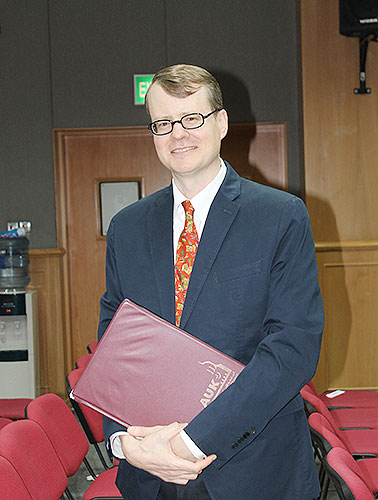
Btw This is Professor Raymond Farrin he is a language professor and former Chair of the Department of Arabic and Foreign Languages at the american university of Kuwait . He has a very groundbreaking book about the study of symmetry of the quran based on his research on the coherent structure of the Qurʾān which led him to conclude that the Qurʾān possesses an intricate and remarkable composition and that it's miraculous in this regard. This discovery was one of the reasons on he converted from Christianity to Islam pdf link to his book
https://t.co/uukIm3s8Iw
the
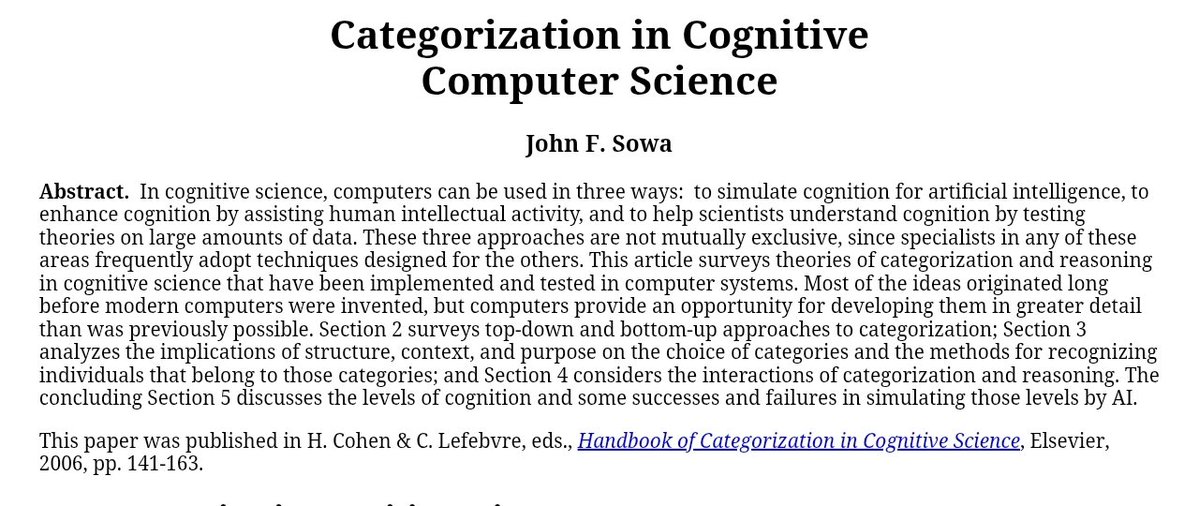
Ibn Taymiyyah is amazing, modern computer scientists (like John Sowa) have noted that Ibn Taymiyyah’s aggressive critique of strict Aristotelian logic, where he favored situational analogy (Qiyas al-Tamthil) and learning incrementally from specific data points, uncannily models the exact way Modern Artificial Intelligence and Machine Learning algorithms operate today. Instead of following rigid rules, they learn patterns dynamically from historical data.
The links to the resources:
https://t.co/ITiYSWDM12
https://t.co/XimohEeODn
اعرف أحد الفضلاء لديه ذاكرة حفظ قوية، وقدرة عجيبة على استيعاب المعلومات واسترجاعها في أي وقت يريد.. عندما سألته عن السر ذكر لي أنه يمارس طريقة مشابهة للطريقة التي تحدث عنها "جوردن بيترسون" في هذا المقطع:
Of unhappily married people who stayed together, two-thirds called the same marriage happy five years later. Of the very unhappy who stayed, nearly 8 in 10.
Divorced individuals were no happier.
Most rough patches are just patches. The rational move is usually to push through.
Study:
https://t.co/RrfHEVFYKp