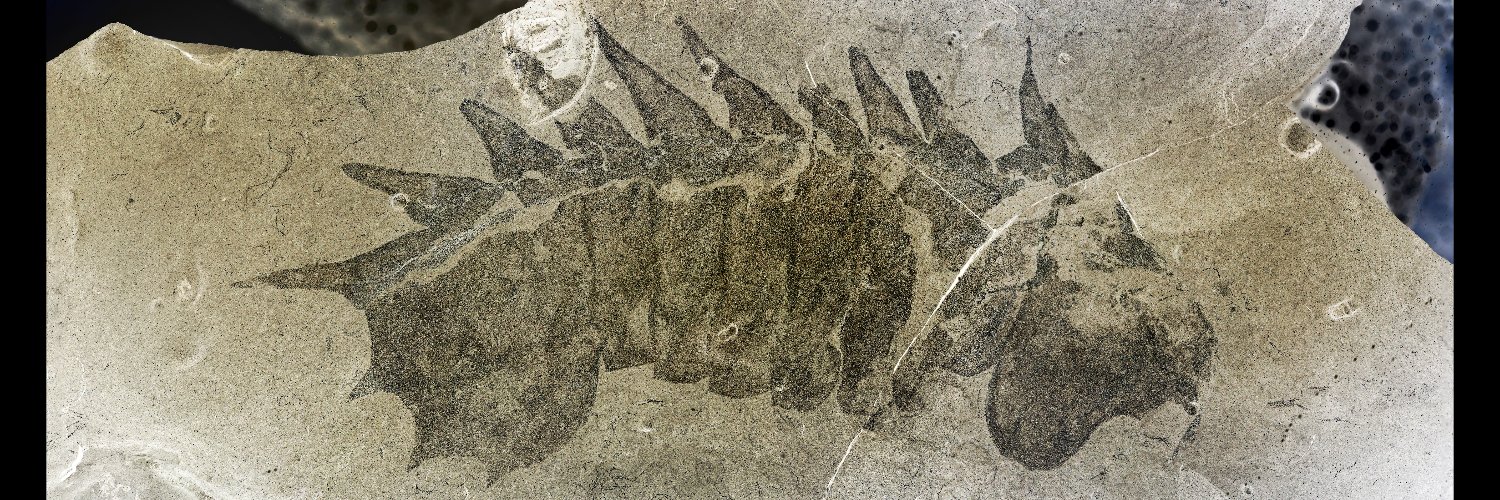
A newly described fossil from Utah reveals a pincer-wielding sea creature from the Cambrian. It may be one of the oldest relatives of spiders, scorpions and horseshoe crabs (Not an April Fool's joke, I swear!) 🕷️ 🦂
Latest for @NYTScience : https://t.co/rCsR9avs5U
The 2023-2024 Annual Report of the MCZ is now available at https://t.co/CtaTBPrzhe
The cover features the Kronosaurus specimen on display at @HarvardMuseums (image taken by Thomas Earle, Harvard Staff Photographer).
Best conference logo ever!!! 😍 The Invertebrate Paleo Lab @MCZHarvard@HarvardOEB is totally visiting beautiful Chile 🇨🇱 next year to share some Cambrian and Ordovician creatures 🤩
🚨Another little promotional piece, this time from our collaborators in Utah. I hope this blog post will help, even in a small way, to raise awareness among Utahns about the fantastic Cambrian paleontological archive their state holds. @NHMU@BLMUtah https://t.co/RbZ7xKspLO
🚨 A bit of promotion for the work we do on the mid-Cambrian Marjum biota in Utah. Feel free to contact me if you want to know more. Thanks to the @royalsociety and our collaborators at the @MCZHarvard@NHMU@BLMUtah. https://t.co/tz0Gz5C9Zc
The MCZ was awarded a new digitization grant and we have two new positions to fill! We are looking for curatorial assistants (one full-time, one part-time) to rehouse and digitize our invertebrate microscope slide collections. https://t.co/I1jRWP1AQD and https://t.co/Cfzd7Bohhl
Bioturbative activities of modern priapulids & potential ecosystem engineering impacts during the Ediacaran–Cambrian transition https://t.co/LT1kyw7El2 @kat_scans@geobiodiversity @wileyearthspace
🚨Please share/RT: I am looking for prospective PhD students to join my forthcoming lab at @UMichEEB@UMichPaleo for Fall 2025. Students interested in network ecology, paleobiology, and theoretical and systems biology or related, please fill:
https://t.co/Ny0rRDI6Ex
A new exceptionally diverse assemblage of ascidian (sea squirt) spicules from the Middle Miocene of Bosnia & Herzegovina https://t.co/hyQNi6kJxY #FossilFriday @wileyearthspace
The MCZ and @HarvardOEB welcome three new Biodiversity Postdoctoral Fellows this month: Valentine Bouju (entomology), Rodrigo T. Figueroa (vertebrate paleontology) and Cata Romero-Ortiz (invertebrate zoology). Applications for 2025 fellows are due Sept 30! https://t.co/uL7B4kIlqU
@Paleojim@BLMUtah@utahgeological @UtahPaleo @NHMU Here are a few links for the people interested:
https://t.co/IwWeanh5fX
https://t.co/c8CrvifFvN
https://t.co/MqrgSzkWMF
Another piece should be online soon ;)
@Paleojim@BLMUtah@utahgeological @UtahPaleo Agree. I believe Utah's remarkable Cambrian heritage is often overshadowed by its renowned dinosaur fossil record. But we are working on its popularization within the state with @NHMU. Hopefully, we'll be given a chance to give some talks there and at UU soon.
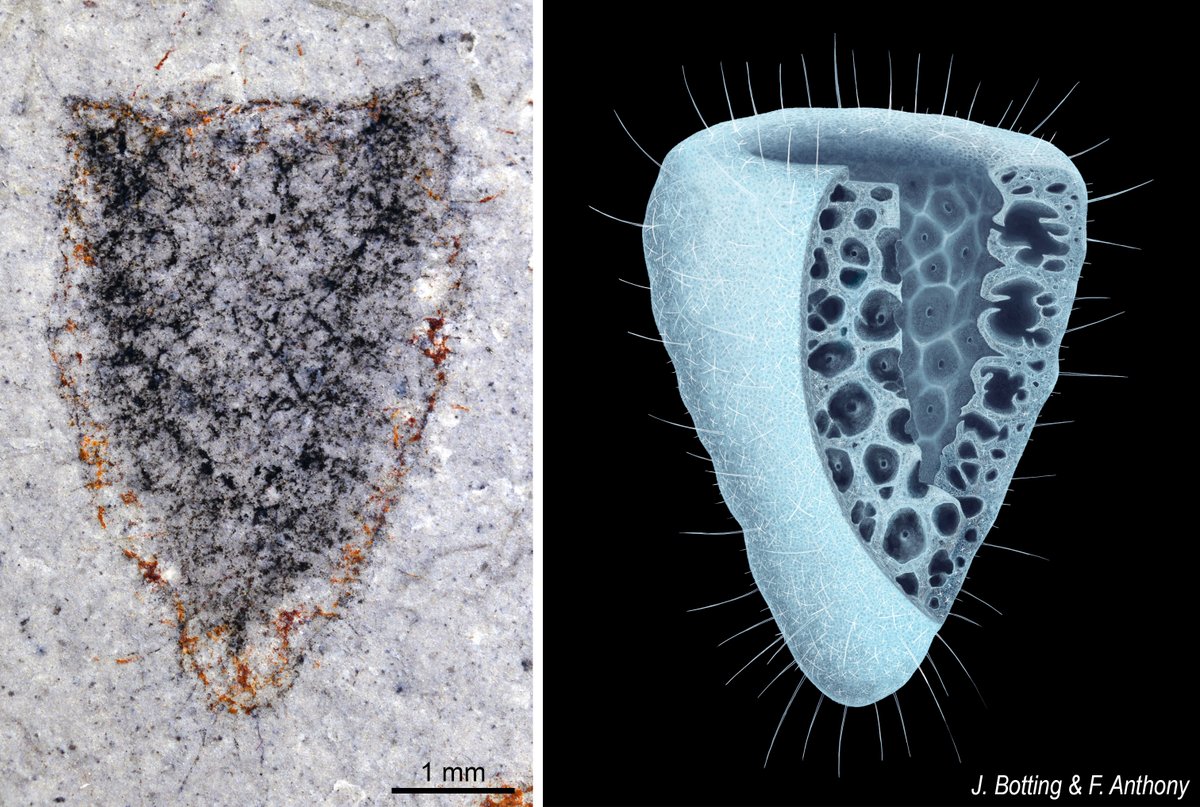
🚨Paper alert🚨Meet Polygoniella turrelli, our latest addition to the remarkable Cambrian Marjum Biota of Utah. This 500-million-year-old sponge displays a complex anatomy that has no equivalent amongst poriferans of that time. @Ldelmouro@InvertebratePal https://t.co/X3aaDnGFNw
We are grateful to: @BLMUtah and @NHMU for a productive collaboration, @MCZHarvard for supporting our fieldwork (Putnam Expedition Grants) and the publication of this paper (Wetmore Colles Fund), @MCZpaleo for invaluable curatorial assistance, and palaeoartist @franzanth