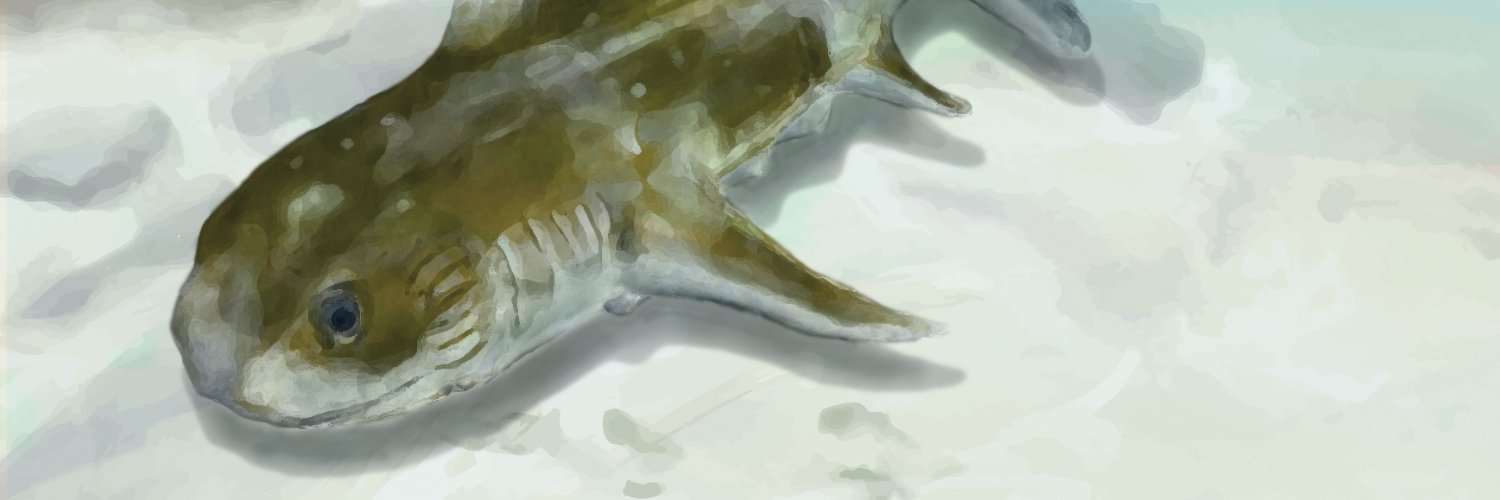
whorls that were distributed along the length of the jaw. This key piece of evidence allowed us to link Qianodus to extinct groups of chondrichthyans, known as acanthodians, that possess whorl-based dentitions.
A few notes on our recent paper on the oldest known gnathostome teeth assigned to the new genus Qianodus @osteichthyan@ZhuEarlyFishLab@Nitroshutter @Palaeo_Bham @unibirmingham https://t.co/i6dOZM0oBa The discovery provides the first tangible evidence for the existence of
i.e. we can identify specimens with a left and right labial offset of one of their two primary tooth rows. This is indicative of tooth whorl positions on opposing jaw rami and combined with other evidence suggests that the dentition of Qianodus was formed of closely spaced tooth
My latest research on the early jawed fish of China in collaboration with Min Zhu, Qiang Li, Ivan Sansom @Nitroshutter @Palaeo_Bham @unibirmingham
and other colleagues from IVPP, CAS @ZhuEarlyFishLab and Qujing Normal University