Land, property, infrastructure, planning, urban/architectural design, construction & use PLANNING, DESIGN & DEVELOPMENT:news & info not views …Paul Collins
Those red lines are not random repairs — they are the ghost routes of old chimneys.
On many older Paris buildings, fireplaces and stoves were connected to vertical terracotta or brick flues built into the walls. When a neighboring building is demolished or a side wall is exposed, these hidden channels can appear like reddish veins climbing toward the roof.
Each track marks where smoke once traveled from rooms on different floors to the chimney pots above.
Did Ontario just get snookered into a $5 billion airport expansion that no one wants for the benefit of a handful of American investors?
The plot thickens.
(You have to admit, it was odd how this popped back onto the agenda, out of the blue).
https://t.co/2AKblAwOu4
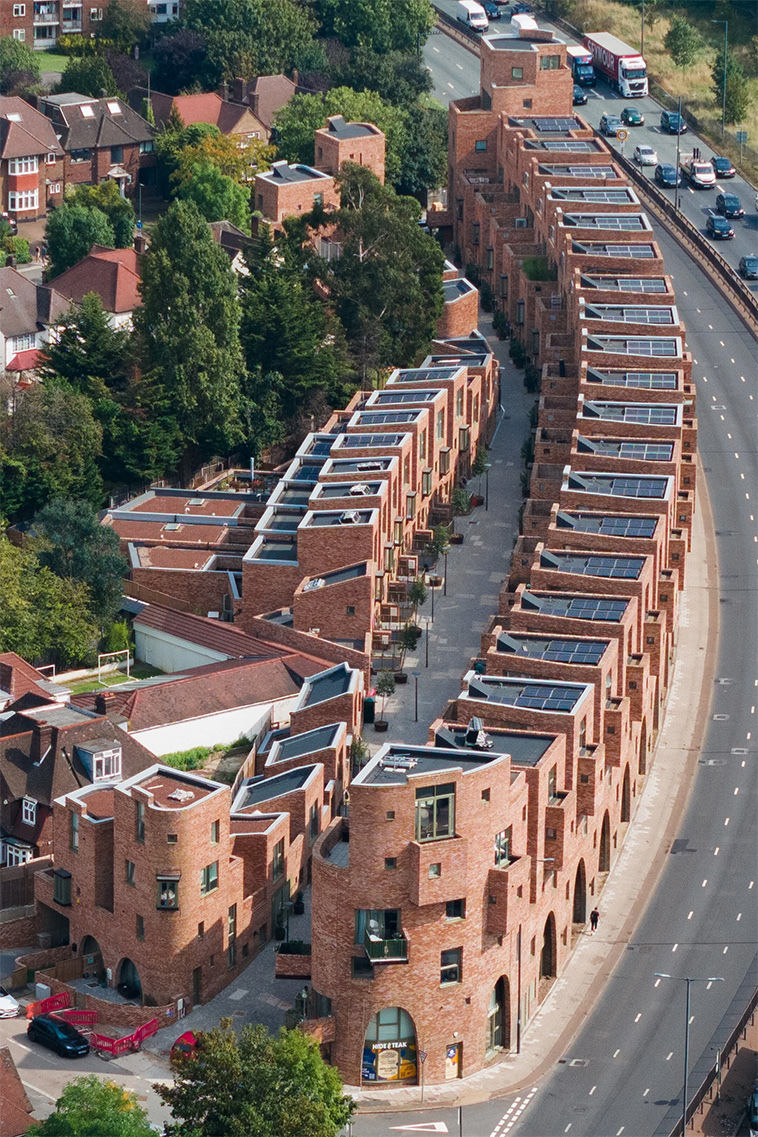
On a long-vacant strip beside London’s North Circular Road, Peter Barber Architects created Edgewood Mews: 97 homes arranged around a car-free, double-crescent pedestrian street.
Formerly known as Beechwood Mews, the project includes 50% affordable housing, plus a café and corner shop — turning a difficult roadside site in North London into a compact piece of city-making.
Architect: @ peterbarberarchitects
Mick Jagger ja Eric Clapton pysäyttivät 29-kerroksisen tornitalon Lontoossa.
Kaikkea ei tarvitse hyväksyä “kehityksenä”, eikä korkeus tee rakennuksesta laadukasta arkkitehtuuria.
Kaunista ja inhimillistä kaupunkia kannattaa puolustaa!
https://t.co/W8BnxMZq1m
“Ancient Lights” signs mark a very old idea in English property law: daylight can be protected.
If a window has received natural light for 20 years or more, it may acquire a “right to light,” meaning nearby construction can be challenged if it blocks too much of that daylight.
It is not about views or guaranteed sunshine—it is about access to natural light.
Which one feels more timeless to you?
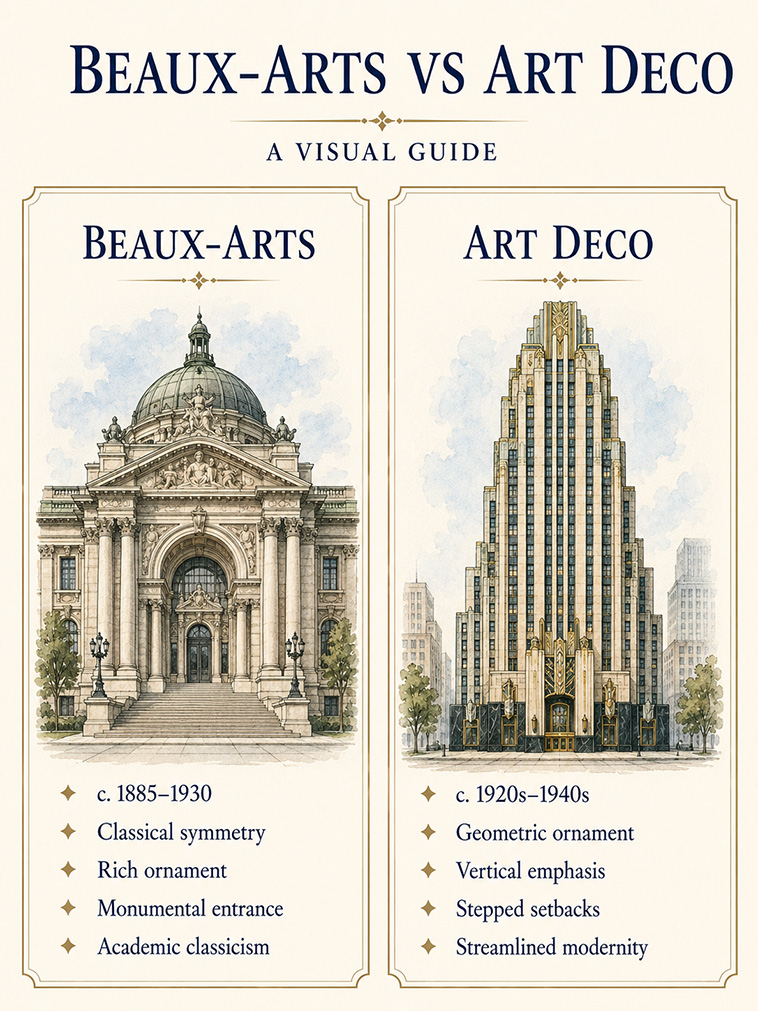
Beaux-Arts and Art Deco show two very different ideas of grandeur.
Beaux-Arts architecture looked back to classical tradition, using symmetry, sculptural ornament, monumental entrances, and academic composition to create buildings that felt formal and civic.
Art Deco turned toward the modern age, with geometric ornament, vertical lines, stepped setbacks, and a streamlined sense of progress — especially in skyscraper design.
One speaks the language of classical monumentality; the other captures the speed and ambition of the 20th century.
How China Built the World’s Biggest Train Station on Top of a Mountain
Welcome to Chongqing East Station: China's $7.8 billion high-speed rail megaproject. 1.22 million square metres. 40,000 peak workers. A 16,500-tonne steel tube truss roof assembled on the ground and hydraulically slid 57 metres upward onto 41-metre tree-shaped "Huangjue" columns.
• How 40,000 workers built a 1.22M m² station in just 38 months on a mountain
• The sliding assembly method — why the 16,500-tonne roof was built on the ground first
• The Huangjue tree columns — 41-metre branching steel structures designed for earthquake resistance
• Stainless steel cladding installation at 57 metres above a mountain slope
• Why Chongqing East Station is now the largest railway hub in the world
• The high-speed rail network connecting Southwest China to 14 major cities
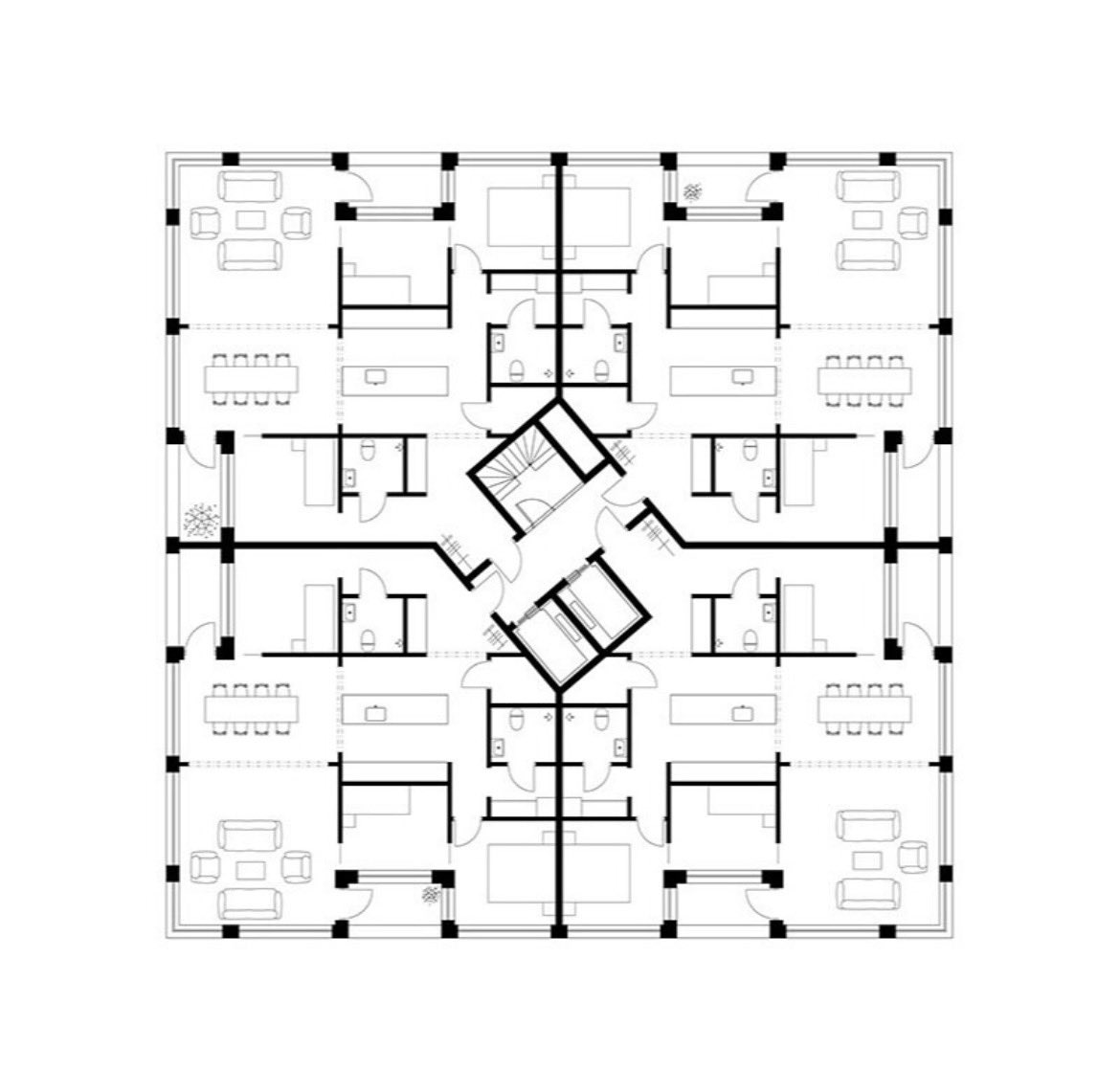
Really interesting plan for a tower in Malmo, Sweden.
Four, family sized apartments per floor, all with three bedrooms. Living space on the corners. Two winter gardens per home. Plenty of storage. Single stair!!!
By Christoph Hilger
Piazza Navona is Rome’s ancient stadium hiding in plain sight.
Its long, curved shape still follows the footprint of the Stadium of Domitian, built in the 1st century AD for athletic contests and large enough to hold around 30,000 spectators. The arena disappeared over time, but the outline survived—quietly shaping one of Rome’s most famous Baroque squares.
What looks today like a postcard of fountains, churches, and cafés is still controlled by an ancient stadium beneath the city.
📍Piazza Navona, Rome
Huge progress at Forgemasters on the new 30,000m² machine shop on Weedon Street to house advanced vertical turning lathes. Apologies for rubbish photo, it's that vast I need a drone to capture it #Sheffield
Leonardo da Vinci may be best known for the Mona Lisa or his flying machine sketches.
But among his innovative designs is another remarkable structure: a sturdy bridge that can be assembled and disassembled quickly with wooden logs.
Art Nouveau vs Art Deco
Though their names are often mentioned together, these two styles belong to different moments in design history.
Art Nouveau emerged in the 1890s and remained influential until the First World War. It is defined by organic curves, floral and plant-inspired motifs, flowing lines, asymmetry, and a strong use of iron and glass.
Art Deco rose to prominence in the 1920s and 1930s. In contrast, it favored geometry, symmetry, stepped forms, and bold decorative motifs such as sunbursts, zigzags, and streamlined vertical emphasis.