Tweeting about plant-pollinator interactions and plant mating systems... with a dose of invasive species, biocontrols, herbivory, and climate change thrown in.
Excited to share this new paper with colleagues examining #seabird#bycatch in #Arctic fisheries. This started as a side project for my post-doc work support by @LiberEroFellows, and has turned into a much longer and larger collaboration.
https://t.co/LOykPyZe0r
Do you live in Nova Scotia? Do you care about #hemlocks? The Medway Community Forest Co-op is hosting public session for Nova Scotians to help inform the provincial HWA strategy and treatment plan – and they want to hear from you!
https://t.co/1B2nkLNhRF
Neat findings! - that also have implications for forest disturbances that may alter snowpack/snowmelt, such as insect outbreaks. @WET_Erik @StephenBHeard
On the topic of long drives across eastern Canada to move to another province, take a listen to one of the latest episodes of the @BirdsCanada#WarblersPodcast on seabirds!
Sarah (@halibirdnerd) does a great job discussing the main threats to seabirds and what you can do to help
Murres are #Arctic#seabirds that play important roles in the food webs of marine ecosystems & in coastal communities. Thick-billed Murres are declining in the Northwest Atlantic including by over 50% in Greenland. @CAFFSecretariat aims to conserve, protect & restore populations.
Interested in the non-breeding behaviour of North Atlantic seabirds?
Impressive Theme Session out today "Non-breeding distribution and movements of North Atlantic seabirds" with 12 papers and 60+ authors. @MEPS_IR
https://t.co/FIlMT4YdGF
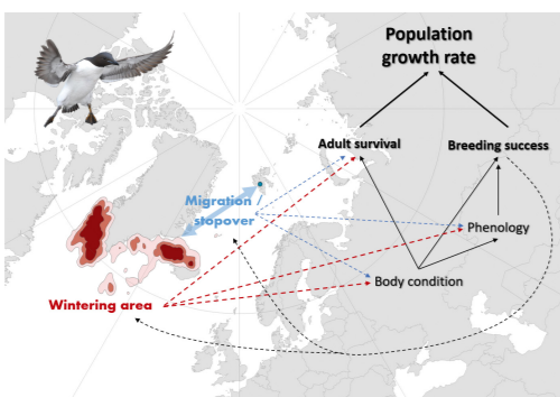
This week #COP15 on #biodiversity#ForNature begins. One way we take action on biodiversity #conservation is through @CAFFSecretariat's #Arctic Migratory Birds Initiative (AMBI) to secure long-term sustainability of declining Arctic-breeding #migratorybird populations.
Super excited to see our latest Canadian knowledge weaving systematic review protocol come online today. Collaborative work underway with @ella_bowles_82 @JessPopp @salexander_11 @SJC_fishy @adamTford@jessj_taylor and others non-Tweeters...
https://t.co/eT7HAdy3rU
🌊 Our team joined @CARPAnnapolis & local volunteers for 2 #shorelinecleanups in Annapolis Royal this week as part of our #ghostgear project. We collected around 100kg of #marinedebris & over 1,250kg of rope. This project is funded by @FishOceansCAN. 📲 https://t.co/6lU4jSsiFO.
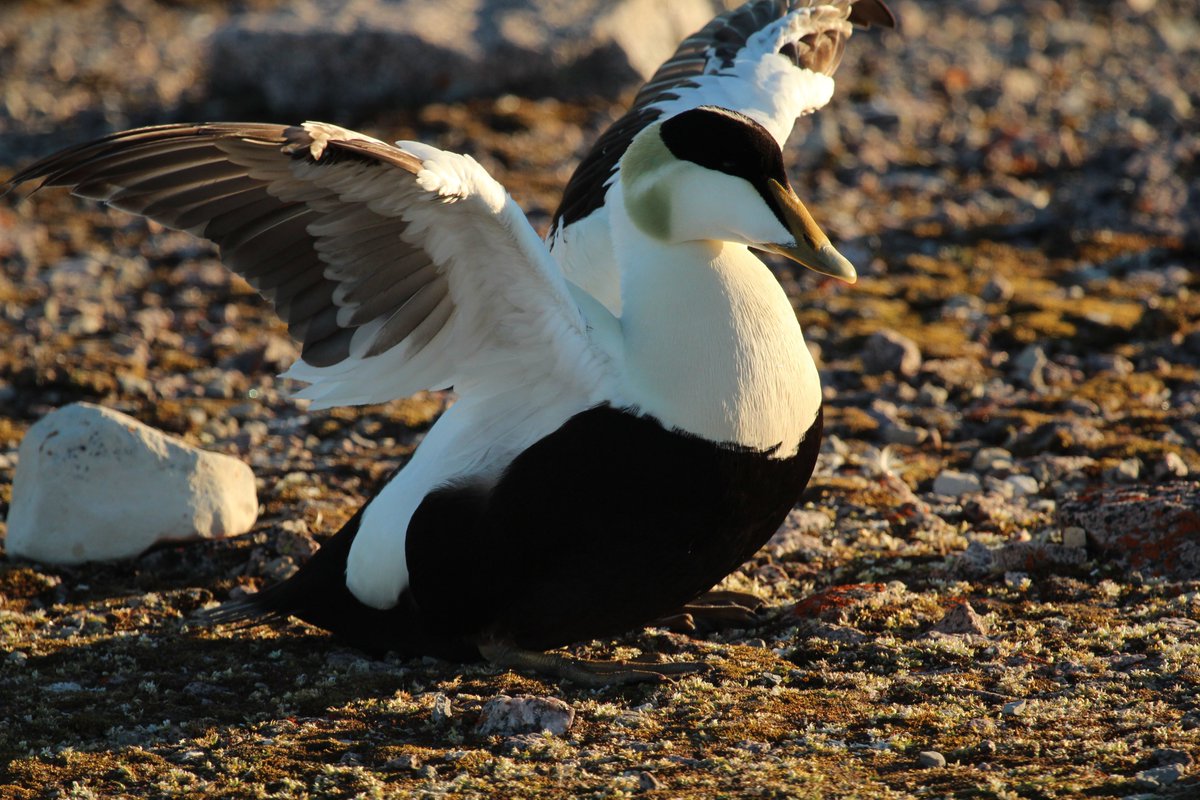
Eider ducks provide 'ecological services' as they move nutrients between marine and terrestrial ecosystems. This is especially critical to biological productivity and diversity in nutrient-poor environments such as the #arctic. Read more in Oecologia: https://t.co/JHsacSUvoJ
JUST OUT as #openaccess in @FACETSJournal:
"Review of plastic pollution policies of Arctic countries in relation to seabirds"
This is the third chapter of my MSc, with @JFLinnebjerg, @MarkMalloryLab, @jenni_pro, @tonyrwalker1, @CAFFSecretariat and more!
https://t.co/eydnh9wbxI
A new paper in PNAS led by Ryan Shipley finds a major cost of responding to changing climates: tree swallows breed earlier and face twice as many cold snaps during breeding as a few decades ago. Result: lots of nestling mortality! @twisci1 @ConorTaff
https://t.co/4ed8Bx0f1u
Next week on #SeabirdSessions#Seabirds#Ornithology
Breeding seabirds increase foraging range in response to an extreme marine heatwave https://t.co/MyFgTDjFfR