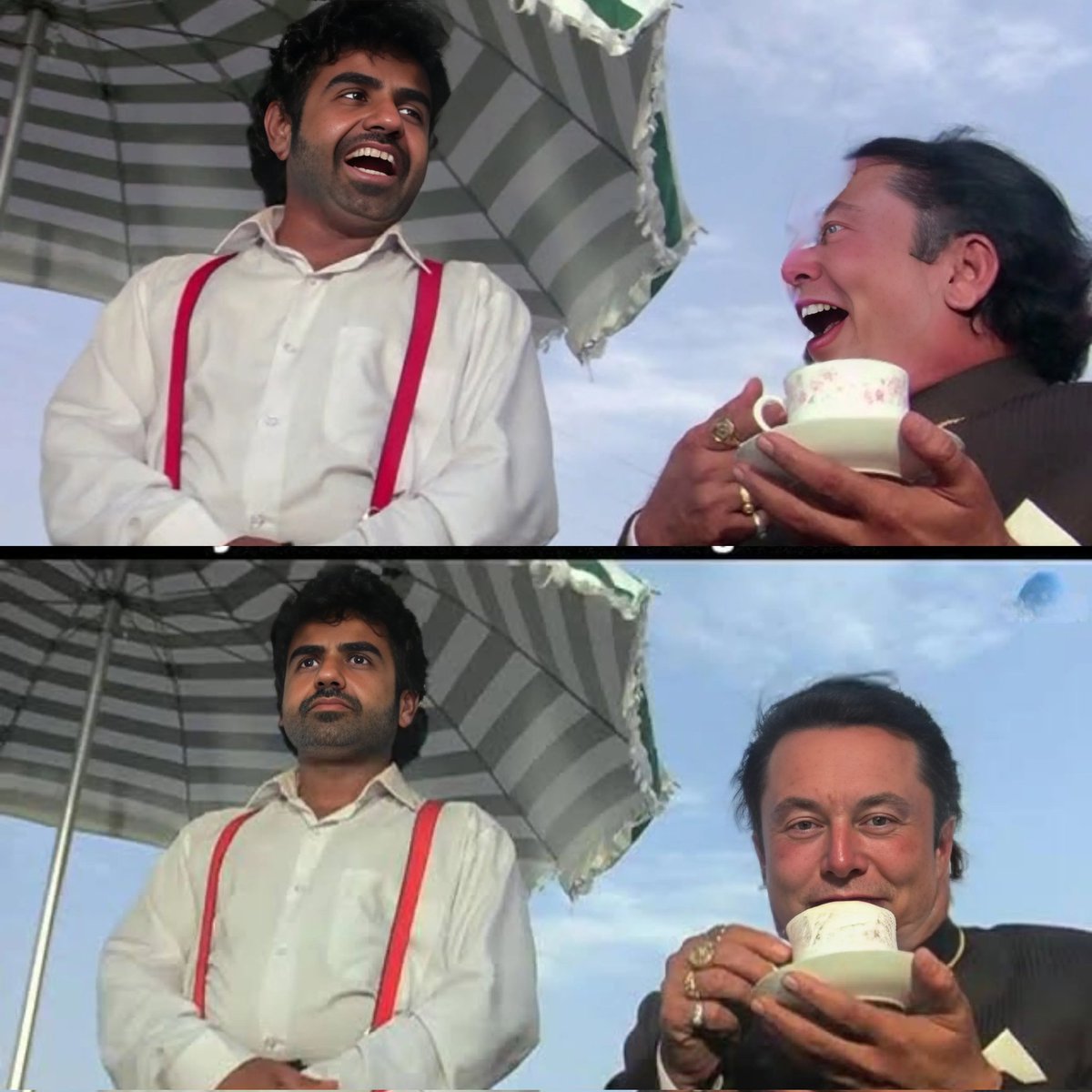
I’ve said this before and I’ll say it again:
Using LLMs-written content professionally will spoil your career, especially if you’re in early stages. Everyone worth their salt that I know is hugely aversive to reading slop and despite your smart attempts, they can sense signatures of AI writing (even if they can’t articulate what gave it away).
When you delegate writing, you delegate thinking and that delegation takes away from you the very thing you need for your future career advancement: careful thinking.
I often hear.. “but my writing is bad”. Well, if you keep on delegating, how will it get better? It’s like complaining that you don’t go to gym because you’re unfit.
Write the first damn draft yourself and then take feedback from AI. Do not ask it to rewrite, but rather ask it point errors and suggestions for improvement.
Writing using LLMs is analogous to binge watching short videos, or eating junk food. Pleasurable dopamine hits in the short term, but complete dependence in the long term.
This is a brilliant ad. It goes on to show that a brand’s identity is beyond just the logo. It’s about how you show up every single day.
Great work Kotak Mahindra Bank. Seriously impressive 👏🏻
So my evening in Lisbon is texting with one of the @TheChainsmokers who’s encouraging me to post my Chamath story as bad VC story #4, and me saying it’s just not as cringe as the first three, and him lecturing me on how to structure a set. 🤷🏻♂️
Let me explain what just happened today because it deserves so much recognition.
GalaxEye is a Bengaluru startup founded in 2021 by IIT Madras engineers. Today they launched Mission Drishti on a SpaceX Falcon 9. It is India's largest privately built satellite at 190 kg. And it carries a technology that no commercial satellite has ever carried before.
Normal satellites take photos of the Earth using optical cameras. Like your phone camera, but from 500 km up. The problem is obvious. Clouds. Night. Fog. Smoke. If any of these are in the way, the photo is useless. India has monsoon cover for 4 months a year. That is 4 months where optical satellites are partially or fully blind over large parts of the country.
The alternative is SAR. Synthetic Aperture Radar. Instead of taking photos with light, it sends radar waves down and reads what bounces back. Radar goes through clouds, through darkness, through smoke. A SAR satellite can image a flooded village at 2 AM during a cyclone when no optical satellite can see anything.
The problem with SAR is that the images look nothing like photos. They look like grainy black-and-white radar maps. A military analyst or a trained geospatial engineer can read them. A farmer, a disaster response team, or a city planner cannot.
Until today, if you wanted both optical and SAR data for the same location, you needed two different satellites, passing over at different times, at different angles. Then someone had to manually align and fuse the two datasets. Expensive, slow, and the data never perfectly matched because the satellites saw the same spot minutes or hours apart.
GalaxEye put both sensors on one satellite. Optical and SAR, fused into what they call OptoSAR. Three times more information than a single sensor. Processed onboard by an NVIDIA AI chip at 1.8 metre resolution.
Now in practice, during the next cyclone hitting Odisha, one satellite pass gives you a clear image of which villages are flooded, which roads are cut, and which buildings are standing. Day or night. Cloud or clear. In near real-time.
For defence, it means you can monitor a border area 24/7 regardless of weather. For agriculture, it means tracking crop health across an entire monsoon season without a single cloud gap. For infrastructure, it means monitoring construction progress on highways and bridges without waiting for a clear day.
GalaxEye tested their SAR tech on ISRO's POEM orbital platform. The satellite was tested at ISRO facilities. IN-SPACe provided regulatory clearance. NSIL, ISRO's commercial arm, will distribute the imagery globally. And it launched on SpaceX because ISRO's PSLV doesn't have the right orbit slot for this mission.
Yes, four IIT Madras graduates built a world-first satellite in 4 years in Bengaluru.
Take a bow!
Mars is being given up. Elon has accepted the reality.
Again a city on moon is crappish. He always keeps an impossible goal, not to work towards it but to maintain a larger than life image among his cultish followers.
He has achieved hell a lot in life. But lot of things he talk are either crap or fantasies.
In my view, I don't think even Elon Musk really believes human beings going and settling in Mars. It's just to create a larger than life image that he is not just a businessman but visionary working for the future of humanity.
As I said, he is an extremely successful entrepreneur at a global scale. But in essence, he is manipulative and he himself may not believe many bull shit claims he is making about future.
is there a single platform that will help me with the one below?
1. Curate the list of my favourite movies, podcasts, tv series, plays
2. I can track wishlist or what they like in the above list.
While watching, I felt that Nikhil came across as more confident, with a brilliant sense of business prediction and philosophy.
Elon, on the other hand, didn’t speak with the level of clarity I expected he wasn’t fully opening up about what he is or what he has achieved.
Maybe he’s smart enough to avoid sharing everything so openly, but it wasn’t the clarity I thought he would start with before the podcast! 🤔
@elonmusk@nikhilkamathcio
Things we don’t appreciate much about corporate Job :-
52 Saturdays + 52 Sundays = 104.
12 public holidays + 2 RH = 14.
18 ALs + 12 Sick Leaves = 30.
104+14+30 =148 Days.
365 - 148 =217 Working Days.
That’s only 18 work days in a month, Add December shutdown and WFH days 🙏