We're back! We are excited to share lots of new and exciting research with you all here and on our new Bluesky account. Find us at https://t.co/HhjsF7f876!
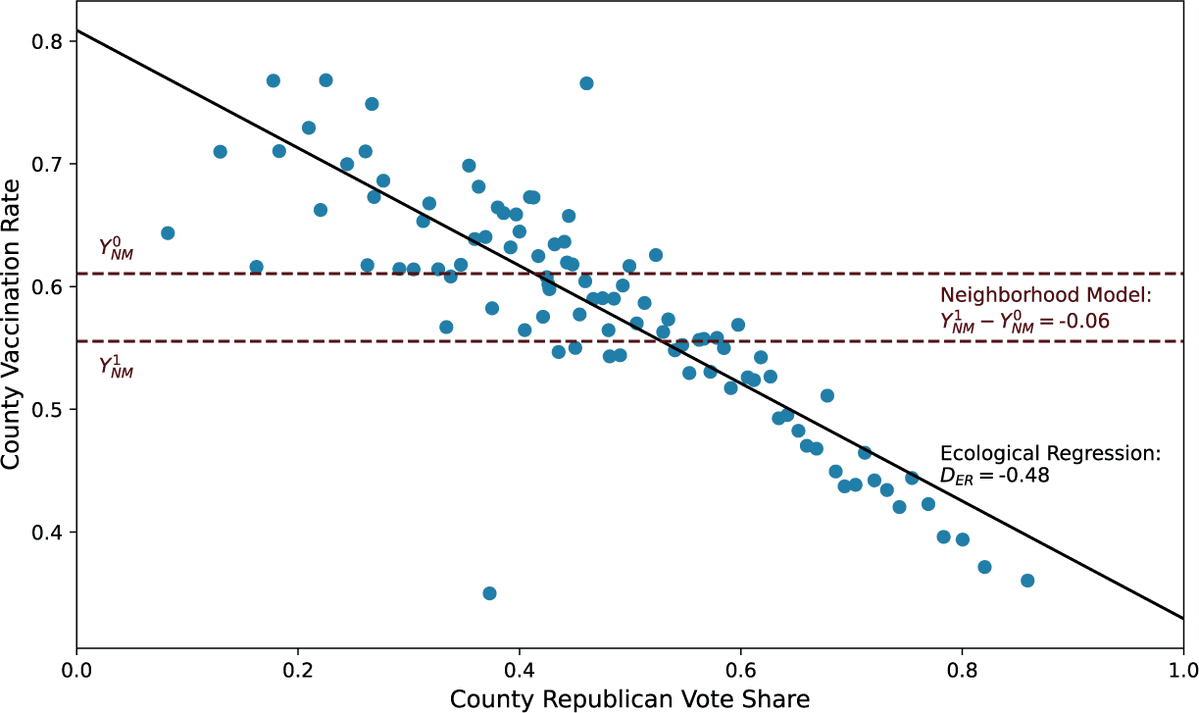
The authors develop a partial identification approach, monotone EI, and illustrate it using county-level data on partisanship and COVID-19 vaccines. You can read the paper here: https://t.co/pgDV6fCzmm
Currently in FirstView: In “Monotone Ecological Inference,” @hselzayn, @jacobsgoldin, Cameron Guage, Daniel Ho, and Claire Morton characterize the biases of, and relationships among ecological inference (EI) estimators for identifying group means and differences.
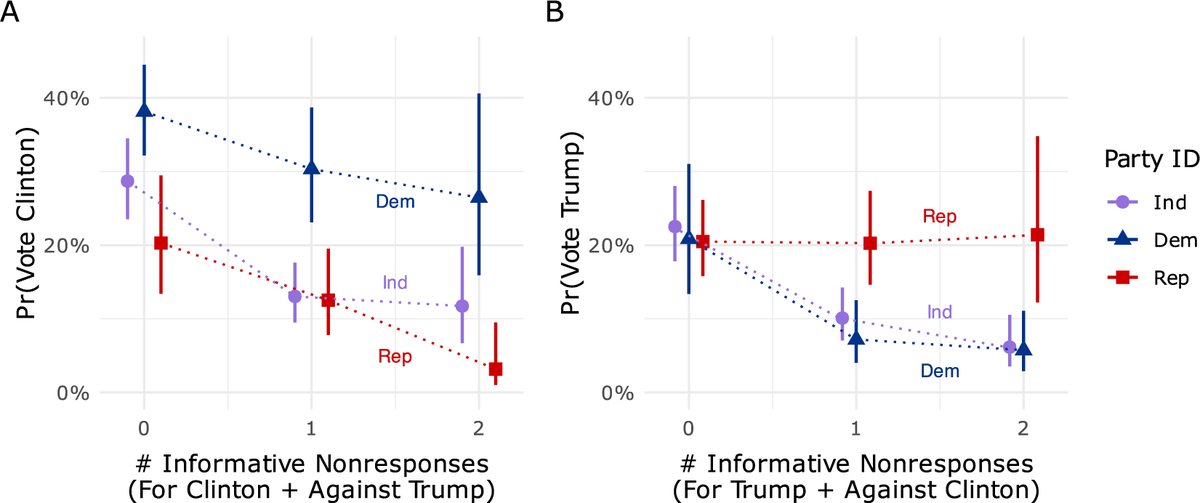
The authors provide two stylized examples illustrating this framework, establish key elements of the analysis, and discuss the interpretation of results under STUVA as well as a weaker assumption (NURVA). Read the full paper here: https://t.co/Deehf80VnT
Currently in FirstView: In “On the Foundations of the Design-Based Approach,” P. M. Aronow, Austin Jang, and @mofferw propose a design-based framework for analyzing randomized trials and survey sampling that avoids strong claims about the data-generating process.
TRACE is the total effect of treatment in the group that would realize a particular value of the relevant post-treatment variable. Unlike other approaches, TRACE does not require strong and untestable assumptions. Read the paper here: https://t.co/Ly8XqmcZxZ
Currently in FirstView: In “Post-Treatment Problems: What Can We Say about the Effect of a Treatment among Sub-Groups Who (Would) Respond in Some Way?,” @chadhazlett, Nina McMurry, and @TanviShinkre propose the treatment reactive average causal effect (TRACE).
Using a simulation and two replication studies, they demonstrate that this approach adheres to the compositional data constraints and offers a more accurate interpretation of estimated treatment effects for proportional outcomes. Read the paper here: https://t.co/M58BfoXE4c
Currently in FirstView: In “Estimating Treatment Effects on Proportions with Synthetic Controls,” @konboga and Lukas Stoetzer examine synthetic control methods (SCMs) and make the case for jointly estimating synthetic controls across multiple compositional outcomes.
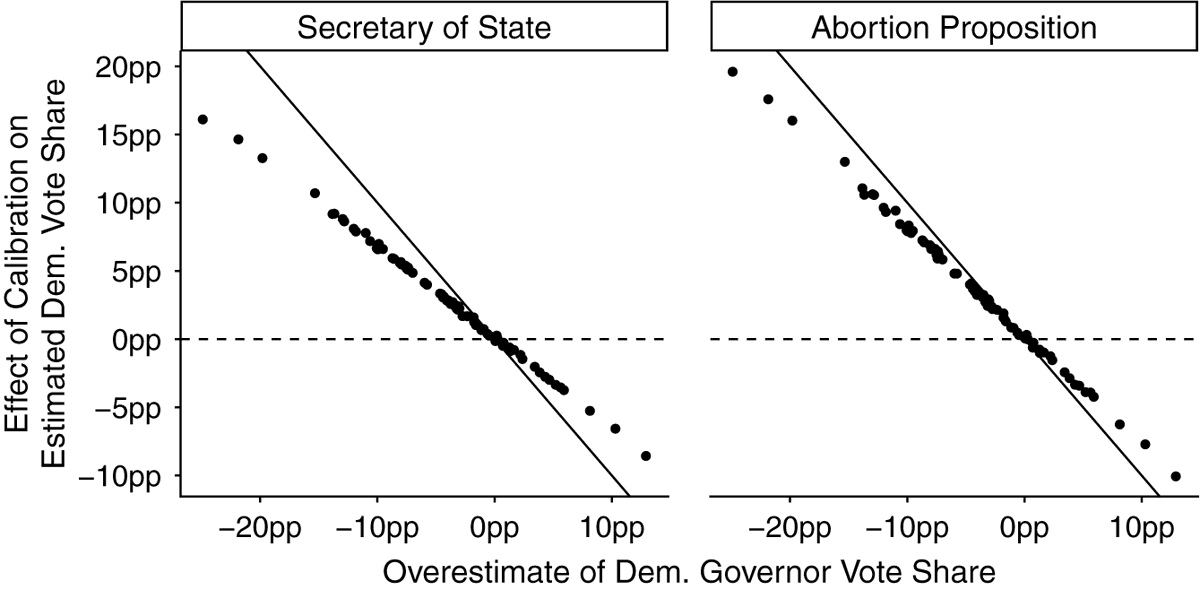
They validate this method using pre-election polling from the 2022 Michigan midterm and find that their calibrated MRP estimates reduce error by as much as two thirds. You can read the full paper here: https://t.co/afAok9jsoX
Currently in FirstView: In “Improving Small-Area Estimates of Public Opinion by Calibrating to Known Population Quantities,” @wpmarble and @joshclinton provide a framework for incorporating known population data to improve estimates of small subgroups in MRP models.
The paper walks through three studies where text is used to quantify attitudes and actions. Ultimately, the paper argues that expression is sufficiently demanding that it should be understood as a form of action. Read the paper here: https://t.co/7VmlrRDInA
Currently in FirstView: In “Text as Behavior,” @owasow proposes using features of open-ended tasks to study text as behavior. Stats like the number of characters can approximate effort and significantly improve estimation.
Their framework, UNITAS, reduces the dependence of inferences on specific datasets, cut-offs, magnitude-of-change and time-window assumptions, while efficiently handling missingness and measurement uncertainty. You can read the paper here: https://t.co/TOA87x2SeS
Currently in FirstView: In “Democracy Manifest or Democracy Latent? A Unified Framework for Identifying Regime Types and Transitions,” @OmerFOrsun and @muhammet_a_bas develop and validate a framework to study regimes that addresses measurement uncertainty and missing data.
The authors introduce a methodology that integrates LMs and structured coding schemes to classify open-ended survey responses cost-effectively and find that LMs can capture democratic perceptions and handle data abstractions. Read the full paper here: https://t.co/YByRi8WhJ1
Currently in FirstView: In “Using Multilingual Language Technology to Classify Open-Ended Survey Responses: Conceptions of Democracy in a Cross-Cultural Survey Setting,” @StefanDahlberg, @JoakimNivre, and coauthors examine the use of LMs in analyzing survey open-ended responses.
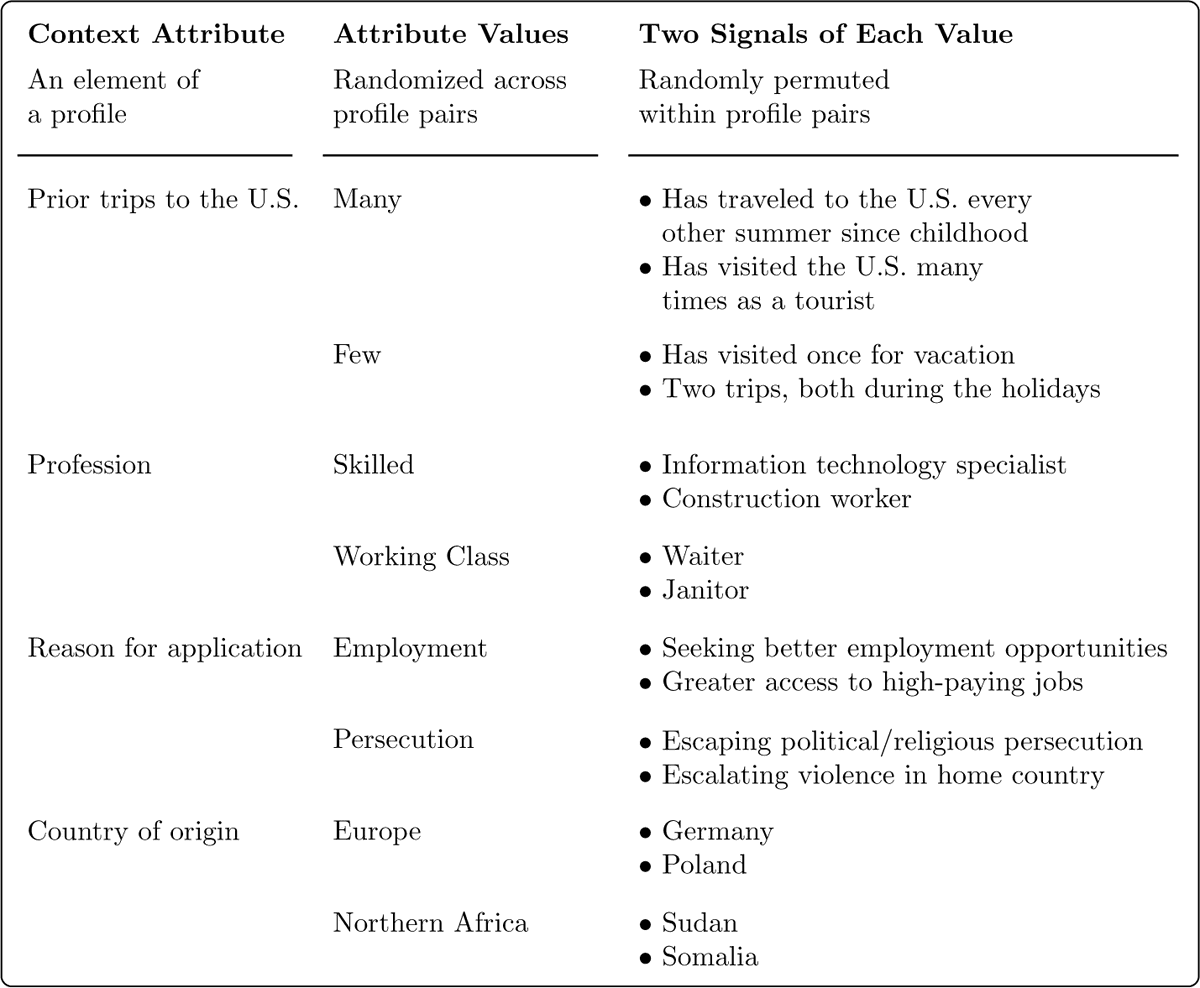
By adaptively adjusting randomization probabilities via Thompson sampling, the method efficiently identifies the contexts in which the focal attribute has its most positive and most negative effects. You can read the paper here: https://t.co/vM8Wdsijgn
Currently in FirstView: In “Adaptive Randomization in Conjoint Survey Experiments,” @jennahgosciak, @danieljmolitor, and @IanLundberg1 develop a response-adaptive design for conjoint experiments that summarizes the range of effects of one attribute as a function of all others.
All models consistently attributed more liberal ideologies to women while racial associations differed by model. They conclude that using these models political content analysis may unknowingly introduce model-specific confounds. Read the paper here: https://t.co/deISwuXaUn
Currently in FirstView, in “From Faces to Politics: Vision-Language Models (Sometimes) Link Visual Demographic Characteristics to Ideological Labels,” Soyeon Jeon, Messi Lee, @Jacob_Montg, and @CalvinKLai ask how models use demographics as shortcuts for ideological attribution.