Today, NASA announced PRIMA, a new space telescope that will explore long-standing mysteries around the formation of planets, stars, black holes, and even how water on Earth came to be. https://t.co/am7EPkNYof
Una pequeña ameba rompió un récord de resistencia al calor. 🔥
Científicos financiados por la NASA descubrieron el primer eucariota conocido capaz de reproducirse a 63 °C, una temperatura superior a la que los científicos creían que las células complejas podían soportar.
Throwback to the time they stuck a IMAX camera on a satellite the shuttle was deploying and got some of the best in space footage ever taken.
God I hope NASA takes some IMAX cameras to the moon on Artemis 4, it would be so dope.
El chileno es mandado a hacer para pifiar políticos en festivales pero pa votar wn. Vean cualquier rutina humorística del festival de viña y ante cualquier mención a Piñera salen las pifias y el weon salió electo DOS veces. Se repite la historia. País inviable.
🇧🇴 | Se descubrió una nueva especie de gato en Bolivia
La cantidad de especies de felinos aumenta a 43 🐯🦁🐱
Se agranda la mejor familia de mamiferos del mundo
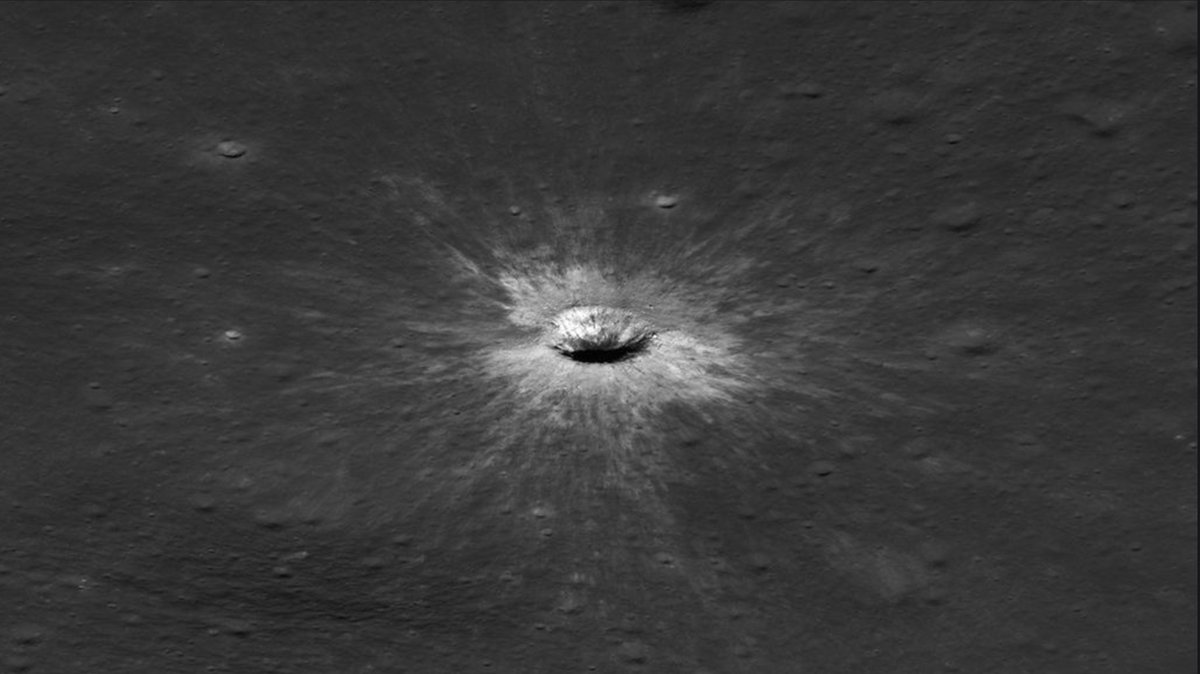
The Moon’s got a big new crater! 🕳️
Spotted by NASA’s Lunar Reconnaissance Orbiter, the McGetchin crater formed when a rock as big as a six-story building crashed into the Moon. It’s 141 feet deep and wider than the length of two football fields.🪨💥🌕
https://t.co/I2fX7bPts1
"El telescopio espacial James Webb (JWST) detecta misteriosos 'Little Red Dots' (LRD) por todas partes. Una nueva y audaz teoría sugiere que se trata de soles decenas de veces más grandes que todo nuestro sistema solar", en Quanta: https://t.co/F8KGMkj8Bo
We’re sharing a solution to the Navier-Stokes Millennium Prize Problem, one of the deepest problems at the frontier of mathematics.
The proof was produced by a group of agents, using an OpenAI next-generation model significantly more capable than GPT-6 Astra.
The problem concerns whether the description of smooth three-dimensional fluid motion modeled by the Navier-Stokes equations can break down. It has remained unresolved for roughly 90 years.
BOOM!
I happened to be shooting this galaxy when a star decided to explode. Pretty lucky!
You can see it appear close to the galactic core. I’ll be shooting it every night for a while to watch it change brightness!
This is comparing photos captured 10 days ago vs 5 min ago.