Ready for an Artemis update?
Tune in Friday, Oct. 23, at 2 p.m. ET (1800 UTC) to hear our latest progress and accelerated plans for Artemis lunar missions.
Watch live: https://t.co/EePpimRqsU
Track Psyche's position in real time as it journeys towards its target, which may be a partial core of a planetesimal, a building block of an early planet. https://t.co/H0tHkTPC7m
Floor it!
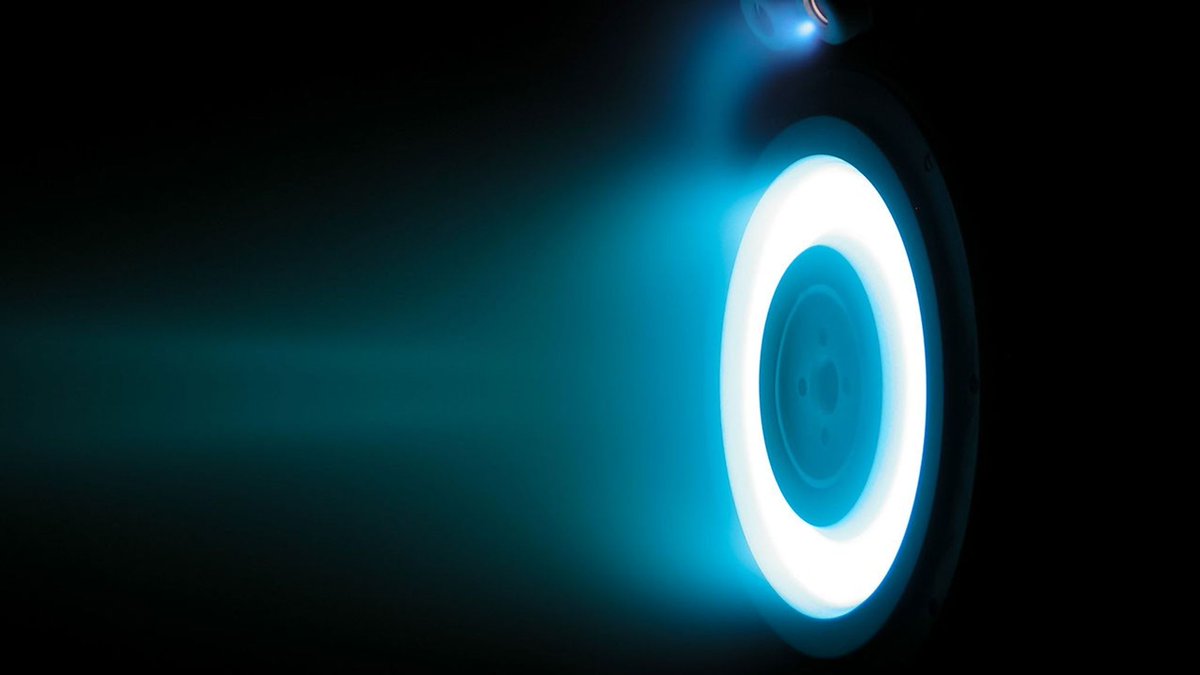
NASA’s Psyche spacecraft has fired up its thrusters and is accelerating to the metal-rich asteroid of the same name. Learn more about Psyche’s solar-powered propulsion system, which uses electromagnetic fields to steadily deliver thrust: https://t.co/MifXRy1npL
The wheels are in motion for Moon Base!
From robotic rovers to lunar terrain vehicles, our latest update highlights progress on the mobility systems that will support early Moon Base development and Artemis exploration.
See what's rolling: https://t.co/xG6fSpetfW
Two scientists. One unforgettable view of our planet.
What's it like to see the Artemis II Earthrise image through the eyes of a lunar scientist? How about an oceanographer? Jacob Richardson & Ivona Cetinic are here to tell us.
Explore Artemis II data: https://t.co/VTUbJMrjIa
The Orionid meteor shower, created by tiny pieces of debris from Halley's Comet, peaks on the night of Oct. 21 - 22. Your best chance to see them comes a few hours before dawn, after the bright Moon sets. Find a dark location, give your eyes time to adjust, and look up.
Have a research idea that could advance NASA science? 🔬
NASA plans to release ROSES-27 by January 2027, with over 50 research opportunities spanning astrophysics, Earth science, planetary science, heliophysics, space biology and more.
Start planning: https://t.co/mPfms0AECl
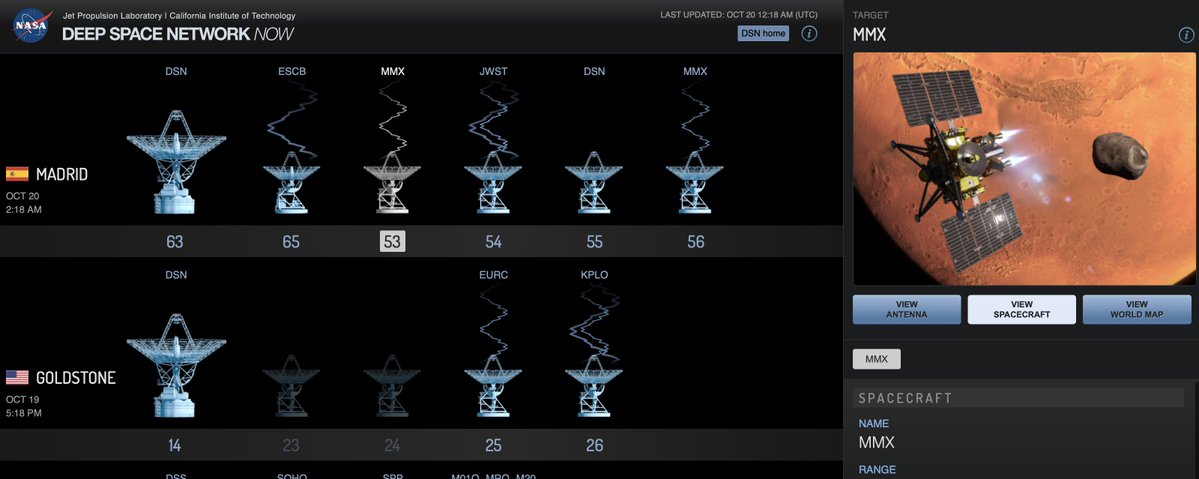
NASA is also providing MMX with communication and navigation support via NASA's Deep Space Network. The station in Madrid is receiving information from the spacecraft right now! https://t.co/JQ4AmP6uIx
NASA has been studying Phobos and Deimos at Mars for decades.
See what we've discovered so far, and learn about the many mysteries that remain: https://t.co/dztPvFg3Pj
Go MMX! 🚀
Ready for today's launch of @JAXA_En's mission to the moons of Mars? Liftoff is slated for 3:41 p.m. EDT.
Watch live at: https://t.co/jf43Aigsbx
The MMX spacecraft carries two pieces of NASA hardware: The MEGANE instrument will be key to revealing the origin of Mars’s moons by measuring their elemental composition.
The P-Sampler demonstration will advance capabilities for surface material acquisition in low gravity. ½
Registration is open for the NASA TechLeap Prize: Orbital Clarity Challenge!
Brainstorm your ideas to advance orbital drag measurements for safer, more predictable satellite flight paths.🛰️
To find challenge guidelines and registration info, visit: https://t.co/xPGVKNCKd7
Day meets night at the lunar terminator. 🌗
The @NASAArtemis II crew highlighted this shadowy frontier during their close encounter in April. Now it’s your turn to explore! No spaceship needed.
It’s #SunDay! Here’s your space weather report for Oct. 9-15:
•3 M-class flares
•0 C-class flares
•19 coronal mass ejections
•1 geomagnetic storm
This video from NASA’s Solar Dynamics Observatory shows the week’s activity. After the Oct. 10 geomagnetic storm, which led to aurora sightings across northern Europe, Canada, and the northeastern United States, it was a relatively calm week on the Sun.
The Moon makes a special guest appearance in this week’s video beginning at about 0:36. Note the sharp outline of the Moon’s edge. That’s because the Moon has almost no atmosphere to scatter sunlight.
At about 2:30, we also see a calibration maneuver, which the spacecraft performs periodically to account for changes in its instruments’ optics over time.
More about solar activity: https://t.co/GRxOaTcMdD
We've studied the moons of Mars from Earth, from orbit, and even in the sky as seen from the surface. (This view comes from the Curiosity rover.) Now, the @JAXA_en MMX mission will see them up close, and even bring a sample home. NASA will be assisting each step of the way. 1/2
Did you know we have a newsletter?
We send out weekly updates straight to your inbox about all that’s happening at NASA—free of charge. From space science to technology on the ground, never miss a NASA update: https://t.co/J5l4OYGVE8
Snapshots of Saturn 🪐
OTD in 1997, NASA’s Cassini spacecraft launched to explore the wonders of Saturn.
For more than a decade, Cassini studied the jewel of our Solar System, including its spectacular rings and icy moons. Take a look at some images captured along the way!
Checking in with two deep space explorers. 🚀🛰️
Our Psyche mission to a metal-rich asteroid launched 3 years ago today, and tomorrow marks 2 years since Europa Clipper set sail for Jupiter's ocean moon Europa.
(The same rocket side boosters were used for both launches!) 1/3
Ride along with Psyche at https://t.co/QpnQxMzhp3
Europa Clipper at https://t.co/AYU2lMFVFQ
and track both flights across both time and space at https://t.co/RR898RnqUj