To see how such space weather may affect Earth, check out @NWSSWPC, the U.S. government’s official source for space weather forecasts, watches, warnings, and alerts.
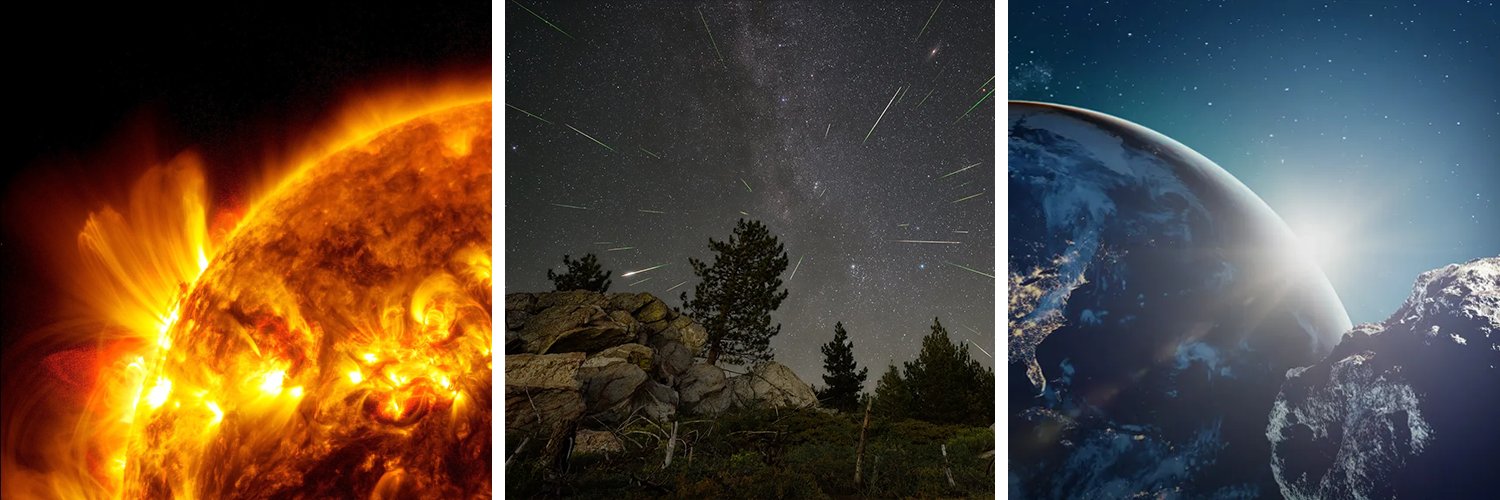
The Sun emitted a strong solar flare on June 3, peaking at 7:28 a.m. ET. NASA’s Solar Dynamics Observatory captured an image of the event, which was classified as X1.0. https://t.co/LuhZRnB99c
Solar flares are powerful bursts of radiation. Harmful radiation from a flare cannot pass through Earth’s atmosphere to physically affect humans on the ground. However — when intense enough — they can disturb the atmosphere in the layer where GPS & communications signals travel.
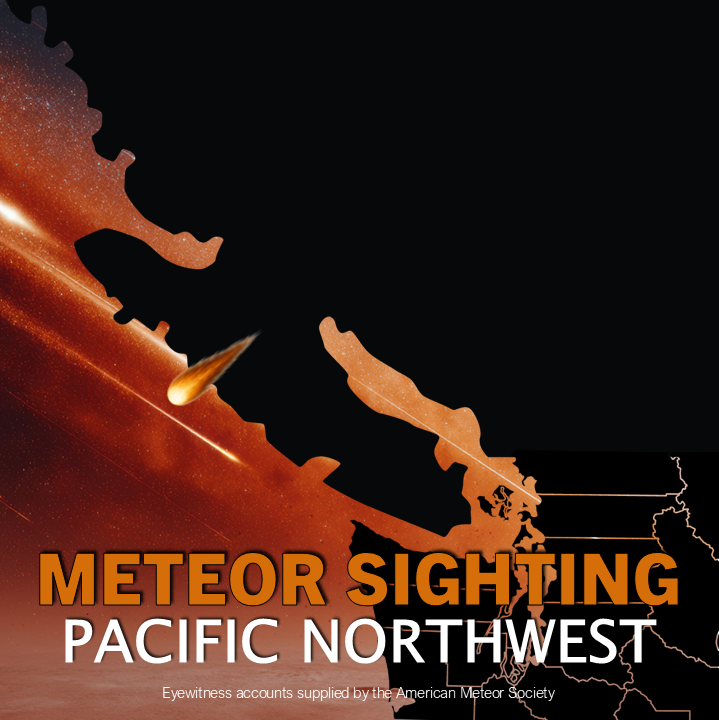
#MeteorSighting: Eyewitnesses in Ohio and Michigan reported a bright meteor on Monday, June 1, at 10:41p.m. EDT. The data puts first detection of the fireball above the Ohio area near Lima. The meteor moved north-northwest at approximately 49,900 mph before disintegrating above the area just west of Lansing, Michigan.
More on this fireball: https://t.co/yw4f6sAzWB
Eyewitness accounts supplied by the American Meteor Society
UPDATE: @NASA can confirm a fireball over New England at 2:06 p.m. EDT on Saturday, May 30, 2026. The meteor was about 5 feet (1.6 meters) in diameter with a mass of 5.6 metric tons and entered Earth’s atmosphere at roughly 42,000 mph.
The meteor traveled through the atmosphere from northwest to southeast for 26 miles before breaking up at an altitude of 31 miles and producing a meteorite fall into Cape Cod Bay.
Based on the latest data, the energy released at breakup is estimated to be equivalent to about 230 tons of TNT, which accounts for the sonic boom.
Have questions? Check out our fireball FAQs: https://t.co/HyyRIGmeoI
#MeteorSighting: Eyewitnesses in New England and @NOAA’s GOES-19 satellite reported a bright fireball on Saturday, May 30, at 2:06 p.m EDT accompanied by a loud noise. The meteor appears to have fragmented at an altitude of 40 miles over northeast MA and southeast NH. The energy released at breakup is estimated to be equivalent to about 300 tons of TNT, which accounts for the loud noise.
Eyewitness accounts supplied by the American Meteor Society.
NASA's planetary defense network watches the skies for objects of all sizes - and specifically is tasked with finding objects 140 meters and larger which can cause widespread damage. Meteoroids, like this one over New England, are much much smaller. Almost impossible to track in space, they do not survive passage through our atmosphere intact and do not pose a hazard.
#MeteorSighting: Eyewitnesses in New England and @NOAA’s GOES-19 satellite reported a bright fireball on Saturday, May 30, at 2:06 p.m EDT accompanied by a loud noise. The meteor appears to have fragmented at an altitude of 40 miles over northeast MA and southeast NH. The energy released at breakup is estimated to be equivalent to about 300 tons of TNT, which accounts for the loud noise.
Eyewitness accounts supplied by the American Meteor Society.
@1bigmari@NOAA Meteors are actually quite common. They occur all the time, and fireballs can be seen on any given night. But they often occur over the ocean or unpopulated areas with no witnesses, or during the daytime, making them difficult to spot. https://t.co/c5sS9v6Vif
NASA's planetary defense network watches the skies for objects of all sizes - and specifically is tasked with finding objects 140 meters and larger which can cause widespread damage. Meteoroids, like this one over New England, are much much smaller. Almost impossible to track in space, they do not survive passage through our atmosphere intact and do not pose a hazard. https://t.co/ngo18KPzxk
Good question. NASA's planetary defense network watches the skies for objects of all sizes - and specifically is tasked with finding objects 140 meters and larger which can cause widespread damage. Meteoroids, like this one over New England, are much much smaller. Almost impossible to track in space, they do not survive passage through our atmosphere intact and do not pose a hazard.
It’s #SunDay! Here’s your space weather report for the week of May 22 - 28:
• 1 M-class flare
• 0 C-class flares
• 46 coronal mass ejections
• 0 geomagnetic storms
This video from NASA’s Solar Dynamics Observatory (SDO) shows the week’s activity. Most of the action this week was on the far side of the Sun, out of SDO’s view. However, we do see a good example of a prominence beginning at about 20 seconds into the video on the lower western limb (right side edge) of the Sun. Prominences are huge clouds of electrified gas called plasma suspended in the solar atmosphere.
Learn more about space weather: https://t.co/GRxOaTcMdD
It’s #SunDay! Here’s your space weather report for the week of May 15 - 21:
• 4 M-class flares
• 3 C-class flares
• 35 coronal mass ejections
• 1 geomagnetic storm
This video from NASA’s Solar Dynamics Observatory (SDO) shows the week’s activity.
It was a fairly calm week on the Sun. A coronal mass ejection last week reached Earth on May 15, triggering a minor geomagnetic storm and leading to aurora sightings across the northern U.S.
On May 20, SDO's Helioseismic and Magnetic Imager (HMI) paused normal science operations for a series of routine calibration maneuvers — measurements that keep the instrument's magnetic field and Doppler velocity data scientifically accurate. You can see these maneuvers starting at about 2:29 in the video.
Learn more about space weather: https://t.co/GRxOaTcMdD
It’s #SunDay! Here’s your space weather report for the week of May 8 - 14:
•1 M-class flare
•1 C-class flare
•31 coronal mass ejections
•0 geomagnetic storms
This video from NASA’s Solar Dynamics Observatory (SDO) shows the week’s activity.
The active region we spotted last week (which erupted with an M-class flare and a CME last Sunday) has moved across the Sun and is now center-disk. It’s right next to a coronal hole that unleashed a stream of fast solar wind to Earth. We’ll be watching both regions for continued activity this week.
Learn more about space weather: https://t.co/GRxOaTcMdD
It’s #SunDay! Here’s your space weather report for the week of May 1 - 7:
•2 M-class flares
•2 C-class flares
•29 coronal mass ejections
•1 geomagnetic storm
This video from NASA’s Solar Dynamics Observatory (SDO) shows the week’s activity.
It has been a relatively quiet week on the Sun, with the two M-class flares erupting off the Sun’s western limb (right side from SDO’s view) and not producing much impact on Earth. However, a large active region will soon be rotating into Earth’s view — you can see it toward the end of this video emerging from the eastern limb (left side from SDO's view). Keep an eye out in the coming week for potential solar activity!
Learn more about space weather: https://t.co/GRxOaTcMdD
It’s #SunDay! Here’s your space weather report for the week of April 24 - 30:
• 2 X-class flares
• 14 M-class flares
• 18 coronal mass ejections
• 0 geomagnetic storms
This video from NASA’s Solar Dynamics Observatory (SDO) shows the week’s solar activity. Two X-class flares erupt on the right side of the disk at the beginning of the week. On April 29, a few spacecraft calibration maneuvers make it look like the Sun is dancing.
Find out more about flares & coronal mass ejections: https://t.co/dZeybRY8A8
#MeteorSighting: Eyewitnesses in Oregon and Washington and the Canadian province of British Columbia reported a bright fireball on Wednesday, April 29, at 12:12 a.m. PDT. The meteor was first visible over Oktwanch Peak on Vancouver Island. It moved southwest at 66,000 mph before fragmenting above the Pacific Ocean, about 20 miles west of the town of Yuquot.
More on this fireball: https://t.co/qk2BlNLxU9
Eyewitness accounts supplied by the American Meteor Society
It’s #SunDay! Here’s your space weather report for the week of April 17 - 23:
•6 M-class flares
•0 C-class flares
•34 coronal mass ejections
•1 geomagnetic storm
This video from NASA’s Solar Dynamics Observatory (SDO) shows the week’s activity. Two X-class flares erupted right after the end of this reporting period — they’ll be first up in next week’s space weather report!
Another thing we *don’t* see here: comet PANSTARRS (C/2025 R3)! The comet is currently passing between the Sun and Earth, and ESA/NASA’s SOHO spacecraft is watching the comet as it streaks across the view of its C3 coronagraph. We'll share more views of that comet later; in the meantime, check the latest imagery here: https://t.co/xuPARpKYlr
Learn more about space weather: https://t.co/GRxOaTcMdD
The Sun emitted two strong solar flares, the first peaking at 9:07pm ET on April 23 and the second peaking at 4:13am ET on April 24. NASA’s Solar Dynamics Observatory captured images of the events, which were classified as X2.4 and X2.5: https://t.co/iQSs7ST85b
Solar flares are powerful bursts of radiation. Harmful radiation from a flare cannot pass through Earth’s atmosphere to physically affect humans on the ground. However — when intense enough — they can disturb the atmosphere in the layer where GPS & communications signals travel.
To see how such space weather may affect Earth, check out @NWSSWPC, the U.S. government’s official source for space weather forecasts, watches, warnings, and alerts.
It’s #SunDay! Here’s your space weather report for the week of April 10 - 16:
• 30 coronal mass ejections (CMEs)
• 0 M-class flares
• 0 C-class flares associated with CMEs
• 0 geomagnetic storms
This video from NASA’s Solar Dynamics Observatory (SDO) shows the week’s activity, which was very quiet. Some C-class flares did occur on the Sun during this period, but none were associated with coronal mass ejections (CMEs) or other space weather events, so they are not reported here.
Active region AR4419 first rotates onto the solar disk from the eastern limb (upper left edge) at about 1:20 into the video, then comes alive with lots of crackles and bursts starting at about 2:00 and continuing through the end. Its activity contrasts with the two other active regions on the Sun, AR4415, which moves across the Sun’s equatorial region, and AR4416, in the upper hemisphere, both of which showcase steadier, smoother brightenings of coronal loops. We’ll be watching all of these regions of possible activity in the coming week.
It’s #SunDay! Here’s your space weather report for the week of April 3 - 9:
•7 M-class flares
•1 M-class flares
•16 coronal mass ejections
•1 geomagnetic storm
This video from NASA’s Solar Dynamics Observatory (SDO) shows the week’s activity.
This week’s geomagnetic storm peaked on April 3, sparking auroras around the arctic circle and reaching a strength classification of G3 (strong). The cause was a CME that erupted from the Sun late on April 1. Aside from that, the Sun was fairly quiet during this reporting period.
Learn more about space weather: https://t.co/GRxOaTcMdD