I can't let Trump's "you make enough money" to farmers and ranchers stand. Yes, the recipients of his aid package invited to the party make enough money because they are universally large corporate farm and ranch operations and packers. They have lobbyists. They are invited to the dinners. They write six figure campaign donation checks.
Trump’s farm subsidies didn’t save small farmers & ranchers; they enriched corporate ag and packers.
MFP bailout ($23B+):
• Top 10% of recipients: 58% of payments
• Top 1%: 16% (avg $524k/farm)
• Bottom 80%: only 23% (avg $9,100)
Bridge assistance is the same: the largest 6% of the farms (corporate) receive 40% of the cash.
Mega-operations dominated.
Mega donors dominated.
Packers like JBS got $62M+ via direct aid & subsidized feed.
This is corporate welfare aimed at campaign donors, not family-farm rescue.
In James Cameron’s movie Avatar, trees glow with a mesmerizing bluish hue. For half a century, researchers suspected treetops on Earth might also glow—albeit because of thunderstorms, not Pandoran bioluminescence.
But the phenomenon, an electric outburst called a corona, had only ever been spotted in the lab.
Now, a team of meteorologists has captured the first observations of faintly glowing trees in nature. https://t.co/FnTIC78i2E
>Be aurochs, 10,000 BC
>Roam the steppes of Anatolia in vast herds
>Humans approach. Nervous.
>They don't kill you. They bring you grass.
>Something strange begins.
>Be domesticated cattle, 8,000 BC
>Humans shelter you from wolves
>You provide milk for their children
>Partnership forms. Mutual. Ancient.
>Your kind spreads across every continent with theirs.
>Be cattle, 3,000 BC
>Pull the plough that breaks the first agricultural soil
>Humans couldn't have done it without you
>Mesopotamia feeds thousands because of your shoulders
>Civilisation, technically, runs on ox power
>Be cattle, Roman Empire
>Armies march on leather boots you provided
>Shields made from your hide
>Legions fed on your meat
>Rome, technically, runs on you
>Be cattle, Medieval Britain
>The peasant's only source of winter protein
>Your tallow lights the candles they read by
>Your manure feeds the fields that feed everyone
>The feudal economy runs on you
>Be cattle, 1800s
>Power the industrial revolution's early leather belts and drive shafts
>Provide the tallow that lubricates every machine
>Your bones make the fertiliser that feeds the growing cities
>The industrial world, technically, still runs on you
>Be cattle, 1950s
>Scientists discover your organs saved millions during wartime
>Insulin extracted from your pancreas keeps diabetics alive
>Gelatin from your bones holds medicines together
>Modern healthcare, technically, runs on you too
>Be cattle, 2026
>The world decides your breath is a global threat
>The "solution" is a lab-grown burger in a plastic box
>The plastic is made from the oil that replaced your tallow
>The soil turns to dust because your hooves don't stir it
>The humans forget who pulled them out of the mud
>You aren't the engine of progress anymore; you're the exhaust.
>Be confused.
as I’m working to create a new wool-based company rooted here in New England, I take this point to heart and is foundational to the business.
if I cannot find a way to make it work while ensuring it’s rooted here in New England, with 100% American wool, a 100% American supply chain, crafted earnestly, and meant to last a lifetime, then I’m not going to do it.
the American people deserve better. I refuse to fool them with anything not done right here in New England, by New Englanders, using only American materials.
RFK Jr exposes why Gluten Allergies skyrocketed...
“2006 marks the date when suddenly these gluten allergies began exploding...celiac disease & wheat problems...You can draw a red line: 2006—the year they began spraying GLYPHOSATE on wheat as a DESICCANT.”
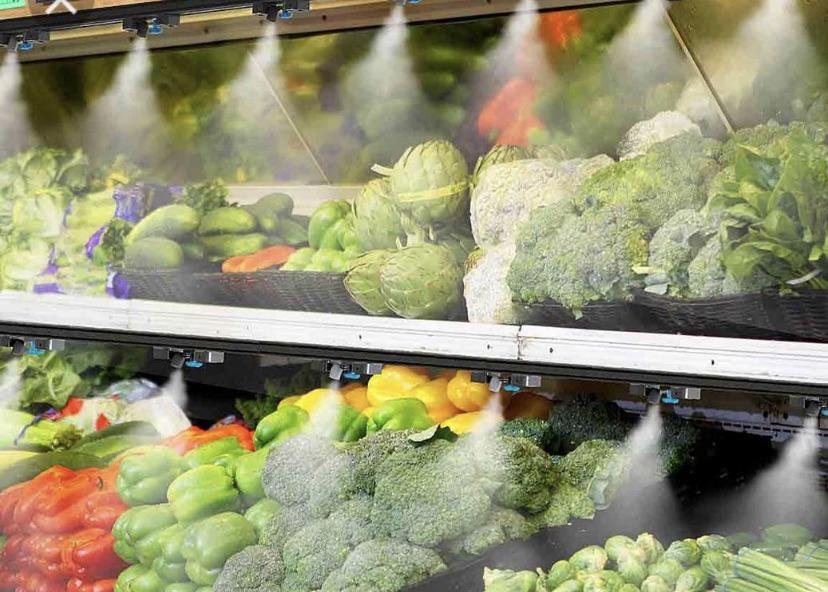
Grocery stores are currently under investigation because the mist on organic produce isn't water -- it's actually full of chlorine and other pesticides to kill bacteria.
Even organic food has pesticides in many grocery stores.
I've grown enough food to live off of in my front & back yard for a few years, here's what to focus on if you're trying to do the same:
Veggies and greens requirements are the easiest to hit. Any leafy green (lettuce, kale, spinach, chard, collards, etc.) more or less grow the same way. You're only eating the leaf tissue of these plants and harvest them before they even get through their full life cycle (most people don't know that all of these plants produce flowers and seeds!)
A simple way to approach growing any leafy green:
Say the time to harvest is ~30 days and you want ~4 heads of lettuce per week.
Start 4 heads of lettuce on Week 1, 4 on Week 2, 4 on Week 3, and 4 on Week 4
By Week 4, the Week 1 batch is ready to harvest. Keep starting 4 lettuce every week. After 4-5 weeks you'll have a repetitive cycle. This is called succession sowing and is great for crops that: 1. You want to consume often but 2. Don't need a TON of and 3. Don't store well.
For other veggies, there are two basic seasons to consider: warm and cool."
Stuff like tomatoes, peppers, eggplants, okra, and squashes like warm temperatures and thus are warm season crops. Start them a month or two before your spring season kicks off (aka the first day of the year where temps aren't reliably freezing) and get them in the ground so they can enjoy spring through summer.
Stuff like broccoli, cabbage, brussels sprouts, beets, radishes, etc. like cooler temps are thus are cool season crops. Start them in late winter to enjoy a spring harvest, or late summer to enjoy a fall / early winter harvest.
Fruit is harder to fully self-supply. I have 25 fruit trees on my property, so I have achieved this, but most don't have the space, time, or knowledge to cultivate them appropriately in an urban home
The BEST fruit of all time to grow is the strawberry. They grow in clumps, self-replicate via runners, and don't require crazy soil or growing conditions. You want to pick June-bearing varieties if you want the HUGE strawberries and have the harvests clustered in June, or ever-bearing strawberries if you want smaller berries with harvests spread out across the late spring -> summer.
For growing CALORIES, there are only a handful of crops that are easily grown at home that satisfy this job: potatoes, sweet potatoes, and beans.
Of these, the potato is the easiest - it's considered a "pioneer crop", AKA it doesn't need much in the way of soil or water to grow successfully. I have grown hundreds / thousands of pounds in a single season.
Potatoes aren't planted the normal way (via a seed). You use a small "seed potato" instead, which sprouts out of the eyes and replicates itself via underground stems called "stolons". Plant ~6" deep, water once you see sprouts, and harvest once the leaves have fully died back. You should see ~10x the yield in weight at least from each seed potato you planted.
Nutritionally, FAT is the hardest thing to grow at home. The best crop would be avocados, but that's difficult to cultivate EVEN IF you're in the right climate, so I recommend getting a lot of your fats from your animal consumption, eggs, etc.
This is the most concise way I could break this down in 10 minutes, if there is interest on Twitter for more of this type of stuff happy to write more.
1600s Europe: Meat is restricted. Hunting laws prevent commoners from taking game. Land ownership concentrated in nobility. Access to meat is determined by class.
Working-class Europeans eat bread, porridge, occasional salted fish, minimal meat.
Then they hear about America: Unlimited game. No hunting restrictions. Forests full of deer. Coastlines thick with fish. Wild turkey, passenger pigeons in millions, bison herds.
The promise isn't religious freedom. It's protein freedom.
European promotional materials advertising American colonies: "Game so abundant you can shoot it from your doorstep. Fish so plentiful you can catch them by hand. Meat available to the common man."
This isn't exaggeration for effect. This is the primary draw. In Europe, if you weren't nobility, meat was scarce and expensive.
In America, anyone could hunt. There were no royal forests. No poaching laws. No class restrictions.
The American frontier: Where poor European peasants could finally eat like rich European lords.
Settlers' journals document this repeatedly: Amazement at meat abundance. Writing home about eating meat daily. Something impossible in Europe.
Benjamin Franklin writes about this: Americans are taller and healthier than Europeans. He attributes it directly to meat availability. The American diet includes meat at levels European commoners never experienced.
The height difference is measurable. American-born colonists average 2-3 inches taller than European-born immigrants. Same genetic stock. Different nutrition.
The American experiment in democracy coincides with the American experiment in democratised meat access.
For the first time in millennia, meat isn't restricted by class. Anyone can hunt. Anyone can eat.
The European model: Meat for the few, grain for the many, restrictions enforced by law and economics.
The American model: Meat for everyone, abundance through available game, no legal restrictions.
The great migration to America was partially a meat migration. Europeans fleeing protein scarcity for protein abundance.
Your ancestors didn't just come to America for freedom. They came to finally eat properly.
Dewormers don’t fit well in a permaculture or regenerative system. They will kill biology in the soil
If you rotate frequently, worms shouldn’t be an issue but if you bring new animals onto the farm you may have to deal with them
Here is how I deal with worms without medication
The average American will eat 30 to 40 teaspoons of this stuff on Thanksgiving day. The Pilgrims ate zero at the first Thanksgiving.
How much will you have?
Source: Dr. Berg (IG)
If your mystical visions of the Trinity don't include angels shredding on the fiddle, you need to reconnect your spirituality back to its medieval and Gaelic roots. Charlie Daniels speaks about this.