@BirthGauge I’m creating a table comparing the TFR1 regions of Kazakhstan with comparable regions in other countries. Can I use the TFR1 data from your table?
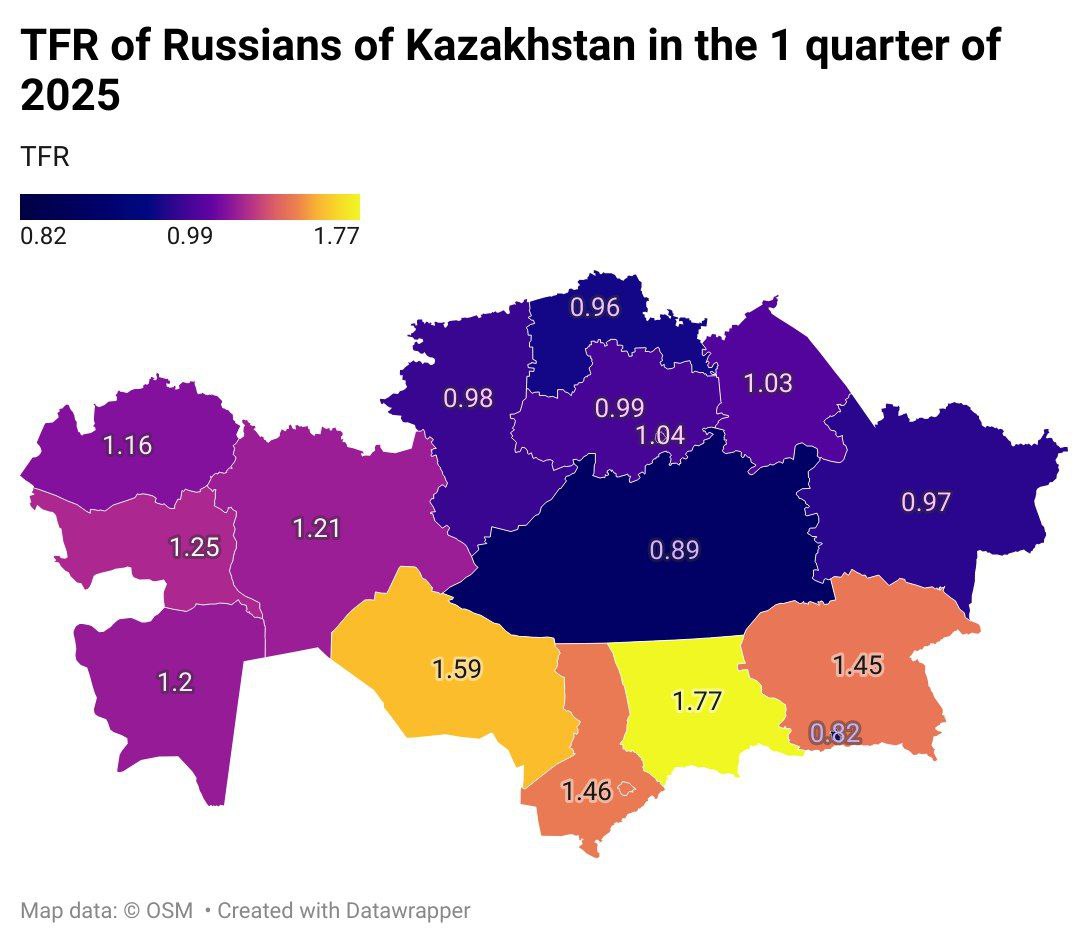
In the first quarter of 2025, the birth rate of Russians in Kazakhstan fell below 0.99 children per woman for the first time in history. Without taking into account interethnic births, the birth rate was 0.94. In the largest city of Kazakhstan, Almaty, the birth rate fell to 0.82
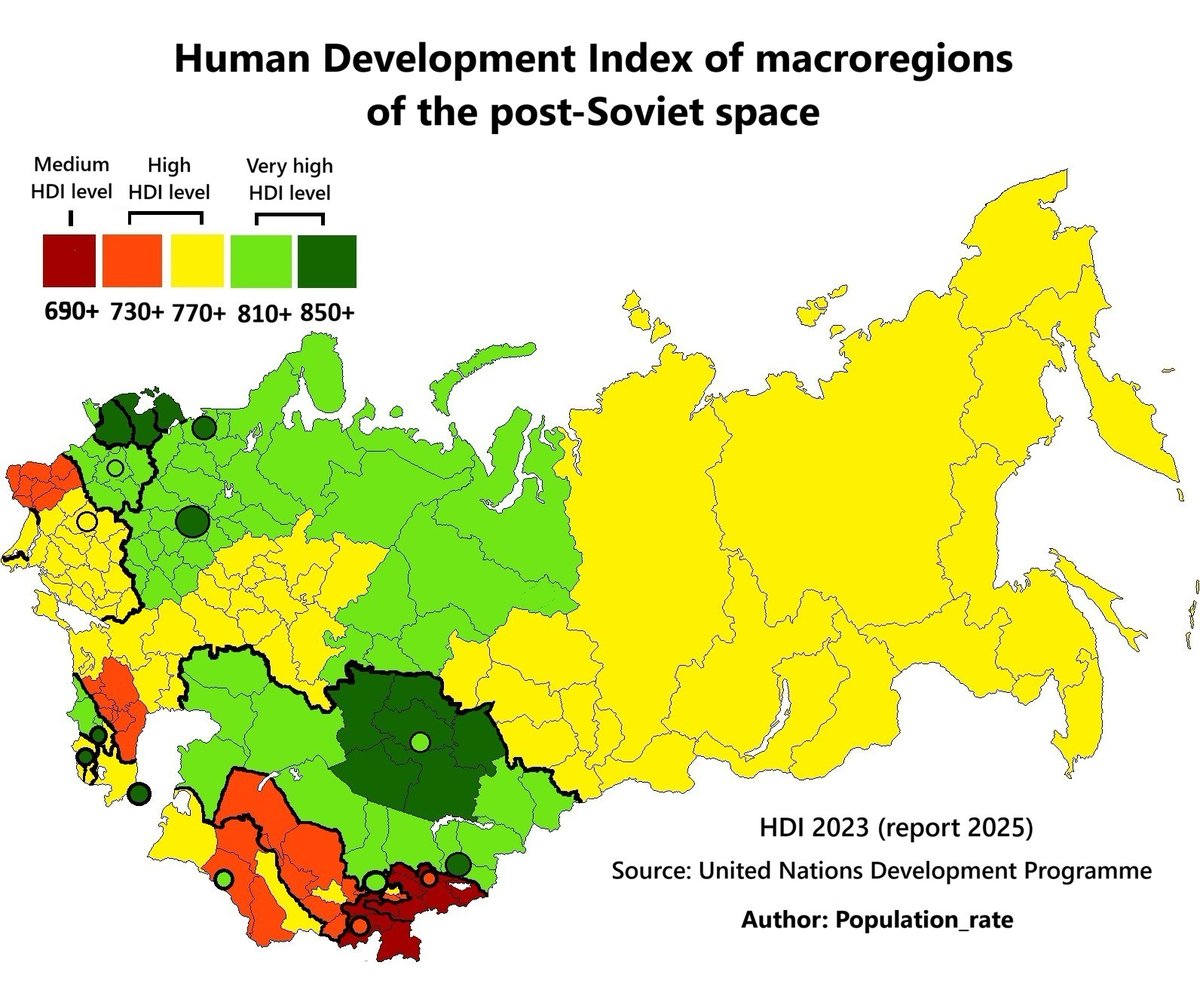
3. The gap between HDI categories exceeds 150–160 points. HDI is directly influenced by levels of urbanization, education, healthcare, and income per capita.
2. The gap between HDI categories exceeds 150–160 points. HDI is directly influenced by levels of urbanization, education, healthcare, and income per capita.
@Divideetimpera5@osvetakosmeta@masagget in several regions of Kazakhstan, the mix seems to have mixed the sample, resulting in a mix TFR of 0.5 in the megacities of Kazakhstan, where 20% of the population lives, which is 4 times lower than the actual TFR. This made the TFR slightly lower than the official TFR.
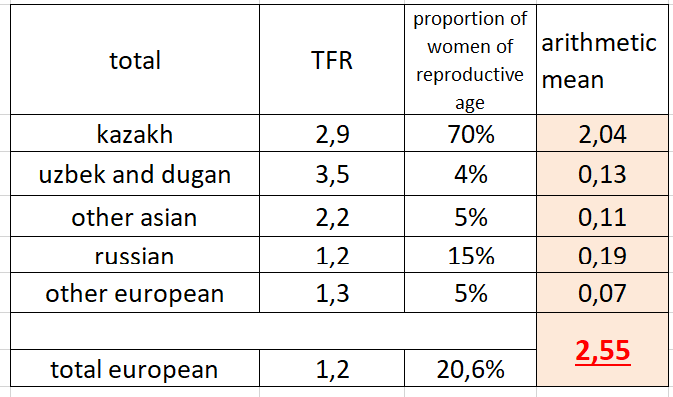
@osvetakosmeta@masagget in the TFR layout, the proportion of women of reproductive age is the most important factor. Kazakh women make up only 70% of the total number of women, while Europeans account for 20%.
Since 2015, fertility patterns have changed significantly in many countries, leading to a kind of childlessness revolution (at least in relative generations). Kazakhstan has been particularly involved in the decline in the TMR.
@mi233695 hi. could you write to me personally and I would like to ask if you have data on births in Xinjiang and Shaanxi provinces over the past years?