Head of Institutional Solutions, Digital Assets @protofire. Tokenization, RWAs, stablecoins. Ex-Deutsche Börse. Writing on what gets bank pilots to production.
So, 2.9 million bank customers got locked out of their money. President tried to quit but Congress said NO.
This is Paraguay. Its biggest digital bank, Ueno, ran out of capital, and the central bank took it over this week.
Then it came out that the head of the central bank used to run Ueno. He resigned. The president handed in his resignation too, but Congress wants to put him on trial instead.
Ueno had a licence and a regulator. The regulator was a weak link. The deposit guarantee is still works however: most customers will get their money back, but slowly.
Question for risk people: where would you keep a year of your salary? In a licensed bank or a stablecoin that publishes its reserves?
The @bankofengland wants to cap each big pound stablecoin at £40 billion. The whole market today is under £50 million.
So the limit is more than 800 times the whole market. It's like a speed limit of 800 km/h on a road nobody drives yet. The Bank's worry is about the future: if people moved their savings into stablecoins, banks would have less money to lend.
Dollar coins face no such cap from the Bank, and @circle's USDC alone is worth about £53 billion.
That's my concern with this rule. It was written to protect British bank lending, yet it could make it easier for British payments to drift into dollars before a big pound coin even exists.
Final rules come by the end of 2026, so there's still time to look at the dollar side.
Question for UK payments heads: if a client asked to settle in a stablecoin tomorrow, would it be pounds or dollars?
Wrote this one after yet another call where a bank told me their pilot "worked fine" back in 2025. It's still running.
Honestly the tech was never the hard part. The harder question is who owns the product once the pilot ends, and in a lot of cases the answer is nobody. Or nobody who wants to.
Curious if others see the same thing.
What keeps a bank blockchain pilot running forever?
Sometimes it’s missing evidence. Sometimes nobody wants to own the product.
Protofire’s Rado Patus (@Potven) on why that distinction matters:
https://t.co/jHzPMbSXWQ
🎁 24H TREZOR GIVEAWAY 🇨🇿
Free Trezor for the @solana CZE fam! Just pay shipping.
How to enter:
- Follow @Trezor & @SolanaCZE
- Like + RT
- Comment why you want it & why it's the best
⭐ Bonus: Creative QRTs!
Huge thanks to Trezor & @XJustmichael for making this happen! 💜
@GoldmanSachs runs a $104 billion fund. The share class made for blockchains holds $10,456, about the price of a used car.
That's about one dollar in every ten million. Goldman's prospectus puts the minimum first purchase in that class at generally $10 million.
A blockchain share class doesn't find buyers by itself. The platforms that sell funds have to be able to hold it.
We build these share classes on existing funds, so the distribution you already have carries over.
Here's how @BlackRock set up twelve of them:
https://t.co/Bmh5ztqPIU
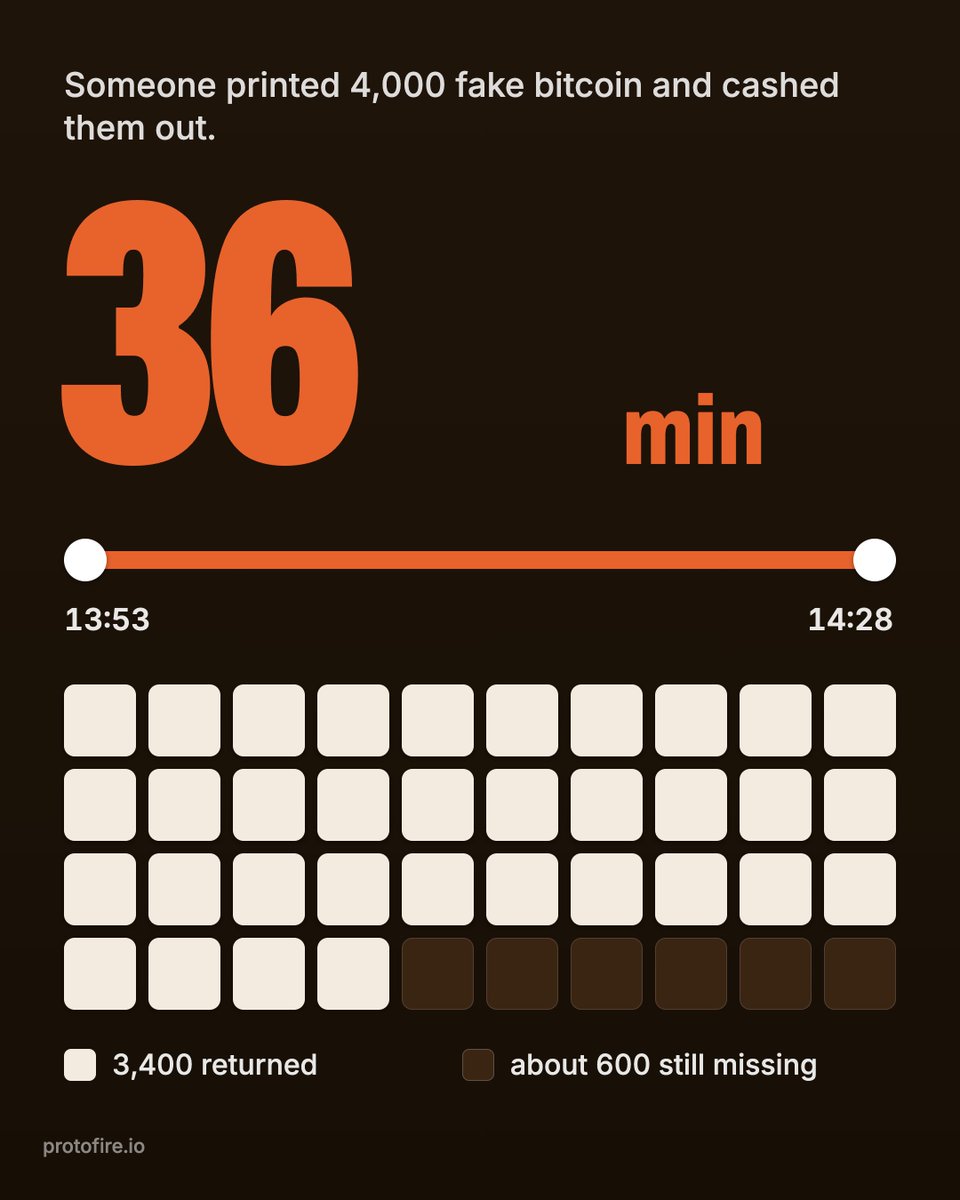
Someone printed 4,000 fake bitcoin and cashed them out. The whole point of bitcoin is that nobody can print more.
Liquid is a network that runs alongside bitcoin. On 6 September a bug there let someone mint 4,000 bitcoin tokens backed by nothing.
They swapped them for about $320 million of real bitcoin in about 36 minutes.
About 600 bitcoin never came back.
If you issue a coin, your code has to refuse to mint what your reserve can't cover.
We build that check for issuers. Here's how the check works: https://t.co/IZIPd26Nxa
Protofire turns 10 this year. 10 years, built together.
A look back at some of the partners, protocols, and ecosystems we’ve helped build with since 2016.
Grateful to everyone who has trusted us to build meaningful infrastructure.
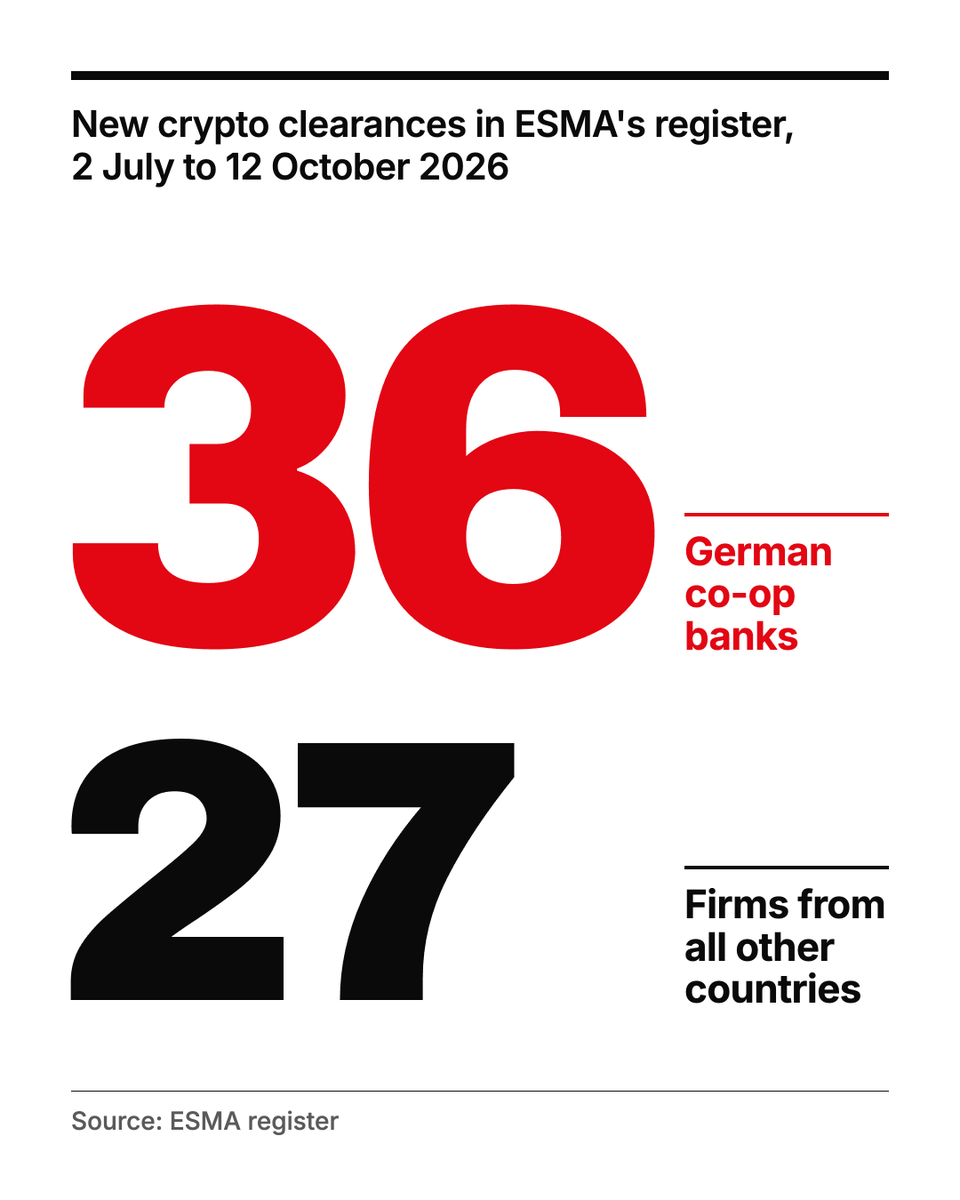
Europe's crypto race is being won by small local banks you have never heard of.
ESMA's own register: of the firms cleared for crypto with start dates from 2 July to 12 October, 36 are German co-op banks. Every other country together adds 27.
Each of them is cleared only to buy and sell crypto for clients, none for custody. Under the setup DZ BANK runs for its more than 700 co-op banks, the coins sit with one custodian, Boerse Stuttgart Digital Custody.
My blueprint for networks like this builds the trading once and switches it on for each bank, and it says where the delivery risk sits: https://t.co/tXWcTB7EJR
If your network makes each member bank build its own crypto setup, you are paying for the same project over and over.
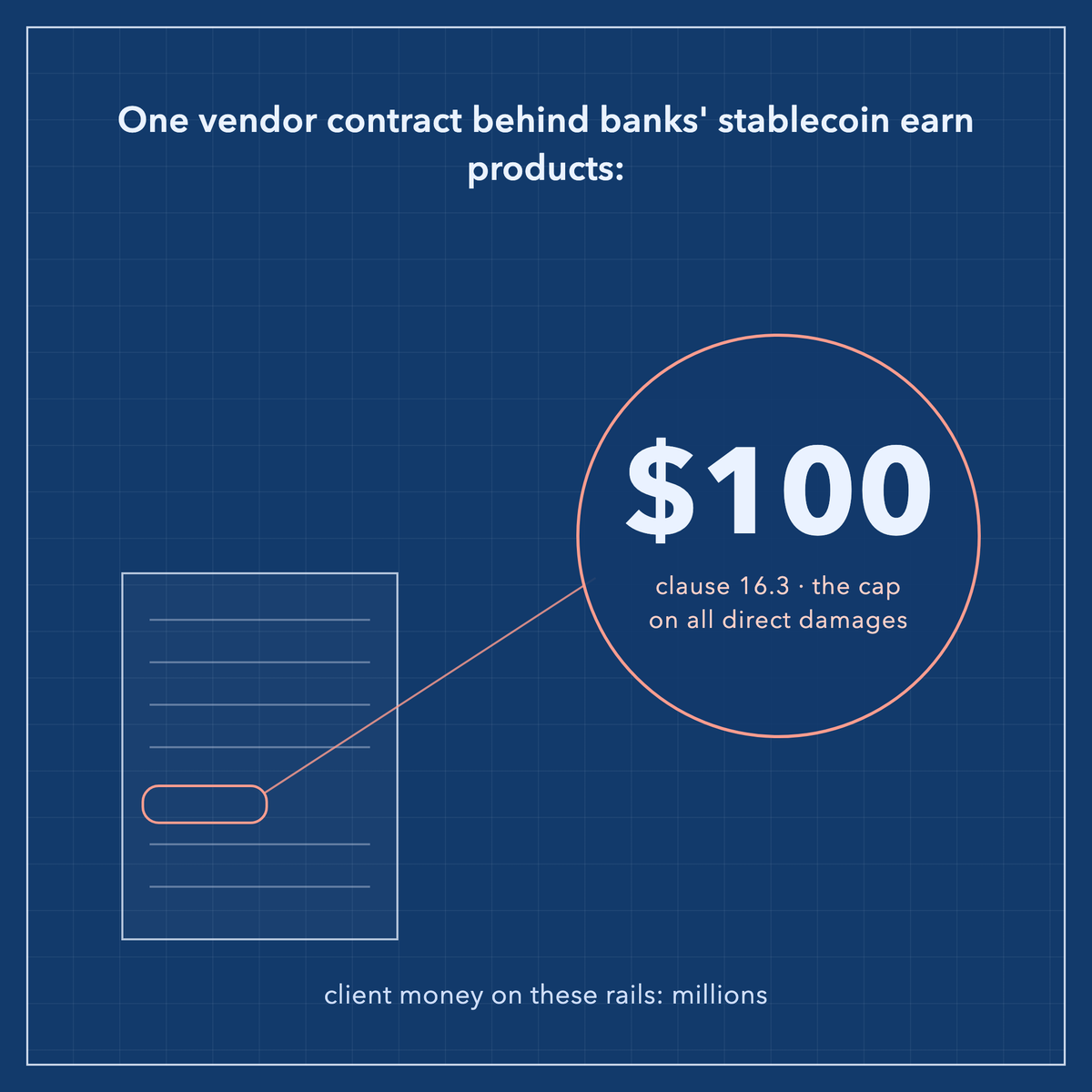
One hundred dollars. That is https://t.co/yuLiGvGoWE's liability cap for all direct damages, under clause 16.3 of its published terms.
I found it while researching the stablecoin earn blueprint. I read every vendor contract behind it, line by line.
https://t.co/yuLiGvGoWE is one of the API vendors European banks plug into for these earn products. Those rails move client money in the millions.
A hundred dollars does not cover that gap.
When did you last read the liability clause in your own vendor contracts?
P.S. The blueprint, with the full vendor list, is here: https://t.co/xAZ3dcBiER
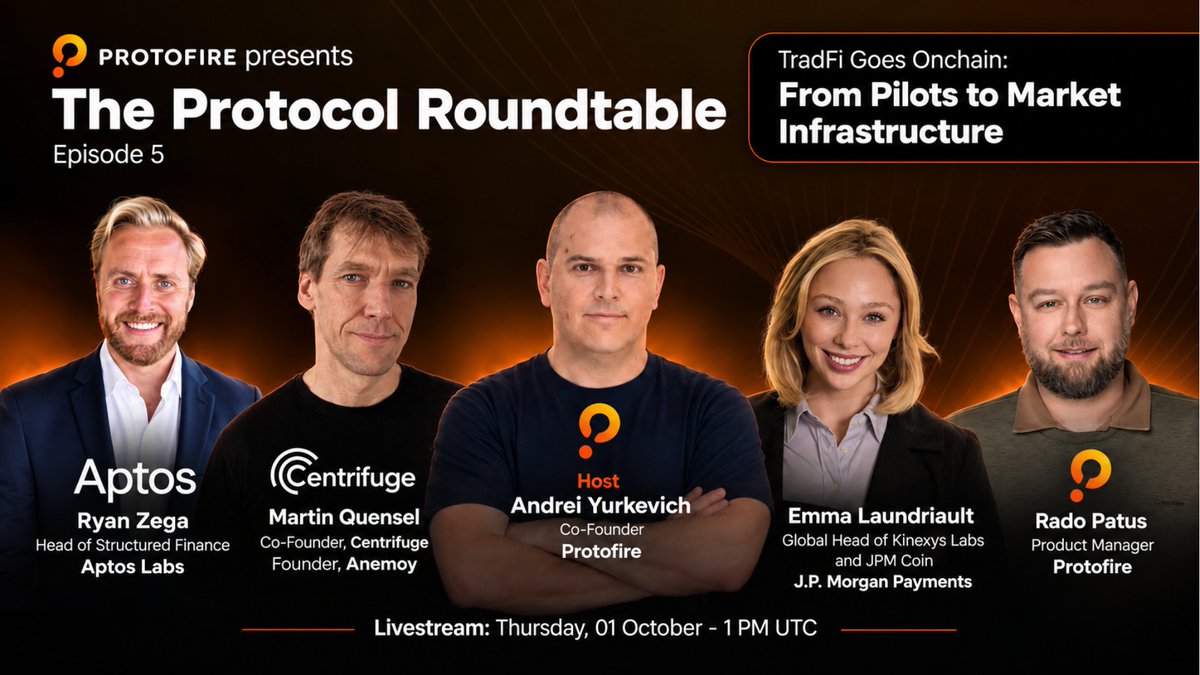
What turns an onchain finance pilot into dependable market infrastructure?
Episode 5 of The Protocol Roundtable brings together:
- Emma Laundriault, Global Head of Kinexys Labs and JPM Coin, J.P. Morgan Payments
- Martin Quensel, Co-Founder of @centrifuge and Founder of @anemoycapital
- Ryan Zega, Head of Structured Finance at @AptosLabs
- Rado Patus, Lead Product Manager at @protofire
Hosted by Andrei Yurkevich, Co-Founder of Protofire.
📅 1 Oct
⏰ 1 PM UTC
📍 Live on X, LinkedIn and YouTube
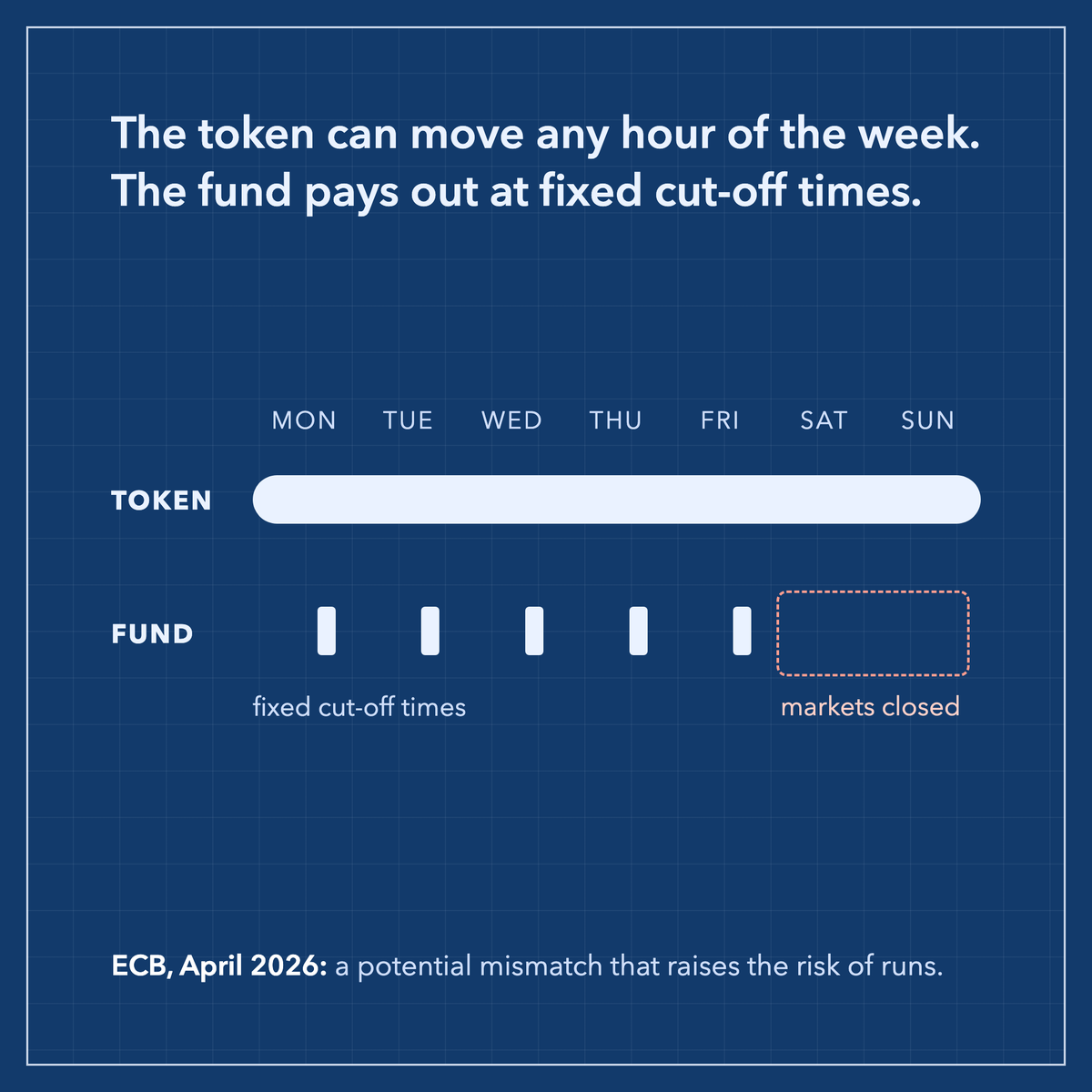
Your money market fund's tokens can change hands at 2 a.m. on a Sunday. The fund behind them still pays out only at fixed cut-off times.
The ECB flagged this gap in April, in its Macroprudential Bulletin. It calls it a potential mismatch that raises the risk of runs. A disruption while markets are closed could force fire sales once they reopen.
The blueprint I wrote for these funds ties redemption to the fund's own dealing cycle: https://t.co/YqlFDxZLQc
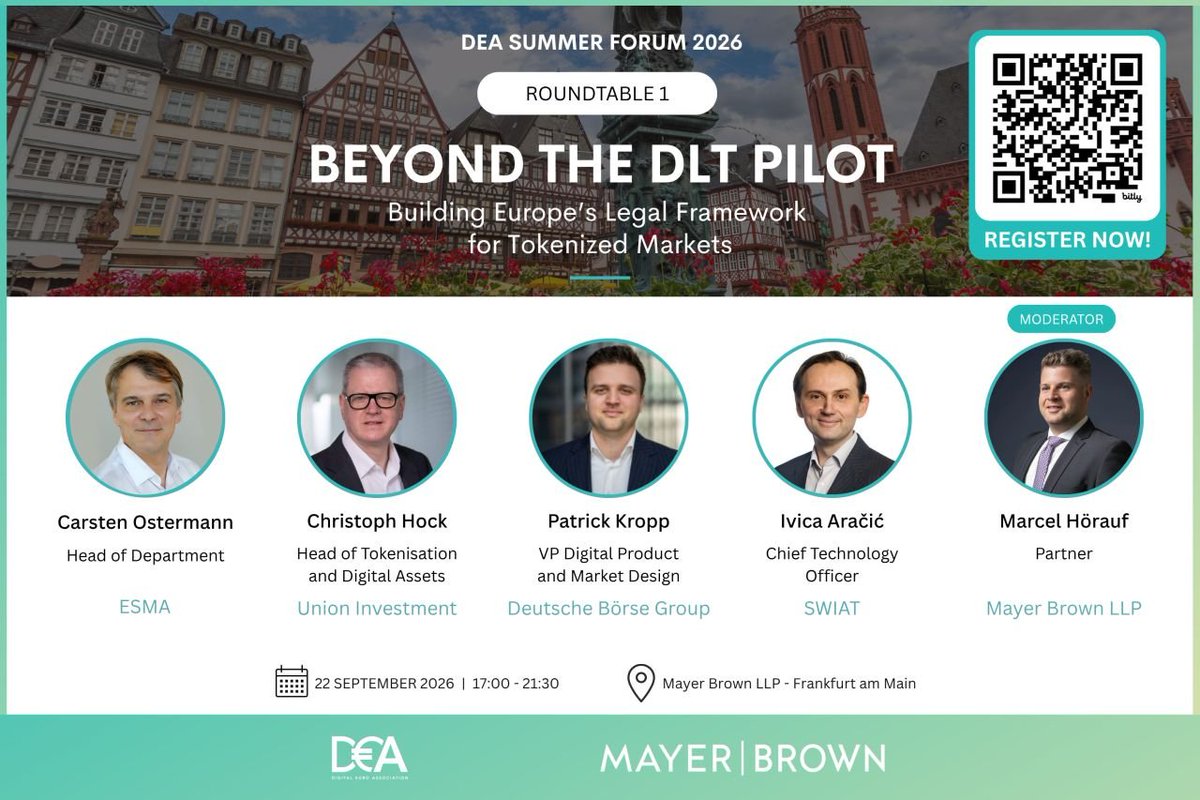
At the DEA Summer Forum in Frankfurt today.
The DLT Pilot Regime did what a sandbox is meant to do: it made experimentation legal and gave the market somewhere to test. The harder question is what comes after the pilot, and how Europe gets from isolated use cases to tokenized capital markets that institutions can allocate to.
That shift is less about technology than about the pieces around it. A settlement asset. Secondary market liquidity. Infrastructure that connects rather than duplicates.
Looking forward to the discussion.
Thanks to Digital Euro Association and Mayer Brown for hosting.
The emergency stop you are counting on might already be dead.
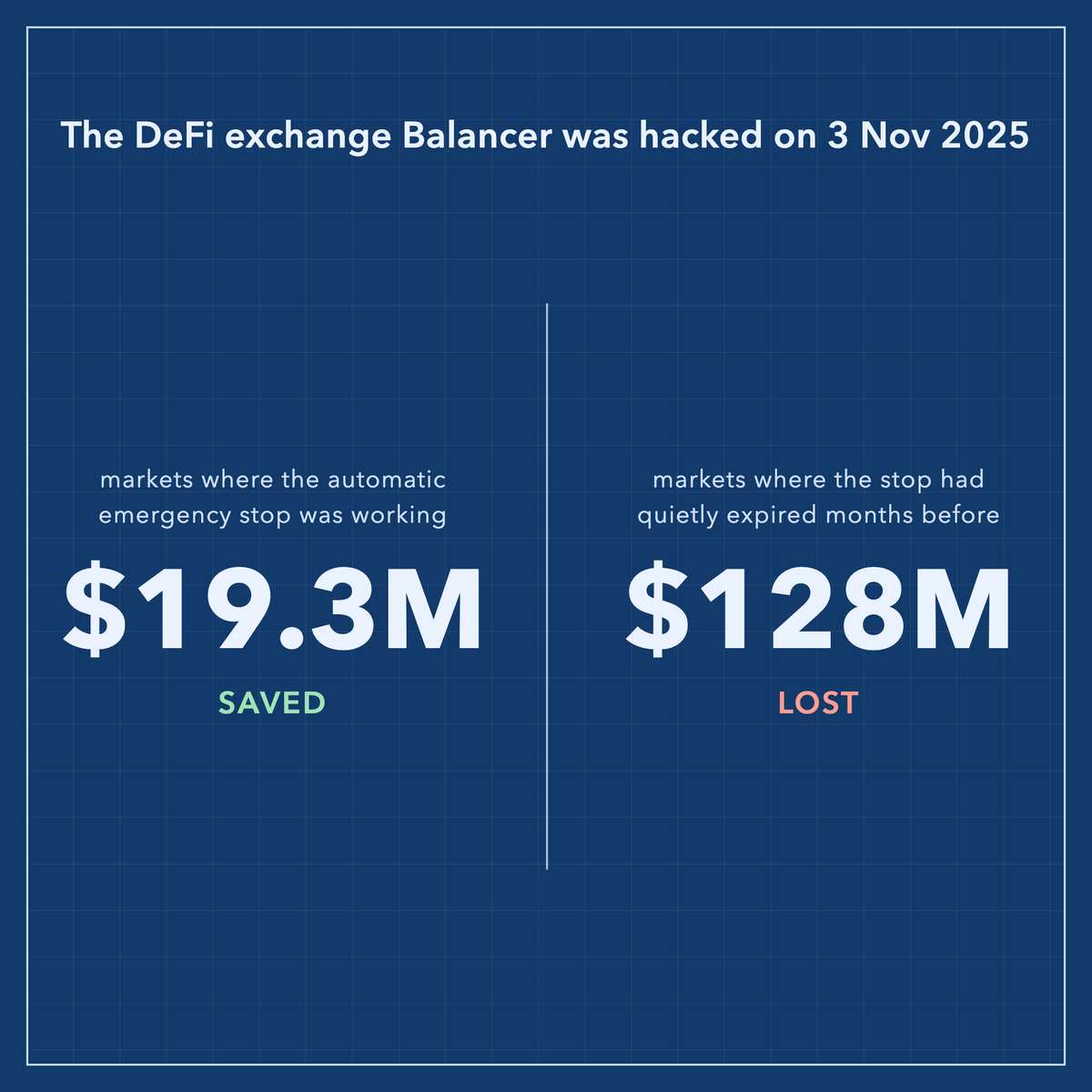
On 3 November 2025 one attack hit the DeFi exchange Balancer. The older markets lost more than $128 million. The newer ones lost almost nothing.
The newer markets had an automatic emergency stop. It fired within minutes, across nine networks. About $19.3 million stayed safe.
The older markets had the same kind of stop. Its permission had quietly expired months earlier. Nobody had checked.
Go test your own emergency stop today.
https://t.co/rwVXauqomp
TradFi is moving onchain. But who’s actually building the systems it will run on?
Protocol Roundtable, Episode 4: TradFi Goes Onchain
With leaders from @Circle, @0xPolygon, @ADI_Foundation, and @Protofire.
Friday, Sept 18 · 1 PM UTC
gm!
Solana DeFi takes over Decada 🇨🇿
Join us in Prague with Vik (@DeusNero) from Kamino, joining remotely to talk @solana DeFi and what’s next.
📅 Sept 9 · 18:00–20:00
📍 Café Decada
🍺 Free drinks + open Q&A
Bring your questions 👇
https://t.co/eynNjA1AKn
I spent about 6 months on creating an implementation of @ISDA's SIMM for DeFi.
I hope this represents a step forwards in providing an open-source guide to removing the risks around arbitrary leverage in DeFi.
As a lender, you can use an AI model to audit collateral LTV limits for safety.
This gives you minimum safety bounds, derived from cross-industry quants and experts to rely on.
For risk managers, structurers and lending protocols this gives you a benchmark on how to set parameters with a full methodology.
Now caveats, I'm really not happy with putting this out there today as I feel like it's not finished and I keep finding errors here and there. But it's at the point, where my errors seem to just be grammatical or bad phrasing, or some random slop that snuck in. Whilst, I remain unable to say this is a final version I think it's well past the 80/20 principle and needs to just get out there.
Contributors ...
1) As mentioned, this isn't finished (arg). There are a number of sloppy parts in the back components in particular.
2) We need to extend this to a new crypto risk class
- btc, eth, sol, avax etc.
- bridges (wBTC, BTC.b etc)
- wrappers / staking (wstETH, weETH, wETH etc.)
3) I'll be working on some edits over the next few weeks into FX, Equities, Comm etc as they're a LOT easier than tokenised funds.
Link in comments ...