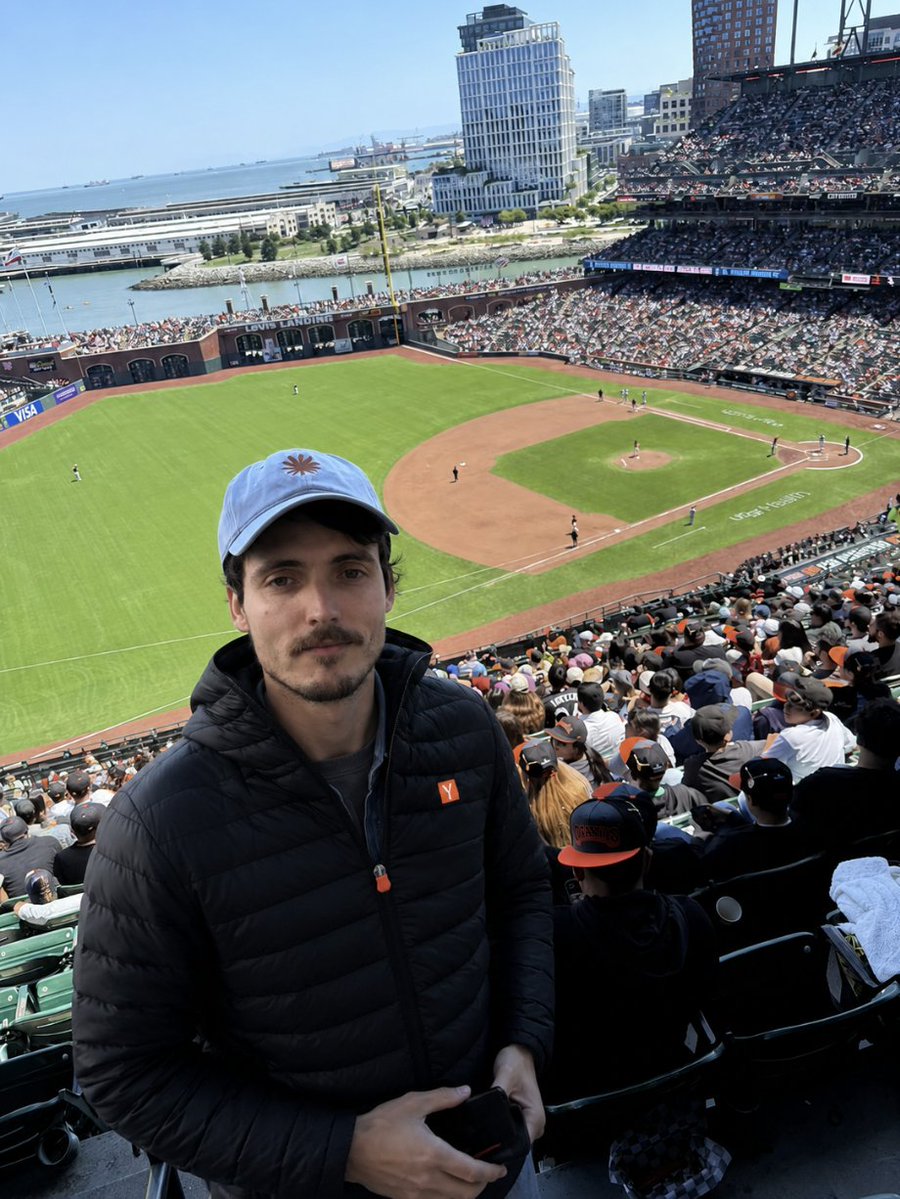
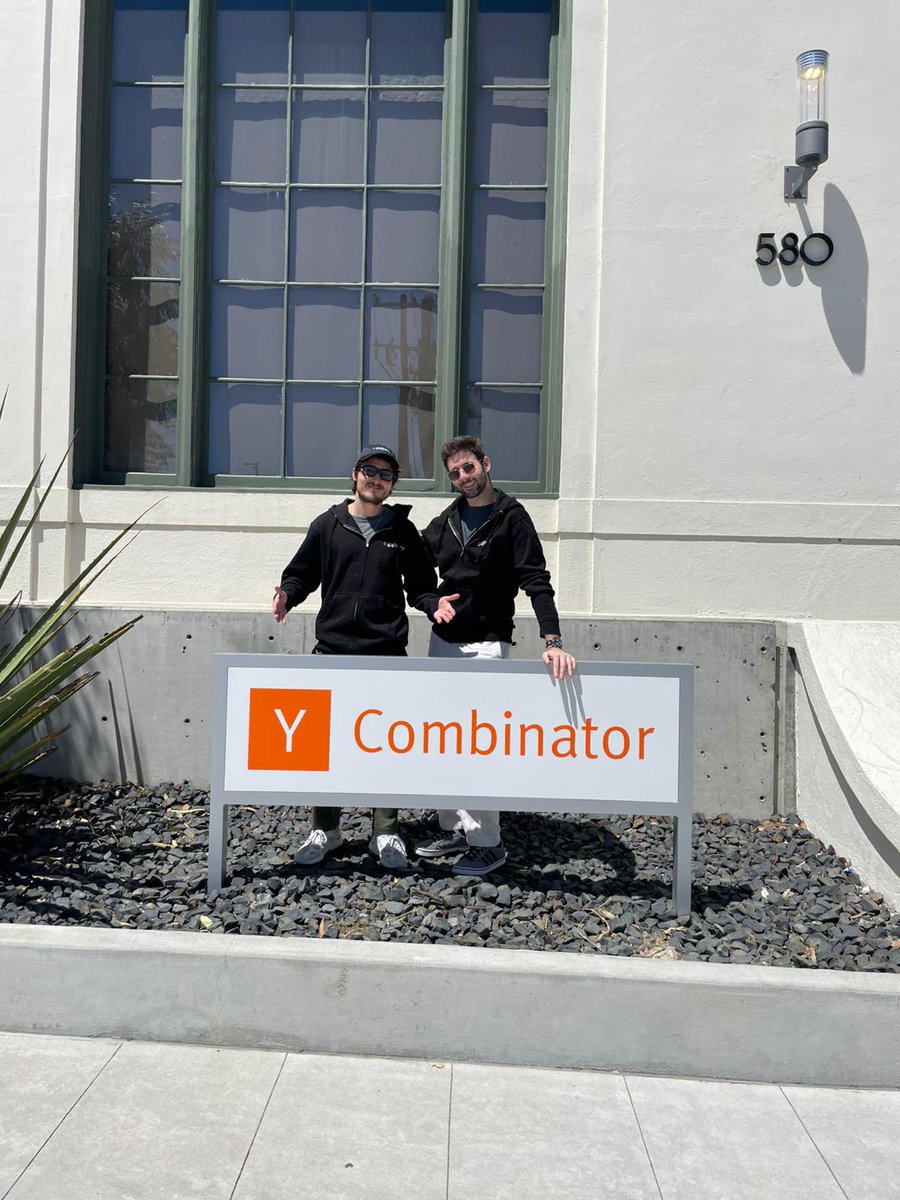
I'm 30. I built an AI startup called GojiberryAI to $3.5M ARR. Got accepted into YC.
If I had to start from 0, here's exactly what I'd do:
1. Sell it before I build it.
No code. Just a simple slide deck (mine was 6 ugly slides) explaining the problem, the solution, the outcome, and the price. I made my first $10k that way, before writing a single line.
2. Pick a painfully specific customer.
Not "B2B SaaS." Something like "founders at 20-person SaaS companies about to hire their first SDR." So specific that the right person reads it and thinks "that's me."
3. Start outbound on day one, but only to people showing intent.
Not scraped lists. People engaging with competitors, changing roles, raising money, or publicly posting about the exact problem I solve. That's the gap between a 1-2% reply rate and 25-40%.
4. Lead with value, never a calendar link.
Send a blueprint, not "got 15 minutes?" Let the resource do the selling, and the trial becomes the obvious next step instead of a pitch.
5. Pick ONE channel and go deep.
For us it was outbound first, then Reddit (10M+ organic views), then LinkedIn lead magnets. I wouldn't touch a second channel until the first one was clearly working.
6. Talk to customers every single day.
The product doesn't matter until you understand the problem better than they do. Spend 90% of every early call listening, not demoing.
7. Only build once people are actually paying.
Then keep it dead simple and price it to sell itself. We landed on $99/mo with a free trial, so the funnel runs without me dragging anyone onto a call.
8. Do this relentlessly for about 12 months.
That’s roughly how long $0 to $2.5M took us.
Bootstrapped.
No outside funding.
Most founders don’t lose because they can’t build.
They lose because they build too early, sell too late, and quit the channel before it compounds.
.@ScottWu46 says because of AI future generations won't even recognize today's jobs as "work":
”If you think about our ancestors from hundreds or thousands of years ago, imagine them looking at us and what we do.”
“You're pushing buttons. You're sitting in a room and talking with other people, and you call that a meeting?”
“ What do you mean that's work? I'm in the fields. I'm doing this every day. I’m farming, I'm making all of our clothes by hand.”
“ I think what we’ll have going forward is going to look that different from what we have today.”
Today, with 97% approval, Dell shareholders voted to bring our legal home to Texas.
This is home and where we’ve always belonged. Texas gave us the talent, the universities, and the environment to build something that lasts.
Proud to make it official. Let’s go. 🤠
The best predictor of success for tech companies, at every stage from during the YC batch to public company with billions in revenue, is the rate of shipping new stuff.
Elon just created 4,400 millionaires in a single day.
400 of them are now worth over $100 million.
These aren't VCs. They're SpaceX employees, and the list includes welders, technicians, and cafeteria staff, because for two decades the company paid every level of the workforce in stock instead of higher salaries.
Juan Hernandez immigrated from Mexico and took a $28 an hour contractor welding job in 2015. He says he didn't even know what SpaceX was. The company gave him a $10,000 equity grant and let him buy more shares through payroll deductions. That stake is now worth $880,000.
Trevor Hise's parents wanted him to take a stable job at General Electric. He picked SpaceX instead, stayed 12 years, and accumulated over 100,000 shares. At the $135 listing price that's $13.5 million. He's 37 and semiretired. His words: "The magnitude of this has been ridiculous."
The most telling detail came before the listing. Over 100 employees quietly banded together and negotiated a group wealth management deal covering up to $5 billion, because none of them had ever needed a wealth manager before.
Software IPOs have minted millionaires for 30 years. This is the first one where the money went to the factory floor.
Venture capital in Canada is very simple.
We’ll back American companies swinging for the fences, watch them turn into monsters, then come home and treat a Canadian founder raising a normal seed round like they asked to buy NASA.
Best we can do is $10K, 11 meetings, and a full exit strategy for a product that launched Tuesday.
everyone's sleeping on how absurdly good 2026 is to start a company (even compared to 2024)
one person can now:
- ship full apps without engineers (cursor, replit)
- design without being a designer (v0, Claude Design)
- turn one video into 10 clips (opus, descript)
- push those clips to millions (X, Linkedin, TikTok)
- replace a support team (chatbase, intercom)
- literally watch exactly what their users do (Posthog)
- find + target perfect leads on autopilot (origami)
This is such a rare window. I just can’t imagine it being this easy ever again
Ecom is the #1 best business in the world in 2026.
And I'm not saying that because I built one to $260M.
I'm saying it because the math is undeniable:
1. No cap on revenue
— we went from $0 to $103M in annual revenue in under 5 years
2. No one physical location required
— we ran a global business from a laptop
3. No inventory risk if you structure it right
— subscription model means predictable demand
4. No VC required
— we raised $0 and kept virtually all the equity
5. Customers pay you before you fulfill
— unlike almost every other business model
6. Retention compounds
— every subscriber you keep is revenue you don't have to re-earn
7. Data ownership
— you know exactly who your customer is, what they buy, and when they churn
8. Exit multiples are extraordinary
— we sold for $260M on $103M revenue
I've been in mobile technology. Fitness. Cannabis. Children's health.
Nothing compounds like a well-structured ecom brand with a subscription model and strong unit economics.
The ceiling doesn't exist.
The only question is whether you pick the right category, build the right product, and have the patience to let it compound.
Most people quit before the compounding becomes visible.
Comment "X" if you want my full playbook of everything I learned while building my business and how you can too :)
**must be following + retweet to receive.
I got into YC S26 as a solo founder!
The last 15 months looked something like this:
> Started an API company from scratch
> Realized building infrastructure is insanely hard
> Grew slowly for months
> Then all at once
> Reached 210 paying customers
> Landed 10 unicorns + 70 VC-backed startups
> Started telling customers "not yet" because I couldn't afford to build everything they wanted
> Wait, I actually need funding
> Applied to YC
> Rejected
> Doubled revenue
> Applied again
Today I'm in.
To all my customers who trusted me when I was just some random dude from the internet, thank you.
There's a finding called the Michelangelo phenomenon: the right partner sculpts you toward the person you were already trying to become. Not who they want you to be, who you aspired to be. A good marriage isn't two finished people. It's two people drawing the ideal self out of each other.
(Drigotas, Rusbult, Wieselquist & Whitton, 1999, Journal of Personality and Social Psychology)
If you are running meta ads go read this article. You will get more value out of it than listening to 99% of the people on this platform. it's a short and simple but very well put together.
https://t.co/sBPEnzxVLm
This works really well btw, at the end of your query ask your LLM to "structure your response as HTML", then view the generated file in your browser. I've also had some success asking the LLM to present its output as slideshows, etc.
More generally, imo audio is the human-preferred input to AIs but vision (images/animations/video) is the preferred output from them. Around a ~third of our brains are a massively parallel processor dedicated to vision, it is the 10-lane superhighway of information into brain. As AI improves, I think we'll see a progression that takes advantage:
1) raw text (hard/effortful to read)
2) markdown (bold, italic, headings, tables, a bit easier on the eyes) <-- current default
3) HTML (still procedural with underlying code, but a lot more flexibility on the graphics, layout, even interactivity) <-- early but forming new good default
...4,5,6,...
n) interactive neural videos/simulations
Imo the extrapolation (though the technology doesn't exist just yet) ends in some kind of interactive videos generated directly by a diffusion neural net. Many open questions as to how exact/procedural "Software 1.0" artifacts (e.g. interactive simulations) may be woven together with neural artifacts (diffusion grids), but generally something in the direction of the recently viral https://t.co/z21CP5iQfu
There are also improvements necessary and pending at the input. Audio nor text nor video alone are not enough, e.g. I feel a need to point/gesture to things on the screen, similar to all the things you would do with a person physically next to you and your computer screen.
TLDR The input/output mind meld between humans and AIs is ongoing and there is a lot of work to do and significant progress to be made, way before jumping all the way into neuralink-esque BCIs and all that. For what's worth exploring at the current stage, hot tip try ask for HTML.
Most SaaS founders fail because they scale acquisition too late.
We did the opposite.
We focused on distribution before product perfection.
That’s how we went from $0 to 2,000+ paying customers in 9 months with 0 outside funding.
Here’s the exact growth system we used at GojiberryAI:
STEP 1: Validate demand before building
Most founders spend months building features nobody asked for.
Instead:
we started selling before the product even existed.
We created a simple 7-slide deck:
• the problem
• the workflow
• the expected result
Then we started outbound immediately.
Using GojiberryAI + manual sourcing, we targeted high intent leads through LinkedIn and cold email.
Weekly targets:
• 180 LinkedIn invites
• 1,000 cold emails
• 4-8 demos per day
That was enough to validate demand.
The signal we looked for was simple:
people asking:
“How much does it cost?”
Before the SaaS existed, we were manually selling curated high intent lead lists.
Once enough companies bought repeatedly, we automated the workflow and turned it into software.
The goal at this stage is not scale.
It’s getting your first 100 customers as fast as possible.
STEP 2: Turn customer results into growth
Once customers started getting results, distribution became easier.
Our biggest unlock:
Reddit.
Not ads.
Not SEO.
Not partnerships.
Just giving massive value publicly.
What worked:
• commenting on viral posts
• sharing tactical breakdowns
• posting real customer wins
• explaining exactly how we generated pipeline
No corporate branding.
No polished marketing language.
Just actionable content.
At the same time:
we kept outbound running aggressively every single day.
First hires:
3 Customer Success Managers.
Retention and customer wins became growth loops.
STEP 3: Build an inbound engine
Once we crossed ~$25k MRR, we doubled down on LinkedIn.
Every person on the team:
• posted daily
• handled outbound daily
We only published lead magnet style content:
• frameworks
• templates
• playbooks
• case studies
• experiments
And every post had the same CTA:
“Comment X and I’ll send it.”
That single mechanic generated thousands of inbound leads.
Every week, each team member created:
• 1 new lead magnet
• multiple distribution angles from it
We also added:
• free tools
• customer stories
• motion design videos
• better landing pages
New hire:
1 Product Manager.
STEP 4: Layer distribution channels
At this point, the system already worked.
Now the goal became:
add more attention sources.
We expanded into:
• X/Twitter
• LinkedIn influencers
• newsletter sponsorships
• partnerships
But we never stopped the channels that already worked:
• outbound
• Reddit
• LinkedIn content
Most founders abandon winning channels too early.
We scaled them harder instead.
STEP 5: Scale paid acquisition
Once the organic engine was stable, we added:
• Meta Ads
• Google Ads
• UGC creators
• B2B influencer campaigns
Then we redesigned the entire website around conversion.
At the same time:
we scaled hiring across:
• growth
• engineering
• sales
And massively increased outbound volume with GojiberryAI.
Our philosophy is simple:
More targeted attention
→ more conversations
→ more demos
→ more customers
Most startups die from lack of distribution, not lack of product.
Build distribution earlier than everyone else.
That changed everything for us.
If you want to try GojiberryAI with a 14-day free trial instead of 7 days:
Comment “GOJI” and I’ll send you access.