@aikisteve@elonmusk@SpaceX This is what etoro said: "eToro est pleinement conscient du fort intérêt des clients souhaitant obtenir une exposition à des sociétés comme SpaceX, et nous travaillons activement sur des solutions et opportunités potentielles afin de répondre à cette demande." Nothing concrete!
LAUNCH PAD SURVIVAL IS A FUNCTION OF ENERGY MANAGEMENT
To survive 33 Raptor engines, you have to master the physics of thermal energy. SpaceX Detonation Suppression System (DSS) uses 3,000 gallons of water.
The result? The majority often all of it is flash-vaporized instantly, absorbing massive thermal energy that would otherwise erode the pad.
SpaceX evolved from multi-pond designs to a compact, onsite lined sump pit in a closed-loop system. Residuals are pumped out and hauled offsite smaller footprint, zero discharge.
Managing thousands-of-degree exhaust with simple water, smart gutters, and clever engineering.
Because rapid reusability starts with pad durability.
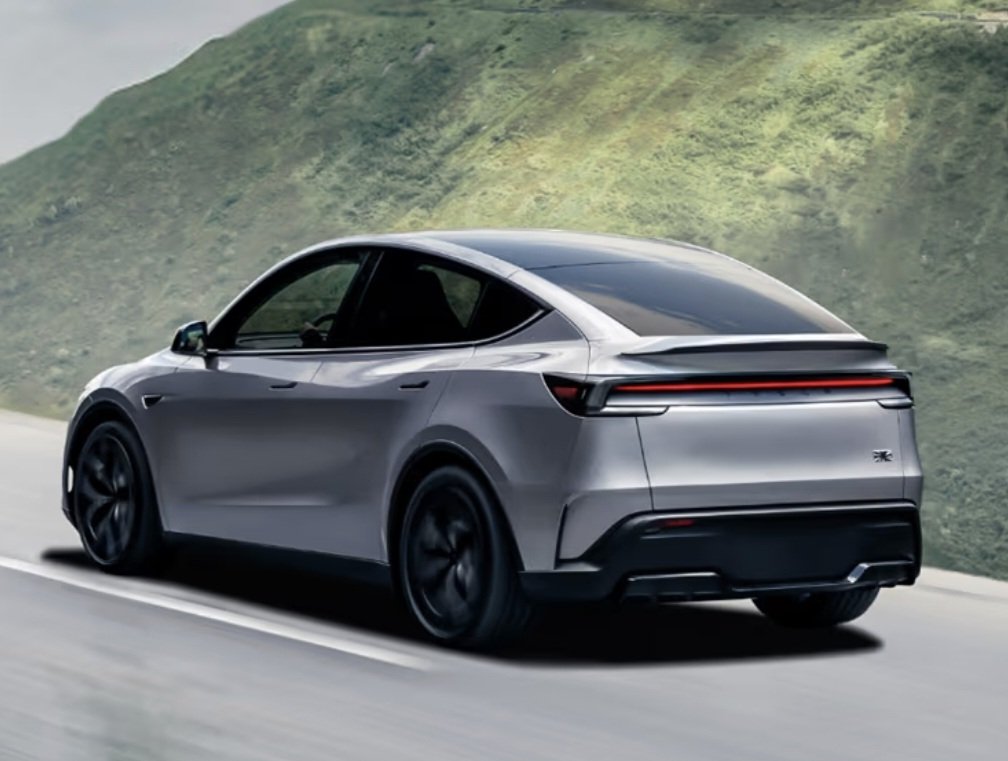
Here's the thing. If you've never driven a Tesla but you're repeating what someone else told you about electric cars, you're being misled.
People say they don't want an EV because they can fill up their gas car in 5 minutes and don't want to wait 3 hours to recharge on a road trip. That's a plain lie. You can stop at a Supercharger for 15 minutes, stretch, use the restroom, grab a snack, and get a big chunk of range back. Then you're right back on the road.
I've rented Teslas to people who had never tried an EV before. Every single one of them loved it and is now looking to buy their own.
Just like anything in life, you have to experience it for yourself to know if you like it or not.
Take a Tesla for a test drive. I promise you'll have the biggest smile on your face and want it to be your next car.
Have you driven one yet?
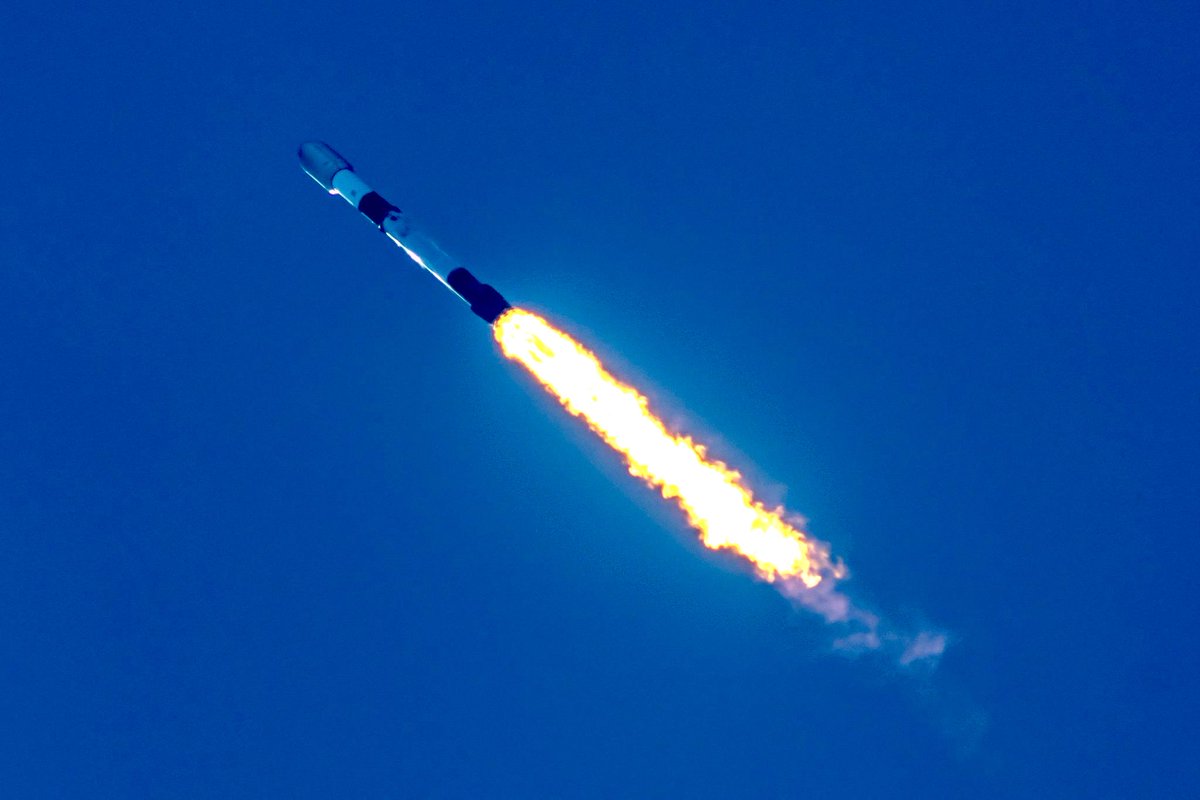
Yesterday SpaceX launched 29 more Starlink satellites from Florida.
Nobody cared. Routine. Another Tuesday.
Here is what actually happened.
Satellite number 10,074 entered an orbit where 300,000 autonomous collision-avoidance maneuvers were executed last year alone. Not by humans. By onboard machine learning that screens conjunction data from 30 million object-transit observations per day, computes probability in real time, and fires ion thrusters if risk exceeds one in a million. The industry standard is one in ten thousand. SpaceX set its threshold 1,000 times stricter and then automated the entire thing.
Three hundred thousand maneuvers. That is 820 per day. Forty per satellite per year. Every single one decided and executed by AI faster than a ground controller could open the alert email.
This is Tesla Full Self-Driving logic running in vacuum at 7.8 kilometers per second.
SpaceX did not stop there. In January they launched Stargaze, a space situational awareness network built on the star trackers already aboard every Starlink satellite. Thirty million observations daily, conjunction screening delivered in minutes instead of hours, and they gave the data away for free to every operator on Earth. They just made themselves the air traffic control system for low-Earth orbit and charged nothing because the real product is not the data. The real product is the standard.
Now connect this to last week.
Terafab breaks ground in Austin. One terawatt per year of AI compute. Eighty percent allocated to space. D3 chips designed to run hotter in vacuum where radiative cooling is free. Satellites with 100-kilowatt solar arrays scaling to megawatt. Optimus robots replicating from raw materials. The Dyson Swarm bootstrap.
Every analyst covering Terafab is modeling chip yields, capital costs, and process nodes. Not one of them is asking the question that determines whether any of it works: how do you manage ten thousand satellites without a single collision, and then scale that to ten million, and then to five billion?
The answer already exists. It launched its 300,000th maneuver months ago. It processes 30 million observations every 24 hours. It operates at a collision-probability threshold three orders of magnitude beyond what any government or competitor has achieved. And it improves with every satellite added because more nodes means more eyes means better models means safer density.
This is the orbital operating system for a Kardashev II civilization and it is already running.
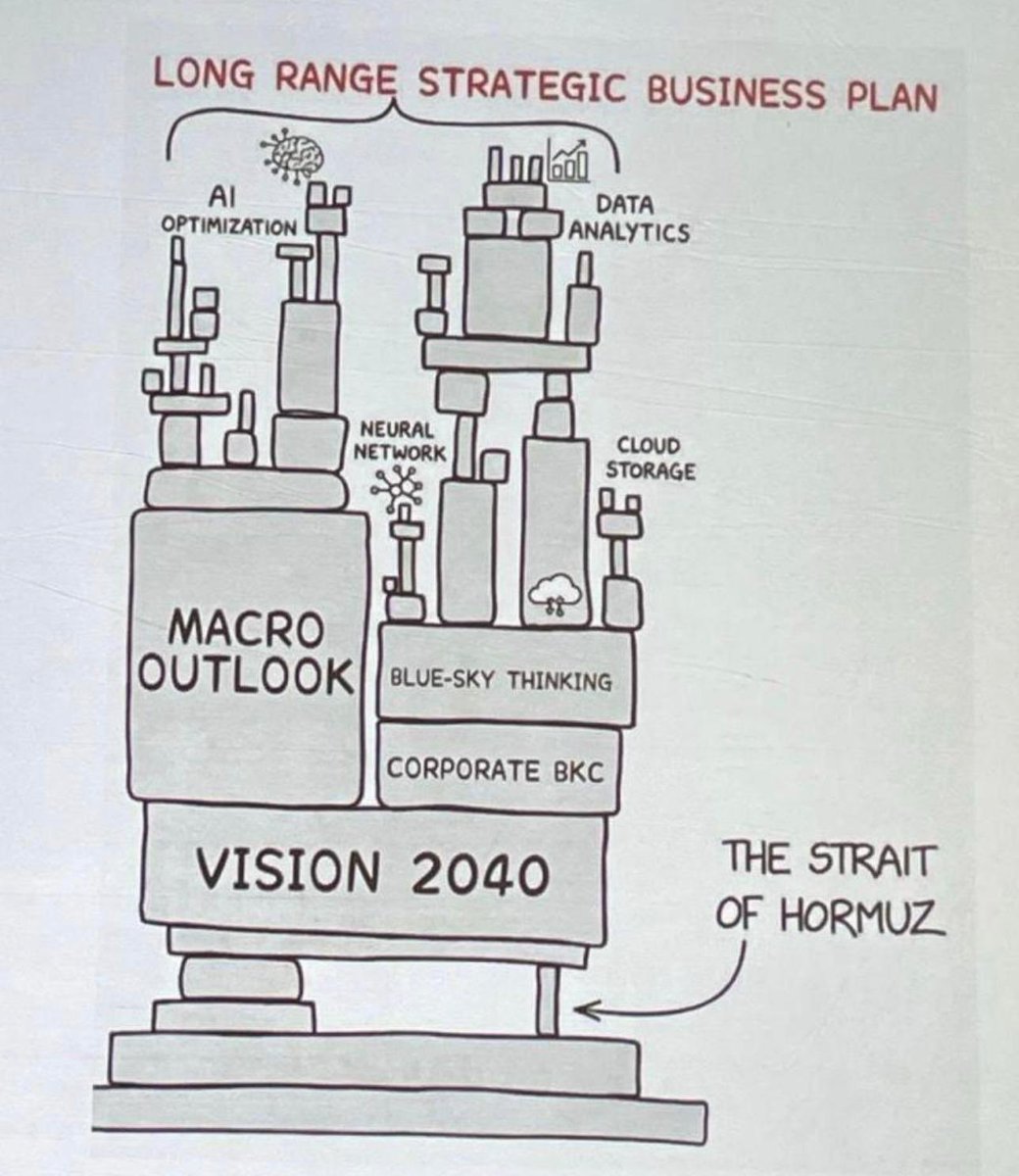
The Hormuz crisis proved that terrestrial supply chains are molecule-dependent and fragile. The Terafab announcement proved that Musk intends to move compute off-planet. But neither of those matter if the orbital environment becomes a debris field. The collision-avoidance AI is the gate. Without it, every satellite launched is a lottery ticket for Kessler syndrome. With it, density becomes self-reinforcing instead of self-destroying.
Nobody is covering this because it is not a product announcement. It is not a keynote. It is infrastructure so foundational that it has become invisible, the way TCP/IP became invisible the moment the internet worked.
SpaceX did not just build a satellite constellation. They built the nervous system of orbital civilization and trained it on 300,000 real-world decisions before anyone realized what they were looking at.
The rockets are visible. The chips are headline news. The AI keeping ten thousand objects from destroying each other in silence at eight kilometers per second is the actual breakthrough.
And yesterday they added 29 more nodes to the network.
Routine.