Good morning, India! 🇮🇳❤️
While the general mindset around building a business is to move fast and break things, we asked, how do you stay the course and build one for the long term?
At @Zoho, we chose an unconventional path by taking our time to validate our convictions and building a suite of world-class products. None of this could have happened overnight—it has been a journey of patience and perseverance, and one that required staying true to our beliefs, through all the highs and lows. This campaign is a reflection of our approach towards sustainable growth.
Watch video (English): https://t.co/bnQXM4mBLV
Watch video (Hindi): https://t.co/hNoCmybA1W
Website: https://t.co/FFFD4Qpw43
#GoZoho
Bad AQI from the neighbourhood. Delhi-Dehradun highway has high smog due to parali burning in and around Baghpat. But i guess news channels are not allowed to venture anywhere near haryana fields.
Flipkart’s board is in an incredibly tough situation right now:
> Leadership exodus: 10+ SVP & CXO level departures since April ‘26 (each with 5+ YOE at FK) incl their CPTO & CFO
> Bad acquisitions: ₹3.2k cr lost on Cleartrip alone over 5 yrs alone after spending ₹300cr to buy the company.
> Core E-Comm business has slowed down (growth is down to ~15% v/s 40% earlier) while it remains unprofitable (₹5k cr+ loss for FY26)
> War of attrition in Quick Commerce: FK was late, invested ₹5.5k cr to build Minutes; losing ₹400 cr per quarter.
> Disgruntled ex-employees: 20k of whom are expected to sign a petition for ESOP liquidity; this is after 5 events have distributed $1.38 bn back to employees.
Our country’s Internet crown jewel is in real trouble ⤵️
AI is incredible. Bought this cheap Bluetooth receipt printer, pointed Claude at it and got it to print out every morning an email I get to read into my day. Unbelievable.
My shopping research has a new intern. Or two. These are AI agents, of course. :)
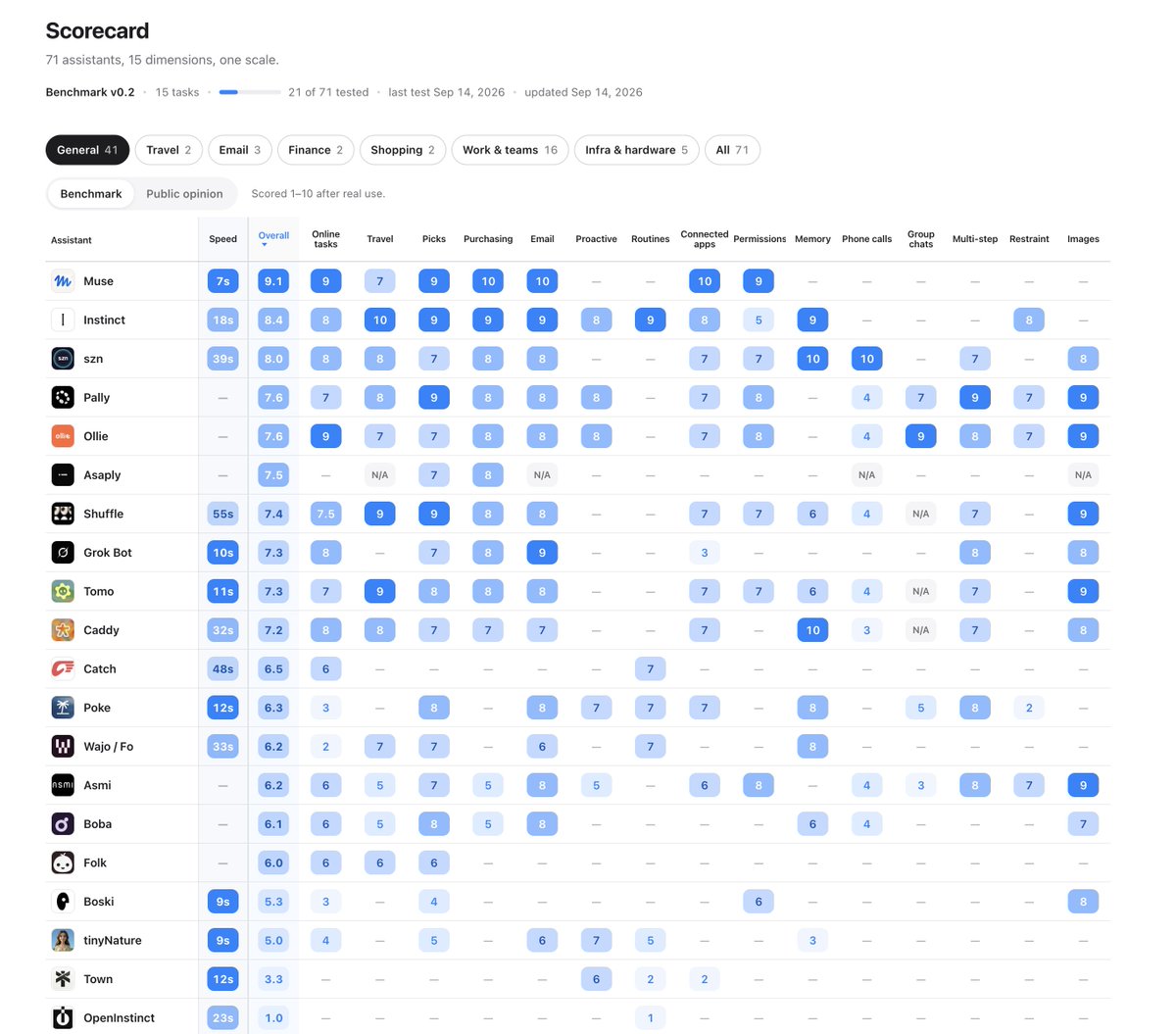
For the last 6 weeks now, my agents across @instinct, Tab, and @hark_labs have been doing a ton of interesting stuff for me (picking up email chains with banks and other services, digging thru loyalty programmes, checking me in on a preferred seat on an Air India flight, adding grocery to my Blinkit cart and checking out, etc.) as well as the boring bits - comparing prices and reading the reviews I never would. I show up only to pay. (It does have a secure wallet but I don't trust it enough. Yet!)
Lately though, things have started to get interesting. Amazon doesn't want my agent there. In the US, I read that Delta and Chase have started blocking agents too, from booking flights and from bank accounts. Of course. An agent walks past the sponsored listing and the "frequently bought together" row. :)
The agent just wants the best product at the best price. That's bad news for anyone who earns from the walk, right? Oh, ecommerce.
Where does this end though? My gut feeling: the blockers bleed customers to whoever welcomes agents, then quietly come back on their own terms. Ads return too, except now the brand pays to be the agent's first pick.
Most Indian D2C brands we know grew up on Instagram and sold on their own websites, well outside Amazon's rulebook. Instagram gave them customers nobody else could gate. (And margins nobody else could take!)
Agents are that door again. A brand that lets an agent read its catalog and finish the checkout will pick up the orders the marketplaces are turning away.
My bet: D2C brands shall get a second wind. Only this time, the customer walking into your online store may be someone's software, with their card on file. Yeah, my agent. Ha!
If you run a D2C brand and are already building for this, I'd love to hear how. Coffee's on me, not on my agent. ☕
@shiladitya@Muse Been using Instinct and Tab extensively over the last month or so. How does Muse compare, if you're tried them? Does Muse work with India phone, yet. I wonder!
@kailazh Hey Kailash. Congratulations on the launch. As someone who's been enjoying listening to music on my KEF LS50 Meta and a Sonos Beam 2 for movies, I'm curious how does Aura 5 stack up? Thanks!
Zoholics, our flagship user conference at @Zoho, is a chance to put faces to the businesses we build for.
This year's edition brought our customers and partners to our Chennai campus, marking 30 years of Zoho Corp.
#ZoholicsIndia2026 was about Zia Chat (AI interface for frictionless work), our foray into vertical solutions, and building world-class business software from India. Keynotes, Product demos and discussions, audience questions, and a ton of conversations. Oh, and an evening full of music I didn't want to end! This video brings it all back. ❤️
My heartfelt thanks to @pratykumar from @SarvamAI for joining us for this special one. 🙏🏼
Thank you to everyone who was a part of this. And to our teams: a lot of work goes into making a day like this happen. Proud of what we put together. It's time to get back to building. 🙌🏼
#GoZoho
A look back at #ZoholicsIndia2026 in Chennai! 💙
A milestone edition filled with engaging discussions, meaningful connections, and valuable insights into the future of business. The event also marked 30 years of Zoho Corp., making it a memorable milestone for our community.
Thank you to our customers, partners, and attendees for making this edition special. Here’s to the ideas we exchanged, the connections we built, and the possibilities that lie ahead. 🙌
Himachal’s finally getting its first snowfall of the season . It’s snowing in Lahaul Spiti and the upper areas of Himachal Pradesh. Winter is finally here guys 🏔️
Other companies announce mass layoffs and it’s treated like just another day in tech.
Zoho skips appraisals to protect jobs, and suddenly everyone’s criticizing it.
As an ex-Zoho engineer, I’ve seen firsthand how much the company cares about its employees. Respect for choosing the harder path.
Sridhar has shared the difficult decision we have taken to skip appraisals this year, given the rising costs and uncertain outlook for the software industry. Every software business will be having this discussion and making difficult choices.
These are real-world situations where there is no single right answer. The decision depends on what we choose to prioritise. These are also decisions AI cannot make for us.
During COVID, we made a similar decision. We offered free licences to customers, even though it meant losing revenue. This time, we had to deal with the sharp increase in server costs. We discussed these options internally.
Lay off employees. While layoffs are common across businesses, we felt it wasn't the right choice when our business is still growing. We have over a million customers to support and products to keep improving. Cutting jobs could affect both employees & customers. Instead, we want to reduce costs by focusing on R&D to make our products and infrastructure more efficient.
Reduce other expenses. We have decided to cut our marketing spend and are looking at ways to improve efficiency across the business.
Increase prices. Customers are already dealing with rising costs and geopolitical uncertainty. So we don't want to add to their burden. We want to first do what is in our control before doing this.
Skip appraisal. This was a difficult decision, but we wanted to avoid layoffs and price increases. So we made this tough decision.
As a private company, we have to take care of our customers and employees. Publicly listed companies also have shareholder expectations to consider.
There is no one right decision in these situations. Ultimately, it comes down to what we choose to prioritise and how we balance the needs of our customers, employees and business for the long term.
Dusting off this tweet from April because this gap in shared understanding of LLM capability is *widening*. It's now less "two groups of people speaking past each other" and more a sharp funnel.
- Napkin math somewhere around 6B people (~75% of the population) have barely come in contact with LLMs at all.
- Around 1-2B (~20%) are casual and infrequent users of free-tier ChatGPT-like products. This group sees derpy chatbots and treats them a bit like a better Google search, a writing aid, or etc. Maybe an agent tries to book you a flight. I have non-tech friends who (reasonably, imo) say they have not much use for it at all. Even many professionals outside of math&code are in this tier. For example, execs and many other functions spend a lot of their time talking to other people, so while they understand what is happening intellectually, it is still second-hand and a bit abstract.
- Now we get to professional use of frontier-grade LLMs in math&code. Somewhere around 20M people (0.2%) see first-hand that large, complex projects that used to take them weeks/months can now be completed by agents with a prompt. Building apps, copying apps, translating apps, decompiling apps from binaries... This has all happened very quickly and recently - less than 1 year ago, I was writing code manually by hand, typing memorized computer code commands into a code editor character by character, occasionally pressing Tab to autocomplete a little chunk of code.
- And finally we get to the ~5,000 people (~0.00006%) with access to frontier-grade systems internally. The external world has seen the preview. It looks like swarms of thousands of agents collaborating over weeks on software mega projects: minting zero days, running cyber attacks and defenses at machine speeds, discovering new science, advancing the frontier of mathematics. Things that would have taken top professionals in the industry years of work. Meanwhile, human review and comprehension are starting to fall behind. For example, people are still involved in the "archeology" of the OpenAI-HF incident from many months ago. Mathematicians may be poring over the 722 manuscripts on frontier mathematics for a while.
The funnel is driven by a combination of factors:
1. The impact scales with ambition, problem size, and horizon. A question with a paragraph answer barely stresses the system. You need a reservoir of big, difficult problems that you really care about. This aspect drives the consumer / professional dimension of the funnel.
2. The jaggedness of the system (which I have written about a lot separately). Capability peaks in domains that are digital, verifiable and economically valuable. This is because LLM capability emerges from reinforcement learning on verifiable rewards on a curated environment mixture driven by revenue potential. This aspect primarily drives the area (e.g. math&code) dimension of the funnel.
3. Access. Free-tier, paid-tier, internal.
So this is the weirdness of the moment. The general public has mostly not interacted with these systems. When they have, it looks like a derpy chatbot. The majority of professionals still see only a modest uplift. And a small sliver of professionals are experiencing the vertigo of the curve going vertical. And it is all happening at the same time.