@castillo_canton Que el Modo IA tire sobre todo de medios de noticias dice mucho: salir en medios con lectores reales ya sirve para dos cosas, posicionar y que te citen las respuestas de IA. Y buen apunte lo del informe de IA generativa de Search Console 👌
@wendy7756 DR is a third-party score, not something Google looks at, so a DR 0 site pulling 300k visits isn't that weird. Works the other way too: when you do get links, a site with real readers on your topic usually does more than a high-DR one nobody visits.
⏳ Have you topped up yet? Ends this Friday
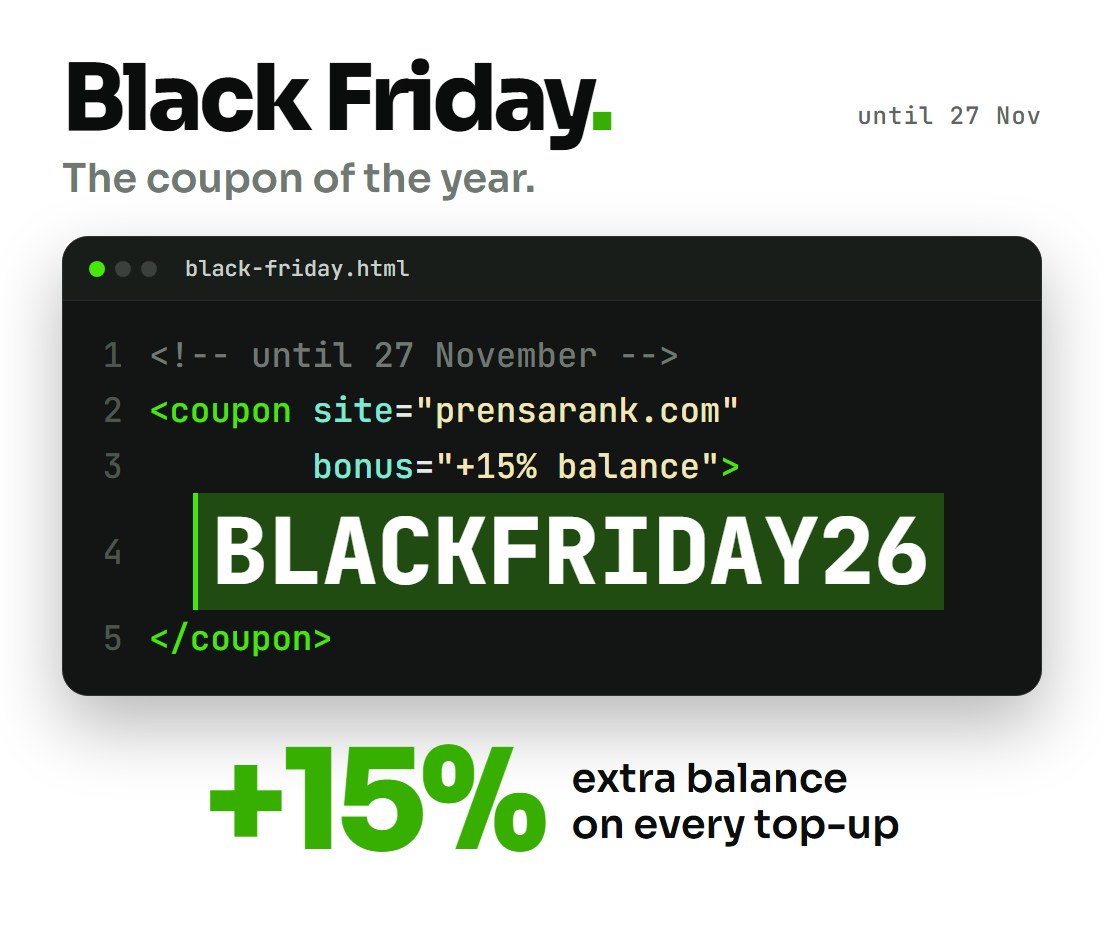
🎁 +15% extra balance on every top-up
💣 Coupon: BLACKFRIDAY26
💰 Top up now, spend your balance whenever you want
🔥 Hundreds of sites on offer
👉 https://t.co/cPygtz4jL9
For a small site, time is the scarce part. Use the few directories your customers actually visit, then stop. Individual outreach is mostly emails nobody answers. There's a third route: sites that already accept articles on a marketplace. You see traffic, topic and price first, and only pay for what gets published.
Your second question answers the first one. If niche sites were dead, nobody would pay to appear on them. A small site with real traffic on one topic is often a better fit than a huge generic one, and those are the sites buyers keep coming back to. Demand is a pretty honest signal 🙂
¿Buscas el cupón de Black Friday para tu link building? 🔎
→ +15 % de saldo extra en cada recarga
→ Cupón BLACKFRIDAY26
→ Hasta el viernes 27
Tú eliges el medio, ves el precio y publicas. Cientos de medios en oferta.
🖤 Black Friday week is on at Prensarank
🎁 +15% extra balance on every top-up
💣 Coupon: BLACKFRIDAY26
📅 Until Friday 27
♾️ No usage limit
🔥 Hundreds of sites on offer
🆕 New order types: link insertions and brand mentions in published articles
👉 https://t.co/cPygtz4jL9
@asaio87 "Build backlinks as normal" is the part most people skip. Rankings dip, links stop, and the recovery takes even longer. Keeping the usual pace while you clean up pages pays off. Congrats on the comeback 👏
We've just shipped one of our biggest updates at Prensarank. Here's what's new:
→ New order types. Besides sponsored articles, you can now order a link insertion or a brand mention insertion in an article that's already published, and articles without a link that mention your brand.
→ Clearer buying. You pick the order type when you buy, and you see the price of each type on every site.
→ Main topic filter. On top of the accepted topics, you can now filter by the site's main topic to find your perfect match.
→ More information about every site: average publication time, a sample article, homepage placement, social media sharing and more.
→ New extra filters: published in 1 day, shared on social media and shown on the homepage.
→ Redesigned order page, better organised and with more information.
→ More than 100 new sites since last month.
It's all live in your panel: https://t.co/EYEaI5zLoV
Thinking of ordering a second article on a site you've used before? Look at the first one first:
→ Is it indexed?
→ Does it still get traffic?
→ Did the page it links to move?
Three yeses = good sign to go again. If not, a new site will probably do more for you.
@seo_bint_ejamil Agreed. AI made content cheap, so content alone stopped being the edge. What's still slow is getting real sites with real readers to mention you. 100 AI articles and zero mentions elsewhere usually just sit there.
@sicodeandres Hay 2 vías: aparecer porque sales en los artículos que sí posicionan, o ser tú el que posiciona. Los enlaces (sea por DR o no) ayudan a ese objetivo, pero no son el objetivo final.
How fast should you build links? Few people ask this, and it matters more than most think.
A steady pace beats a burst. Here's how we'd plan it 👇
→ Pick a monthly number you can keep up for 6+ months. 4 articles every month beats 24 in one week followed by silence.
→ Grow with the site. A new site with 10 referring domains shouldn't jump to 150 in a month. Real brands don't get mentioned like that.
→ Spread the targets. Don't point every link at the same URL: rotate between the homepage, category pages and your best content.
→ Mix the sites. Different sizes, topics close to yours, some local and some national.
→ Tie links to real moments: a launch, new data, a seasonal peak. It gives each article a reason to exist.
→ Review every quarter: what moved, what didn't, and adjust the plan.
Link building is a habit, not a one-off campaign.
A sponsored article is only as good as its brief. ✍️
Before you order, tell the site:
→ The URL you want linked
→ The anchor text (2-3 natural options)
→ The angle the article should take
→ Anything to avoid
Two minutes on the brief saves a round of edits.
@shopkeeperseo Simple filter for a new domain: would real people read the page your link sits on? Check the site's organic traffic first, DR second. A handful of articles on sites with real readers will do more than a hundred listings. And keep a steady pace instead of one big burst.
@dom51143825 It works, but rarely on its own. A free tool earns links once people can find it, and at launch nobody can. What usually gets it moving: a few articles on sites with real traffic that mention the tool. After that the links start coming without you asking.
@damitour Picking sites by DR alone. Real organic traffic first, DR as a quick filter after. Plenty of high-DR sites turn out to have almost no visitors.
@gaganghotra_ Makes sense. On-page fixes pay off in weeks when the authority is already there; without it you can do everything right and still wait. One thing worth adding to that first look: how many of those referring domains still get real traffic.
@yasir_builds Not a dumb question. The $4 ones never moved much, even when links "mattered more". And most mentions come from the same place good links do: an article on a site people actually read. A $4 link fails both tests.