@83221n4ndr34@AzzaroGabriele Non sufficienti, decisamente. Dalla mia esperienza dipende anche e soprattutto dove vai a finire.
Gestione "MEH", praticamente il mio ultimo anno era una auto-gestione di noi studenti italiani.
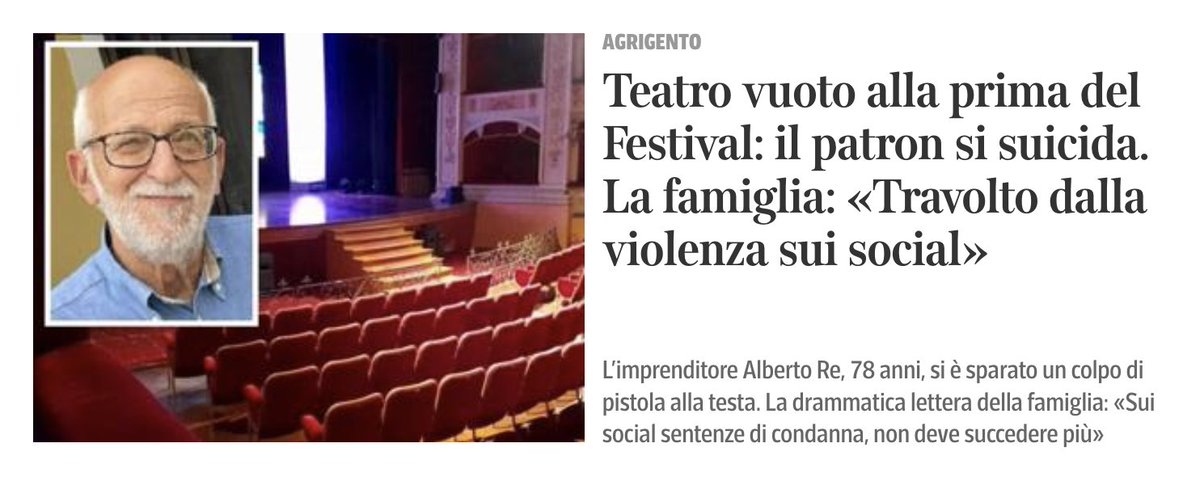
Il giornalismo italiano ha un enorme problema: non sa parlare dei suicidi nel modo corretto. Per esempio questo articolo viola quasi tutte le raccomandazioni dell’Organizzazione mondiale della sanità su come dare notizie di suicidi in modo responsabile.
1/2
@nighthawk_falco@83221n4ndr34 Probabilmente il risultato in alcuni casi può essere un minor costo di produzione, ma diminuisci al contempo l'on-stream factor. Significa che per raggiungere la stessa produttività devi avere impianti più grandi che lavorano di meno. In conclusione: overbuild e perdi efficienza.
@nighthawk_falco@83221n4ndr34 Il problema di base è che non in tutti i settori è possibile seguire con agilità la voglia delle rinnovabili di produrre. Lo scopo del DSM è proprio quello di adattarsi a questo andamento per ridurre i costi di produzione PERÒ ottieni in cambio un impianto che non produce 24/7 >
@iosononicol@e_medoro Forse perché l'impatto ambientale delle bottiglie di vetro è maggiore di quelle in plastica? Ma sono dettagli. Così come l'impatto delle buste monouso in plastica, tanto per dire. Anziché fare la lotta a qualcosa di utile e ad oggi necessario per ideologia, fatelo con i numeri.
@83221n4ndr34 Io non comprendo come possano avere anche solo una persona che decide, in cabina elettorale, di fare un segno sul loro logo. Una pochezza di contenuti che penso sia inarrivabile. GP e Legambiente in confronto sono nulla.
@AlchemyOnAir@7urz@europaverde_it Esperienza personale: io non ho avuto particolari problemi in Veneto (un solo ritardo da 40', stavo sul treno). A Bari, invece, dove in provincia c'è la ferrotranviaria locale, non mi esprimo. Anche le volte che ho preso Trenitalia sulla tratta Bari-Lecce non ho avuto problemi.
Poland is starting to build a fleet of large reactors TODAY, immediately after signing contracts.
They have this one great chance to bury Germany economically.
Germany's economy was based on large and middle-sized industrial companies running on cheap energy.
Where did that energy come from?
It came from three places: brown coal under German soil; insecure Russian pipeline natural gas; and its outstanding nuclear reactors, the world's most prolific.
Germany urged Europe to tax its own brown coal so severely that it multiplies the cost by more than four times.
So its own coal isn't cheap any more.
Russia always meant its gas to be a weapon of control. They simply turned off the flow at a time of their choosing in order to assist with launching a war. Only after the flow was stopped did the Nord Stream pipelines get blown up, locking the loss into place.
Now Germany has to buy liquefied gas from ships, including from Russia. It's much more expensive than the Russian pipeline gas used to be.
So the cheap gas is gone.
That left only nuclear for cheap energy. Germany just months ago in late 2021 had enough ultra-cheap clean nuclear electricity to power a third of its industrial sector at extremely competitive rates. Those plants would last for 50 more years at least.
But Germany shut down nuclear anyway.
Now there is nowhere for German companies to turn to get cheap industrial (read: steady, long-term contract) electricity.
German factories can't buy cheap power just from wind and solar because those energy sources can't guarantee they'll be available. And once you stabilize their power not with cheap nuclear but with expensive coal and gas, it's not cheap enough to be competitive.
Meanwhile Poland opened a new natural gas pipeline from Norway and is launching their nuclear program construction today.
This means if you're a German industrial manager looking to locate the next multi-billion investment that must purchase power for the next few decades, you can't justify placing it in Germany. But you might justify placing it in Poland to coincide with the arrival of its nuclear power.
And if you're a German small business owner, you can't get the cheap electricity that your French competitors get from their giant nuclear fleet. Might as well move over the river to France if possible, or close down if not.
Germany can still turn its nuclear fleet back on within a few years but may destroy it instead at the behest of a tiny number of ideology-poisoned politicians.
I predict that this colossal energy system shift will reverberate through the rest of this century.
@MaytheforcebeM@carlogubi@CarloCalenda@GiZollino QUALUNQUE progetto parte con una previsione di costi, i quali possono cambiare durante i lavori. Torniamo a tirare fuori i FOAK, vero?
E COME GIÀ DETTO, SI SALTA ARGOMENTO. Che senso ha una discussione del genere. Complimenti per la coerenza.
@carlogubi@MaytheforcebeM@CarloCalenda@GiZollino Così, senza stare tanto a pensare: quello che nel frattempo ha il minore impatto ambientale. Si ottimizza su una base di criteri, che inizialmente saranno arbitrari e poi verranno standardizzati.
Va bene difendere le proprie idee, però almeno fossero argomentazioni decenti.
@carlogubi@MaytheforcebeM@CarloCalenda@GiZollino Questa è esagerata.
IPOTESI: i due scenari abbiamo pari risultato: si prende quello che ha costo minore.
IPO: costano pari? Si prende quello che evita un maggior numero di emissioni prima del NetZero.
Così, su due piedi sono già due criteri di "superiorità" su cui fare confronti.