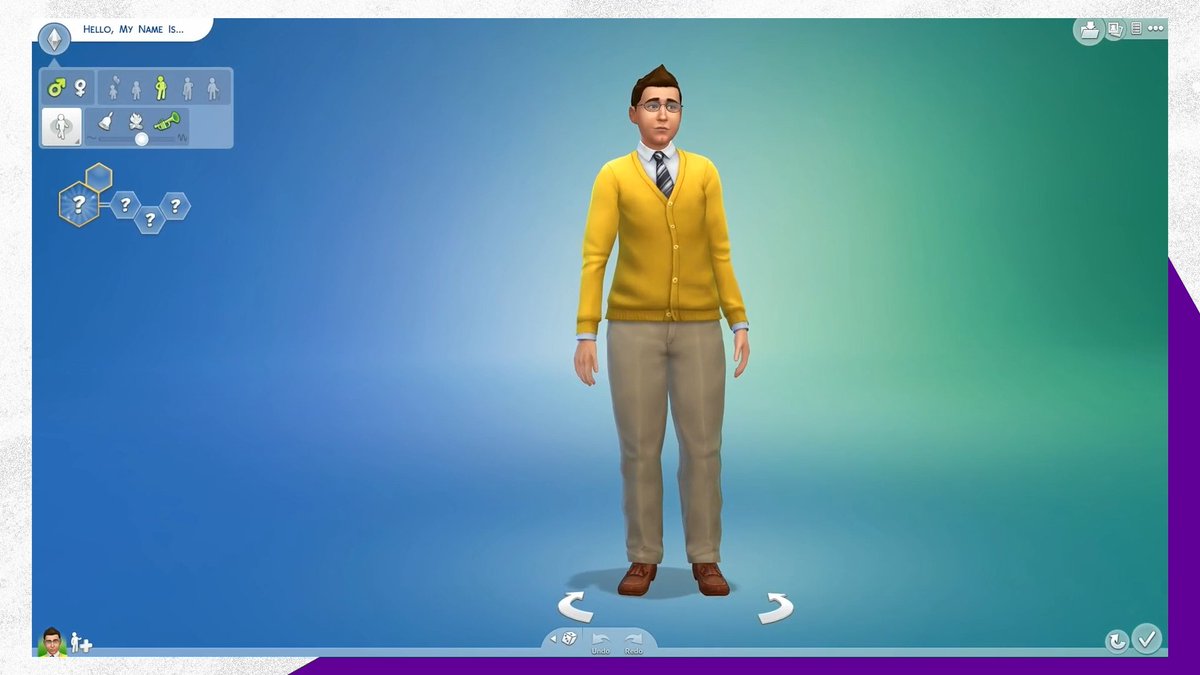
✨FREE CC✨
Oops I forgot to post here that my "Tiny Playrooms" CC Pack is out for free download. Make your kids' room look amazing with these new items! 😊👨🍳🎹🧸#TheSims4#Sims4CC
I hope you like it! ▶️Link in bio.
This is Princess Lili'uokalani. She would become the last sovereign ruler of Hawaii. The photo was taken in 1853 when she was only 15 years old.
In 1874, Lili'uokalani's brother, David Kalakaua became king, and a few years later, she was named the heir apparent. She spent the next few years building schools for the people of Hawaii.
In 1881, Liliuokalani served as regent while the king was away on his tour of the world. When a smallpox epidemic broke out on the island of Oahu, she made the quick decision to close down all its ports, which helped to contain the spread and ended up saving many lives. However, her decision irked many of the wealthy sugarcane plantation owners.
In 1891, her brother died, and she became the ruler of Hawaii. Unfortunately, her reign would be very short-lived as a coup led by Sanford Dole (his cousin founded the Dole Food Company) and several other white businessmen and lawyers with the backing of the United States would annex the islands. Two years later, when Lill'uokalani and her supporters attempted to return to power, she was charged with treason and forced to go under house arrest. In order to pardon her supporters, she agreed to yield her power to the United States.
"Now, to avoid any collision of armed forces and perhaps the loss of life, I do, under this protest, and impelled by said forces, yield my authority until such time as the Government of the United States shall, upon the facts being presented to it, undo the action of its representative and reinstate me in the authority which I claim as the constitutional sovereign of the Hawaiian Islands."
She spent the remainder of her life in exile until her death in 1917 at age 79.
#Anxiety can make us see things differently.
I always have to remind myself to look for hard evidence before jumping to conclusions.
If there's no evidence, then it's most likely my anxious brain making things up again 💜 https://t.co/Ovpil64VtG
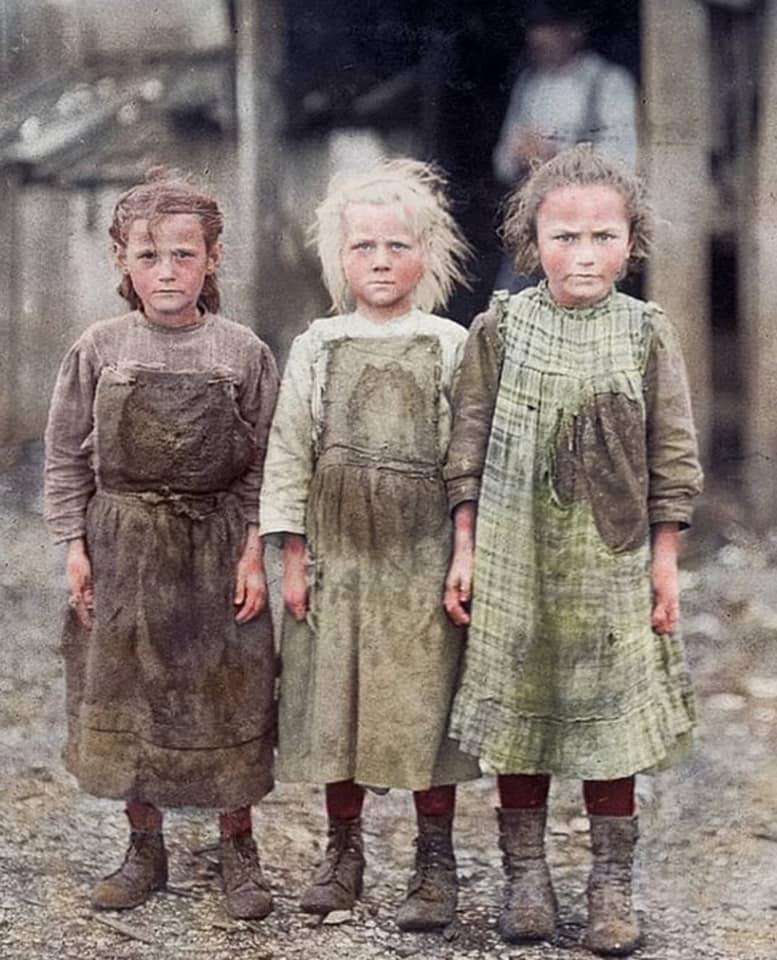
Josie (6 years old), Bertha (6 years old) and Sophie (10 years old) worked regularly at the Maggioni Canning Company.
Work began at 4 AM, and the three would make from $9 to $15 a week.
Sophie would do six pots of oyster a day, and her mother, who also worked with her, said, "She don't go to school. Works all the time."
Through such photos, Lewis Hine documented the harsh working conditions borne by thousands of children, who were sent to work soon after they could walk and were paid based on how many buckets of oysters they shucked daily.
Mr Hines wrote of one photograph: ‘All but the very smallest babies work. Begin work at 3:30am and expected to work until 5pm.’ He covered around 50,000 miles a year, photographing children from Chicago to Florida working in coal mines and factories.
These photos helped to raise an outcry against child labor and made the American public widely aware of the scope of the problem.
An Oklahoma judge was arrested last week after authorities say he opened fire on parked vehicles while out driving, striking at least one of them, and intentionally crashing into a woman’s vehicle, telling officers later that she had cut him off. https://t.co/mfysJ2W6u7
Those attending outdoor parties or barbecues in New York City this weekend may notice an uninvited guest looming over their festivities: a police surveillance drone. https://t.co/zzKKuu2Yjq
12 Reasons Why Cities Need More Trees:
1. Temperature Control
One large tree is equivalent to 10 air conditioning units, and the shade they provide can reduce street temperature by more than 30%.
2. Noise Reduction
Trees can reduce loudness by up to 50%. In urban areas filled with the sound of cars, construction, sirens, aeroplanes, and music, trees are essentially the best way to block noise and keep cities — along with the homes and workplaces in them — quieter.
3. Air Purity
Trees remove an astonishing amount of harmful pollutants and toxins from the air. In urban areas air quality is often disastrously bad — with severe consequences for our health. Trees make the air we breathe much cleaner.
4. Oxygen
And, while absorbing all those pollutants, trees also put more oxygen back into the urban environment. Oxygen levels are significantly lower in cities compared to the countryside; trees help to solve that problem.
5. Water Management
Trees do more than just shelter us and our buildings from rain — which is, in fact, extremely important. They also absorb huge quantities of water, reduce run-off, neutralise the severity of flooding, and make flooding more unlikely altogether. Not to forget that their roots absorb pollutants and prevent them from feeding back into a city's water supply.
6. Psychological Health
Studies have proven what we instinctively know to be true: that human beings are significantly happier when surrounded by nature rather than sterile urban environments. Our emotions, behaviour, and thoughts are shaped by the places we spend time — and trees have a profoundly positive effect on our psychology. The consequential benefits of being happier and more peaceful — as individuals and as a society — are immense.
7. Physical Health
Beyond all the other ways in which trees improve air quality and the urban environment, much to the benefit of our health, they also encourage people to go outside. Cycling, running, and walking are all more common in urban areas with plenty of trees. A knock-on effect of people spending more time outdoors is also social integration and stronger communities.
8. Privacy
A simple point, but not inconsequential, is that trees provide privacy.
9. Economics
The total economic benefit of urban trees is hard to calculate. There are costs, of course, including the repair of infrastructure damaged by roots and maintaining the trees themselves. But the total economic benefit — a consequence of everything else in this list and more — far outweighs the expenditure. Trees make cities wealthier.
10. Wildlife
Trees are miniature cities all of their own, serving as a habitat for hundreds of different species, including birds and mammals and insects.
11. Light Pollution
Trees don't only block the light shining down, therefore keeping us and our cities cooler — they also disrupt light shining up, from street lighting, cars, houses, and billboards. Skies are clearer in cities with more trees.
12. Aesthetics
And, finally, trees are beautiful. They break up the potential monotony of urban environments — the sharp geometry, the greyscale roads and buildings, the endless rows of cars — with their trunks, boughs, canopies, and flowers.
Just think: the gold and red of falling leaves in autumn, the white and pink blossom of spring, the vast green canopies of summer, and the branches lined with hoar-frost in winter. Every single tree is a myriad of intricacy and texture, of colour and scent, of dappled light on the pavement, mottled bark, knotted roots, of clustered leaves and delicate petals and stern boughs.
Few streets would not be improved by the kaleidoscopic aesthetic delights of a tree, not to mention the many different species of tree, all over the world, whether willow, oak, lime, cherry, aspen, maple, birch, horse chestnut, dogwood, hornbeam, ash, sycamore... the list goes on.
There are some drawbacks to urban trees, most of them context-specific, and they are not — of course — universally appropriate. But it seems fair to say that many cities would benefit from at least a few more trees here and there.