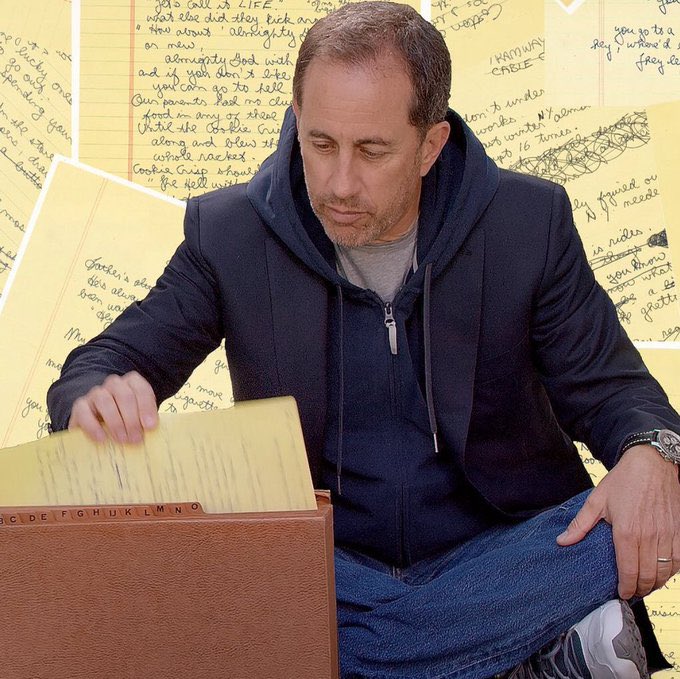
After the final episode of “Seinfeld” in 1998, Jerry Seinfeld didn’t know what to do next with his life.
With the success of the show, he had options.
“What do I do?” he asked a friend.
“Well what’s been the best experience you’ve had so far?” the friend asked.
Seinfeld said,
Two things:
First, writing—“I just see something and I write it down—I like a big, yellow legal pad—and once I get that pad open, I can’t stop…the next thing I know, the day is gone.”
Second, performing stand-up—“I just love the life of it,” Jerry said. “I love the joy of hearing laughs and making jokes.”
So, despite the cool and lucrative opportunities to further an acting or screenwriting career in Hollywood, Seinfeld moved back to New York City where he returned to writing jokes by day and performing in comedy clubs by night.
Takeaway 1:
“For anyone trying to discern what to do with their life,” the author Amy Krouse Rosenthal said, “PAY ATTENTION TO WHAT YOU PAY ATTENTION TO. That's pretty much all the info you need.”
Pay attention to what you can pay attention to so that, as Seinfeld put it, “the next thing you know, the day is gone.”
Takeaway 2:
After investing 9 years into creating the 9 seasons of the show, Seinfeld returned to being a standup comedian.
He made an estimated $38 million from just the last season of the show—when he had a boatful of money and unlimited options, he went back to the thing he loved when he had little money and few options.
It made me think of the parable of the fisherman and the businessman:
In a small coastal village, there is a fisherman who owns a small row boat. One afternoon, after fishing all morning, he returns to shore with his boat full of fish.
A vacationing businessman sees the fisherman and is impressed, “How long does it take you to catch so many fish?”
“Oh, just a couple of hours,” the fisherman says.
The businessman immediately sees a business opportunity. He offers to invest money in the fisherman—enough to buy a bigger boat and to set up his own company supplying fish to every restaurant in the village.
Fisherman: “And then what?”
Businessman: “We’ll set up a production plant and distribute fish to restaurants around the world.”
Fisherman: “And then what?”
Businessman: “Eventually the business will be so big that we’ll sell it for a huge sum of money.”
Fisherman: “And then what?”
Businessman: “You’ll have so much money that you’ll be able to do whatever you want. You can retire, move to a house by the sea, and fish as much as you want.”
The fisherman was confused, “Isn’t that what I already do?”
It’s just a reminder: the ability to do what you want for as long as you want is priceless and, often, inexpensive.
- - -
“The highest form of wealth is the ability to wake up every morning and say, ‘I can do whatever I want today.’” — Morgan Housel
Follow @bpoppenheimer for more content like this!
Die deutsche #Zellstoff- und #Papierindustrie hat im vergangenen Jahr einen enormen #Nachfragezuwachs verzeichnet. Der Aufschwung wurde jedoch von dramatischen Steigerungen der #Energie-, #Rohstoff- und Logistikkosten belastet.
https://t.co/Fai5k0nYTU
We are excited to announce that our new online eLearning platform, Problem Solving Learning Path (PSLP) received a second Brandon Hall Award in 2021.
Sign up and learn about our innovative remote eLearning solution: https://t.co/pyEZ7jLc2p
Press Release: https://t.co/p50mLDNVcu
Listening is a multidimensional practice. It requires commitment and constant attention, and leaders cannot survive or thrive in their work until they learn that fundamental lesson. Click here to see why listening is crucial to your business: https://t.co/ZUFsRTVkVB
A structured #DecisionMakingProcess is a standard hiring procedure in many organizations. That’s not to minimize the value of an analytic approach to all kinds of decisions. Here’s how an #AnalyticApproach can be used to improve hiring: https://t.co/f2wWU9cOXI
Melden Sie sich an zum kostenlosen BrightTALK am 29. Oktober:
8D-Problemlösung – der VDA empfiehlt Kepner-Tregoe IST und IST-NICHT
https://t.co/FXwVzhUh3W
#8D#problemlösung#quality#VDARotband#automotive
Besuchen Sie am 10.-12. November unseren öffentlichen Workshop in Problemlösung & Entscheidungsfindung und lernen Sie, wie Sie komplexe Probleme lösen und schwierige Entscheidungen treffen. Anwendungstag am 7. Dezember.
https://t.co/PXdxQah2iD #problemsolving101#KepnerTregoe
Kostenloses Webinar am 13. August auf Brighttalk (45 Minuten). Kepner-Tregoe Consultant Sascha Laufenberg: "Advanced (Major) Incident Management in ServiceNow: powered by KT"
https://t.co/frm8xEZRIv
#KepnerTregoe#ServiceNow#IncidentManagement
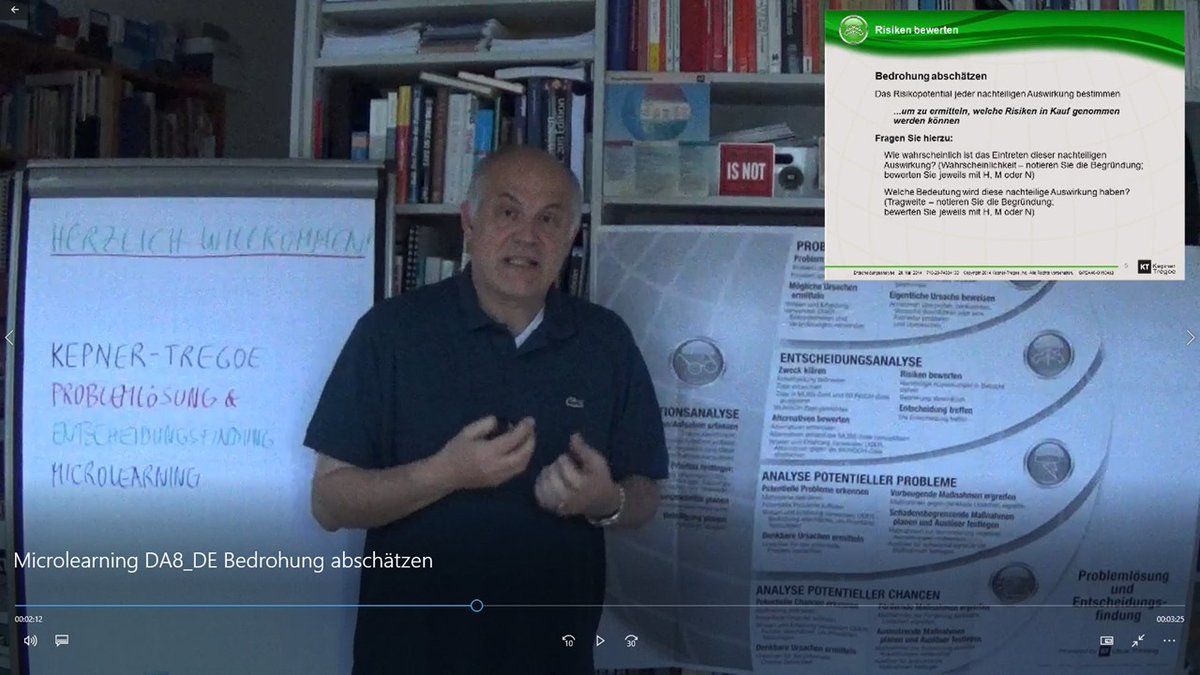
Kepner-Tregoe Microlearning, Woche 8. Sehen Sie heute, wie Sie mit einer Folge gezielter Fragen den richtigen KT-Prozess auswählen, um Ihre Situationen/Aufgaben zu lösen. https://t.co/GuVGt6gNSh #Microlearning#KepnerTregoe#Situationsanalyse#ProzessSelektor
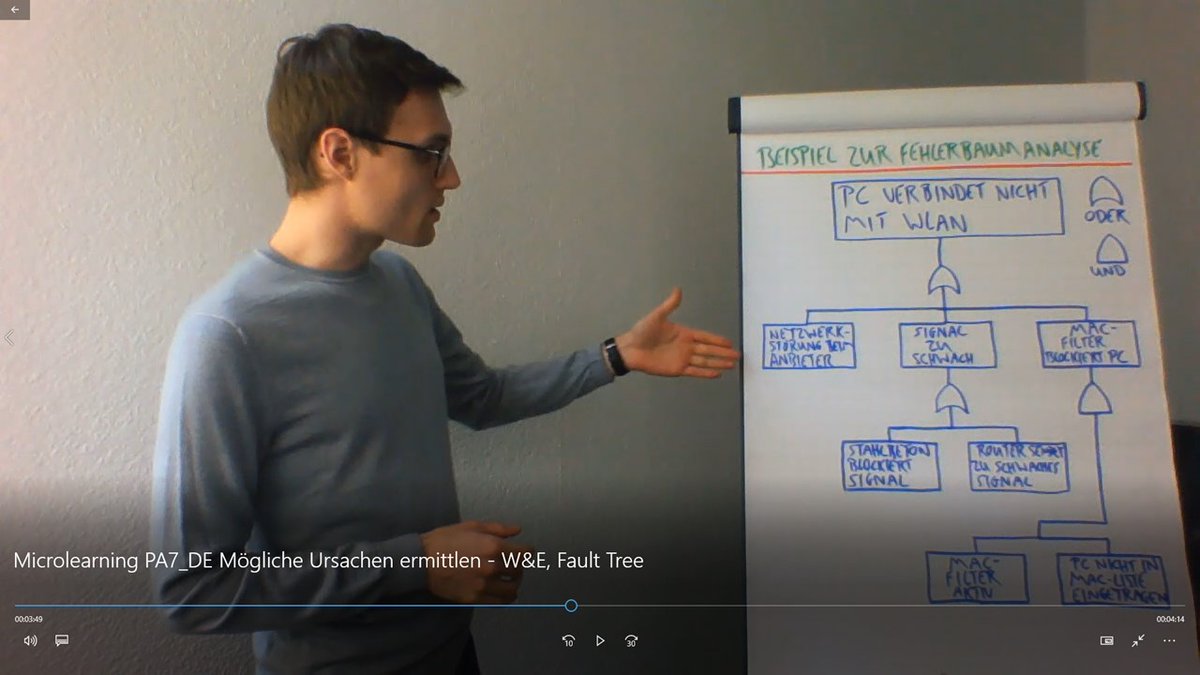
Kepner-Tregoe Microlearning, Woche 7. KT Consultant Marven Röll erklärt, dass man im zweiten Schritt der Problemanalyse Fault Tree Analysis benutzen kann, um mögliche Ursachen zu ermitteln. https://t.co/GuVGt6gNSh #Microlearning#KepnerTregoe#RCA#FTA
Problem Solving best practices in @servicenow for Problem Managers and technical problem solvers tomorrow afternoon on Brighttalk:
https://t.co/WBoxOGgC8H
Kepner-Tregoe Microlearning, jetzt schon seit vier Wochen jeden Tag neu. Heute ein neues Video zum Thema: Schadensbegrenzende Maßnahmen bei der Analyse potentieller Probleme. https://t.co/GuVGt6gNSh #Microlearning#KepnerTregoe#HomeOffice#Risikomanagement