Teacher. Consultant. Researcher. Author. Senior Research Fellow Canterbury CC Uni. Trustee NAEE. Wildthinker. Minute part of planet Earth. @geopaula.bsky.social
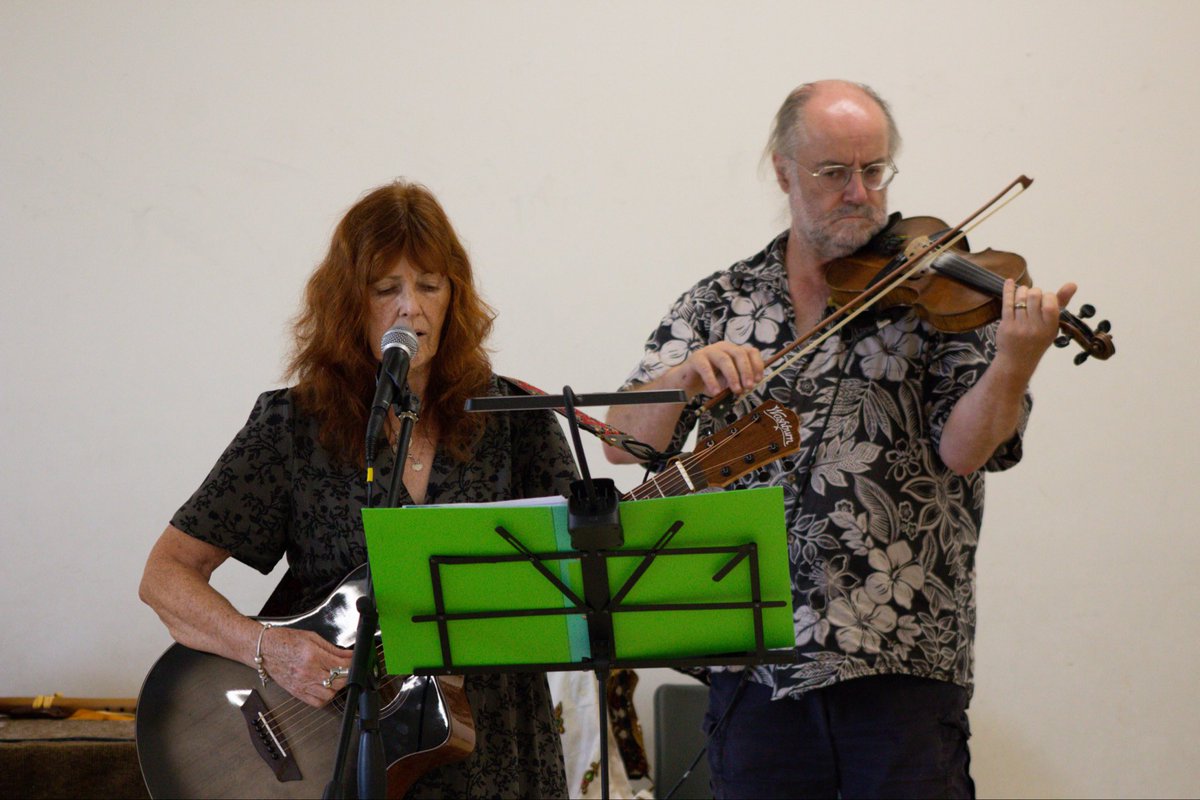
When I’m not ‘doing geography’ I’m lucky enough to be doing this! Playing our own songs as ‘Wild Roots’ alongside legends Lynn Gosney & @CoorBlimeyGuv (check out his latest single). Latest gig also had Pete (from Touch the Earth) adding extra quality on violin. Pics Nina & James
Just been reading this fascinating article - more impacts of #ClimateCrisis#geographyteacher
‘… the rate at which our days are lengthening is now “unprecedented” in 3.6 million years of geological history’. https://t.co/qqOE96qN1J
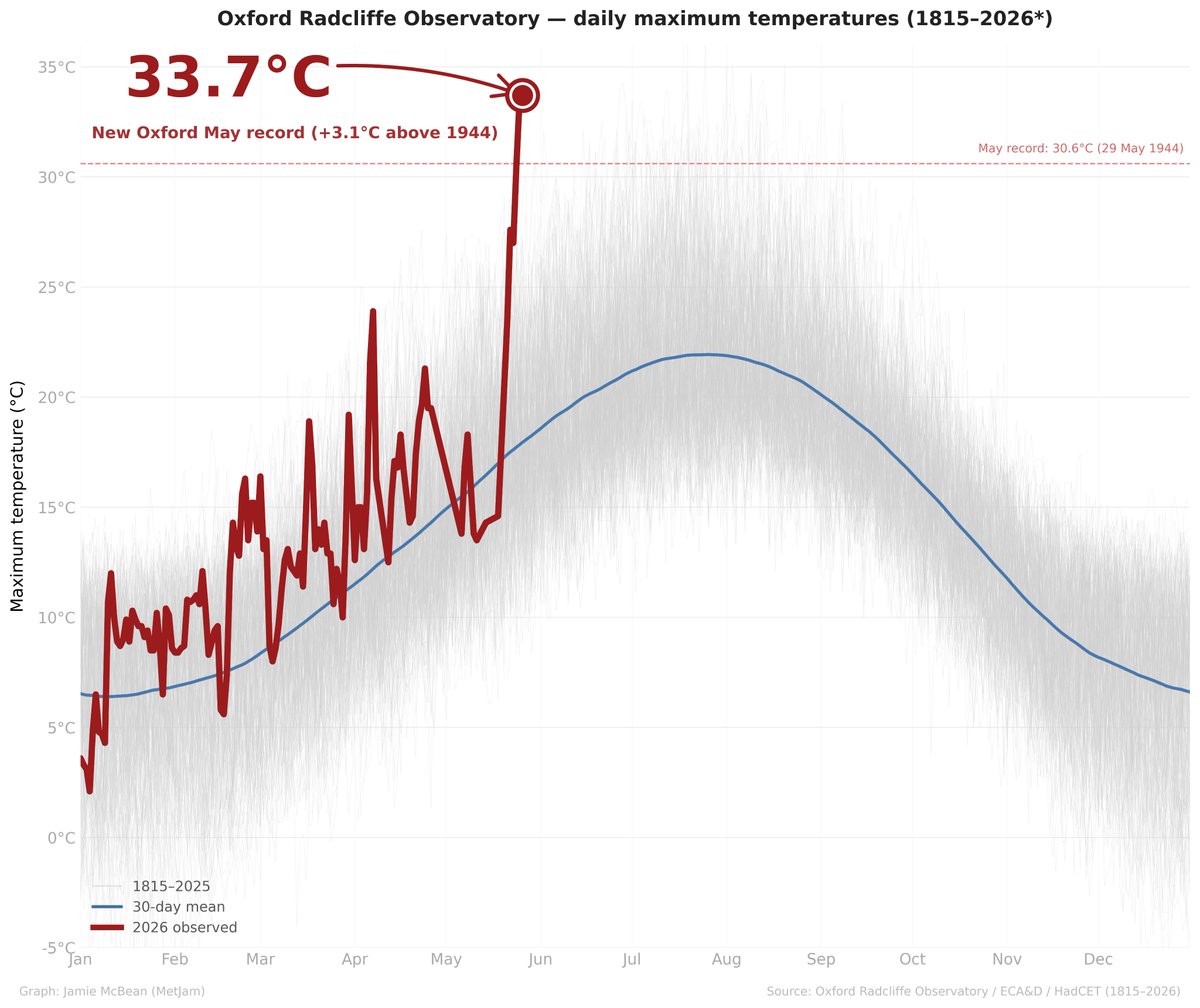
Oxford, the longest running continuous weather station in UK history, with temperature observations stretching back to 1815, has preliminarily broken its maximum temperature record for May yesterday by OVER 3ºC with a temperature of 33.7ºC. Unprecedented in its 211-year history.
We got a bill May 2026 > DOUBLE last bill! No change in use so turned our house stopcock off & checked outside meter - still spinning. Reported your faulty stopcock as source of possible leak > week ago! @SouthernWater yet you emailed us today re saving water. When will you come?
In May 2025 we reported that your stopcock could not be turned off & in December 2025 you sent someone to look at it who confirmed a problem said it would need a team to fix. A year on we’re still waiting. 1/2 #WaterAwareness@SouthernWater
This article says climate change is “believed to have played a role” in the UK's extreme heat this week.
As a climate scientist, let me fact-check that.
First, climate change is not a religion. No belief is required. It is about evidence.
And the evidence has been crystal clear for more than two decades: climate change is making heat waves hotter, longer, more frequent and more dangerous.
In fact, science has advanced far beyond saying climate change merely “played a role.” Today, we can quantify how much more likely and how much hotter climate change made a specific event.
Here's the bottom line:
Climate is changing. Humans are responsible. And we are experiencing the impacts now. That’s the bad news.
The good news is that solutions already exist, and the majority of people care - 89%, around the world!
But meaningful action depends on helping people understand not just what is happening: we need to know how it affects our lives (this heat wave being example A today) and what we can do about it.
That’s the opportunity this reporting missed.
https://t.co/vYfPDKcWWf
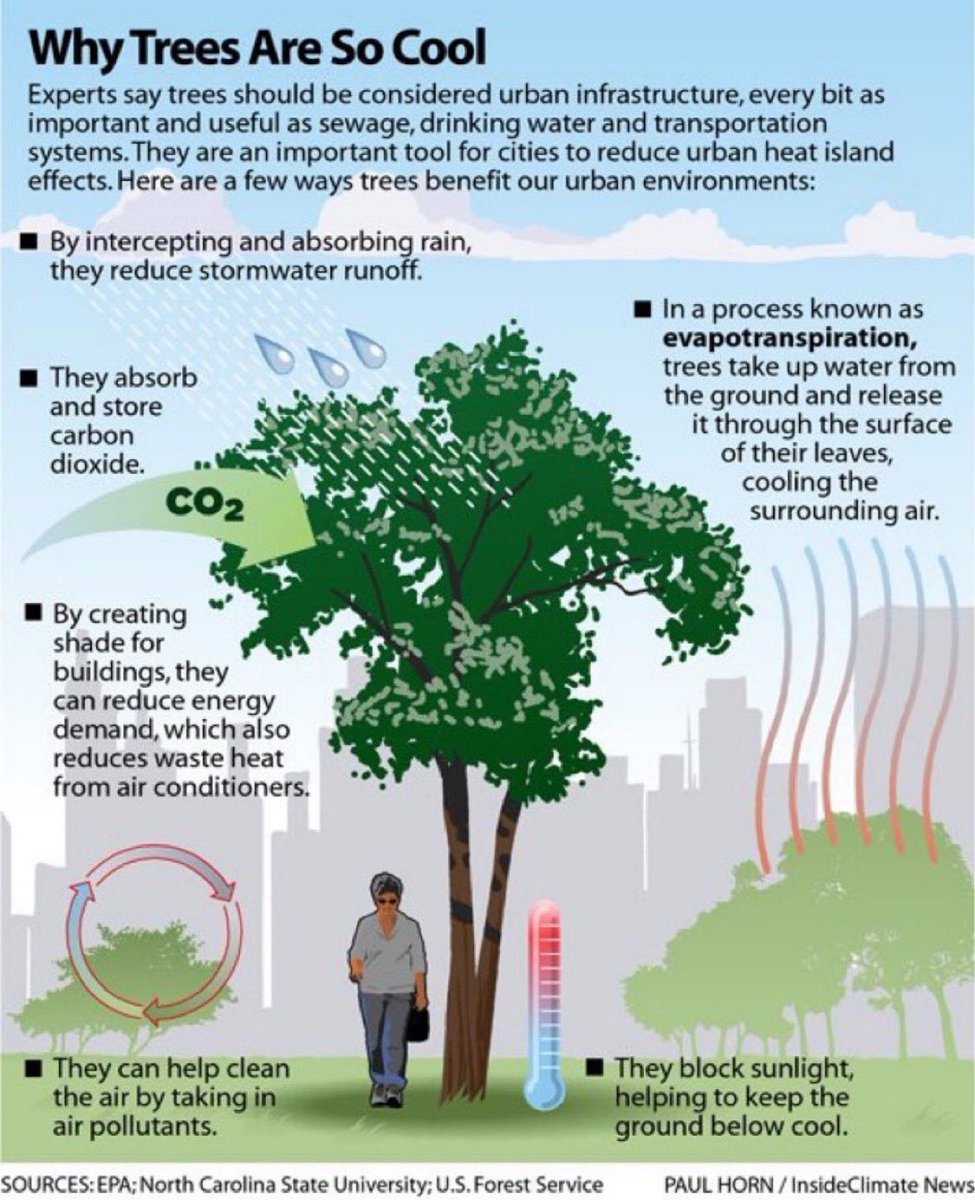
A simple and effective way to reduce the summer temperatures in our towns and cities: Plant lots of trees.
🌳stores carbon dioxide
🌳reduces city pollution
🌳helps protect from flooding
🌳reduces city temperatures
🌳provides habitats for urban wildlife
🌳beautifies urban surroundings
@AmericanAir hello you are still sharing data with me about another passenger’s flights after I informed you some time ago. You need to check the email address you have for your passenger with the same name.
May has given us brilliant women in science like Mary Anning @theAliceRoberts & @jurassicg1rl & I’m honoured that we have an interview with Dr Anjana Khatwa in the summer ed. of @The_GA#PrimaryGeography journal.
Another May treasure, packed with great articles. #primaryteacher
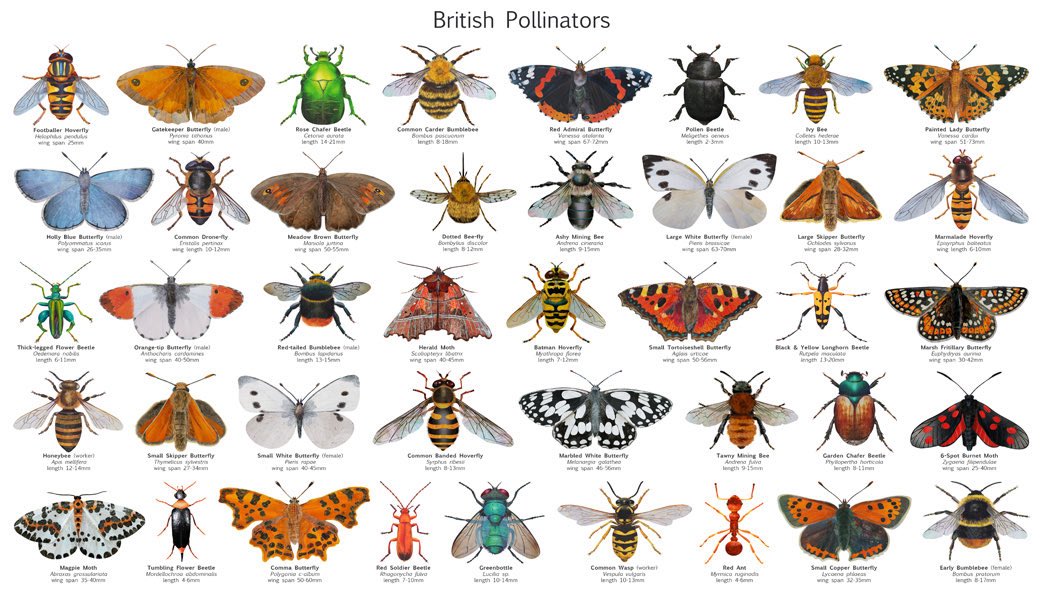
British pollinators. What a workforce ! Without this amazing team there would be no gardens or food for that matter. We must do our best to look after them, teach our kids they are friends and build habitats to show them how loved they really are.
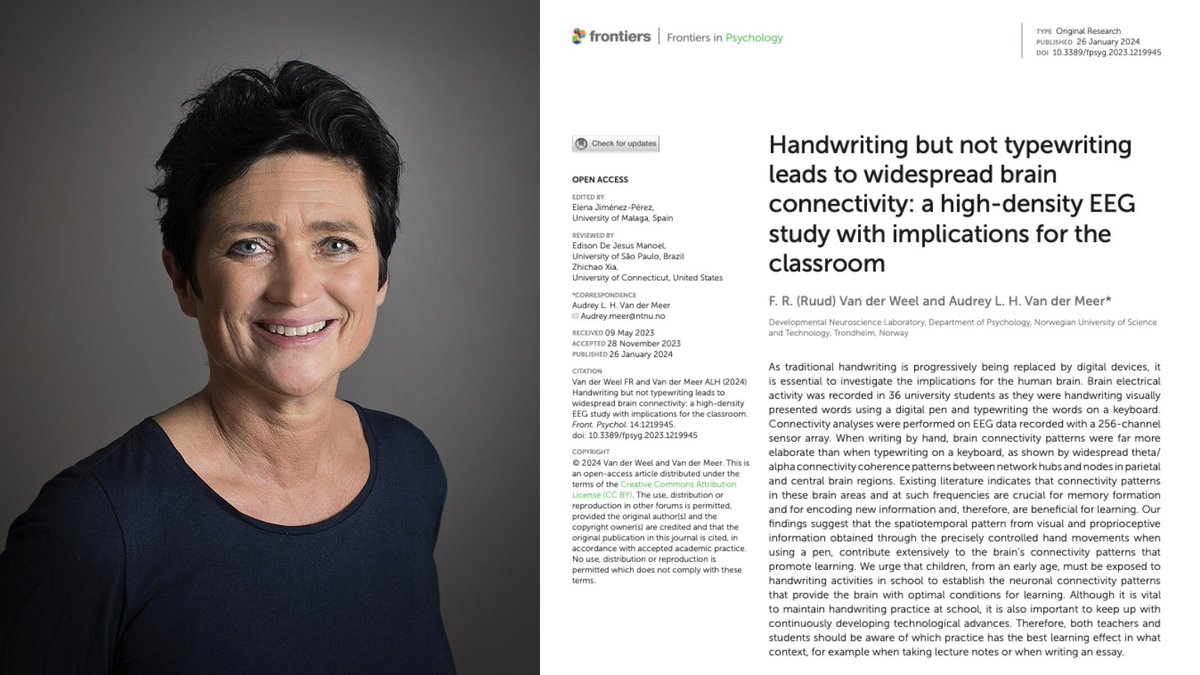
A Norwegian neuroscientist spent 20 years proving that the act of writing by hand changes the human brain in ways typing physically cannot, and almost nobody outside her field has read the paper.
Her name is Audrey van der Meer.
She runs a brain research lab in Trondheim, and the paper that closed the argument was published in 2024 in a journal called Frontiers in Psychology. The finding is brutal enough that it should have changed every classroom on Earth.
The experiment was simple. She recruited 36 university students and put each one in a cap with 256 sensors pressed against their scalp to record brain activity. Words flashed on a screen one at a time.
Sometimes the students wrote the word by hand on a touchscreen using a digital pen, and sometimes they typed the same word on a keyboard. Every neural response was recorded for the full five seconds the word stayed on screen.
Then her team looked at the part of the data most researchers had ignored for years, which is how different parts of the brain were communicating with each other during the task.
When the students wrote by hand, the brain lit up everywhere at once.
The regions responsible for memory, sensory integration, and the encoding of new information were all firing together in a coordinated pattern that spread across the entire cortex. The whole network was awake and connected.
When the same students typed the same word, that pattern collapsed almost completely.
Most of the brain went quiet, and the connections between regions that had been alive seconds earlier were nowhere to be found on the EEG.
Same word, same brain, same person, and two completely different neurological events.
The reason turned out to be something nobody had really paid attention to before her work. Writing by hand is not one motion but a sequence of thousands of tiny micro-movements coordinated with your eyes in real time, where each letter is a different shape that requires the brain to solve a slightly different spatial problem.
Your fingers, wrist, vision, and the parts of your brain that track position in space are all working together to produce one letter, then the next, then the next.
Typing throws all of that away. Every key on a keyboard requires the exact same finger motion regardless of which letter you are pressing, which means the brain has almost nothing to integrate and almost no problem to solve.
Van der Meer said it plainly in her interviews.
Pressing the same key with the same finger over and over does not stimulate the brain in any meaningful way, and she pointed out something that should scare every parent who handed their kid an iPad.
Children who learn to read and write on tablets often cannot tell letters like b and d apart, because they have never physically felt with their bodies what it takes to actually produce those letters on a page.
A decade before her, two researchers at Princeton ran the same fight using a completely different method and ended up at the same answer. Pam Mueller and Daniel Oppenheimer tested 327 students across three experiments, where half took notes on laptops with the internet disabled and half took notes by hand, before testing everyone on what they actually understood from the lectures they had watched.
The handwriting group won by a wide margin on every question that required real understanding rather than surface recall.
The reason was hiding in the transcripts of what the two groups had actually written down.
The laptop students typed almost word for word, capturing more total content but processing almost none of it as they went, while the handwriting students physically could not write fast enough to transcribe a lecture in real time, which forced them to listen carefully, decide what actually mattered, and put it in their own words on the page.
That single act of choosing what to keep was the learning itself, and the keyboard had quietly skipped the choosing and skipped the learning along with it.
Two studies. Two countries. Same answer.
Handwriting makes the brain work. Typing lets it coast.
Every note you have ever typed instead of written went into your brain through a thinner pipe. Every meeting, every book highlight, every idea you captured on your phone instead of on paper was processed at half depth.
You did not forget those things because your memory is bad. You forgot them because typing never woke the part of the brain that would have made them stick.
The fix is the thing your grandmother already knew.
Pick up a pen. Write the thing down. The slower road is the faster one.
Following ongoing issues of illegally dumped waste at an SSSI #Sheppey & the bio-hazardous waste, laboratory test vials, washed up along the shoreline, what is @EnvAgency planning? Counted 23 test tubes today in a short space, 100s more at source. https://t.co/YeWfFcqFmj
A strong domestic, clean, safe, non polluting water industry is vital not only for our economy but the very existence of humanity itself, every bill player, customer, voter, every resident of my street, your street, the next street over.
That’s why we’re introducing a Bill... ah, no, sorry, wrong industry... 🤔
Free guidance to download from @OrdnanceSurvey on planning your primary curriculum with #maps and #map work in mind. Underpinned by research & includes tables on #progression. #geographyteacher https://t.co/1Eofa3Pg3S
Some free resources for #mapping & #fieldwork activity in primary - underpinned with research & teacher notes. #geographyteacher https://t.co/S1XLJ6LKNI
Thank you to the lovely helpful conductor on the 14:51 delayed service from Llandovery to Swansea today who made sure we got our connection and kept us all updated. @tfwrail
🔥🔥BOOM🔥🔥
This is the moment 100,000 people added their voice to the demand for a referendum on who owns our water.
The government now has to consider it for a parliamentary debate.
Please sign and share the petition. Make it impossible for them to refuse a debate: https://t.co/EDl41I9Uqo