People complain about the price of meat, dairy and seafood, but forget that high-quality animal products give you the most nutrients per dollar.
Spending a little extra on the grass-fed meats, organic, raw dairy, and local wild-caught seafood is always a good investment.
Lots of people claim to eat meat, but what they actually mean is they eat MUSCLE meat.
And while muscle meat is delicious, organs and fats are also vital to our overall health.
Traditionally, the healthiest and most successful societies consumed ALL parts of an animal, eating from nose-to-tail.
That means alongside steak and ground meat, you should regularly include things like liver, bone marrow, bone broth, and tallow to ensure you're getting all the benefits an animal has to offer.
Sourcing these from ruminant animals is always best, aka: beef, bison, sheep, deer, goat, as it's much more difficult to find high-quality chicken and pork.
Revised egg leaderboard 🐣:
Our initial chart corresponded to the ranking of total omega-6 per 100g of sample, not % of omega 6 of total fat.
Both views are calculated here. Our conclusions remain the same, buy soy-free when possible, but there will always be variance in real world samples.
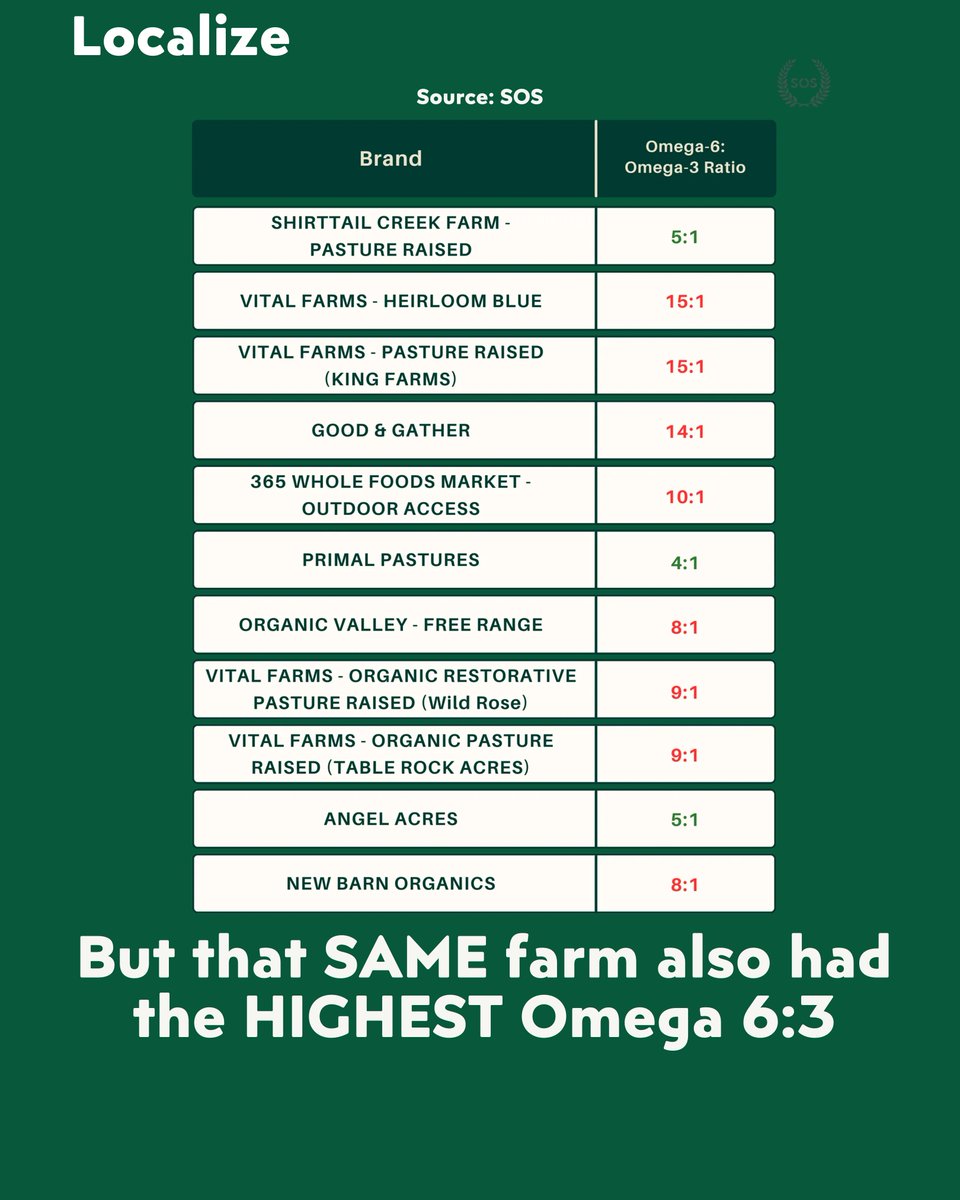
This chart went viral showing different Vital Farms tested for both some of the lowest and highest Omega-6 fatty acid percentages…let’s talk about it.
First off, shoutout to Seed Oil Scout for sending me the labs and conducting the testing.
Unfortunately, we did notice a small calculation error: I am not sure where these total fat numbers were pulled from but they should be the NLEA fat from the COAs.
When recalculating, you can see the fully updated percentages.
But it still begs the question, how it Vital Farms Egg has the lowest Omega 6 %.
Rob McDaniel from Primal Pastures pointed out what’s even more important is the ratio of Omega 6:3.
For that same VF that has the lowest 6%, it also has the HIGHEST O6:03 ratio.
Based on this, the four Vital Farms Eggs were all in the bottom 6, with Heirloom Blue and Pasture-Raised having the most damning ratios at 15:1.
Humans evolved consuming a diet with an omega-6 to omega-3 ratio of approximately 1:1
It seems when scale gets involved, optimizing for these metrics becomes all the more difficult for institutionally held $1B+ dollar companies like Vital Farms.
I think SOS made an honest calculation mistake as this doesn’t change the rankings, but what really changes things here is looking at the O6:O3 ratio rather than just purely O6 anyways.
Thanks to SOS for doing the testing and these wonderful small farmers for helping with interpretation of the fatty acid test results.
Strength in numbers
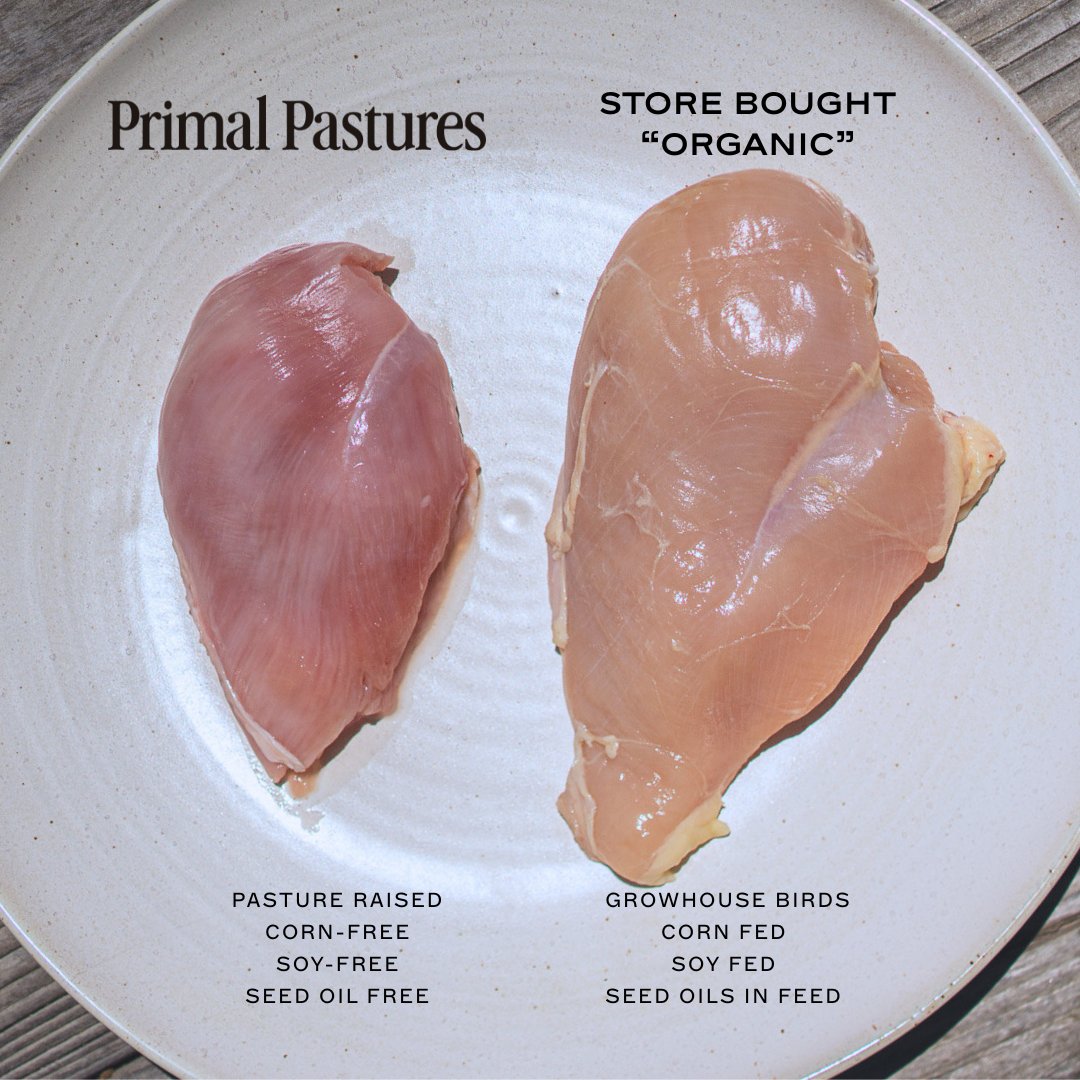
If people are (rightfully) upset about about the effect corn & soy have on the nutrient-profile of eggs, wait until they know the truth about meat. Muscle tissue reflects diet over a much longer period of time. Even the visual difference between our chicken and store-bought is striking.
We're committed to raising our chickens on a soy and corn-free diet. It's better for the animals and it produces healthier, more nutritious meat. #cornfree#soyfree#pastureraised#lowPUFA
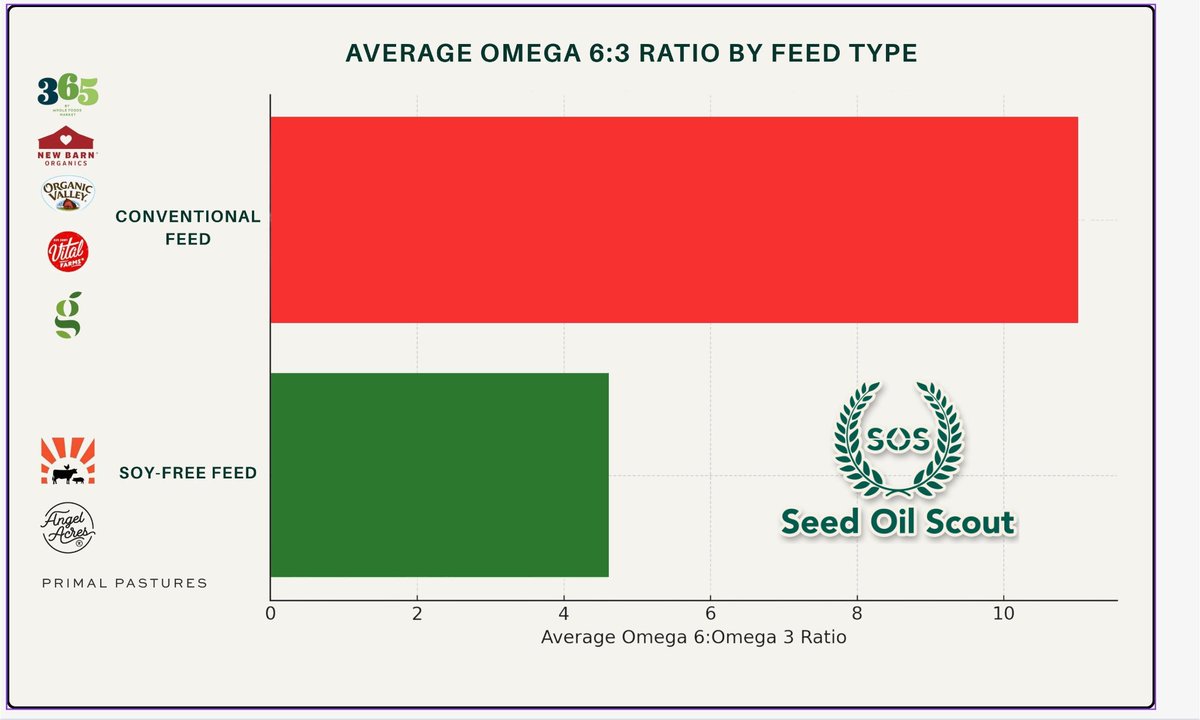
Omega-6 is essential, but excess vs. omega-3s fuels inflammation. This goes way beyond eggs: Feed transforms nutrient profiles...imagine the impact on all meat and human health. 👀. It's why we are committed to delivering the best corn-free, soy-free and seed-oil free meat. 5/5
Many have seen the viral nutrient test on that big egg brand. It reinforces what we've said since 2012: You are what what you eat, eats.
So we put our own corn-free, soy-free, seed oil-free, pastured chicken to the test with Edacious.
The numbers speak for themselves. 👇 1/5
On balance, soy free eggs are the better choice.
They lack the phytoestrogens from conventional feed, and are likely have a favorable omega 3:6 ratio.
Either way, an egg yolk generally contains less than 1g of linoleic acid.
You would be fine with a couple of yolks per day, and shouldn't drop eggs to due these concerns.
We ACTUALLY analyzed every egg in Whole Foods to confirm if these results were the real deal
Vital Farms eggs from 4 different producers were put head-to-head against the nation's best soy-free, low omega 6 eggs
Before you boycott, some Vital Farms producers actually had the LOWEST omega 6 of the bunch
Our goal is to produce the highest quality meat possible, while also caring for the environment and promoting sustainable agriculture. It's all part of our commitment to regenerative farming. #regenerativeagriculture#environmentalstewardship
🍀Happy St. Patrick's Day!🍀
Celebrating the green, not just in shamrocks, but in our fields too. Here's to regenerative agriculture and a sustainable future!
#happystpatricksday#greenpastures
By practicing regenerative farming, we're not just producing food. We're improving the health of the land, the animals and the people who eat our products. It's a win-win-win situation! #regenerativefarming#healthyeating
Rotational grazing is an important part of regenerative farming. By moving our animals to fresh pasture regularly, we're able to improve soil health and give the land time to rest which promotes forage growth. #rotationalgrazing#soilhealth
We believe in raising our animals in a way that is kind and respectful and mimics nature. That's why we choose to raise our animals on pasture, where they can graze and roam freely. #pastureraised#animalwelfare#naturedoesitbest
Pasture raised, Grass-fed and finished beef is not only more sustainable, but it's also healthier and more flavorful. Try it for yourself and taste the difference! #grassfedbeef#pastureraisedbeef