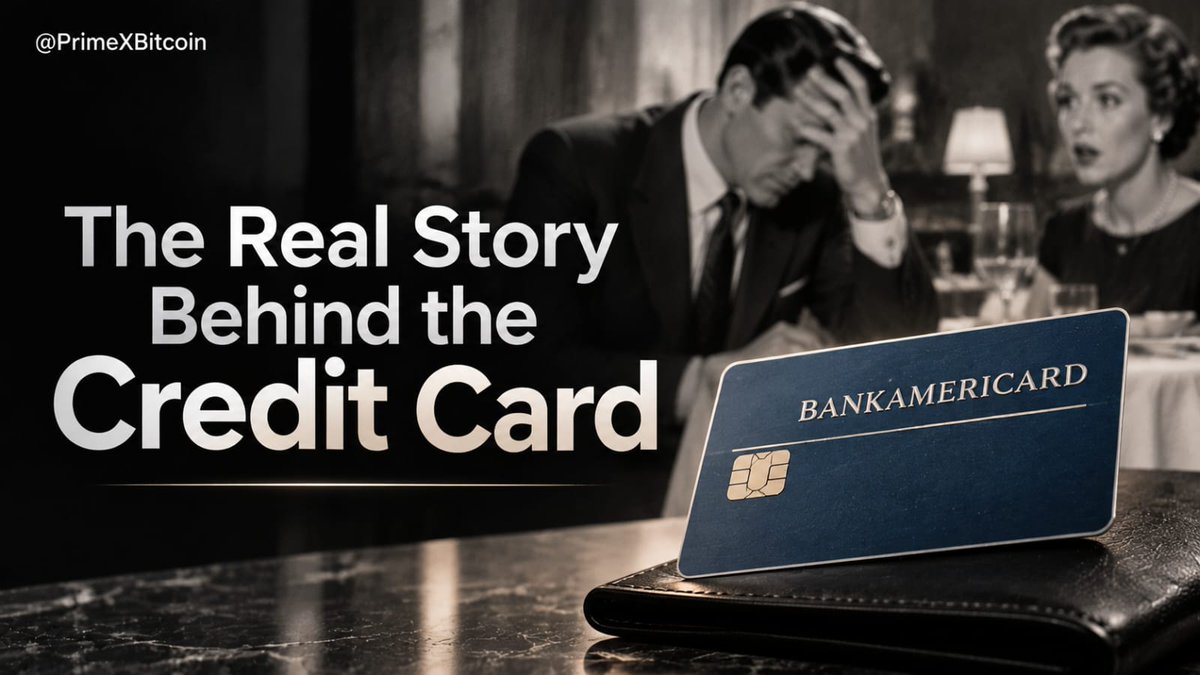
One of the most consequential financial inventions in human history is based on a complete myth.
The story goes like this: In 1949, a businessman named Frank McNamara took clients to a fancy New York restaurant. At the end of the meal, he reached for his pocket and realized he had forgotten his wallet at home. Humiliated, he supposedly invented the "Diners Club" charge card so businessmen could eat and pay their bills at the end of the month.
It is a brilliant origin story. It is also highly contested. Historians point out that this "forgotten wallet" narrative was heavily pushed by his PR team years later to build a founding myth.
The real origin of the modern credit card is far more aggressive.
A few years later, Bank of America decided to completely transform the model. Instead of a charge card requiring full payment every 30 days, they introduced revolving debt, allowing users to carry balances and pay interest.
To launch it, they did not wait for customers to apply. In September 1958, they secretly signed up over 300 local merchants, then simply mailed out 60,000 active "BankAmericards" with pre-approved limits of $300 to $500 to pre-screened households in Fresno, California.
They literally carpet-bombed a city with instant, unrequested debt just to see what would happen.
It was an absolute operational disaster. Delinquency rates spiked over 20 percent. Fraud was rampant. The bank lost an estimated $20 million. But they refused to quit. They established collections departments, built strict fraud controls, and eventually spun the network off into what became Visa.
Sometimes, massive business empires aren't born from a moment of brilliant personal inspiration. They are born from brute-force corporate distribution.