What happens in the body before we execute a complex movement? We usually focus on the action itself, but our new paper in the Journal of Motor Behavior shows the secret to expertise lies in the "prep." A quick thread on the Readiness-Efficiency Coupling 🧵👇
The fastest, most accurate movements happen when high preparatory complexity synergizes with low execution complexity. Check out the open-access paper here to see the data and state-space analysis: https://t.co/i9DJFNA9yB 🙏 Huge thanks to my co-authors!
What happens in the body before we execute a complex movement? We usually focus on the action itself, but our new paper in the Journal of Motor Behavior shows the secret to expertise lies in the "prep." A quick thread on the Readiness-Efficiency Coupling 🧵👇
Because of this intense preparation, the actual execution becomes highly automated and metabolically efficient (Hexec↓). The motor system is brilliant: it ramps up complexity to plan, so it can cruise on autopilot when it's time to move. 📉⚙️
A preview of the work I will be presenting in Piran next week @mobi_conference with co-authors. We recently completed a successfull pilot of whole-body motor sequence learning using #EEG & #MoCAP. We are making progress w. using EEG to individualise & customise motor learning!
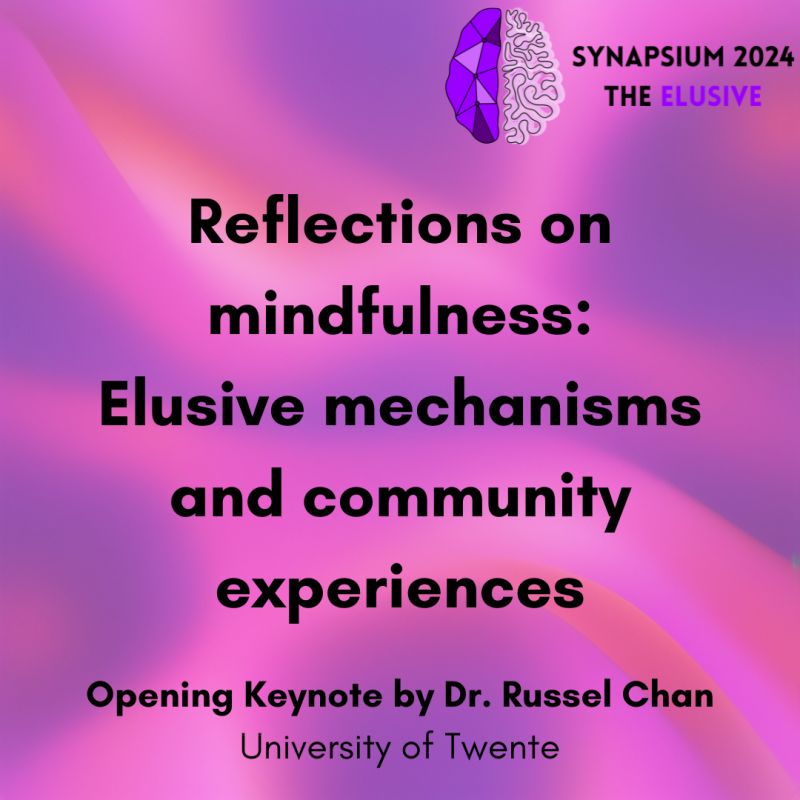
I'm honoured to be a keynote for next week's #Synapsium2024@Radboud_Uni , @DondersInst. It is abt the journey of mindfulness resarch, about how mindfulness community programs can be succuessful.
More: https://t.co/Qu35QzfzzR
Signup: https://t.co/mtxvuiF7Ro.
our design thinking that is lacking in these kinds of art, wellness and mindfulness programs. Full article: Art, meditation and cognitive science: a framework for museum-based community meditation programme during the COVID-19 pandemic in Singapore https://t.co/zBJaCLSML8
One of the most rewarding experiences during the COVID-19 pandemic was to collaborate and co-design an online art and wellness program with @SgArtMuseum and my co-authors, leveraging on my expertise as a cognitive neuroscientist and meditation teacher.
We understood that the public needed help to alleviate loneliness and disconnect (which is prevalent even without a pandemic). In the last months, we worked to publish our framework and documented the programme so that others may learn, understand and adapt
Common Probability Distributions That Occur In Nature And Why Mathematics Is The Language Of The Universe
Fundamentally the patterns of the universe repeat themselves making machine learning and AI possible.
Basically, when training ML models, including NNs we are attempting to model the patterns in the data. A good model can predict unseen data points that are part of the original data distribution.
Here are the common probability distributions and where they occur naturally
Symmetry and normal distributions - Nature loves balance. You see it in butterfly wings, faces, and even in physical laws. Natural phenomena that exhibit symmetry often fit well with a normal distribution.
The Central Limit Theorem tells us that the sum of many independent, identically distributed variables approaches a normal distribution. These distributions are characterized by a mean and a standard deviation and everything from human heights, IQ scores, and even the velocities of molecules in a gas follow a normal distribution
Log-normal distribution - If the logarithm of the variable follows a normal distribution, then the variable itself has a log-normal distribution. The distribution of financial assets, or the sizes of particles generated by grinding, blood pressure, and metabolic rates in various organisms often follow a log-normal distribution.
The Log-Normal Distribution often arises from multiplicative growth processes, where you're repeatedly multiplying by some random factor.
Uniform Distribution. This is self-explanatory. All outcomes are equally likely. In the continuous case, the probability density function is flat between the minimum and maximum values. Rolling a fair die, or picking a card from a well-shuffled deck follows uniform distributions
Poisson Distribution It describes the probability of a given number of events occurring in a fixed interval of time or space. The events must occur with a known constant mean rate and independently of each other. It is the go-to for predicting rare events.
Poisson distribution models the number of times a radioactive atom decays in a given time period, or the number of cars passing through a certain point in a given time frame.
If a particular intersection sees an average of 10 cars passing through it per minute, the Poisson Distribution can estimate the probability of 15 cars passing through in the next minute. Similarly in sports like hockey or soccer where goals are rare, you can use distribution to model the number of goals scored by each team.
Bernoulli Distribution, the binary star of the probability universe! Scientifically speaking, it's a discrete probability distribution that models a single experiment with exactly two outcomes, often termed "success" and "failure," and is characterized by a single parameter p, the probability of success.
The flip of a coin, genetic inheritance (you either have a trait or you don't), and the polarization of a single photon (either vertical or horizontal) model this distribution.
Binomial Distribution It describes the number of successes in a fixed number of independent Bernoulli trials, each with the same probability of success.
For example, The number of heads when flipping a coin multiple times, or the number of defective items in a batch of manufactured goods can be modeled with this distribution.
Exponential Distribution models the time you have to wait for the next event in scenarios where events happen independently and at a constant average rate. It's often used to describe phenomena like the time between bus arrivals or the intervals between radioactive decay events.
In essence, it's the go-to distribution for understanding "waiting times" in various natural and man-made systems.
This is a summary of the most common distributions. There are a bunch of other distributions that are related or variations on the above distributions and the image below captures some of them.
These naturally occurring distributions speak to why mathematics is the language of the universe and how you can use it to model and predict its behavior
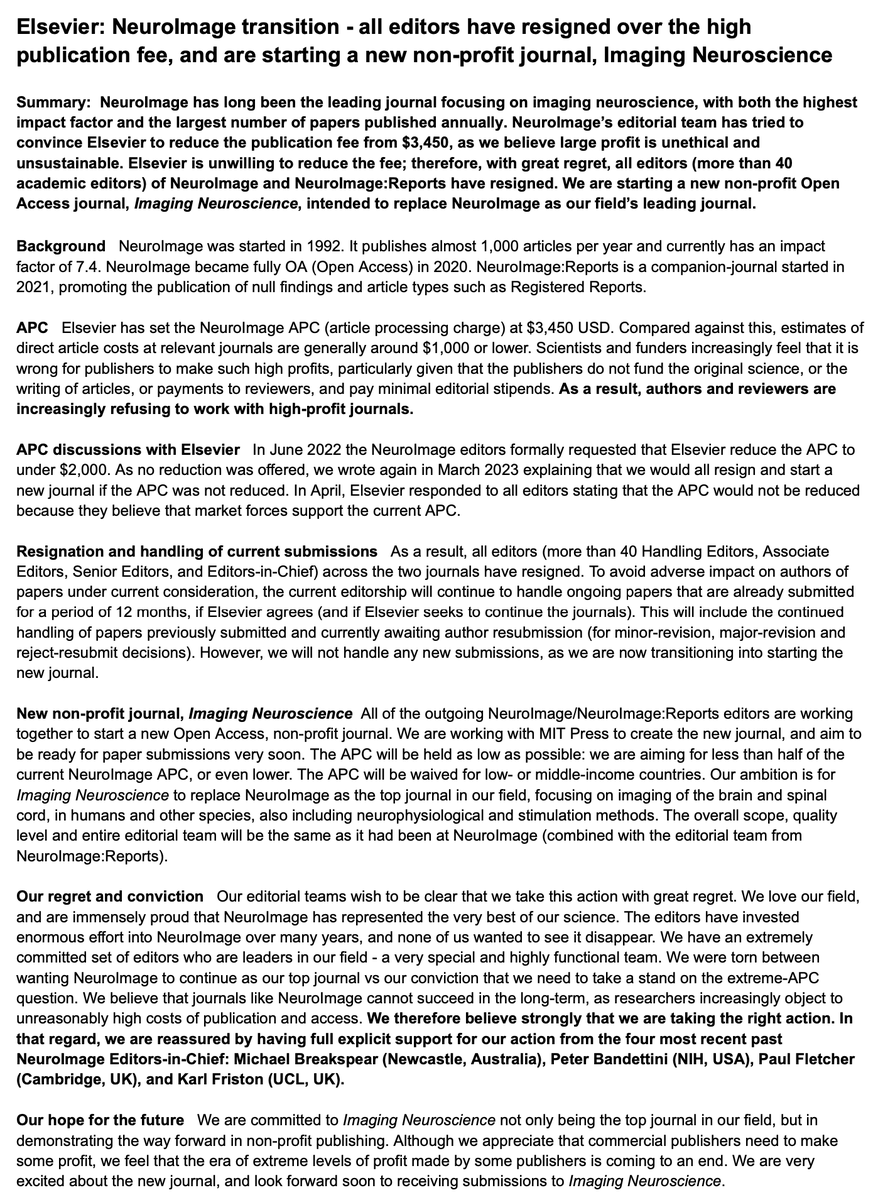
All NeuroImage and NeuroImage:Reports editors have resigned over the high publication fee, and are starting a new non-profit journal
https://t.co/DmnwDKVCK7
This comes with great regret, and a huge amount of thought and discussion- please read announcement to get more details.
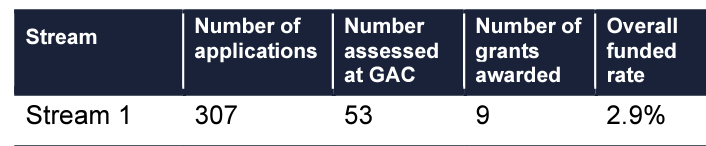
2.9% success rate = 9 grants awarded from 307 applicants!
*For the stream specifically identified for ECRs*
And no assessor feedback!
This is a complete failure of policy, funding & leadership
"The MRFF aims to transform health and medical research" - yeah right ...
Thank you for having me #CNS2023#SanFrancisco 🎉 If you are interested in knowing more about mindfulness as a cognitive training tool (and resting-state EEG), please reach out!
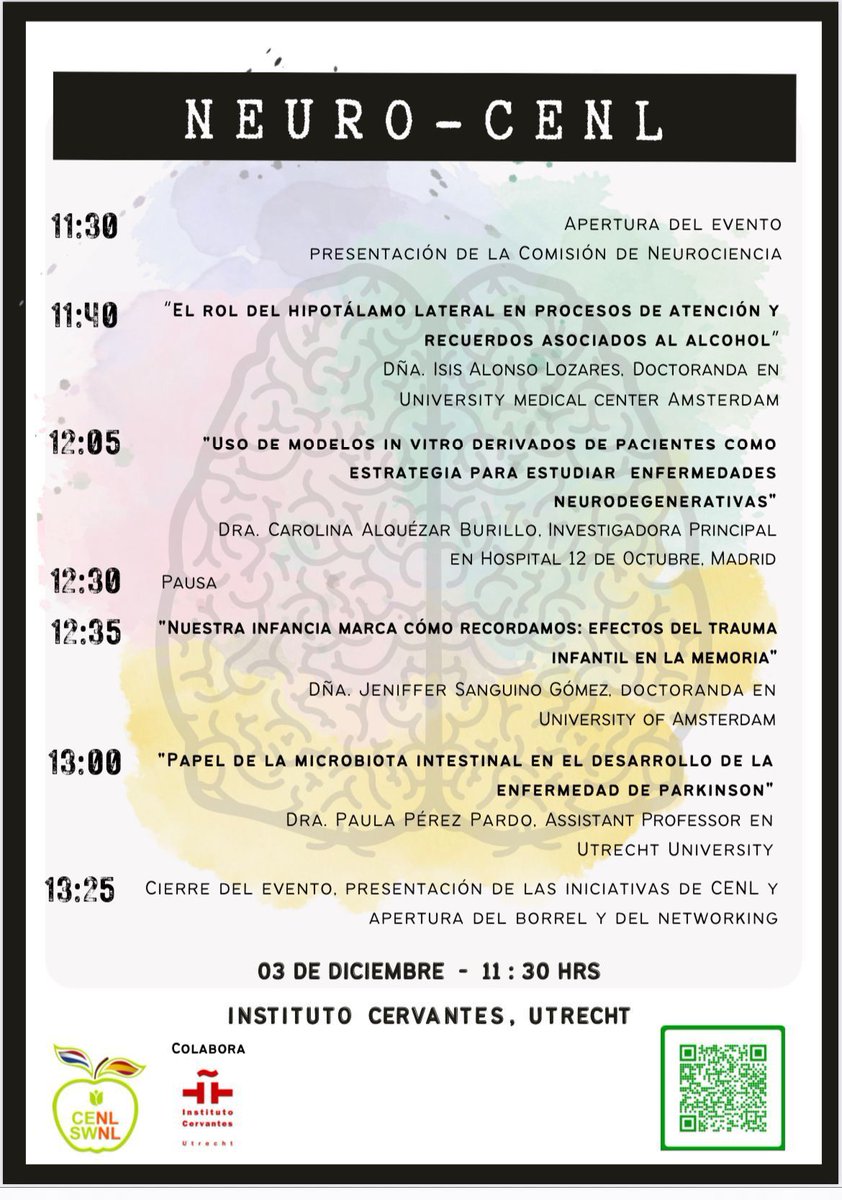
Our #NeuroCENL talks are around the corner! 🧠
The event will finally be in english 🇬🇧
Thank you so much @FECYT_Ciencia! We are so grateful for all the support.
All the information regarding the schedule just below 👇
2️⃣ días.
Veníos al @ICUtrecht a hablar de IA con @J0A0Valente y @sierra_carles este miércoles. A los mandos de esta mesa estará @eTalaveraM 👏
¡Os esperamos!