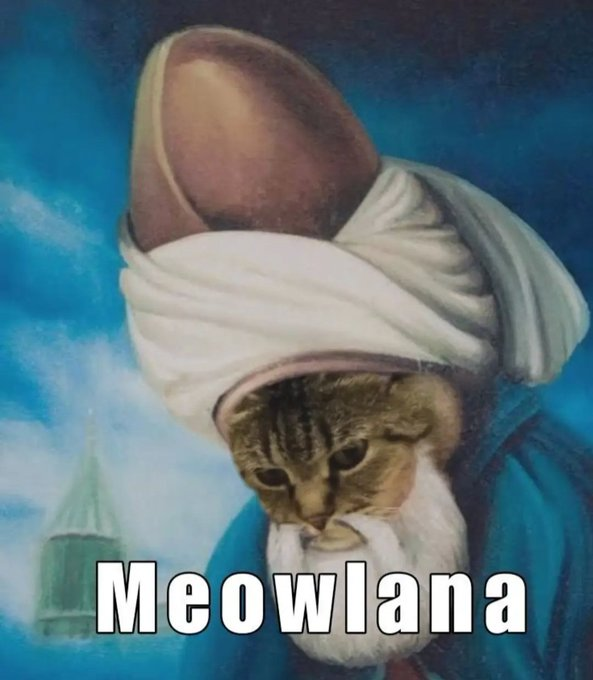
If an intelligence is perfectly mapped, yet still misses the essence of existence, where exactly does the missing variable hide? It’s not about the strength of the code.
Follow the error code back to its source. The real variable can't be computed 🕵️♂️💾
#HiddenTruth#ERROR404
"I built this empire alone."
— An organism that can't digest bread without 30 trillion gut bacteria on shift.
We mistake the pilot seat for the engine. The "self-made" illusion dies under a microscope. 🔬👀
#LogicAndReason#HumanEgo
Sky This Week: August 14 to 21
Two planets mingle in the morning sky as Venus meets the Moon and Dione skims Saturn's pole in the sky this week.
Image: Mercury-Jupiter-Conjunction
Credit: Stellarium
Read more:
https://t.co/yqoG1HTOFK
SonnyFaz reacts to Dan Bilzerian expose why Islam isn't the problem in the West ❤️🩹🤲
"It's so obvious that Nick Fuentes is 1000x more of a fed than Dan could ever be. The strongest evidence of that is how Nick reacts after getting the message of Islam."
The Ballad of Nawab Hyder Ali.
George Washington reportedly ordered an artillery salute for Nawab Hyder Ali, who aided the American revolution and inspired the revolutionaries, who named a warship after him and sang ballads in his honor. This was one such ballad.
✨You’ve seen this in every math class:
sin(a ± b) = sin a cos b ± cos a sin b
sin(2a) = 2 sin a cos a
cos(2a) = 1 − 2 sin²(a)
🚨But did you know these formulae came from a Muslim scholar 1000 years ago?
Meet Abū al-Wafā al-Būzjānī, the genius who shaped Trigonometry. 📐
Abū al-Wafā Būzhjānī (d. 998) was a Persian Muslim mathematician and astronomer from Khorasan. Born in Būzjān (near Nishapur, Iran), Būzhjānī showed early brilliance in mathematics and geometry.
He later moved to Baghdad, then the heart of the Islamic Golden Age, a city of scholars, libraries, and observatories.
In Baghdad, he became one of the leading scientists of the House of Wisdom (Bayt al-Ḥikmah). Here, he studied Greek works like Euclid and Ptolemy, and expanded them far beyond their original limits.
📐 His Contributions to Mathematics:
He established several trigonometric identities such as [sin(a±b)] in their modern form:
{sin(α ± β)= Sinα Cosβ ± Cosα Sinβ}
{sin(a + b) = Sin(a)Cos(b) + Cos(a)Sin(b)}
{Cos(2a) = 1-2sin²(a)}
{Sin(2a) = 2Sin(a) Cos(a)}
He compiled tables of sines and tangents at 15° intervals, introduced secant and cosecant, and explored the relationships between all six trigonometric lines. His work made both mathematics and astronomy quantitatively precise.
He also studied geometry, arithmetic, and number theory, writing detailed commentaries on al-Khwārizmī and Diophantus.
Some sources suggest that he introduced the tangent function, although other sources give the credit for this innovation to al-Marwazi.
🌌 His Work in Astronomy:
Abū al-Wafā designed and built a wall quadrant, a large, fixed instrument used to measure celestial altitudes with remarkable accuracy.
This invention influenced later observatories across the Islamic world.
His masterpiece, Kitāb al-Majisṭī (“The Almagest”), improved upon Ptolemy’s astronomy, described planetary motion, and developed mathematical methods for finding the Qibla direction, the direction of prayer. 🕌
In 997, he participated in an experiment to determine the difference in local time between his location, Baghdad, and that of al-Biruni (who was living in Kath, Uzbekistan).
Their result was astonishingly accurate, within about 1 hour of modern calculations. ⏱️
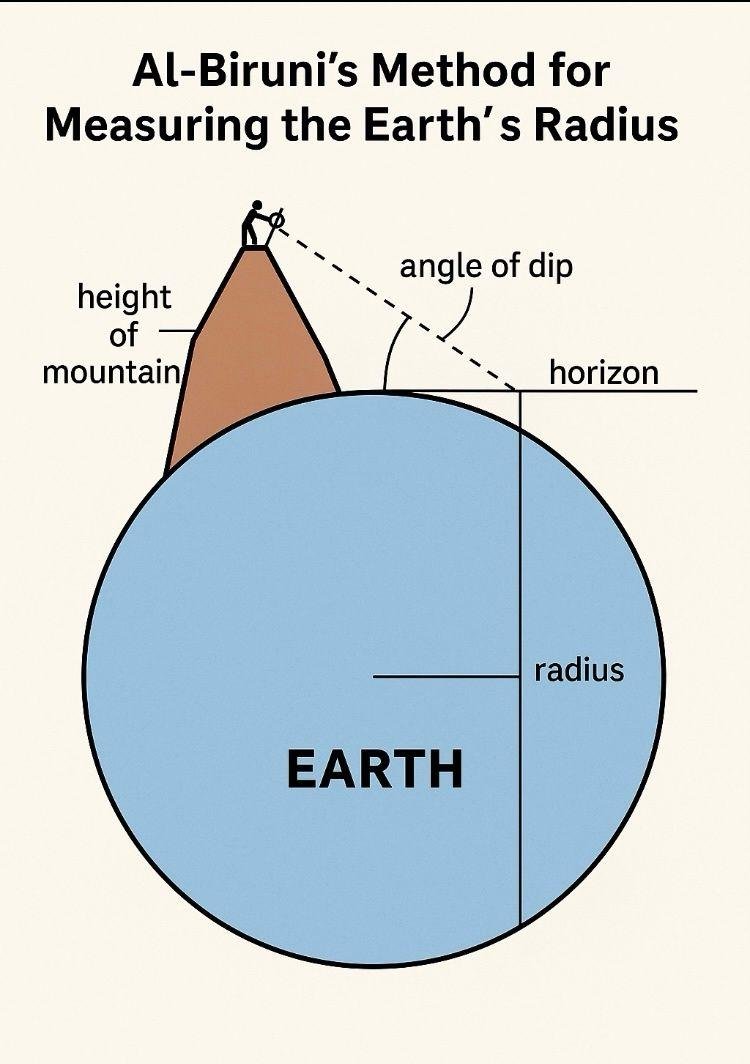
✨In the 11th century, the famous Muslim polymath Al-Biruni figured out the Earth's radius using nothing more than a mountain and a bit of trigonometry. 📐
The insight was brilliant:
Stand on a mountain, and the horizon dips below the horizontal. That dip isn't an optical illusion; it's a geometric signal. It creates a right triangle where the mountain's height (h) and the Earth's radius (R) are the only variables.
Measuring the mountain's height without climbing down:
He used a simple trigonometric trick: from two points on the plain, he measured the angle to the peak. Knowing the distance between those points, he calculated the mountain's height with a formula surveyors still use today:
H = D / (cot A1 – cot A2)
From the peak, he measured the dip angle to the horizon: α = 34′ (just over half a degree):
R = h * cos(α) / (1 - cos(α))
How did he compute the cosine of such a tiny angle?
Without modern calculators, he used a sophisticated technique: he started with the known value of cos(60°) and used the half-angle formula to work his way down to the required value for his 34′ angle.
He calculated the Earth's radius as 6,340 km. The modern value is 6,371 km.
An error of less than 1%. In 1030 CE.
Dear @AnnieJacobsen,
You told millions of people a story about Dr. Aafia Siddiqui on Joe Rogan @joerogan that her attorney, Clive Stafford Smith, says is filled with false claims and nonsense.
So let’s put the claims to the test:
Come on @TheDeenShow and face Clive @CliveSSmith directly. Bring your evidence. He’ll bring his.
You told the story to millions. Now defend it in front of the man who actually represents her.
Will you accept?
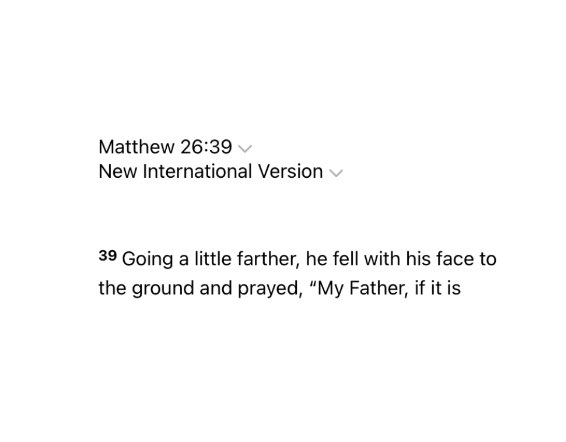
Jesus (pbuh) didn’t teach Christianity & didn’t call his followers Christians. People did. God gave Moses (pbuh) the Torah but didn’t call the religion Judaism. People did. But both Jesus (Matthew 26:39) and Moses (Exodus 34:8) taught their followers to bow down #Islam
A barber was once cutting a man's hair and the barber said: “I do not believe in the existence of God.”
The Muslim asked: “Why not?”
The barber said: “There is so much misery and chaos in the world. If God existed, this mess would not exist."
The Muslim said: "I also do not believe in barbers..."
The barber asked confused: “What do you mean?”
The Muslim said to the barber: “Do you see those men outside with long hair?”
The barber said: “Yes.”
The Muslim said: “If barbers existed, people with long and messy hair would not exist.”
The barber said: “We exist, but people do not come to us!“
The Muslim then said: “Exactly. God also exists, but people do not turn to God for guidance. That is why there are so many problems in the world."


![IslamicSH_'s tweet photo. ✨You’ve seen this in every math class:
sin(a ± b) = sin a cos b ± cos a sin b
sin(2a) = 2 sin a cos a
cos(2a) = 1 − 2 sin²(a)
🚨But did you know these formulae came from a Muslim scholar 1000 years ago?
Meet Abū al-Wafā al-Būzjānī, the genius who shaped Trigonometry. 📐
Abū al-Wafā Būzhjānī (d. 998) was a Persian Muslim mathematician and astronomer from Khorasan. Born in Būzjān (near Nishapur, Iran), Būzhjānī showed early brilliance in mathematics and geometry.
He later moved to Baghdad, then the heart of the Islamic Golden Age, a city of scholars, libraries, and observatories.
In Baghdad, he became one of the leading scientists of the House of Wisdom (Bayt al-Ḥikmah). Here, he studied Greek works like Euclid and Ptolemy, and expanded them far beyond their original limits.
📐 His Contributions to Mathematics:
He established several trigonometric identities such as [sin(a±b)] in their modern form:
{sin(α ± β)= Sinα Cosβ ± Cosα Sinβ}
{sin(a + b) = Sin(a)Cos(b) + Cos(a)Sin(b)}
{Cos(2a) = 1-2sin²(a)}
{Sin(2a) = 2Sin(a) Cos(a)}
He compiled tables of sines and tangents at 15° intervals, introduced secant and cosecant, and explored the relationships between all six trigonometric lines. His work made both mathematics and astronomy quantitatively precise.
He also studied geometry, arithmetic, and number theory, writing detailed commentaries on al-Khwārizmī and Diophantus.
Some sources suggest that he introduced the tangent function, although other sources give the credit for this innovation to al-Marwazi.
🌌 His Work in Astronomy:
Abū al-Wafā designed and built a wall quadrant, a large, fixed instrument used to measure celestial altitudes with remarkable accuracy.
This invention influenced later observatories across the Islamic world.
His masterpiece, Kitāb al-Majisṭī (“The Almagest”), improved upon Ptolemy’s astronomy, described planetary motion, and developed mathematical methods for finding the Qibla direction, the direction of prayer. 🕌
In 997, he participated in an experiment to determine the difference in local time between his location, Baghdad, and that of al-Biruni (who was living in Kath, Uzbekistan).
Their result was astonishingly accurate, within about 1 hour of modern calculations. ⏱️](https://pbs.twimg.com/media/HHf61X_aIAAM_05.png)







![IslamicSH_'s tweet photo. ✨You’ve seen this in every math class:
sin(a ± b) = sin a cos b ± cos a sin b
sin(2a) = 2 sin a cos a
cos(2a) = 1 − 2 sin²(a)
🚨But did you know these formulae came from a Muslim scholar 1000 years ago?
Meet Abū al-Wafā al-Būzjānī, the genius who shaped Trigonometry. 📐
Abū al-Wafā Būzhjānī (d. 998) was a Persian Muslim mathematician and astronomer from Khorasan. Born in Būzjān (near Nishapur, Iran), Būzhjānī showed early brilliance in mathematics and geometry.
He later moved to Baghdad, then the heart of the Islamic Golden Age, a city of scholars, libraries, and observatories.
In Baghdad, he became one of the leading scientists of the House of Wisdom (Bayt al-Ḥikmah). Here, he studied Greek works like Euclid and Ptolemy, and expanded them far beyond their original limits.
📐 His Contributions to Mathematics:
He established several trigonometric identities such as [sin(a±b)] in their modern form:
{sin(α ± β)= Sinα Cosβ ± Cosα Sinβ}
{sin(a + b) = Sin(a)Cos(b) + Cos(a)Sin(b)}
{Cos(2a) = 1-2sin²(a)}
{Sin(2a) = 2Sin(a) Cos(a)}
He compiled tables of sines and tangents at 15° intervals, introduced secant and cosecant, and explored the relationships between all six trigonometric lines. His work made both mathematics and astronomy quantitatively precise.
He also studied geometry, arithmetic, and number theory, writing detailed commentaries on al-Khwārizmī and Diophantus.
Some sources suggest that he introduced the tangent function, although other sources give the credit for this innovation to al-Marwazi.
🌌 His Work in Astronomy:
Abū al-Wafā designed and built a wall quadrant, a large, fixed instrument used to measure celestial altitudes with remarkable accuracy.
This invention influenced later observatories across the Islamic world.
His masterpiece, Kitāb al-Majisṭī (“The Almagest”), improved upon Ptolemy’s astronomy, described planetary motion, and developed mathematical methods for finding the Qibla direction, the direction of prayer. 🕌
In 997, he participated in an experiment to determine the difference in local time between his location, Baghdad, and that of al-Biruni (who was living in Kath, Uzbekistan).
Their result was astonishingly accurate, within about 1 hour of modern calculations. ⏱️](https://pbs.twimg.com/media/HHf669za0AErbcc.jpg)