Fighting carceral exploitation through research. UChicago student @ Center for Global Human Rights and a systematic theologian, @Martin Marty Center Fellow
What I learned from @johnsearsleake new book is the importance of questioning institutions we’re told to trust—and following the incentives behind them.
That framework has made me look more critically at America’s organ and tissue donation system: consent, brain-death determinations, OPO oversight, financial incentives, and what happens to our loved ones after death. Families deserve transparency. Donors deserve dignity. And the public deserves honest answers. If government oversight is failing, and profit can influence institutions entrusted with the dead, we should be asking hard questions—not accepting reassuring slogans.
Our loved ones are not commodities. Accountability should not end at death.
Questioning institutional trust: Leake encourages scrutiny of governments, medical authorities, pharmaceutical companies, and media. In organ donation, this means examining transparency and potential conflicts of interest within transplant organizations.
Following financial incentives: His framework invites questions about financial interests and accountability. In organ donation, this includes examining the economics of organ procurement, transplantation, and hospital reimbursement.
Critical thinking over slogans: Leake emphasizes independent examination of evidence. In organ donation, this means questioning consent, brain-death criteria, donor rights, outcomes, and oversight rather than accepting conventional claims uncritically.
https://t.co/ZkUyZRpJLM
Questioning institutional trust: Leake encourages scrutiny of governments, medical authorities, pharmaceutical companies, and media. In organ donation, this means examining transparency and potential conflicts of interest within transplant organizations.
Following financial incentives: His framework invites questions about financial interests and accountability. In organ donation, this includes examining the economics of organ procurement, transplantation, and hospital reimbursement.
Critical thinking over slogans: Leake emphasizes independent examination of evidence. In organ donation, this means questioning consent, brain-death criteria, donor rights, outcomes, and oversight rather than accepting conventional claims uncritically.
https://t.co/ZkUyZRpJLM
Tonight, on 20/20 CHAT, I’m talking to Dr. Heidi Klessig @heidiklessigmd about the hard-to-accept horror of organ donation/harvesting and the shocking truth behind the brain death lie.
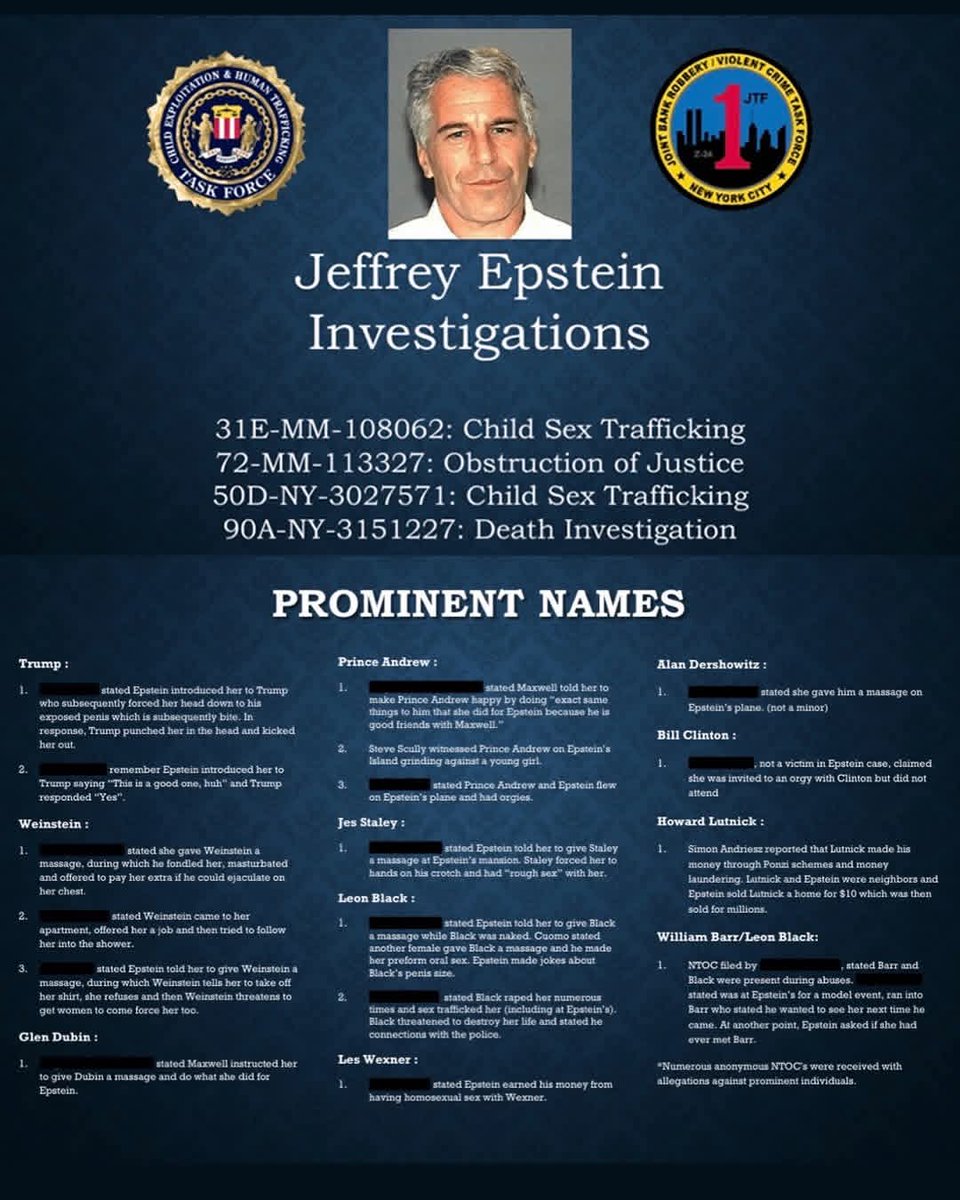
Finally, seeing these names in an official FBI presentation rather than just gossip is damning. The sheer volume of high-profile figures from politics and business on a 'Prominent Names' list underscores how enabling his network was.
Courtesy of @MeidasTouch
Found in the Epstein Files: It appears the FBI Child Exploitation and Human Trafficking Task Force put together this presentation to explain the various investigations surrounding Jeffrey Epstein.
This page, titled 'PROMINENT NAMES,' features the names and accusations regarding well-known figures including Donald Trump, Harvey Weinstein, former Prince Andrew, Alan Dershowitz, Howard Lutnick, Bill Clinton, Bill Barr, and others.
👇👇👇👇
Bayou creates investigative, storytelling content, exposing corruption, crime, and hidden truths across Louisiana. His analysis of the ITUC report was quite brilliant. #ITUCReport#McDonald
New Video from Bayou "US brands covering up prison slavery profits". In this hard-hitting ITUC feature, he exposes how corporations benefit from forced prison labor while hiding the truth from consumers. #PrisonLabor#ITUCReport#HumanRights
https://t.co/SgDVELi7wn
@traceyh415 Tracey's new video shines a light on forced labor and the struggles of incarcerated women, drawing from her own time in prison. Known for her powerful memoir The Big Fix, her voice is offering truth, hope, and a call to action. #ForcedLabor
https://t.co/bfHqbf99nI
BREAKING - This gang member is issuing a warning to President Trump, stating not to send troops to Chicago, warning that the gangs will beat the National Guard.
People are increasingly aware of corporate greed and ethical consumerism. Connecting forced prison labor to well-known brands and government kickbacks will outrage viewers.
“Private prison needs more bodies to grow. Corporations have no place in any system that claims to be about justice,” @biancatylek on mass detention being treated as business. https://t.co/sgqZFJPVoW
New enforcement moves risk criminalizing more immigrants & people experiencing homelessness — pushing people into detention systems where forced or underpaid work is already common. It’s exploitation. #EndPrisonSlavery#HousingNotJail
White House press secretary Karoline Leavitt said that homeless people in D.C. could face jail time if they do not use certain resources. #Homelessness#nationalguard#workinjail https://t.co/Y0DmnIgn6z
HRW’s new report documents pervasive human rights violations at Krome North Service Processing Center, Broward Transitional Center, and the Federal Detention Center in Florida between January and June 2025. #forcedlabor#slavery
https://t.co/syOVuAXyDA
In the U.S., the average hourly pay for incarcerated workers is $0.13-$0.52 for non-industry jobs and $0.30-$1.30 for jobs in state-owned correctional industries.
Series Episode 2: "What Can You Buy With $1?"
Prisoners forced towork for as little as $0.1/hr can’t even afford basic items. It's No.2 video in our growing series inspired by the ITUC report, which revealed U.S. prison labor practices violate ILO Convention No. 105.#forcedlabor
Check out Deidra| Naturally Kurious's video! She zeroes in on racial bias—Black and Brown inmates stuck in menial, low-skill jobs while White prisoners secure trades positions—echoing post–Civil War convict-leasing legacies. #forcedlabor#slavery#ITUC https://t.co/gmxRvCyygT
TikTok’s “fact-checked conspiracy” creator who digs up the wildest truths—no myths needed. His latest video breaks down the new ITUC report showing nearly 800,000 incarcerated people forced to work. Join the movement to #EndPrisonSlavery
https://t.co/TjOqqfAF3m
Incarcerated people and their loved ones will continue to be exploited by sheriffs and telecom companies for 2 more years, thanks to the @FCC delaying the reduction of prison & jail phone rates.
Shameful to say the least.
https://t.co/7hV1hSPUDv
Forced prison labor isn’t a relic—it’s modern slavery funded by tax dollars and corporate profit. This ITUC report is a rare global spotlight on our prisons. #EndPrisonSlavery
The International Trade Union Confederation (ITUC) report detailing widespread forced labor in U.S. prisons, and the United States’ potential violations of ILO Convention No. 105.
https://t.co/a5jhWQyG4A
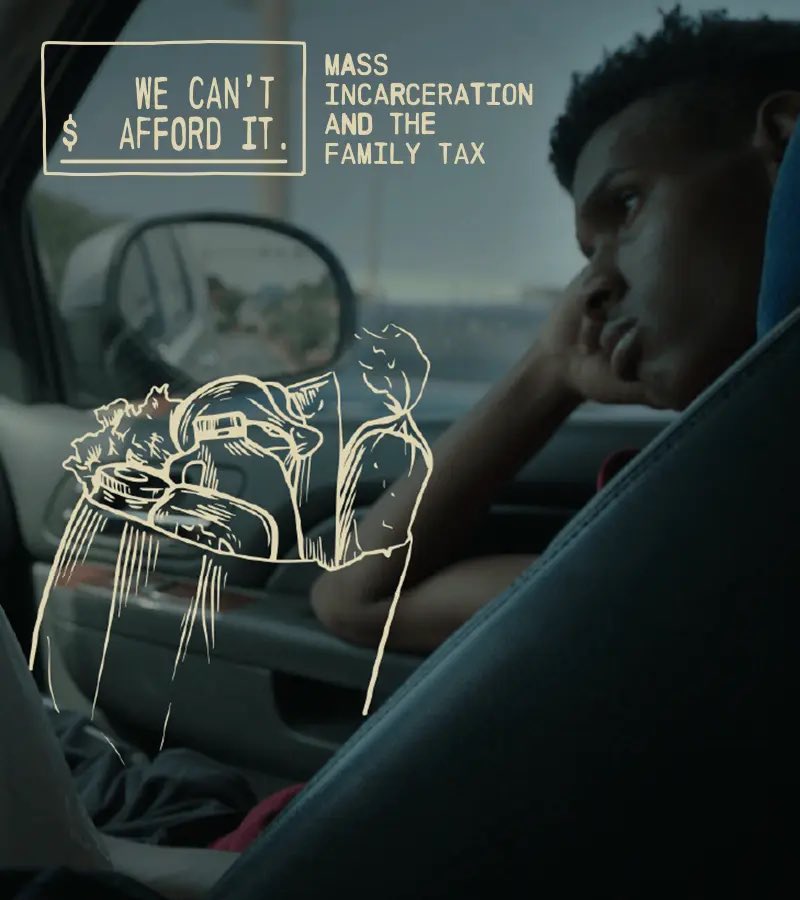
Black families shoulder 2.5× the burden of white families ($8,005 vs. $3,251), driving intergenerational poverty and racial wealth gaps .
One in five families is forced to move when a loved one is behind bars, costing an average of $2,360. #FamilyTax#PrisonReform
REQUIRED READING out now from @FWDus "People with an immediate family member in prison spend nearly $4,200 annually to support them—more than one-quarter (27%) of income for someone living at the federal poverty line." https://t.co/b6KP9BpiPw
True rehabilitation should never mean coerced labor for pennies. Three out of four incarcerated people report being forced to work under threat of punishment—like solitary or loss of privileges—if they refuse. We must push for real reform, not just a rebrand. #LaborOrSlavery
Rethinking 'Rehabilitative Work' in U.S. Prisons. They call it rehabilitation—but for many incarcerated people, it’s coerced labor for pennies, backed by threats, punishment, or loss of privileges.
Follow us. Join the conversation. Use the hashtag: #LaborOrSlavery