@Feliciamtang Hi @Feliciamtang , I’m currently a college student but very eager to gain real-world experience. I’m not looking for pay, just the opportunity to work hands-on, learn, and contribute meaningfully. I’m open to exploring and growing in ML, backend, and related areas.
It's wild that Google wrote the Transformers paper (that birthed GPTs) AND open sourced Chromium..
Both of which will (eventually) lead to the downfall of their search monopoly.
History lesson in there somewhere.
Holy shit...Google just built an AI that learns from its own mistakes in real time.
New paper dropped on ReasoningBank. The idea is pretty simple but nobody's done it this way before. Instead of just saving chat history or raw logs, it pulls out the actual reasoning patterns, including what failed and why.
Agent fails a task? It doesn't just store "task failed at step 3." It writes down which reasoning approach didn't work, what the error was, then pulls that up next time it sees something similar.
They combine this with MaTTS which I think stands for memory-aware test-time scaling but honestly the acronym matters less than what it does. Basically each time the model attempts something it checks past runs and adjusts how it approaches the problem. No retraining.
Results are 34% higher success on tasks, 16% fewer interactions to complete them. Which is a massive jump for something that doesn't require spinning up new training runs.
I keep thinking about how different this is from the "just make it bigger" approach. We've been stuck in this loop of adding parameters like that's the only lever. But this is more like, the model gets experience. It actually remembers what worked.
Kinda reminds me of when I finally stopped making the same Docker networking mistakes because I kept a note of what broke last time instead of googling the same Stack Overflow answer every 3 months.
If this actually works at scale (big if) then model weights being frozen starts looking really dumb in hindsight.
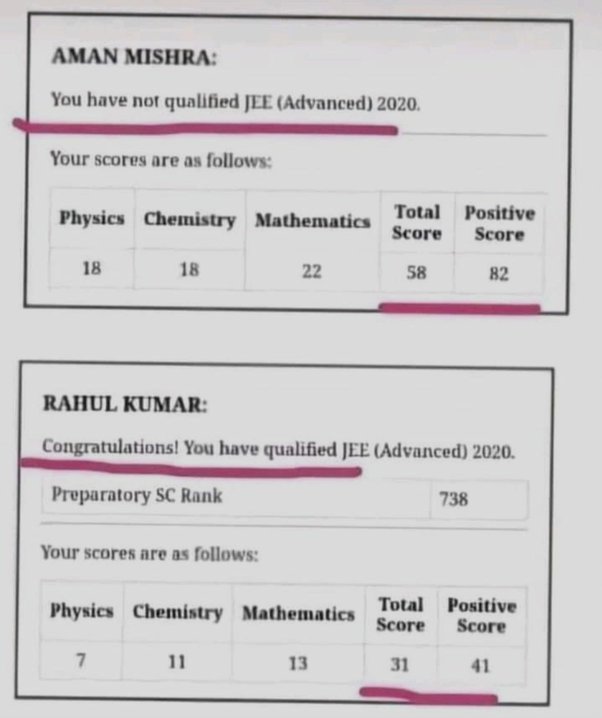
Score- 82
Status- Rejected
Score- 41
Status- Selected
Even if you study for 20 hours a day to secure a seat at IIT, your seat will be given to someone who has scored half of your marks.
In India, hard work has no value. It is cheaper than table salt.