Family Business Since 1984/ Third Generation
Channel Seed, Agronomy, Fertilizer, Sprayer Parts, Chemical Inductors,
Poly/Stainless Tanks, UTV/ATV Sprayers
Dry year mean perfect harvest conditions?
Noticing stalk rot beginning to take place.
Crop stress, limited water/nutrient uptake. Plants begin to translocate carbohydrates from stalk to put into kernel fill & development. Disease begins setting into stalk.
Keep an eye out!
@JasonSchley Ran 18 tests from Pre-plant and again at V5-V6. Each time we saw on average 14.93 lb decrease in WEON.
Why?
Plants are able to uptake it.
Same on Available P: 2 of 18 fields had MAP applied yet saw 2.94 lb increase in Avlb P in correlation w/ 3.77 ppm increase on CO2 Resp
Pro Farmer vs Aug USDA vs Final USDA 🌽
Since 2014 the tour has correctly pointed in the direction of where final yield came in compared to August in all but two years
The two years it was wrong were 2017 and 2023
Let’s look at some other data..
Pro Farmer: 173.2
Aug USDA: 180.7
Difference: -7.5
This is the largest difference between the tour and the Aug USDA in at least a decade
Here are some other years where Pro Farmer was more than 5 bpa below the Aug estimate and what happened to final yield:
2019:
• Tour was -6.2 bpa below Aug USDA
• Final USDA was -2 bpa below Aug USDA
2022:
• Tour was -7.3 bpa below Aug USDA
• Final USDA was -2 bpa below Aug USDA
2025:
• Tour was -6.1 bpa below Aug USDA
• Final USDA was -2.3 bpa below Aug USDA
So each time the tour has been this far below the USDA’s August number, the final yield has came in lower
However, the final yield did not come all the way down to Pro Farmers number
Take a look at 2019, 2022, and 2025 on the table for reference
Over the last 10 years, Pro Farmer has on average came in -2.5 bpa lower than the final USDA
Enjoy this post?
Try our daily grain market updates & alerts for free
👉 https://t.co/JvQ1KIpXXU
Potassium & K:Mg
I’m going through some data that is getting presented at a meeting tomorrow and one of the things that has stuck out to me is Potassium (K) both in the soil and in plants.
We’re working with about 2,500 data points from each, all in Indiana. Here is my interpretation of what I’m seeing:
•Soil test K (ammonium acetate) is adequate or above adequate 73.4% of the time.
•Soil test Mg (ammonium acetate) is high or very high 85.3% of the time.
•Tissue K (corn) is low or very low over 60% of the time across the growing season. Over 64% of the time from R1-R5 we are low or very low.
•Soil K:Mg is low to very low 65% of the time (the goal is 1:1 for K availability)
What’s going on?
1) There are only so many seats at the table (soil colloid). Think CEC. Most of your seats will be taken up by Ca and Mg. They are a 2+ charge. Cations like K and H are only 1+ charge.
2) When a K:Mg ratio is 0.5 or lower, you have Mg squeezing out K spots at the table.
How should we address this? Should we try to displace Mg or apply more K to kick some Mg off the colloid?
My argument is no. It’s not going to happen. Not by apply 300-400# of potash in the fall (I don’t even think 200# in the fall would).
1) An in season spread of 50-100# of potash could be a great starting point and base.
2) But layering on a well-timed foliar K could really be of benefit too. In the reproductive stages, the crop will work to move sugars from the parent (the plant) to the offspring (ear, pod, fruiting site). A Potassium Acetate application could help with this. And by bypassing the soil, we ensure the crop is seeing the K.
*Potassium Acetate paired with Boron could move the needle even further. These two work as synergists.
What is your K plan and do you have plans to apply more this season?
Corn Root Worm rearing its head up here now that silks are coming out. Corn back on fields where severe feeding came 2 years ago. Interested to see pollination & late season stand-ability.
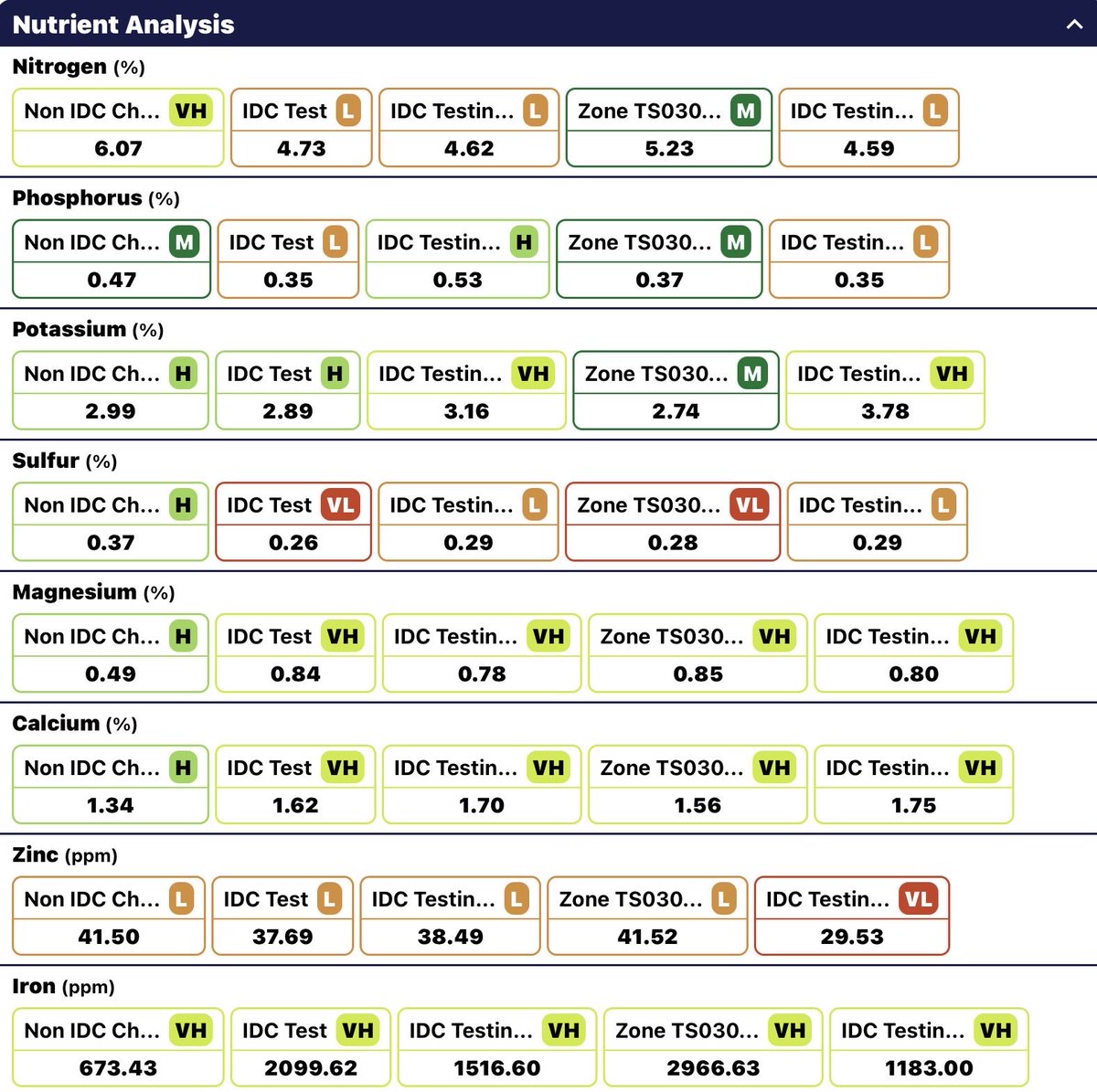
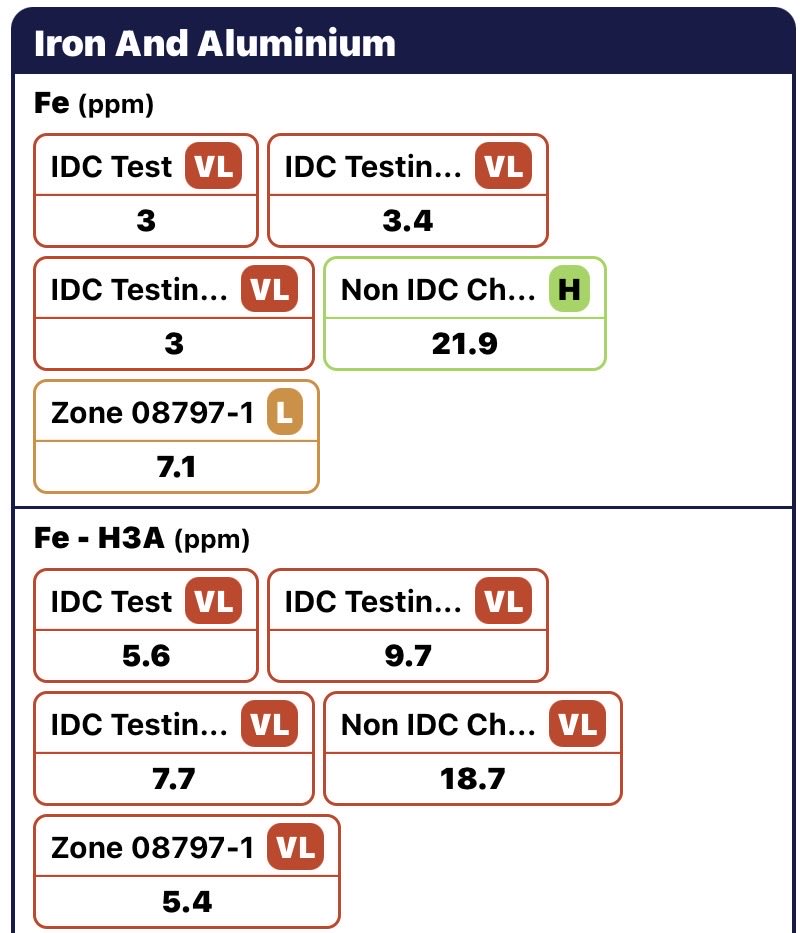
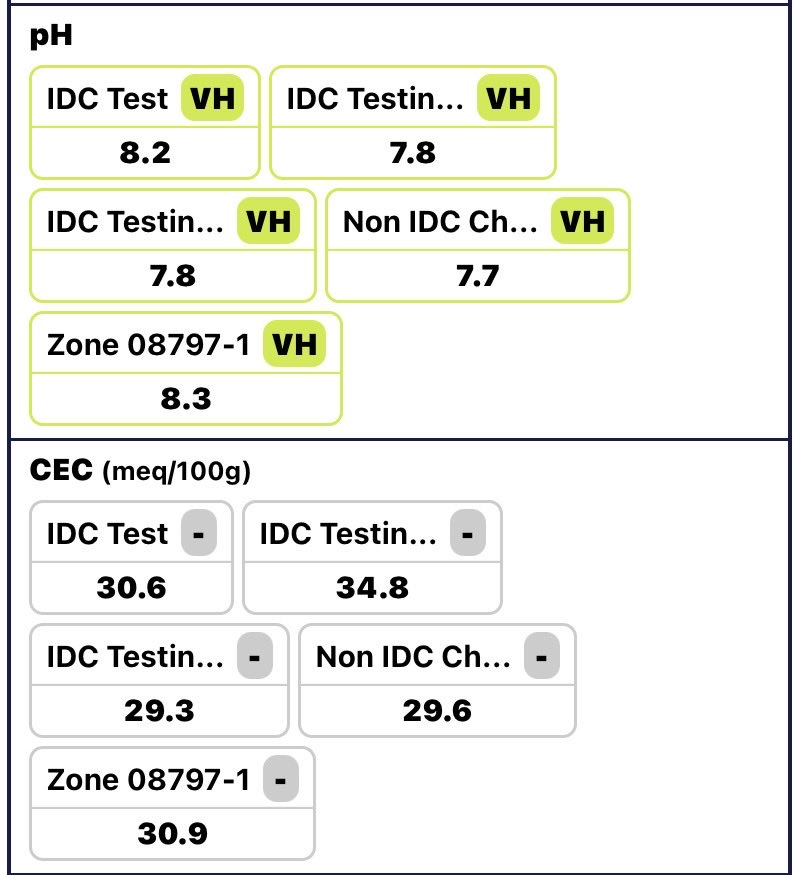
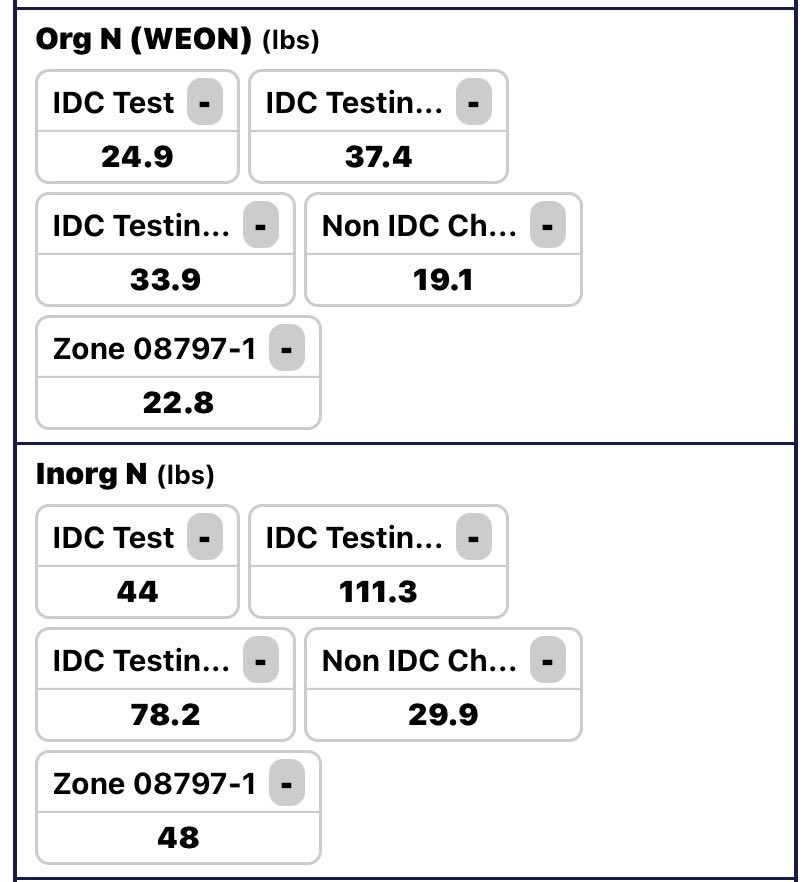
Ran Soil & Tissue testing on 3 fields that had IDC pockets throughout the field. Here are the comparisons:
- Higher residual N in IDC (yet higher N in non-IDC tissue)
- Only Slight change in pH
- Low Fe in IDC soil
- Extreme levels of Fe in IDC tissue (Is this Fe3+?)
Thoughts?
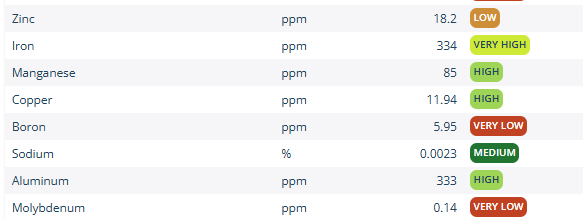
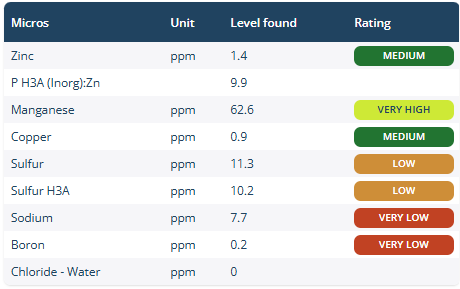
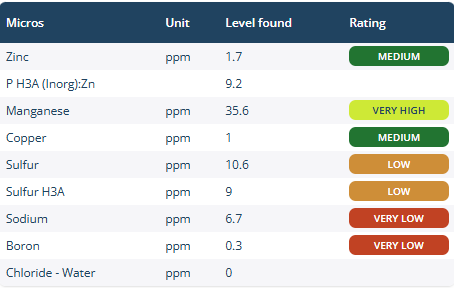
Most of our V5-V6 soil & tissue's coming back w/ low levels of Boron. Looking ahead to finishing or starting Side-Dress, Y-Drop, Aerial, or Pivot apps let's consider applying.
Why?
- Facilitates sugar movement into kernels for grain fill
- Supports pollination & fertilization
🚨🚨GIVEAWAY ALERT🚨🚨
The first 300 fans at the Odde will receive a FREE Micro Fiber Rally Towel Courtesy of Healthcare Plus Federal Credit Union & Pro Ag Supply!
#RoadToTheRobby#WingsWay#NAHL
Enjoy your Triduum & Holy Week!
"Rather, he emptied himself, taking the form of a slave, coming in human likeness; and found human in appearance, he humbled himself, becoming obedient to death, even death on a cross." -Phil 2:7-8
Miserere mei, Deus!
As Planting SZN approaches, it is good to remind ourselves on how germination begins.
The 1st step is called imbibition which is when a seed rapidly takes in 30-40% of its weight in water in the first 24 hrs.
This is a critical & fragile stage that can be damaged by cold soils
No one receives medical advice before a physical check-up, blood work, X-Ray or other examinations.
Why should our soil be any different?
Soil sampling to take educated decisions is critical especially with high input costs going into the 2026 season.
Soil Sample Your Fields!
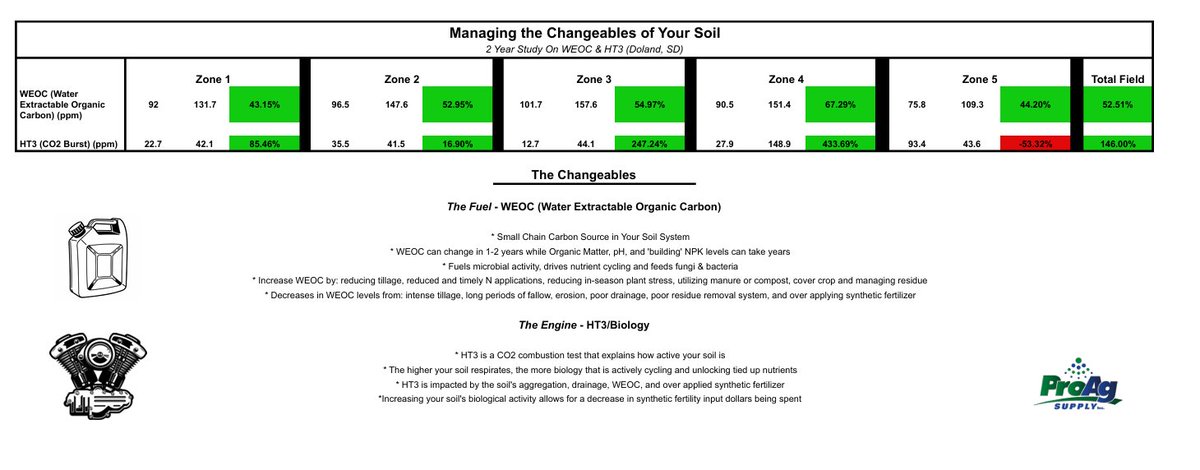
*Manage the metrics you can change: WEOC & HT3*
Here is a 2-year case study near Doland, SD.
How did we do that?
Reducing our N application rates, timing fertilizer applications, applying residue managing microbes, & carbon sources.
Let your soil work for you! @Jaren_Schley
🌽More Corn Moving Today🌽
Time to begin crop planning if you haven’t already!
Hybrid placement is IMPORTANT as well as understanding a hybrid’s ability to flex. Make the proper adjustments to your seed populations when making variable rate seed scripts and capitalize on yield!
Getting questions this winter around WEOC.
What is WEOC? Why does it matter? How do I test for it?
Here's a short informative thread I ran on ChatGPT to help tell the story:
Introduction to WEOC https://t.co/dYelqJDvHv
Hope you enjoy!
(cont'd)
What does this suggest?
- Actual Market Needs: $4.38/bu for a thin margin
- Break Even Market Needs: $4.15/bu
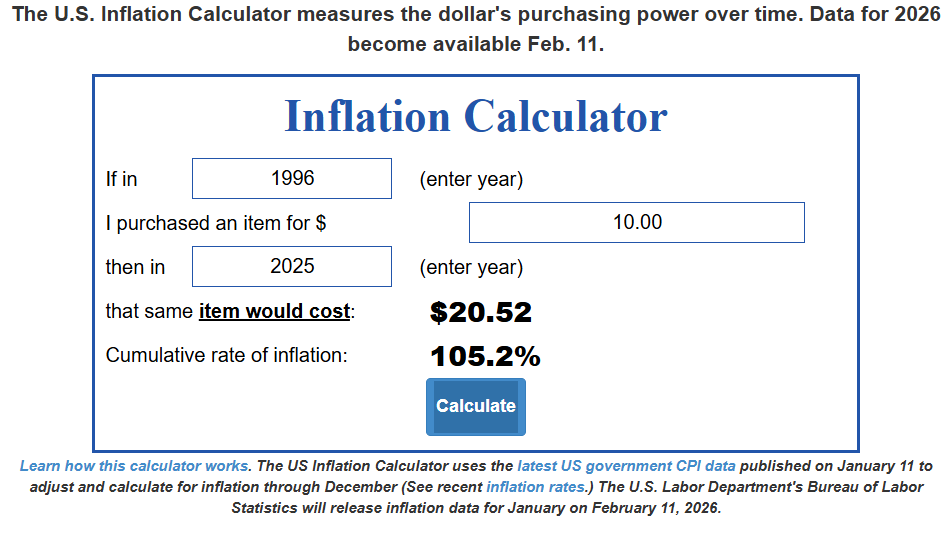
- Inflation + Yield Market calls: $3.11 (unviable to currently farm)
How do farmers continue to farm under these conditions?