🚨#Plastic#waste pollutes Earth’s ecosystems and loses planetary resources.🚨Our @Nature Communications reveals one-step hydrogenolysis of PET over CoOx #catalysts to 97 % p-xylene or 90 % 1,4-dimethylcyclohexane. #catalysis#sustainability@ASTARsg
https://t.co/QRqQlndU7J
🎉We are pleased to share that Catalysts has received an increased #CiteScore of 8.3 in June 2026, maintaining its growth for eight consecutive years!
🔗https://t.co/U4UI75MXGQ
🙏Many thanks to our authors, editors, and reviewers for their support!
#Announcement#Awards
🎉We are inviting nominations for the @Catalysts_MDPI Best Paper Award!
🗓️Winner announcement: 30 April 2027
🔗More information at: https://t.co/y2rHYmIDpe
🎉Check out our new Special Issue: Construction of Novel Heterojunction Photocatalytic Systems and Their Synergistic Enhancement Mechanism in Photocatalytic Water Splitting
📋Edited by: @ProfAdamFLee , Dr. Kim and Dr. Karthikeyan
🔗https://t.co/AgRPGbGm1T
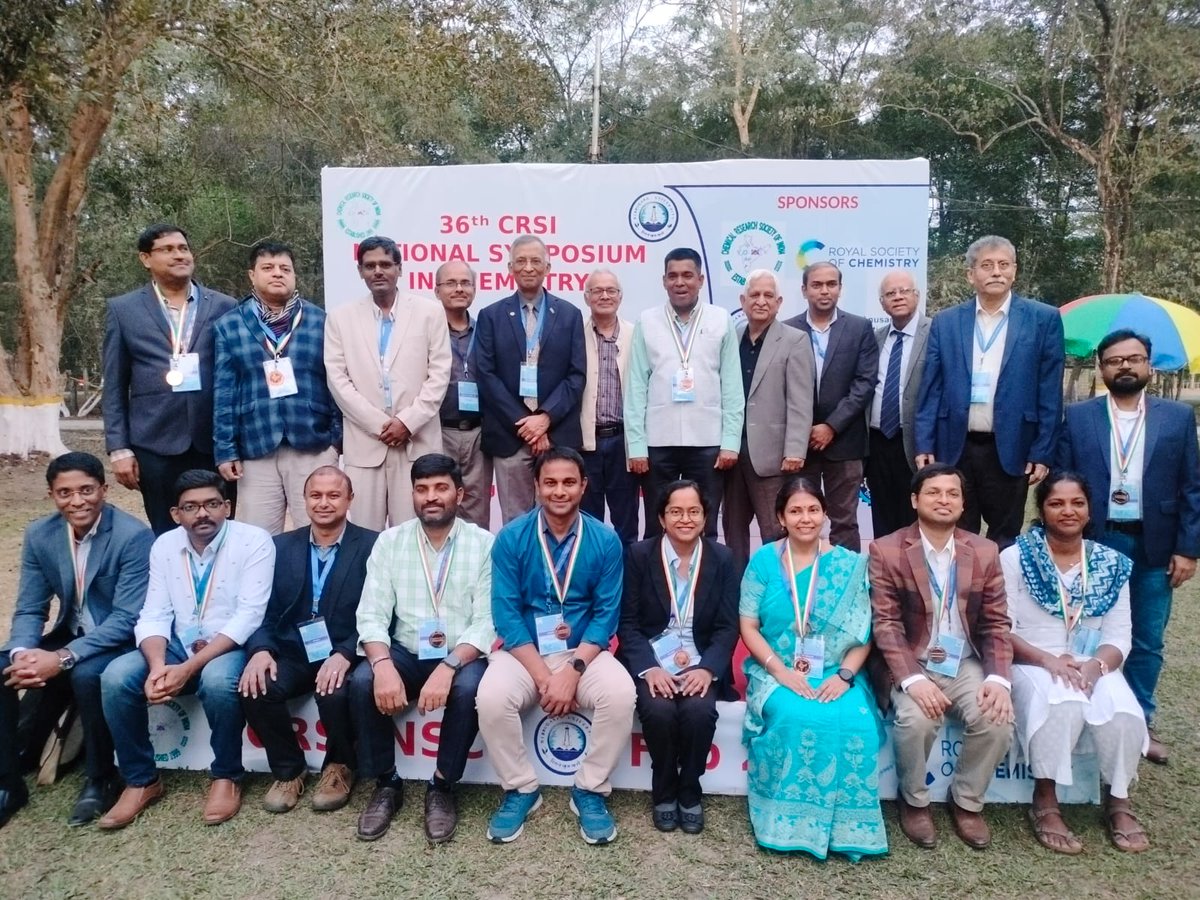
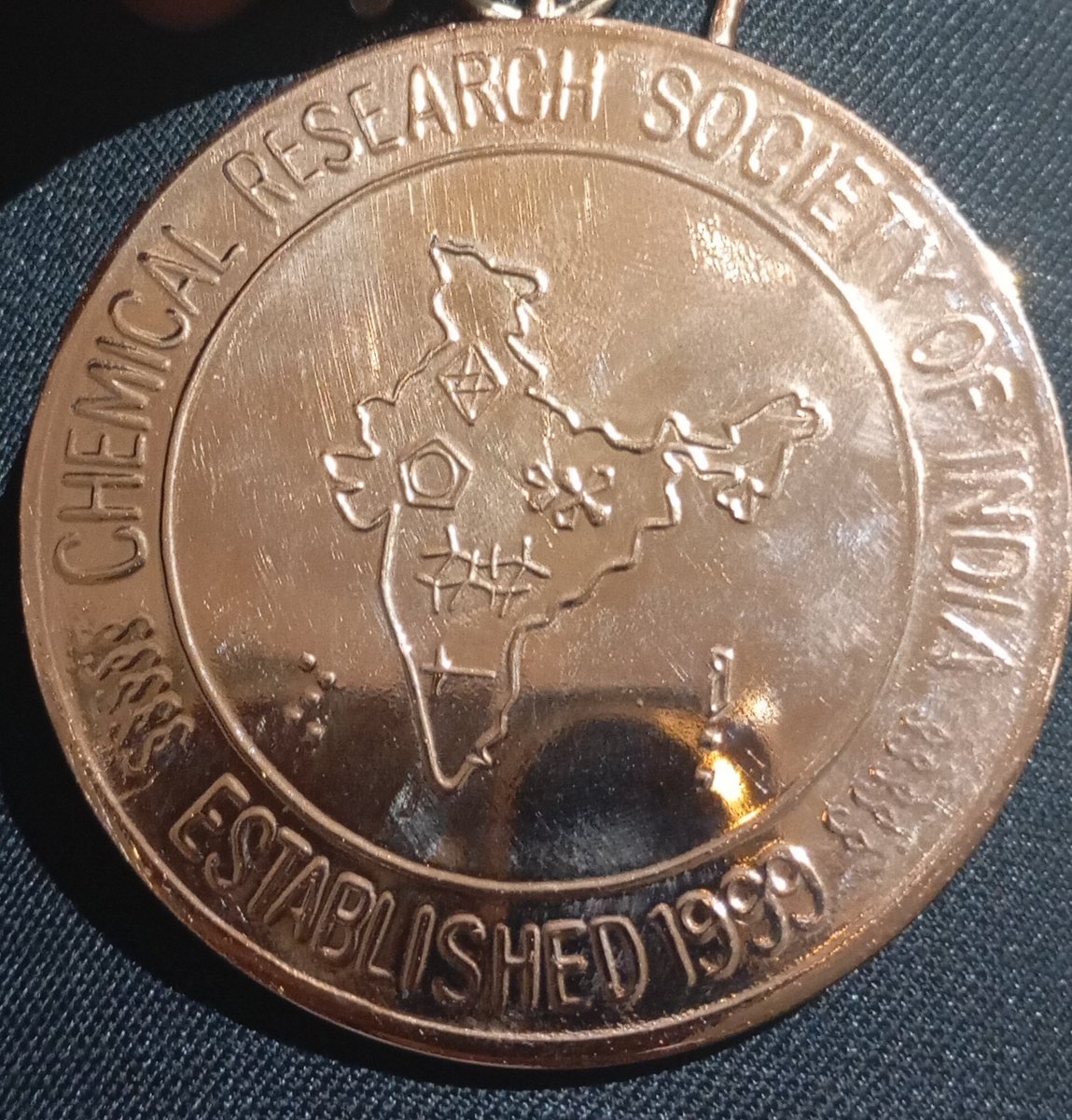
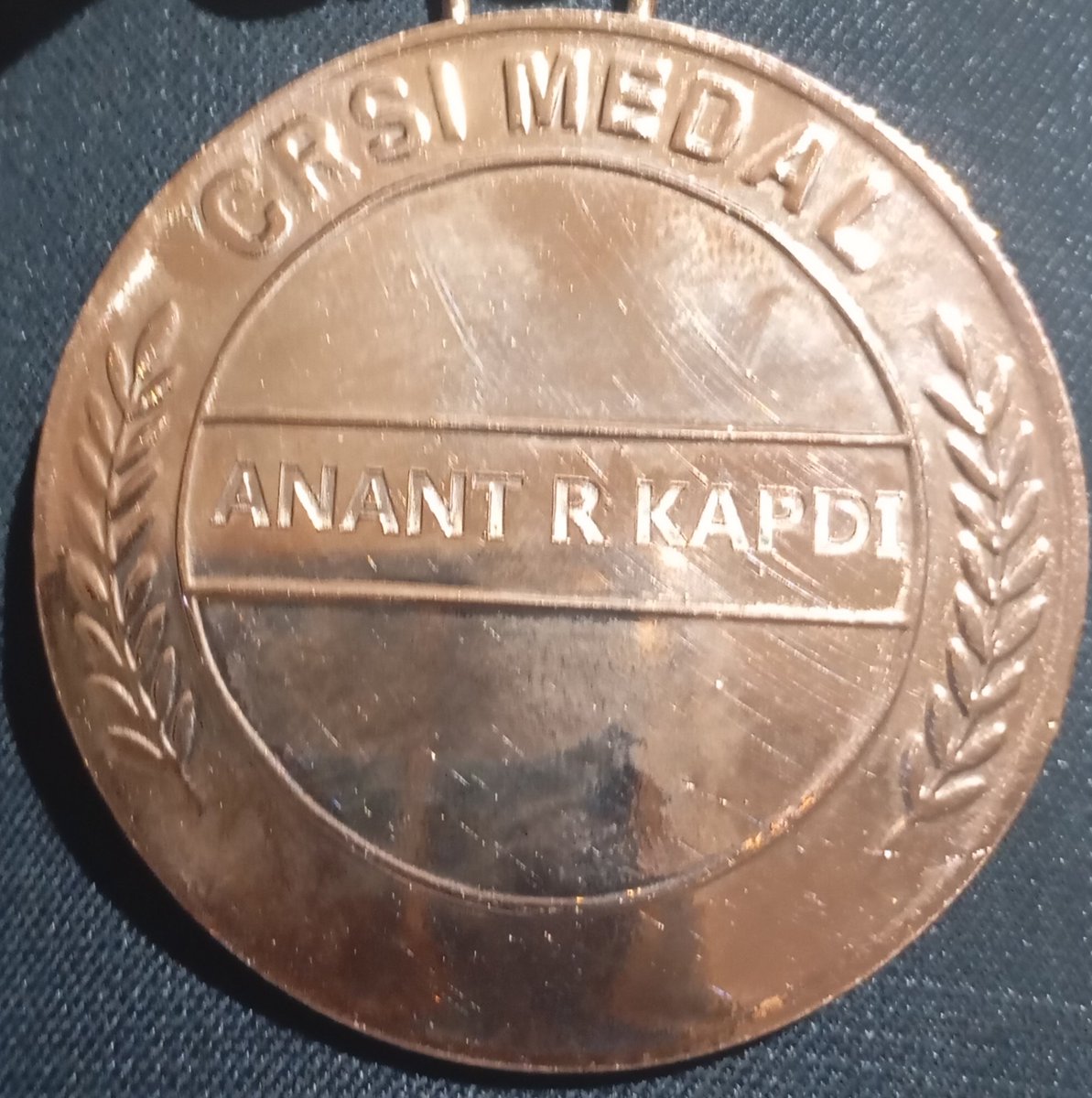
Chemical Research Society of India has conferred the Bronze medal for our scientific contribution. Thanks to all the supporters, collaborators and stakeholders. @ChemResSocIndia@ICTMumbai1933@ugc_india
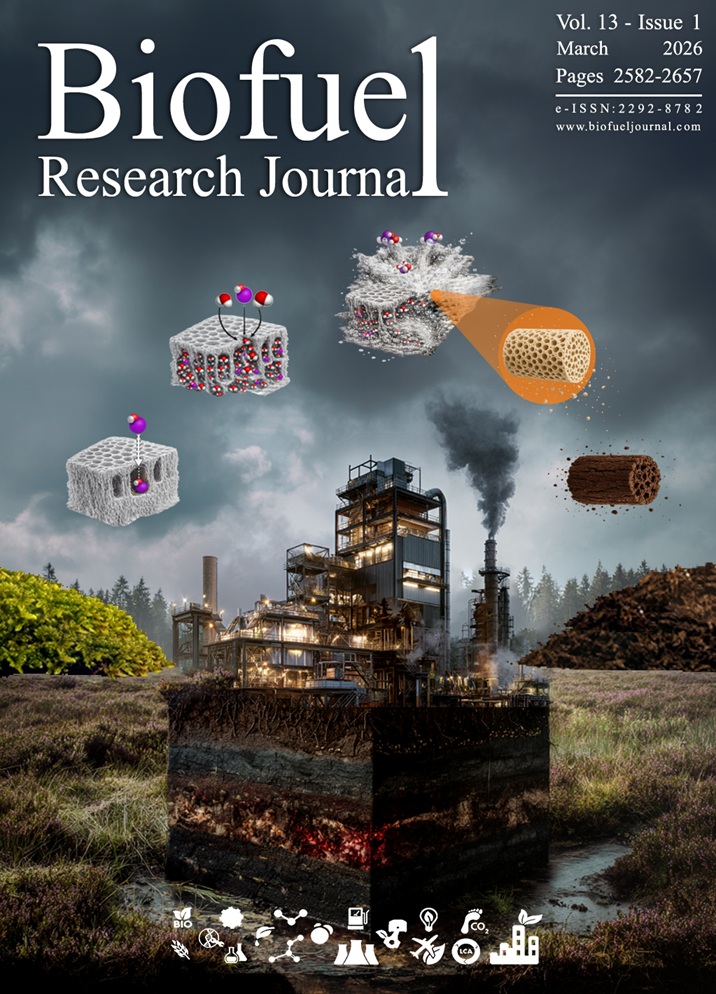
📢 BRJ December 2025 Issue Out Now!
‣ Highlights:
• Biomass pelletization for better saccharification
• Poplar biorefinery for furfural & butanol
• Transcription-factor-engineered C. glabrata for α-KG
• CRISPRi boosting PHB from crude glycerol
📖 https://t.co/LwheAy48QH
Elemental Abundance of Earth
This is quite an important chart to understand the progress of humanity and maybe identify some things that we might have skipped over in our tech tree progress as a civilisation.
Here’s how to read it.
The X axis is all the naturally occurring elements ranked by their atom number (size of their nucleus). Small atoms on left, big atoms on right.
The Y axis is logarithmic and tells you the abundance of each element in the Earth’s crust.
Side note: All of these elements (other than hydrogen) were made inside an old star that existed before our sun and exploded in a supernova. Our planet is made from the ashes of a dead star.
Now different planets that orbit our sun have different orbit distances and at diff distances there are different combinations of all these elements to form each planet.
The chart below is what we rolled for Earth. Some stuff is very abundant, some stuff is rare.
Now, if you think about this from a high level, the stuff that is very common, should be easily come by, it should be readily available to Earthlings, it should be relatively cheap.
Stuff that is rarer should be harder to find, should be less available should naturally be more expensive.
Stuff that is cheap should be very economic for us to use, we should therefore use more of that stuff and we should therefore get really good at working with that stuff.
Stuff that is harder to find, stuff that is therefore relatively expensive would also be stuff that we use less (economic reasons), and therefore we get less good at using that stuff.
This are very general rules that should apply to any civilisation on any planet at any stage of development. You might be able to estimate what sort of materials and technologies a civilisation on a far away planet would be more likely to develop based purely on the abundance profile of their home world.
You can also look introspectively and check are the elements that are most abundant on Earth also the ones that form the cheapest materials in our economy? Did we get good with the thing easier to get good at on Earth? If not why not? Because maybe there’s a huge opportunity there.
This suggests we are underachieving with our use of magnesium, titanium, calcium, sodium, sulphur.
We are overachieving with our use of copper, lithium, silver, nitrogen, carbon, nickel, cobalt.
Human civilisation is currently over optimised for extraction and use of rare conductive and catalytic elements, and we are under optimised for use of our abundant lightweight reactive elements.
Why has this happened?
1. Economic inertia, iron and copper matured before titanium and magnesium.
2. Chemical accessibility, oxides and silicates demand high energy reduction.
3. Utility density, because of transport costs we value compact specific systems rather than bulk designs.
4. Historic lock in, infrastructure path dependence (steel - cu - al).
If we were more rationally utilised…
Structural alloys, we still use Fe and Al when Ti and Mg are superior and more abundant.
Batteries, we use Li and Co when Na, Mg, Al should be more economic.
Catalysis, we use Pt, Rd, Rh when we should be using Ti, Fe, Mo, W, nitrides.
Electronics, we use Cu when Al and graphene should be more economical.
There are myriad reasons for all these but it’s down to economic drivers and usually because we lack some technological step to bring the more abundant material to our economy more efficiently.
Overall this suggests our entire process chemistry industry is not performing for humanity as well as it could. Although we have no alien civilisation for any frame of reference, so maybe we are doing well?
But this exercise shows our economy and material use has massive economic opportunities to rebalance our economy’s material demands to reflect the resource wealth of Earth.
We should think about this much more deeply as we look to develop other worlds and moons.
Discovering catalytic cooperativity with pooling and deconvolution
Many catalytic reactions rely on more than one catalyst working together. In principle, pairing catalysts could unlock reactivity, efficiency, or selectivity far beyond what each can achieve alone. In practice, however, identifying which catalysts cooperate is prohibitively difficult: a panel of just 50 catalysts already contains more than a thousand possible pairs to test. Most of those pairs do nothing. A few may inhibit each other. And only a very small number may exhibit the kind of synergistic behavior synthetic chemists are looking for.
Marcus H. Sak and coauthors present a strategy inspired by group testing that makes this search experimentally tractable. Instead of testing catalysts one pair at a time, they test pools of catalysts arranged according to a covering design, ensuring that each potential pair appears multiple times across different contexts. A simple “cooperativity score” reflects whether a pool performs better than expected from the individual catalysts alone. A second “deconvolution” step traces those performance boosts back to the specific catalyst pairs responsible.
The authors first validate the approach on a known cooperative system in an enantioselective oxetane opening. They then apply it to a far more challenging case: a Pd-catalyzed decarbonylative Suzuki–Miyaura coupling. The result is striking. The workflow identifies ligand pairs that enable the reaction at lower temperature and lower Pd loading than state-of-the-art single-ligand systems—discoveries unlikely to have emerged from intuition or standard high-throughput screening.
What’s compelling here is not just the chemistry, but the discovery method. By combining combinatorial pool structures with minimal assumptions and rapid experimental readout, the workflow efficiently explores landscapes that are too discontinuous and too sparse for conventional optimization or machine learning to navigate directly. It suggests a direction for discovery workflows where experimental design, not model complexity, is the main accelerator—and where synergy, rather than single-variable optimization, becomes the core target.
This could reshape how we search for cooperative behavior in catalysis, materials, and biochemical systems: not by guessing, but by systematically letting the chemistry reveal where the cooperation actually happens.
Paper: https://t.co/kFIxGMVqVz
After 4 years in writing, and 1.8 years in peer review, our work on porosity was just published in @ScienceMagazine.
This paper has a rich life-story by now, which I will tell later. Right now, we're just happy :)
https://t.co/2VEl1wRok8
@TechnionLive
Darwinian evolution—now in chemistry
Life, at its core, is a chemical process that learns through trial and error. Molecules replicate with small variations, and those that perform better at survival or function become dominant. This simple feedback loop—Darwinian evolution—is the engine behind every biological innovation on Earth.
For decades, chemists have dreamed of recreating that same logic from scratch: not with DNA or enzymes, but with fully synthetic molecules that can evolve outside biology. The goal is profound—to uncover how life might have first emerged from inanimate matter, and to design chemical systems that adapt, learn, or improve their own functions.
In a new study, Kai Liu and coauthors take a major step toward that goal. They create self-replicating molecular rings that spontaneously assemble into fibers. These fibers can recruit a photocatalytic dye (Thioflavin T), which under light generates singlet oxygen—a reactive species that helps make the very building blocks the fibers need to grow. In other words, the replicators catalyze their own survival.
The team then places this chemistry in a flow reactor, where new material is continuously supplied while old products are removed. In this out-of-equilibrium environment, natural selection begins to operate: replicators that are better photocatalysts gradually dominate the population, while less efficient ones fade away. Even subtle structural differences matter—mutants that produce singlet oxygen more effectively gain an evolutionary edge. High-speed atomic force microscopy reveals this process at work, capturing in real time how small reservoirs of precursor material form and are consumed on the fiber surfaces as they grow. The result is the first demonstration of Darwinian evolution for a functional trait—here, photocatalysis—in a completely synthetic molecular system.
Overall, this work unites self-replication, catalysis, and selection in one experiment, bridging chemistry and biology.
Paper: https://t.co/ptTSF3BAVC
Our lab recently discussed the impactful career of Donna Blackmond @scrippsresearch. What’s your favorite paper from the Blackmond Lab? Here are some papers selected by our lab:
In this Account, I summarize my PhD research with @AizenbergLab@hseas on how colloidal templating can afford a modularly versatile and robustly stable catalytic platform to elucidate clear structure-property relationships
https://t.co/gmKWFakt4A
Susumu Kitagawa, Richard Robson and Omar M. Yaghi have been awarded the 2025 #NobelPrize in Chemistry for the development of a new type of molecular architecture.
In 1989, chemistry laureate Richard Robson tested utilising the inherent properties of atoms in a new way. He combined positively charged copper ions with a four-armed molecule; this had a chemical group that was attracted to copper ions at the end of each arm.
When they were combined, they bonded to form a well-ordered, spacious crystal. It was like a diamond filled with innumerable cavities.