From my new book: Masculinity Monday “Boys can risk honesty when they are not risking their membership.”
The goal isn’t to have tougher boys. It’s all about stronger communities where belonging doesn’t disappear the moment vulnerability appears.
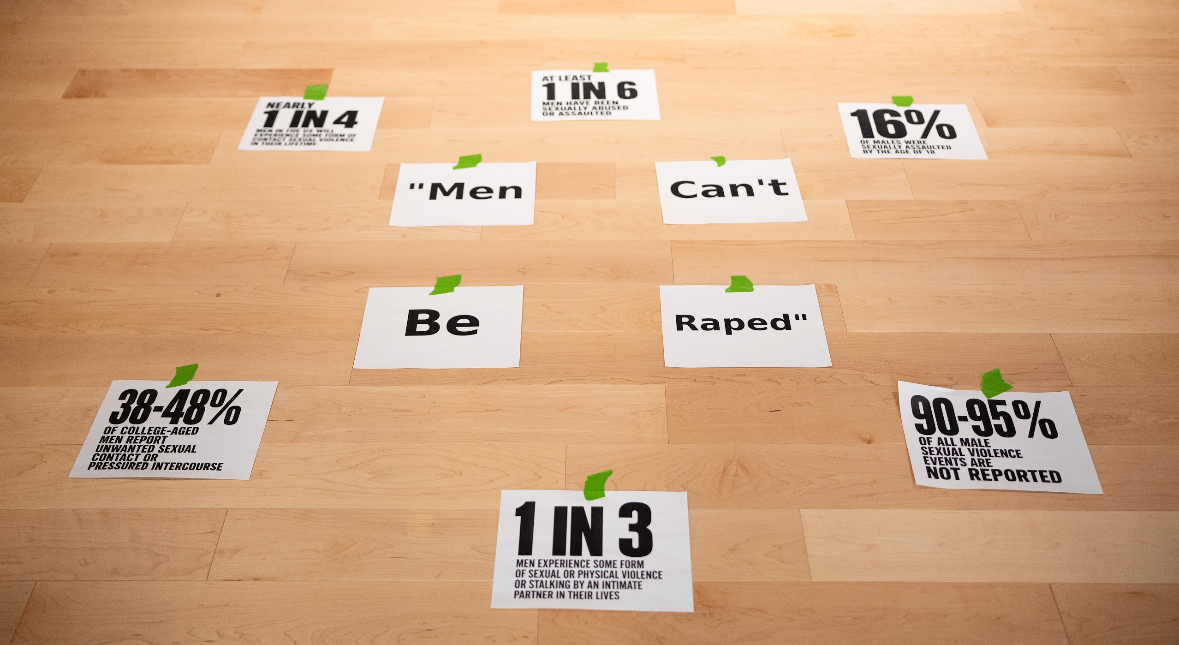
I wanted to give a shout-out to my research assistant Zac. He recently did a project aimed at raising awareness for sexual assault involving male victims.
Masculinity Monday
Optimization masculinity is looksmaxing in more respectable language.
Track your body. Upgrade your habits. Master your emotions. Maximize your value.
The promise is control. The cost is that the self becomes another thing to manage.
Resilient masculinity asks a different question: not how do I become impossible to reject, but how do I build a life where I can be fully human?
Models That Matter
Victor Wembanyama is one of the most impressive athletes on the planet and an excellent role model.
Wemby’s refusal to conceal his emotions on the court models a version of masculinity grounded in honesty, not suppression. This is the kind of emotional literacy boys are rarely permitted but deeply need.
@primetateHQ@Cobratate Men don’t need a script telling them who they’re supposed to be. They need agency, accountability, empathy, and emotional literacy. That’s where real strength begins.
Masculinity Monday
Strength that disappears the moment you struggle was never really strength.
Resilient masculinity makes the path back visible. You can mess up, own it, learn from it, and still belong.
@yonann This is such a damaging lesson in masculinity: that a man’s job is to endure, produce, and expect nothing for himself. That is not strength. It is self-erasure. Boys and men need a model of masculinity that makes room for joy, connection, and honesty, not just survival.
LeBron James is arguably the greatest athlete ever. On top of being an incredible athlete, he’s also an incredible role model. James has spoken about the value of expressing emotions and not suppressing feelings. Additionally, he has been dedicated to helping those around him, including the I Promise school, which he founded to provide opportunities for children from less fortunate backgrounds. LeBron has been in the spotlight since he was 18 years old and has consistently set a great example. @KingJames@Lakers@IPROMISESchool
None of it is toxic. None
How it’s expressed can have a toxic impact but that’s about the person & other factors not the masculinity
If you use a quality hammer to kill someone, it doesn’t make the hammer toxic
Models That Matter
Dwayne “The Rock” Johnson matters as a model of masculinity not because he rejects strength, but because he widens what strength can mean. He looks like the kind of man our culture has long treated as the masculine ideal, yet he has spoken openly about struggle, pain, and the danger of suffering in silence. That matters. Boys and men need more models showing that strength is not just toughness or control. It is also honesty, emotional openness, and the willingness to let other people in.
Masculinity Monday
Masculinity is often discussed as if it lives inside individuals. But masculinity also lives in rooms, institutions, teams, feeds, and peer cultures. It is sustained collectively, which means it can also be changed collectively.
Models That Matter
Jaylen Brown is an NBA superstar for the Boston Celtics. Jaylen is a great role model for boys and men, leveraging his platform to raise awareness for social issues and speaking out about the challenges of mental health. It’s no surprise to see this guy enjoying a career year! @FCHWPO@celtics
Teach Talk Tuesday
Nearly 1 in 5 men deal with a mental health condition every year.
Most never talk about it.
Check in on your friends.
Even the “strong” ones.
Masculinity Monday
Masculinity is not about being unbothered. It’s about being bothered and choosing to deal with it in productive ways for self and others!
Models That Matter
Ted Lasso matters because he gives boys and men a different script. He shows that strength is not about bottling everything up or pretending you are fine. It can look like care, vulnerability, emotional honesty, and asking for help.
In a culture that often teaches boys to stay guarded, that kind of model matters.