Nearly 200,000 conflict events were recorded in 2024, with over 233,000 fatalities estimated. ACLED experts unpack these findings, highlighting the 50 most extreme conflict zones & 10 crises shaping 2025.
🎥 Watch the Conflict Index & 2025 Watchlist now: https://t.co/wfvlLE29uf
🍃 | The EU considers conflict drivers, #climate stresses, and democracy issues largely in isolation from each other.
But none of the issues can be understood or tackled separately from the others, argue @YoungsRichard, @Farinha_Ric & al. 👇
https://t.co/rfgdwDlPWO
France’s remaining permanent military bases in Africa have become a noose around Paris’s neck, hamstringing even the best thought-out French policies.
Read @_Will_Brown and Suzanne Tisserand's commentary 👇
https://t.co/BK8VpXRMeW
Leaders of the West African regional grouping, Ecowas, have approved the withdrawal of three countries ruled by the military, but have also offered them six-months to reconsider.
Mali, Burkina Faso and Niger are set to leave the bloc in January.
🔗 https://t.co/LWdYFgJPuC
❗ Job opportunity @ecfr❗
ECFR is hiring a new director for the Africa programme. Join us in supporting a more coherent European Africa strategy, making the case for strong European engagement with African partners!
Find out more & apply here: https://t.co/zM9dUsAW0V
In Hindsight: The Financing of AU-led Peace Support Operations: What Next?, December 2024 Monthly Forecast : Security Council Report https://t.co/MlByzk5Ek3
The idea that the BRICS Countries are trying to move away from the Dollar while we stand by and watch is OVER. We require a commitment from these Countries that they will neither create a new BRICS Currency, nor back any other Currency to replace the mighty U.S. Dollar or, they will face 100% Tariffs, and should expect to say goodbye to selling into the wonderful U.S. Economy. They can go find another “sucker!” There is no chance that the BRICS will replace the U.S. Dollar in International Trade, and any Country that tries should wave goodbye to America.
Following a Russian veto on the #UNSC Resolution on #Sudan last week, our latest Ideas Indaba interrogates whether and how a repeat of similar use of veto on African files be averted. For further details 👉🏾https://t.co/Bo098xaFXX
Any new forms of practical cooperation between Russia and Africa will require funding from the Kremlin, currently difficult to achieve while the Russian economy is dedicated to the war effort in Ukraine, writes @Komin_mo. @ECFRWiderEurope
https://t.co/AZdU8jwKp9
Inevitably if #UNSC is paralysed initiative will move to ad hoc arrangements fostering tendencies of #deinstitutionalization of the former: https://t.co/6E9CjtVyf5
Russian meddling at the UN is no reason for European diplomats to resign from efforts to protect civilians from the world’s worst humanitarian crisis, writes @Jonas_Horner. @ECFRAfrica
https://t.co/YgRfveGoXb
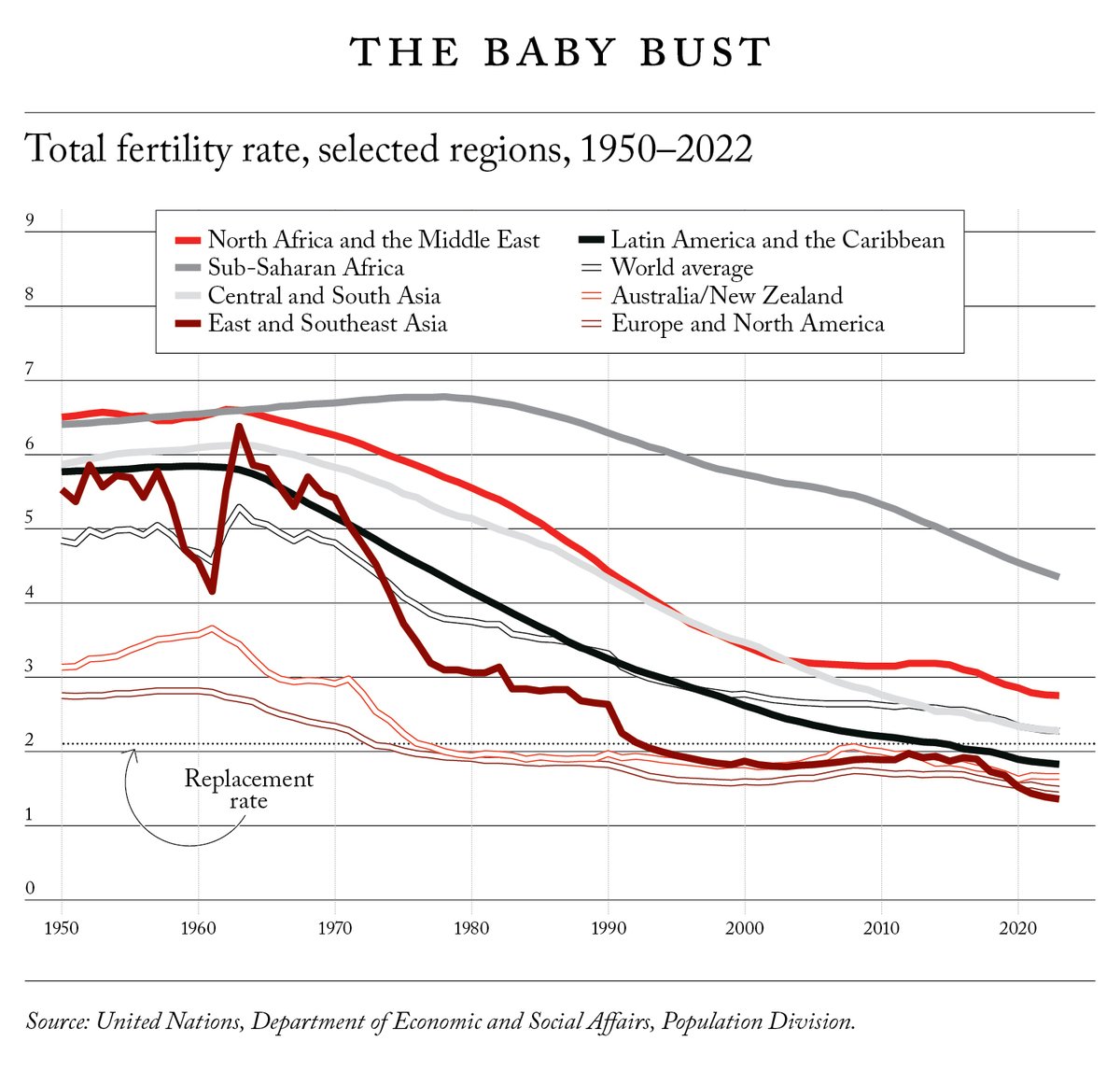
For the first time since the Black Death in the 1300s, the world is heading into an era of depopulation—and this time, the coming implosion will be entirely due to choices made by people, writes Nicholas Eberstadt.
https://t.co/Jw1XTTu26L
Happy to see that tackling the #polycrisis is part of South Africa's #G20 presidency in 2025. @DIRCO_ZA@SAIIA_info@IGD_SA lets partner early on, we do have a large research project consisting of more than 20 universities in Africa and Europe #PolyCivis
https://t.co/hy7fOoKeWN
wenn der Kandidat bald weg ist und keine politische Zukunft hat. Noch ein paar Wünsche:
Bitte keine Angst vor Putin
Bitte nicht mehr rumeiern
Bitte keine Angst vor der Energie- und Verkehrswende
Opposition ist Mist aber notwendig.
Over and out.
@spdde kleiner Beitrag zur Entscheidungsfindung der #K-Frage. Als Wähler möchte ich, dass meine Stimme Gewicht hat. Also: Wird der Kanzlerkandidat auch Oppositionsführer nach der Wahl oder Bundesminister? Bei @Bundeskanzler Scholz ist das ausgeschlossen. Also warum #SPD wählen,
Further to this, the key question is if voters tolerate budget cuts in other fields to cross-finance defence spending? Assuming that the new CDU led government keeps the #Schuldenbremse
Most Germans want military spending to rise significantly to 3-3.5% of GDP or even higher, according to the latest #TheBerlinPulse survey. Just a few years ago, it was 1.2% of GDP.
https://t.co/WZhwE1K3Kl
In a world that is going multipolar multiplex and through a polycrisis going non-aligned is a dead-end while multi-alignment offers better opportunities (see India).
Non-alignment is a strategic approach to navigating the polarities and complexities of international relations, and to this day, the Non-Alignment Movement’s Heads of State and Government Summit’s Durban Declaration of 1998 remains instructive. For a country grappling with high rates of inequality, poverty and unemployment, it is crucial not to pin its interests solely on one side of the geopolitical spectrum.