Guzel bir calisma, VAR'da Cholesky Decomposition mi kullanilmis acaba? Goremedim, eger oyleyse birinci variable hangisi? Kur gibi gozukuyor, eger oyleyse kurun en etkili cikmasi normal.
https://t.co/lN303SyNWq
Enflasyonun temel belirleyicileri döviz kuru ve enerji maliyetleri bulunmuş ve para politikasının ağırlıklı döviz kuru kanalından çalıştığı, talep kanalının görece zayıf olduğu belirtilmiş. Sonuç bölümünde ise şokların ekonominin geneline yayılmasında ücret ayarlamaları, fiyatlama davranışları ve bölüşüm çatışmalarının olduğu ifade edilmiş. Sonuç şaşırtıcı değil. Döviz kuru ve enflasyon beklentilerinin, gelir çekişmelerinin enflasyon üzerinde etkili olduğunu biliyoruz. Talep koşullarının etkisi ise genelde küçümseniyor. Aslında temel belirleyici olarak bulunan hem döviz kuru hem de enflasyon beklentileri üzerinde talep koşulları ve çıktı açığı etkili. İthalat üzerinde temel belirleyici büyüme. Dolayısıyla hızlı büyüme cari açık üzerinden döviz kuru üzerinde etkili olabiliyor. Diğer yandan talep canlı, atıl kapasite az olduğunda ücret/kar artışları daha rahat oluyor. Dolayısıyla enflasyon beklentisi, fiyatlama davranışları, gelir çekişmesi üzerinde de yurt içi talep koşulları etkili olabiliyor.
El político sionista Moshe Feiglin en el programa de noticias más visto de Israel:
"Como dijo Hitler: 'No puedo vivir si queda un solo judío', no podemos vivir aquí si queda un solo palestino en Gaza".
Lo admiten sin pudor alguno, el Sionismo es el nuevo Nazismo.
Korku daglari bekler
Ben bu isin sonunda Iran'da degil tam tersine BAE'de rejim degisikligi olacagini dusunuyordum, onlar da anlamislar herhalde, onlem almaya calisiyorlar.
https://t.co/aJjDp4vURt
🇦🇪🇮🇷 UAE is unlocking $10+ billion for Iran, with the first $3 billion already delivered and potentially up to $20 billion total.
In exchange: Iran halts attacks and ramps up economic + intelligence cooperation.
The Gulf Arabs are straight-up paying Iran to calm down.
This is classic Middle East “peace”: suitcases of cash to buy quiet. Whether Iran actually stays bought is the real question.
Source: Reuters via @clashreport / Writer: Oliver
Trump is once again talking about Kharg Island and saying we can take it "at a time of our choosing."
He's not wrong. We can get troops on that island.
But he's not telling you what happens next.
Kharg Island is 16 miles off the Iranian coast. Iran has every square foot of it registered for artillery and rocket fire. They've spent the last three months laying anti-personnel mines on the beaches, pre-deploying shoulder-fired surface-to-air missiles, and moving IRGC troops into hardened positions. They know we might be coming.
Every one of our ships in our assault force is 47 seconds from an Iranian anti-ship cruise missile. Every Marine on that island is within rocket artillery range of a coastline that runs 1,500 miles. We can't suppress that effectively even if we used all of our forces
I flew CH-53E helicopters in Desert Storm, and I know what it means to put troops in a fixed position on a small island with no room to maneuver and no friendly territory within reach. The military term for that is a kill box. The political term is leverage. The human term is a body bag.
The analysts are being careful in how they are framing it. Ryan Brobst and Cameron McMillan of the Foundation for Defense of Democracies, which is about as hawkish as think tanks get, wrote in March that a seizure and occupation "is more likely to expand and extend the war than it is to deliver any sort of decisive victory." Former CENTCOM commander Joseph Votel said troops on the island would be "very vulnerable" and would require massive logistical backup. Malcolm Davis of the Australian Strategic Policy Institute put it more plainly: "I think the Iranians can probably sit back and attack Americans on Kharg Island, and casualties will mount up."
That's the politically correct version.
Here's what they're not saying out loud: Iran has FPV drones. The same camera-equipped drones being used by the millions in Ukraine. If our troops land on that island, Iranian drone footage of American casualties will be on every screen in the world within hours. Trump will own every frame of it.
Iraq bombed Kharg Island for four straight years during the Iran-Iraq War. From 1982 to 1986, but they never put a single soldier on it. They couldn't. The Iranians rebuilt and kept exporting oil. That's the historical record on what "taking Kharg" actually means.
And here's the part that makes even less sense: seizing the island doesn't open the Strait of Hormuz. Kharg is 300 miles from the strait. The Iranians mine the strait from their southern coastline. You'd have to suppress 1,500 miles of Iranian coast to fix that problem. Kharg is just a political symbol, not a solution.
We can bomb it into rubble. We've already struck over 90 targets there. Trump can destroy every oil facility on that island from the air, permanently. That's a real option with real consequences for Iran's economy and real consequences for global oil markets.
But putting Americans on the ground 16 miles from the Iranian coast, surrounded by water, within range of everything Iran has left?
That's not a strategic or tactical military operation. That's just a sacrifice of American lives.
Are you OK with that?
If banks functioned as full reserve institutions, as suggested in the Chicago Plan, we would not be dealing with speculative manias and inevitable crashes, or at least much less. Instead, we allow them to create money out of nothing to buy stocks.
https://t.co/36RGsxs7jd
Insanli ucaklarin devri bitti, balistikler ve drone'lar var gelecekte. Turkiye hayatinin dogrusunu yapti F35'den kurtulmakla, ama vazgecmeyecekler satmak icin ellerinden geleni yapacaklar ve de yapiyorlar
https://t.co/J3qp5JhoMg
This is a significant operational achievement for Iran. The AR-327 radar at Bahrain’s highest point is a very important piece of the regional missile defense and battlefield awareness architecture. What you need to realize to see the significance of this hit is this:
Radars are the easiest thing to target bc they’re fixed addresses that emit such powerful electromagnetic signals. This makes very vulnerable. And because they are so operationally important, they have to be very strongly defended by interceptor systems. There is almost certainly a multi-layer ballistic missile defense-in-depth to defend this particular radar.
Now if you recall, the Iranians managed to hit at least 14 US radars across the region, include four AN/TPY-2 (THAAD) and at least one AN/FPS-132. This happened in the first two days of the war when the Iranians fired off hundreds of missiles. In that case, they were able to defeat the interceptors and hit the best-defended hard-kill targets like radars because of the size of the salvos.
Now they’ve bagged a big radar kill. The math shows that, even with a CEP of 5m, Iran would’ve needed something like a salvo of 12 missiles.
So the possibilities are: (1) they did fire a dozen missiles at this radar, (2) they fired a hypersonic missile with terminal maneuvering that could not be intercepted, (3) the interceptor inventories are running so low that US policy has shifted from firing 10 interceptors at each inbound missile to firing far fewer; maybe as few as just one or two.
Regardless of which of these hypotheses is correct, this is a very serious setback for the US. It may explain why the Iranians did not attack high value targets like warships or try hard to get birds on the apron (my Ben Gurion nightmare). They went after the eyes. There may have been more hits.
So the kinetic aspect of this war of position is a counter-radar war, a two-sided one. Maybe this is why Trump taco’d on his latest threat. He was probably told by the military that had he kept going, the US would get blinded before Iran does.
Iran'in ABD'nin en iyi korunan 14 radarini dan dan dan nasil vurdugu anlatiyor.
Daha once de yazmistim, Iran gizli gizli F35 almis olmali, yoksa nasil vuracak onlari, hayalet ucak lazim milyarlarca dolara, ABD dunyaya satmaya calistigi hikaye bu ve bir suru de alicisi var hala
Iran’s Mehr news agency publishes the purported text of the draft agreement with Trump. It will keep the Strait of Hormuz under Iranian control, will promise Iran $300 billion in reconstruction money in addition to an immediate cash transfer of $24 billion, a suspension of sanctions and the withdrawal of U.S. forces from the Middle East. Also, a commitment not to bother Iran again about its missiles and proxies, and restraining Israel in Lebanon.
The U.S. gets in exchange a pinky promise to respect the NPT.
Let’s see what happens in coming days.
Link: https://t.co/MFCRLUCHDw
Full text:
A permanent and immediate cessation of war on all fronts, including Lebanon.
A U.S. commitment not to interfere in Iran’s internal affairs and to respect the sovereignty of the Islamic Republic of Iran.
Full lifting of the naval blockade within 30 days.
A U.S. commitment to withdraw its forces from areas surrounding Iran.
Reopening of the Strait of Hormuz within 30 days under arrangements determined by Iran.
Suspension of sanctions on the sale of oil, petrochemical products, and related derivatives, along with full Iranian access to the resulting financial revenues.
The United States and its allies would be required to present reconstruction plans for Iran worth at least $300 billion.
A 60-day negotiation period aimed at reaching a final agreement covering nuclear issues and the complete removal of U.S. primary and secondary sanctions, as well as the repeal of relevant resolutions of the UN Security Council and the IAEA Board of Governors.
Reaffirmation by Iran of its commitment under the Nuclear Non-Proliferation Treaty (NPT) not to produce nuclear weapons.
During the negotiation period, the United States would commit not to deploy additional forces to the region and not to impose any new sanctions.
The release of $24 billion in frozen Iranian assets during the 60-day final negotiation period. Half of this amount must be made available to Iran before negotiations begin.
Establishment of a monitoring mechanism to oversee implementation of the agreement.
The final agreement would be approved through a UN Security Council resolution.
Final negotiations would not begin before the release of half of Iran’s frozen assets, the suspension of oil sanctions, and the lifting of the naval blockade. The final agreement would focus exclusively on the future of enriched nuclear material and uranium enrichment, sanctions relief, and a program for rebuilding Iran’s economy. Discussion of Iran’s missile program and its support for resistance groups would be definitively excluded from the agenda.
As stated by the Foreign Ministry spokesperson, this text still requires review and final approval by the relevant authorities in Iran.
China first weaponized rare earths v. Japan in 2010, & yet the Japanese, with their legendary manufacturing & engineering prowess, have been unable to completely end their dependence on Chinese rare earths…16 years later.
Pretty good read on realistic timeline for US reshoring.
2021-22 boyunca PPI CPI dan daha yuksek, bu sirket karlarini ekonomi genelinde otomatik dusurur, 2022'de de ABD borsasi bayagi dustu sonucta, simdi gene ayni islem basliyor gibi
https://t.co/NwDAk1jttt
Inflation in the US is now up to levels that were last seen after $4 trillion in pandemic stimulus was handed out for "free."
The worst part?
Most Americans have no idea that it is happening.
A few months ago AI’s productivity boom was going to bring massive deflation. Now it turns out they are buying so many chips needed for other stuff they are driving inflation.
When this all crashes Wall Street and corporate America need to be understood as morons and liars.
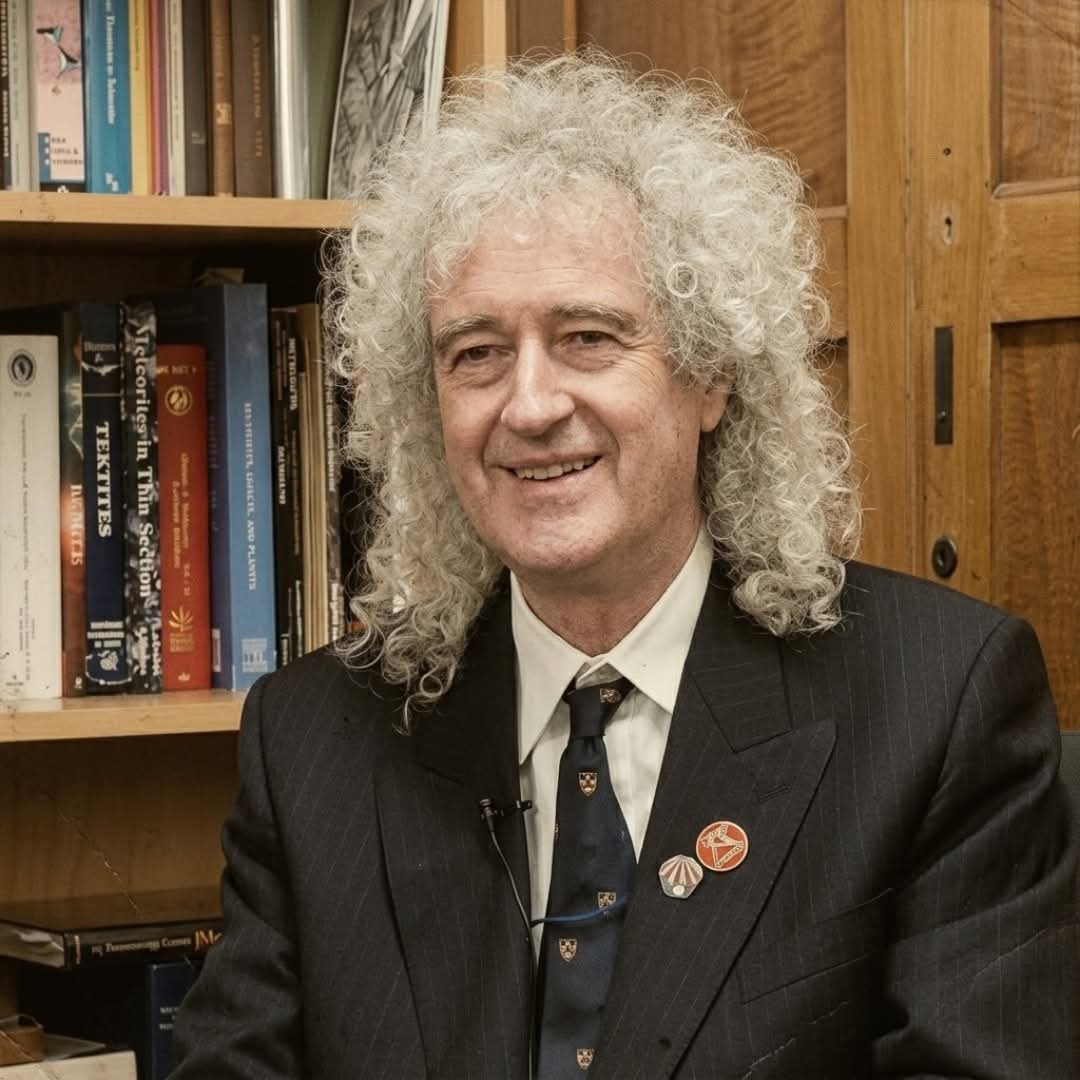
Brian May's PhD thesis sat in the loft of his Surrey home for 33 years. In 2006 — he put everything in his life on hold for a full year, went back to Imperial College, and finished it. His professor said he had a mountain to climb reviewing 30 years of scientific work. Brian May climbed it anyway. The most extraordinary act of academic commitment in rock history.
In 1970 — Brian May began a PhD in astrophysics at Imperial College London.
He supplemented his grant with income from part-time teaching and playing in bands with Roger Taylor. Soon they were joined by Freddie Mercury and John Deacon. Queen was formed.
For four years — Brian tried to do both.
His doctoral thesis on interplanetary dust was taking shape. But the grant was running out. And music was beginning to take over his life.
In 1974 — before leaving — he co-authored two research papers based on his work at the Teide Observatory in Tenerife, Spain.
Then he made a decision.
He abandoned his thesis — or more exactly, as he put it himself — he put it on the back burner. And the rest is history.
The 48,000-word thesis — Radial Velocities in the Zodiacal Dust Cloud — was stored in the loft of his home in Surrey.
It stayed there for 33 years.
Then in 2006 — something changed.
Brian told Time magazine — "Suddenly my subject became very in-demand again. I started talking about astronomy again to people who said — 'Why don't you still do it?' I put everything — and I mean everything — on hold for a year. And they put me in a little office in Imperial College and I got down to it."
His professor was honest about what awaited him.
Professor Rowan-Robinson said — "Brian brought along print outs of what he had written in 1974. It was then that I realised Brian was going to have a mountain to climb — reviewing 30 years of work."
Brian May climbed it.
He re-registered for his PhD in 2006. Less than a year later — he submitted it successfully.
In 2007 — Brian Harold May was awarded his PhD in astrophysics from Imperial College London.
Thirty-three years after he first abandoned it.
For a band called Queen.
He sacrificed his academic career to play rock and roll.
Then sacrificed a year of his rock career to finish what he had started.
Some people simply cannot leave things undone.
In 1982, when the 40-year bull market started, the P/E ratio was 8, implying an earnings yield of 12.5%, and the 10-year yield was about 13%. LT yields determine stock performance in the long run, if they keep rising, valuations will drop- no way out!
https://t.co/CyV7d0wHkC
US 10-year Treasuries are offering about the greatest amount of yield versus the S&P 500's earnings yield going back to 2003. Either earnings have to keep outperforming, or bonds will start looking like an increasingly attractive alternative.
Emin degilim, ama bir senaryo- Cin heryere altin depolari kuruyor bence yakin gelecekte uluslararasi ticarette altinin reserv rolune geri donecegini hesapliyor. Bunlardan biri de Isvicre'de. ABD'nin altin ihracati da Isvicre'ye cok.
https://t.co/yd8nUtSwrp