ESMO 2026 mCRC — what do I test? 🧬
A simple way to remember the molecular work-up:
🔹 At diagnosis: MMR/MSI + RAS + BRAF + HER2
🔹 NGS: when available & applicable → look deeper for actionable alterations
🔹 ctDNA: when tissue isn’t feasible or a rapid answer matters
🔹 Anti-EGFR rechallenge: check ctDNA for RAS + BRAF + preferably EGFR first
Test early → NGS when applicable → ctDNA when it changes the decision.
📖 Cremolini C, et al. Ann Oncol. 2026;37:759–776.
doi:10.1016/j.annonc.2026.03.005
🚨 ASCO updates the living guideline for Stage IV NSCLC with driver alterations
The major new change: EGFR exon 20 insertion NSCLC now has 2 strong first-line options:
• Sunvozertinib monotherapy
• Platinum-doublet chemotherapy + amivantamab
📌 WU-KONG28
Sunvozertinib vs carboplatin-pemetrexed:
• mPFS: 10.3 vs 7.5 months
• HR 0.65
• ORR: 58.9% vs 31.1%
• DoR: 11.2 vs 7.1 months
⚠️ No head-to-head comparison exists versus chemo + amivantamab, so the optimal frontline strategy remains uncertain. OS is also immature.
🩺 Clinical verdict:
Sunvozertinib is now a guideline-backed, chemotherapy-free frontline option for EGFR exon 20 insertion advanced NSCLC.
@ASCO@oncoalert
#LungCancer #NSCLC #EGFR
Gallbladder polyp management isn’t just size-based. European vs SRU guidelines differ on size, morphology, risk & follow-up. Some polyps may be malignant, surgical planning matters.
Do you use European, SRU, or individualized approach?
When consider extended cholecystectomy?
🩸 Can ctDNA actually change what we do before the scan changes?
Liquid biopsy is moving from prognostic biomarker → treatment decision tool.
📌 4 trials that matter
SERENA-6 | ER+/HER2− metastatic breast cancer
ctDNA-detected ESR1 mutation before radiographic progression
Camizestrant + CDK4/6i vs continue AI + CDK4/6i
📈 PFS 16.0 vs 9.2 mo
HR 0.44
DYNAMIC | Stage II colon cancer
ctDNA-guided adjuvant strategy vs standard clinicopathologic management
📊 2-y RFS 93.5% vs 92.4%
💊 Chemo use 15% vs 28%
Less chemotherapy, without compromising recurrence-free survival.
IMvigor011 | Muscle-invasive bladder cancer
ctDNA-positive after cystectomy
Atezolizumab vs placebo
📈 DFS 9.9 vs 4.8 mo | HR 0.64
📈 OS 32.8 vs 21.1 mo | HR 0.59
CodeBreaK 100 | Pretreated KRAS G12C NSCLC
Plasma ctDNA identified actionable KRAS G12C alterations
🎯 ORR 37.1%
🎯 DCR 80.6%
💡 Why it matters
ctDNA now has 3 increasingly actionable roles:
Target selection → resistance detection → MRD-guided treatment
⚠️ But one rule still matters:
ctDNA positive ≠ automatically treat.
Optimal testing intervals and the benefit of intervening on molecular relapse alone remain disease-specific and incompletely defined.
🎯 Clinical verdict: PRACTICE EVOLVING
The future may be treatment based on molecular progression before radiographic progression, but prospective disease-specific validation remains essential.
@ASCO@oncoalert
#ctDNA #LiquidBiopsy #PrecisionOncology #CancerResearch
How Epstein–Barr Virus Drives Nasopharyngeal Carcinoma
EBV is more than an associated virus—it is a key driver of nasopharyngeal carcinoma (NPC).
Through latent viral proteins and miRNAs, EBV hijacks host signaling to promote cell survival, proliferation, immune evasion, and invasion.
Key viral players:
• EBNA1 – maintains the viral genome
• LMP1 – activates oncogenic signaling
• LMP2 – promotes cell survival
• BART miRNAs – suppress immune recognition
Plasma EBV DNA is a unique biomarker in NPC, with established roles in diagnosis, prognostication, treatment monitoring, and recurrence surveillance.
#MVOnco #NasopharyngealCarcinoma #NPC #EBV #HeadAndNeckCancer #Oncology #MedicalEducation
🚨 A new biomarker-driven standard in thyroid cancer?
Phase III trial in previously treated BRAF V600E-positive, RAI-refractory differentiated thyroid cancer:
Dabrafenib + trametinib vs placebo
✅ PFS: 12.8 vs 3.7 months
HR 0.38, p<0.0001
✅ ORR: 57% vs 4%
⚠️ Interim OS: HR 0.66, not significant
Pyrexia: 48%
Serious AEs: 43% vs 25%
Take-home: A major PFS and response benefit after VEGFR-targeted therapy.
Verdict: Practice Changing
Would you choose this over cabozantinib?
@TheLancetOncol@oncoalert
#ThyroidCancer #PrecisionOncology
Beyond AR and BRCA. An outstanding review on the genomic landscape of prostate cancer. From targetable alterations to lineage plasticity and therapeutic strategies.
Are we finally ready to identify and treat aggressive-variant PC?
📖 https://t.co/Mea3Gr3zFk…
@OncoAlert
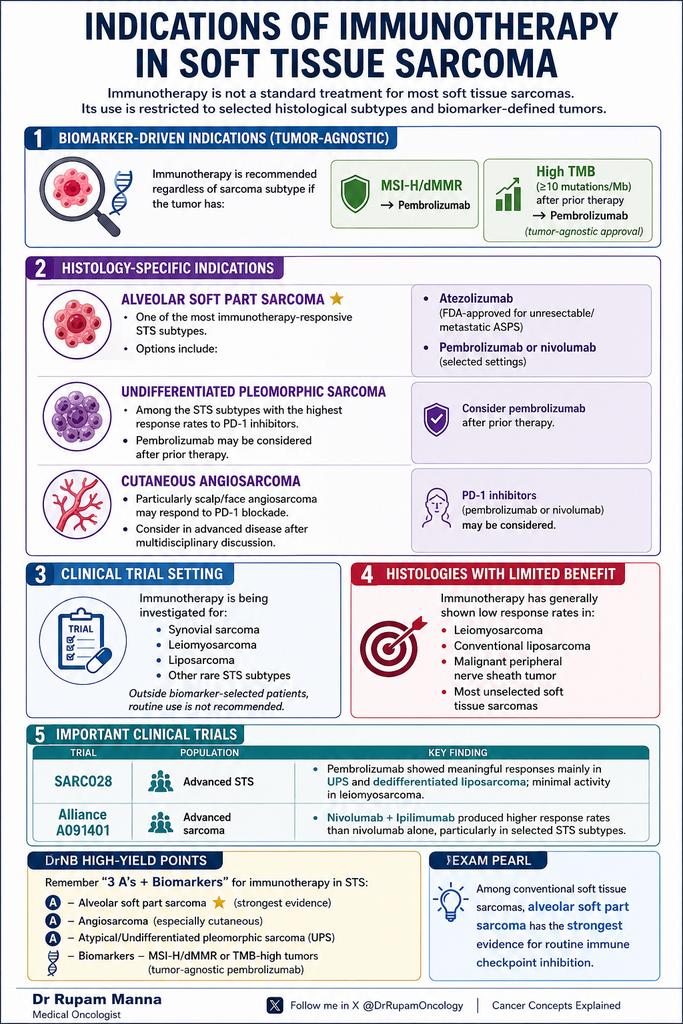
The future of oncology is increasingly tumor-agnostic.
Rather than selecting treatment solely based on where a cancer originated, we can now target specific genomic alterations that drive tumor growth—regardless of the tissue of origin.
Some of the most important tumor-agnostic biomarkers every oncologist should know:
🧬 MSI-H/dMMR
🧬 NTRK fusion
🧬 TMB-High
🧬 RET fusion
🧬 BRAF V600E (approved settings)
🧬 HER2 alterations (selected indications)
Comprehensive Next-Generation Sequencing (NGS) has become an essential tool to identify these actionable alterations and guide personalized treatment decisions, especially in advanced, rare, or treatment-refractory cancers.
Think molecular. Treat smarter.
The right biomarker can transform outcomes—sometimes irrespective of where the cancer began.
#Oncology #MedicalOncology #PrecisionOncology #PrecisionMedicine #TumorAgnostic #NGS #CancerGenomics #TargetedTherapy #Immunotherapy #NTRK #MSI #dMMR #TMB #RET #HER2 #BRAF #CancerEducation #FOAMed #MedEd #DrNB
🧬 Can ovarian reserve help personalize chemotherapy?
Emerging evidence suggests Anti-Müllerian Hormone (AMH) may predict which premenopausal women with HR+/HER2− early breast cancer derive the greatest benefit from chemotherapy.
Key points:
✅ High AMH → greater chemotherapy benefit
✅ Low AMH → limited additional benefit
⚠️ Not yet ready for routine clinical use—prospective validation is needed.
#BreastCancer #Oncology #MedTwitter #AMH #PrecisionMedicine #BreastOncology #RxPONDER #AnnalsOfOncology
Crossover can change how we interpret clinical trial results.
When patients in the control arm switch to the experimental treatment after disease progression, the overall survival (OS) difference may appear smaller—even if the new therapy truly improves survival.
Key takeaways:
🔹 Crossover is ethically appropriate in many oncology trials.
🔹 It can dilute the observed OS benefit.
🔹 Progression-free survival (PFS) is generally less affected.
🔹 Always interpret OS alongside crossover rates, subsequent therapies, and adjusted analyses (e.g., RPSFT, IPCW).
Understanding crossover is essential for critically appraising landmark oncology trials and applying evidence to clinical practice.
#ClinicalTrials #Oncology #EvidenceBasedMedicine #MedicalOncology #ClinicalResearch #OverallSurvival #ProgressionFreeSurvival #Biostatistics #CancerResearch #FOAMed #MedEd #OncologyEducation #DrRupamOncology
Should we reconsider platinum rechallenge in advanced biliary tract cancer?
A multinational real-world study suggests that reintroducing cisplatin + gemcitabine + durvalumab (CGD) after progression on durvalumab maintenance may outperform standard FOLFOX/XELOX in selected patients.
🔹 OS: HR 0.47
🔹 PFS: HR 0.44
🔹 2L PFS: 9.0 vs 4.9 months
Prospective validation is still needed, but these findings are hypothesis-generating and clinically relevant.
#BiliaryTractCancer #Cholangiocarcinoma #BTC #GIOncology #Immunotherapy #Oncology #ESMOOpen
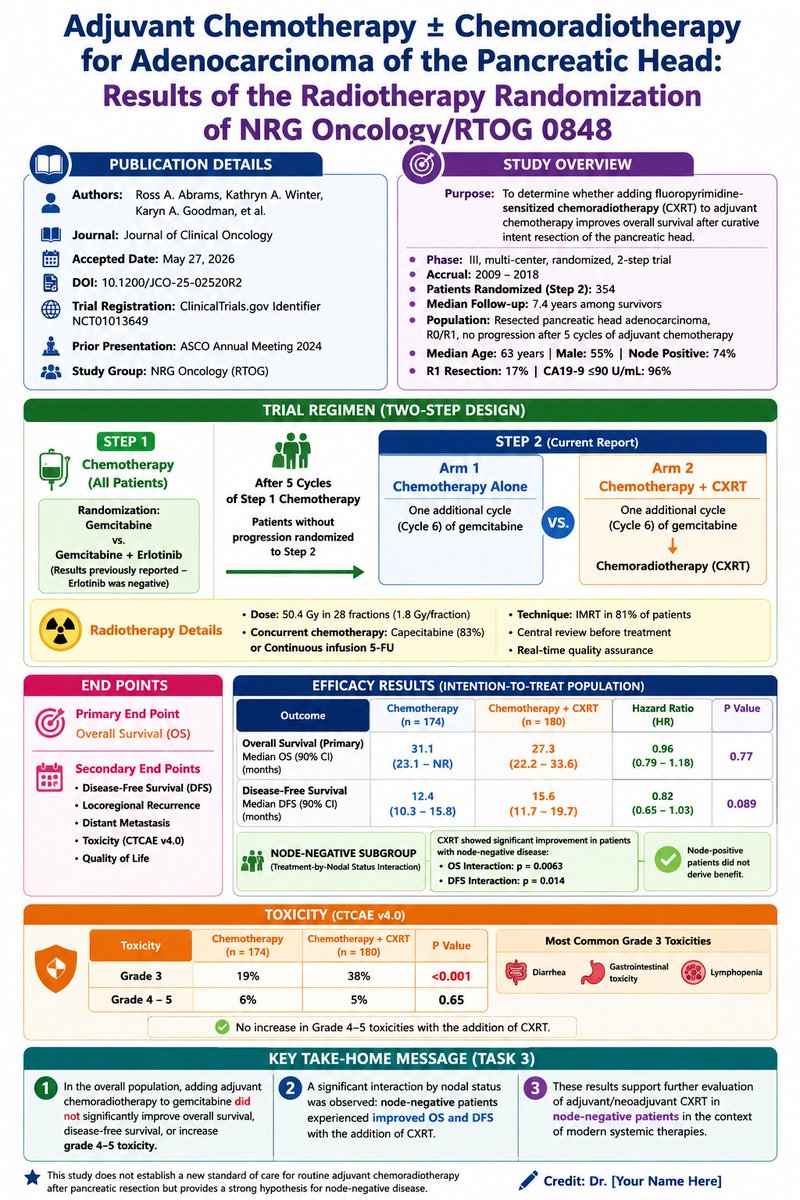
"Adjuvant Chemotherapy ± Chemoradiotherapy for Adenocarcinoma of the Pancreatic Head: Results of the Radiotherapy Randomization of NRG Oncology/RTOG 0848