Associate Professor of Government at Claremont McKenna College and author of Black Silent Majority: The Rockefeller Drugs and the Politics of Punishment
Much of @Tyler_A_Harper’s academic career had felt like a fairy tale. When he landed a tenure-track job, one adviser said that it was like “watching the last dinosaur being born.” But after few years at Bates College, his faith in academia had shattered: https://t.co/8ZnqxJfYcJ
How New York City Got Safe. Michael Javen Fortner (@ProfFortner) reviews @PeterMoskos’s historical reconstruction of the Big Apple’s crime decline, told from inside the institutions responsible for public safety.
https://t.co/hyfiuZVyZ9
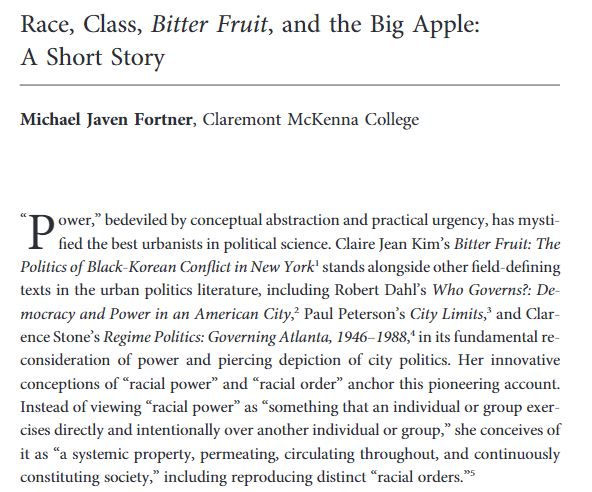
#NowOut: @ProfFortner argues that Kim’s research uncovers the importance of class and economics, but he suggests she might have pursued these dimensions of power in contemporary urban politics more fully.
Read it here:
https://t.co/v3pHutcwa4
Vital City is proud to release our seventh issue, Does Evidence Matter?, on the intersection of academic research and public policy. It's a partnership with @NiskanenCenter and its excellent Hypertext journal. Thanks also to @HFGuggenheim for their support. https://t.co/KUlotJstqI
Norton Long Career Achievement Award recognizes a senior scholar for distinguished contributions to study of urban politics through scholarship, mentoring, & public service. Committee: @ProfFortner Laura Reese and Juliet Gainsborough
To nominate: https://t.co/ITCj1BeIBE
No serious conversation about drug policy in America can sidestep the role of race. @proffortner of @cmcnews contributes this provocative essay about the crack epidemic and a certain prominent New York congressman. https://t.co/63RVmLV5ZP
To many, the term “bipartisan” has come to mean compromise where both sides give up much of what they want. We hope to create “transpartisan” (win-win) solutions that offer something to everyone.
https://t.co/Th3RnKmOIC
So what do viable policy solutions look like? Read the full piece by @LisaLynnMiller to learn how both the left and right could improve their approaches to correctly address America's violence problem. /end https://t.co/0IedIuCXvq
What do racial minorities think about crime, disorder and policing? @ProfFortner takes a deep dive in this piece for @VitalCityNYC, combing through decades of survey research (and citing a hip-hop classic in the process) https://t.co/tF1MeCKbgo
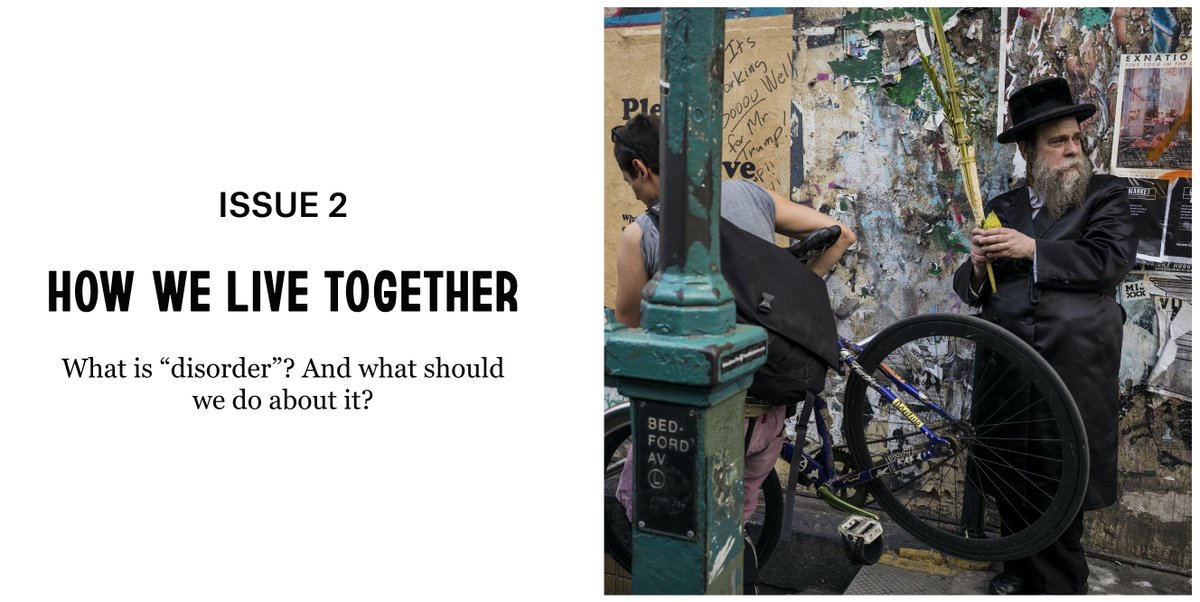
New issue of Vital City out now! Leading thinkers wrestle with the perception/reality of urban disorder (and what to do about it). Check it out here: https://t.co/7yn3rUk6UT
We are happy to announce that our 2022 Video Voter Guide for the CA election is live!
This series provides an easy to understand, nonpartisan overview of the propositions on the CA ballot this election cycle.
Watch and share these videos at https://t.co/DPgoqDXrdD.
Invisible Child: Poverty, Survival and Hope in New York City by Andrea Elliott - review by Michael Javen Fortner https://t.co/2EmtmLz6ur via @Lit_Review
"The Future of Policing," a new Quality Policing Podcast featured an excellent discussion live at Claremont McKenna College between me and Professor (and police abolitionist) Alex Vitale, moderated by Professor Michael Fortner. https://t.co/VgvFwOuc9O @avitale@ProfFortner
THREAD: NYC's framing of/response to violent crime as a recent problem is driven by politics and emotion.
It completely ignores neighborhoods that - due to lack of investment - never experienced safety in the first place. 1/ https://t.co/dhvRp9lovE
Here's an excellent analysis by @ProfFortner of the political challenges facing Democrats on violent crime. My brief thoughts below. https://t.co/74k0Y1ukNi