Well this is quite the roll of dishonour - MPs who don't understand that the law in question is the Equality Act, as interpreted by the Supreme Court. So who are trying to prevent statutory guidance on that law from being approved, because 🤷♀️
https://t.co/hi0EC3Frvj
So you know what @bbcquestiontime did with Farage? They’re now doing it with AI.
This ‘expert’ panel on AI is a disgrace: not one critical voice.
Gilbert works for Tony Blair to promote AI. Jones is govt chief AI booster (& Blair flunky). Riparbelli is industry. Gawdat is ex industry. And for ‘balance’? A Tory MP.
1/
Some nursing homes struggle to attract visitors. One in the Netherlands chose to invite roommates instead.
In the Dutch city of Deventer, a retirement home called Humanitas introduced an idea that would eventually gain attention around the world.
Rather than accepting loneliness as a normal part of aging, they approached it as something that could actually be solved.
For over ten years, Humanitas has allowed university students to live inside the nursing home rent free.
In return, the students spend about thirty hours each month connecting with residents. Sometimes that means sharing meals, having conversations, helping with technology, joining activities, or simply keeping someone company during a quiet afternoon.
They are not nurses or employees. They are simply part of the community.
At first, the idea sounded like a smart response to expensive student housing.
But the real impact appeared in the lives of the residents. Reports from outlets such as PBS NewsHour and AARP described seniors becoming more social, more active, and less isolated once younger people became part of everyday life.
What makes the story even more meaningful is that many students chose to spend far more time there than the agreement required.
Some even stayed connected after graduating. Over time, casual interactions turned into genuine friendships.
Humanitas didn’t really create something new. It brought back something many societies once had naturally: different generations living side by side instead of separately.
Maybe the issue was never aging itself. Maybe it was the distance we created between generations.
Sometimes the most powerful ideas are simply old human connections rediscovered.
🧵Today in Parliament I used privilege to expose @EnoughToEndRape - the company behind self-swab rape kits.
They use lawyers to intimidate rape charities and threaten young women into silence.
Today that stops. #EnoughIsEnough
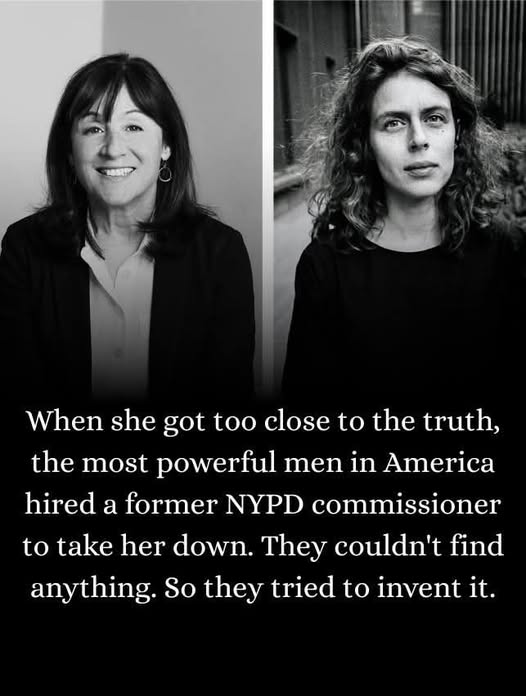
In August 2010, Jane Mayer published a long article in The New Yorker called "Covert Operations."
It introduced most Americans, for the first time, to two brothers — Charles and David Koch — and the quiet network of foundations, think tanks, and political organizations they had spent decades building to reshape American politics from behind the scenes.
The article was meticulously sourced. It named names. It followed the money.
A few months later, Mayer started getting strange messages.
A blogger asked her how she felt about the private investigator who was looking into her. She thought it was a joke. Then a former reporter told her, at a Christmas party, that he'd been approached and asked to help dig up damaging information on a journalist who had written something two billionaires didn't like.
Then, in January 2011, her editor at The New Yorker, David Remnick, forwarded her a query from the New York Post. The Post had been handed material claiming Mayer was a serial plagiarist. The "evidence" was being shopped to multiple outlets at once.
It wasn't true. The reporters she had supposedly stolen from confirmed she had cited them properly or asked permission. The Post dropped the story. But the campaign had been real — and Mayer eventually traced it to a firm called Vigilant Resources International, run by Howard Safir, the former NYPD commissioner. The firm had been hired, she would later document, by people connected to Koch business interests.
The dirt didn't exist. So someone had tried to manufacture it.
That moment told Mayer something about her own work that she has never forgotten.
She wasn't being attacked because her reporting was sloppy. She was being attacked because it was accurate.
Mayer has spent more than three decades doing this. Before Dark Money, she wrote The Dark Side, the definitive account of how the United States adopted torture as policy after September 11. After Dark Money, she investigated dark money behind Supreme Court confirmations, the network funding election-denial campaigns, and the secret political work of a Supreme Court justice's spouse.
Each story has followed the same arc.
Reporting comes out. Power responds — not by disputing the facts, but by going after the reporter. Lawyers get involved. Personal information gets leaked. Old colleagues get phone calls. The accusation is always the same in spirit, even when the words change: she went too far.
But "too far" has never meant inaccurate. It has meant inconvenient.
That's the quiet education buried in Jane Mayer's career: powerful institutions rarely correct the record. They reach for the messenger. They make the cost of telling the truth so high that the next person thinks twice.
It only works if it works.
Mayer is still reporting. The stories are still landing.
The lines, it turns out, were never where we were told they were.
Someone just had to be willing to walk past them, and write down what was on the other side.
HOW @BBC THANKED THE WOMAN WHO TRIED TO EXPOSE JIMMY SAVILE
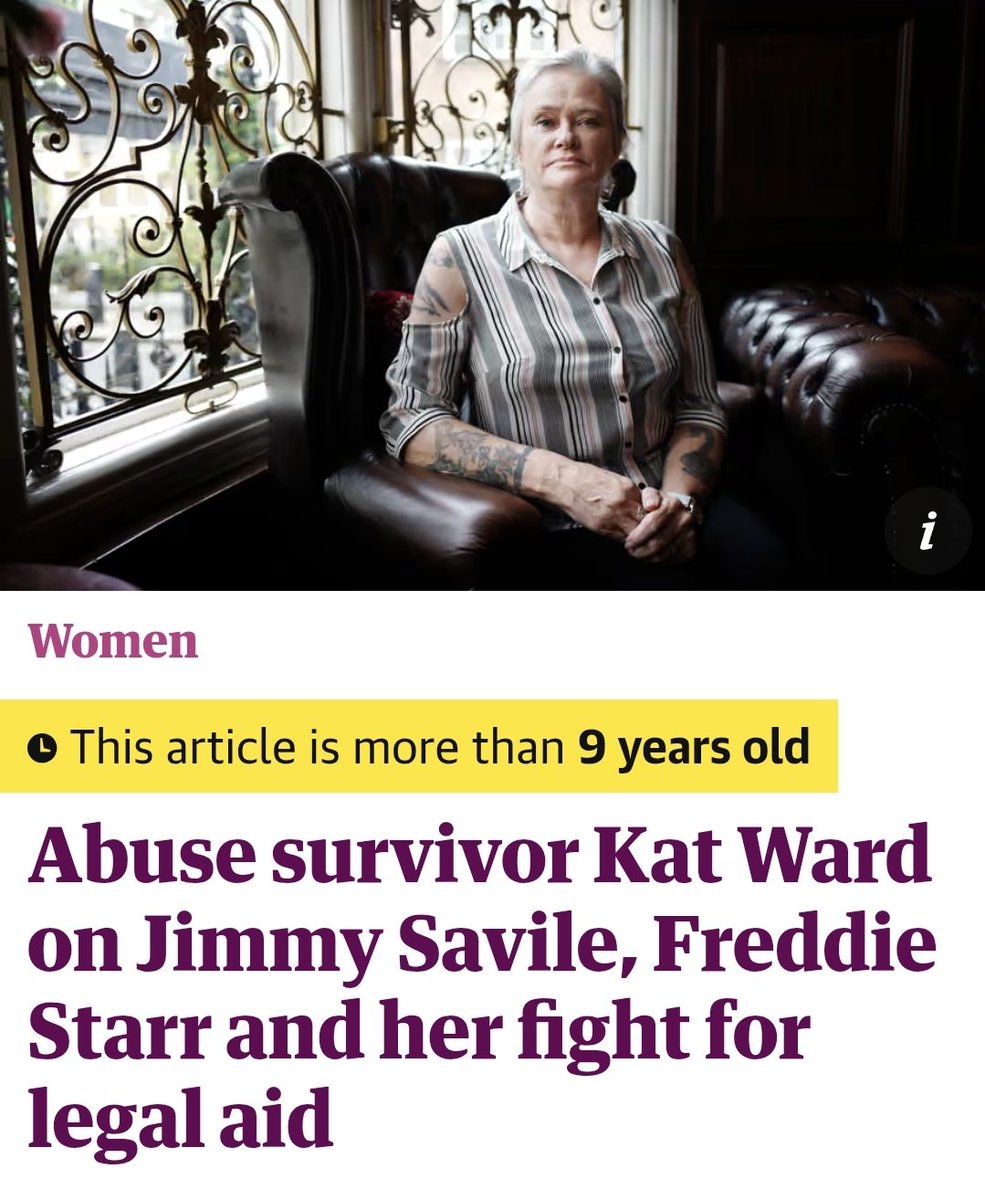
In November 2011, a woman named Karin Ward sat in front of a @BBCNewsnight camera and told the truth about Jimmy Savile. She was the first victim to go on camera. She was undergoing treatment for advanced bowel cancer at the time. She did it anyway.
@BBCNewsnight producer Meirion Jones (@MeirionTweets) and journalist Liz MacKean had built the investigation. BBC management spiked it.
Instead of broadcasting the story, the BBC aired Christmas tributes to Savile. The man the corporation had just learned was a serial child abuser got a warm festive send-off.
The spiked interview footage was then handed to Panorama, which broadcast it in 2012 as Jimmy Savile: What the BBC Knew.
Nobody asked Karin Ward. She never gave permission. The BBC had promised her Freddie Starr would not be identified in her interview. He was identified.
Starr sued her. Not the @BBC. Not @ITV. Her.
A private individual with bowel cancer, fighting a £300,000 defamation claim for words she said on someone else's programme, for a story she was pressured to give, about footage she never authorised.
Both the BBC and ITV refused to provide financial support. The BBC eventually offered money three days before trial. Karin Ward's lawyers took the case on a no-win-no-fee basis. She fought it alone for two years.
On 10 July 2015, Mr Justice Nicol ruled entirely in her favour. The judge found her account to be true. Freddie Starr was left with a costs bill estimated at around £1 million.
Karin Ward said afterward: the BBC's handling of her case was a shameful indictment of how large corporations deal with vulnerable people.
Meirion Jones put it more bluntly. He said the BBC behaviour would frighten whistleblowers away from going to the corporation. He suspected the abandonment was deliberate, in the hope the court would find Ward a liar, so the BBC could justify the original decision to suppress the story.
Sources: @pressgazette | @guardian | @ITVNews | @BBCPanorama | @pressgazette |
For years I've been asking the major disability charities, including Scope, whether they support same-sex care for disabled women. I've sent them statistics, I've given them real world examples of abuse. And I've never received a single reply.
Every major disability charity has pulled a Stonewall. They've decided where the easy money is and they've abandoned the people they're supposed to help and support.
I worked a case last year in which a man accidentally killed his wife by putting a lethal dose of benzodiazepines in her food. He refused to talk to us, and his defense was that she’d been struggling with insomnia and he was trying to help her relax. We found this kind of content on his phone — women being drugged unconscious and then abused, upskirting videos, etc.
Rotherham, England replaced 8 miles of mowed grass with wildflowers.
They saved £25,000 in mowing costs a year and bees, butterflies, and birds showed up almost immediately.
You don’t need to wait for your city to act. Start small in your own patch:
🏡 Let your front verge or sidewalk strip go wild this spring
🌻 Toss a few native wildflower seed balls into neglected spots
🌱 Stop mowing one strip and see what shows up
📧 Contact your city government. One email from one person has started initiatives like this before
One person. One small patch. Real habitat.
Your street could be next.
In her final semester at Harvard, Amanda Nguyen was raped. She did everything survivors are told to do. Then she discovered that the physical evidence collected from her own body would be destroyed in 6 months — unless she filed paperwork to stop it. And then filed it again. Every 6 months. Forever. She was 22 years old. She decided to change federal law instead. 🌟
Amanda had interned at NASA. She had big plans. The kind of future that takes years of hard work to build was finally within reach.
Then everything shattered.
She went to the hospital. She reported the assault to police. She endured the forensic exam. She made the careful decision to file her rape kit anonymously — worried that an open case could affect security clearance applications for her dream careers.
That's when the system revealed how broken it truly was.
Because she was anonymous, Massachusetts law gave her only 6 months before her rape kit — physical evidence collected from her own body — would be permanently destroyed.
Not the 15 years the state allowed for pressing charges.
Six months.
No official process to extend it. No clear instructions. No one to guide her. She had to figure it out herself, every 6 months, forcing herself to relive the worst experience of her life just to preserve her right to eventually seek justice.
She started researching rape kit laws in all 50 states.
What she found was staggering.
Some states kept kits for years. Others destroyed them in as little as 30 days. Some states charged survivors for the cost of their own kit collection. Others never notified survivors what happened to their evidence. No consistency. No standard.
*"Justice should not depend on geography,"* she said.
But it did.
In November 2014, Amanda founded Rise — a nonprofit dedicated to changing that reality. Everyone who worked with Rise was a volunteer. They fundraised through crowdfunding.
Their goal was rewriting federal law.
She met with lawmakers across Washington. Staffers told her it wasn't a priority. Some questioned her story. She kept going. She learned that the most powerful thing she could do was stop being abstract — to walk into a room, look a senator in the eyes, and say: *this happened to me. I am sitting in front of you.*
Together with Senator Jeanne Shaheen, she drafted the Sexual Assault Survivors' Rights Act — proposing that survivors should never be charged for their rape kit collection, should receive testing results, and must be notified at least 60 days before their evidence was scheduled for destruction.
In February 2016, the bill was introduced.
It passed the Senate unanimously.
It passed the House unanimously.
Not a single vote against.
On October 7, 2016, President Obama signed the Sexual Assault Survivors' Rights Act into federal law.
Amanda Nguyen was 24 years old.
Rise continued working state by state. To date, Rise has helped pass 33 laws across the United States, covering protections for over 84 million rape survivors.
A movement started in spare time, with no budget and only volunteers, became one of the most effective civil rights campaigns of its generation.
And Amanda never stopped reaching for the stars — literally.
In 2024, Blue Origin announced she would be the first Vietnamese woman to fly to space. The young woman who had once feared that fighting for justice would cost her a future in space proved the two didn't have to be a choice.
She was nominated for the Nobel Peace Prize. Named a Time Woman of the Year. She wrote a memoir called *Saving Five.*
But perhaps the most remarkable thing about Amanda Nguyen's story is not any single achievement.
It is the fact that she turned the most painful moment of her life into something that made the world more just for millions of people who will never know her name.
She was a college student who needed the system to work.
When it didn't, she rebuilt it herself.
**At 24 years old.
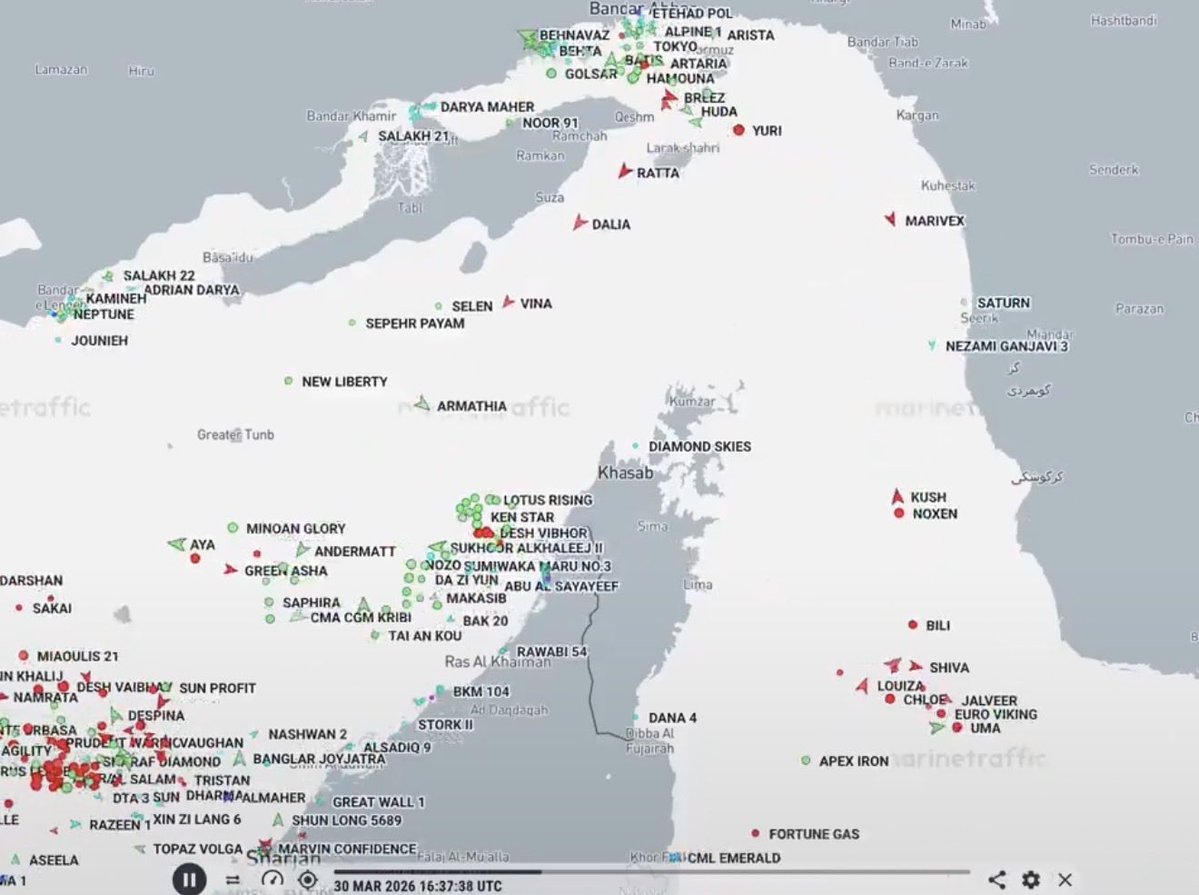
The Strait of Hormuz is not closed. It is sorted.
Iran has built a three-tier access system for the most important waterway on earth. Tier one: allies transit free. Malaysia cleared seven vessels through diplomacy at zero cost. India negotiated zero-fee passage. Pakistan secured clearance for 20 ships. Iraq transits without charge. These countries proved geopolitical alignment and the IRGC waved them through the Larak corridor without collecting a rial.
Tier two: compliant neutrals pay. At least two tankers, likely Chinese-linked, paid up to two million dollars each in yuan through Kunlun Bank intermediaries. COSCO container ships attempted the corridor, were turned back on first approach when documentation was incomplete, then succeeded days later with revised paperwork. These are the vessels that prove the system works. They submit IMO numbers, ownership chains, cargo manifests, and crew lists to the IRGC’s Hormozgan Command. They receive clearance codes. They are escorted by pilot boats through the five-nautical-mile channel between Qeshm and Larak. They pay in a currency that does not route through SWIFT. Every successful yuan transit is a live proof-of-concept for non-dollar energy settlement.
Tier three: adversaries are denied entirely. The committee plan bans American vessels, Israeli vessels, and vessels from any country participating in sanctions against Iran. These ships do not get vetting. They do not get codes. They do not get escorts. They get the AL SALMI, burning off Dubai, as illustration of what the corridor looks like without permission.
But the toll is not the real cost. War-risk insurance is. Premiums have surged from $40,000 per VLCC transit before the war to $600,000 to $1.2 million today, a 30-fold increase, now running five to ten percent of hull value. A VLCC carrying $50 million in crude oil can absorb a combined $3 million in toll and insurance as a fraction of cargo value. A container ship carrying $5 million in manufactured goods cannot. The insurance premium alone exceeds the profit margin on non-oil cargo. The strait has become an oil-only VIP lane. Crude flows selectively for those who can pay the combined cost. Everything else waits, reroutes around the Cape of Good Hope, or does not move at all.
And the US Navy is not inside the strait. The Abraham Lincoln strike group operates from standoff in the Arabian Sea. Three Littoral Combat Ships sit in the Persian Gulf. Marine expeditionary units are positioned for contingency. But zero American warships have transited the strait or escorted commercial traffic since the war began. The Navy told the shipping industry it has “no availability” for Hormuz escorts. The world’s most powerful fleet keeps respectful distance from a waterway controlled by a country whose navy is 92 percent destroyed because the mines, drones, and shore missiles that remain make close-in presence prohibitively risky.
The result is a geopolitical sorting algorithm operating at the molecular level. One hundred and eighty-one vessels transited in all of March. Pre-war traffic was 138 per day. Of those 181, roughly 70 percent were Iranian-affiliated. The remaining 30 percent were vetted allies or yuan-paying neutrals. The 20 percent of global oil that once flowed freely through this strait now flows selectively, conditionally, and in currencies chosen by Tehran.
Iran lost its air force. It lost its navy. It lost two thirds of its production capacity. It retained the only thing that matters: 39 kilometres of coastline on both sides of the narrowest point. The US Navy will not enter. Chinese tankers will. And the sorting algorithm processes another vessel, collects another yuan payment, and demonstrates once more that geography is the one military asset that cannot be degraded by precision strikes.
The strait is not closed. It is under new management.
https://t.co/dAOBBMrIOk
A trainee gynaecologist in Belgium who was found guilty of rape will face no punishment and receive no criminal record because, the judge decided, he is "a talented and (socially) engaged young man".
Unsurprisingly, the student he raped is devastated by the ruling. It also means that he will be able to practise gynecology, potentially putting other women at risk of sexual assault.
This is MMA fighter Sean McInnes. When Anne Marie Boyle asked him to leave her alone, he punched her in the face so hard that he broke her cheekbone and her eye socket, knocked her unconscious, and left her with a life-altering brain injury.
He was given less than two years behind bars.
It would be a real shame if this post was widely circulated and impacted his career in a negative way.
This week on #bbcqt, arguably the most dangerous man in Britain that few voters have even heard of: Reform UK's anti-abortion #NatCon Head of Policy and Peter Thiel associate, James Orr, who is facilitating the transfer of control of Britain to #MAGA extremists.
FFS WAKE UP!
Private equity firms bought 500 hospitals. Death rates in their emergency rooms went up 13%. They fired 12% of the staff. Then they paid themselves billions in dividends.
A Harvard study just confirmed what doctors already knew: people are dying so investors can hit quarterly targets.
Exactly what happens. A PE firm buys a hospital using debt. The debt gets placed on the hospital's balance sheet, not the firm's. Now the hospital owes hundreds of millions it never borrowed. To service that debt, the hospital cuts costs. Costs mean nurses.
The numbers from the Harvard/University of Chicago study are horrifying. After PE acquisition, emergency department salary spending dropped 18.2%. ICU salary spending dropped 15.9%. Hospital-wide employees were cut 11.6%. Emergency department deaths rose 13%, seven additional deaths per 10,000 visits.
A separate study found patients undergoing surgery at PE-acquired hospitals had 17% higher odds of dying within 90 days.
Steward Health Care, owned by Cerberus Capital, filed bankruptcy with $9 billion in debt after closing hospitals across Massachusetts. The CEO lived on a $40 million yacht while emergency rooms went dark. Eight hospitals serving 2 million people nearly disappeared because a PE fund extracted more cash than the system could survive.
The private equity industry has poured over $1 trillion into healthcare. They operate a quarter of ERs nationwide. This isn't going away.
The investing angle nobody talks about.
Non-PE hospital operators like HCA Healthcare (HCA) and Tenet (THC) are the direct beneficiaries. Every time a PE hospital closes or deteriorates, patients flow to the nearest competitor. HCA has returned 1,200% since 2011. Patient volume from PE closures is a structural tailwind nobody's pricing in.
Medical staffing firms (AMN Healthcare, Cross Country) charge premium rates specifically because PE hospitals cut staff. The staffing shortage IS the business model for these companies.
The disruption play: outpatient surgical centers (SCA Health, now part of UnitedHealth) are pulling profitable procedures out of hospitals entirely. PE-owned hospitals lose their highest-margin surgeries to outpatient, and the death spiral accelerates.
Pull up tradevision and monitor healthcare M&A alerts, hospital closure filings, and patient volume migration data. When a PE-owned hospital announces "restructuring," the patient volume shift to competitors like HCA starts within 30 days. That 30-day window is when the competitor's earnings revisions haven't updated yet. Free to try.
(a private equity firm bought your local hospital. borrowed $500 million in the hospital's name. fired 12% of the nurses. emergency room deaths rose 13%. then they paid themselves dividends. nobody went to prison. they're currently buying another hospital.)
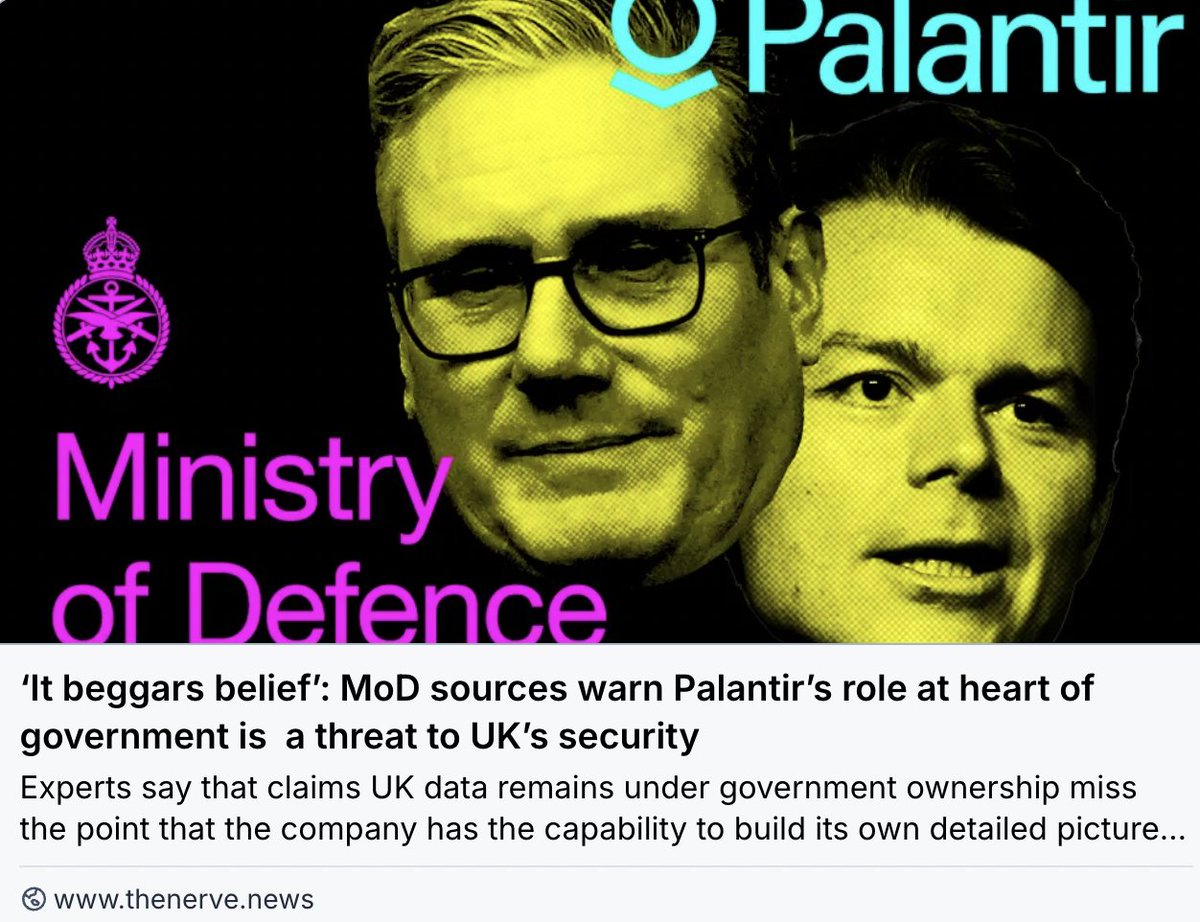
NEW: Two senior MOD whistleblowers with inside knowledge of Palantir's systems have come forward to @thenerve_news to say government ministers are ignorant of the grave national security risks the technology poses.
Hugely important by @CharlieNotOld
NHS hospital: I noticed the clock on the wall showed the wrong time.
A nurse told me they knew, but they wouldn’t report it because replacing the battery through the NHS would cost £70.
A £2 battery... £70. How? Why?
That's when I began to dig further.
🧵
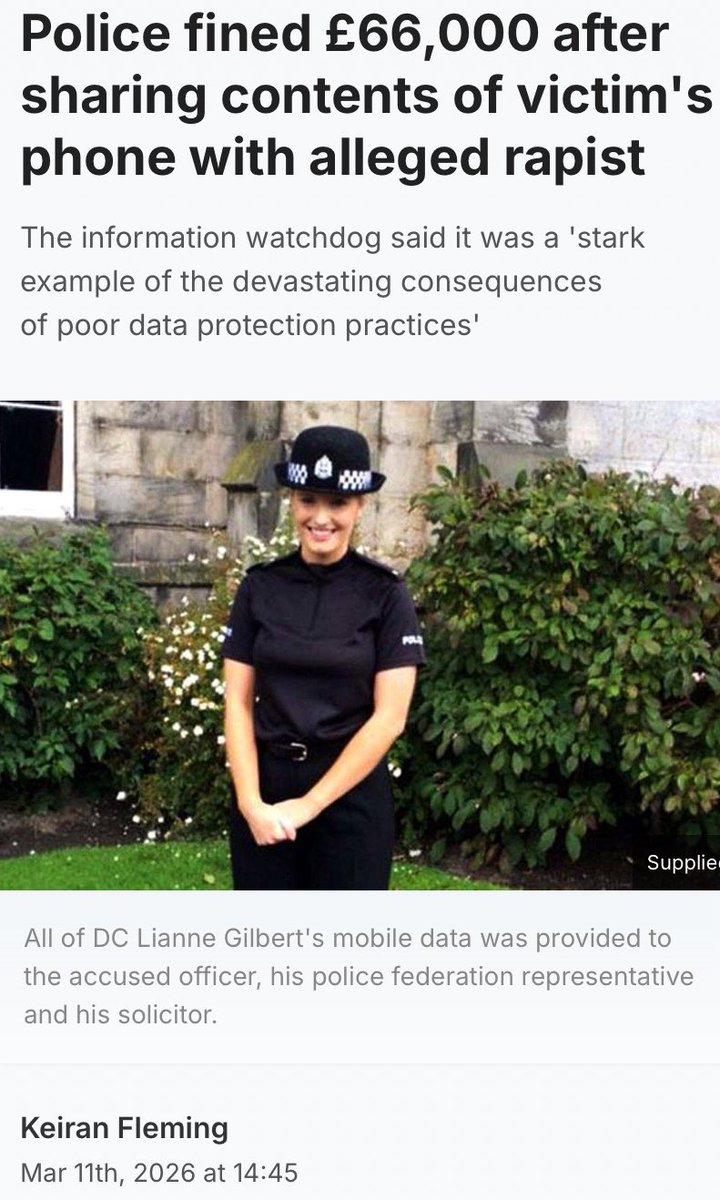
This is simply inexcusable. Police Scotland hand over ALL data downloaded from a rape survivors phone to her alleged rapist (who happens to be a police officer).
They then LIE to her and say the data breach had been reported when it hadn’t been.
As the fine isn’t awarded to her, I really hope she takes a civil case out against them.
▪️▪️▪️▪️▪️▪️▪️▪️▪️▪️▪️▪️
Police Scotland has been fined £66,000 by the UK data watchdog after sharing the entire contents of a rape survivor’s phone with her alleged attacker.
On July 5, 2022, detective constable Lianne Gilbert received a letter from a police data protection officer confirming that personal data and images had been shared incorrectly with third parties. Her phone had been submitted voluntarily as part of an investigation into criminal allegations against a serving police officer.
The data was passed to Police Scotland’s Professional Standards Department (PSD). As part of the procedure, the officer subject to investigation is provided with the investigator’s report and relevant documents prior to a hearing.
On June 14, 2022, all of DC Gilbert’s mobile data was provided to the accused officer, his police federation representative and his solicitor.
In a letter seen by STV News, Police Scotland said this was “human error”.
Three days later, the discs were retrieved from the officer. On June 22, 2022, the information was retrieved from the SPF and the solicitor.
One disc contained 39,233 pages of information following the initial download of the phone. One included 697 image files, 17 uncategorised files and 13 video files, the majority of which were not relevant to the investigation.
Only one disc contained messages between the victim and the accused officer.
A review carried out by officers identified 15 images described as intimate which had been incorrectly shared along with DC Gilbert’s medical records.
Almost two months following the breach, an email from a Police Scotland data protection officer stated that the PSD National Complaint Assessment and Resolution Unit determined the matter “could be considered under criminal legislation”.
DC Gilbert told STV News: “This has left me with significant psychological issues.
“At the time this happened, I had a five-month-old child. I don’t remember a lot about their early years because of the toll this had on me. It has been traumatic.”
In the initial letter sent to DC Gilbert, Police Scotland determined that the breach “did not meet the statutory notifiable requirements” for the force to report itself to the data watchdog, the Information Commissioner’s Office (ICO). But, Police Scotland claimed in the letter that it reported the breach to “demonstrate accountability and transparency”.
However, in an email seen by STV News, an ICO lead investigator stated they were not made aware until DC Gilbert lodged a complaint on September 2, 2022 – three months after the incident.
The ICO confirmed it would investigate the “unlawful disclosure” of data and Police Scotland’s “mobile phone extraction process”.
On Wednesday, March 11, 2026 – three and a half years after it being reported – the ICO said it had issued a £66,000 fine and a reprimand to Police Scotland for serious failures in the handling of sensitive personal information.
“The ICO’s investigation found that Police Scotland extracted the entire contents of a person’s mobile phone after they reported an alleged crime, without ensuring there were sufficient safeguards to prevent access to irrelevant personal information,” the watchdog said.
“As a result, officers collected a substantial volume of highly sensitive information, much of which had no bearing on the investigation.”
*ARTICLE CONTINUED IN COMMENTS*