Hantavirus on a cruise ship sounds scary, but experts say there's no need to panic.
Eight cases (including three deaths) have been reported on the MV Hondius, but #WHO confirms this is NOT the start of a new pandemic. A Chinese expert also notes that the strain most found in China rarely spreads person-to-person.
Awareness cures anxiety. #hantavirus
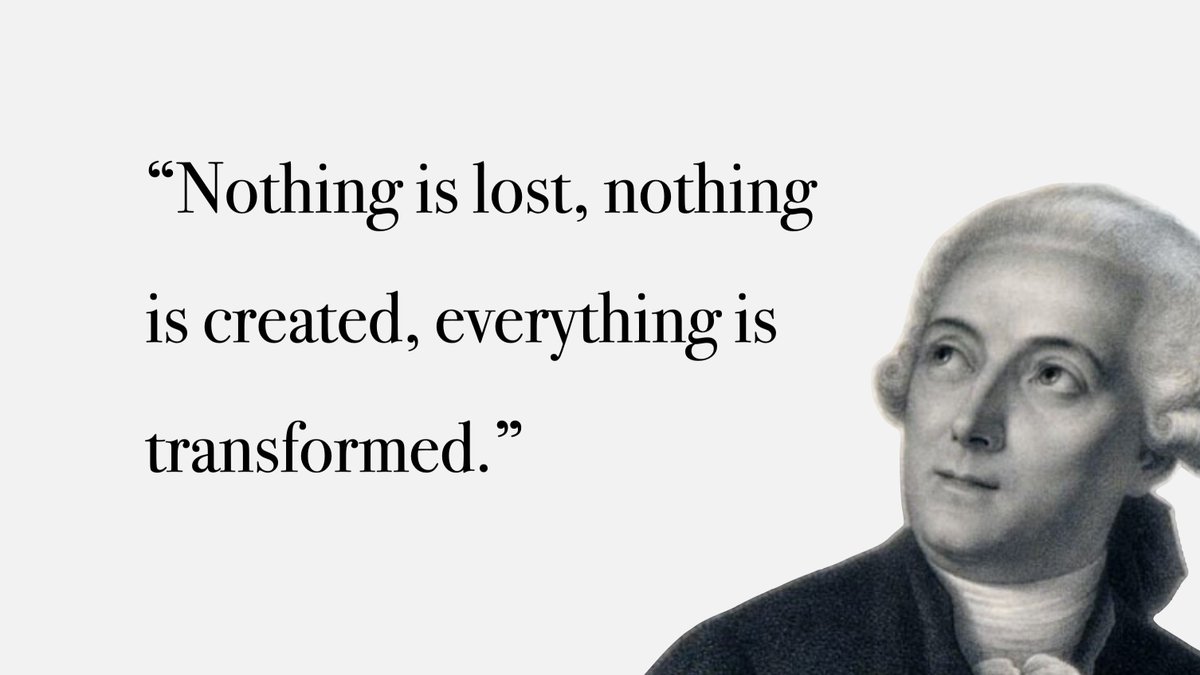
On this day in 1794 the French Republic guillotined Antoine Lavoisier. He had named oxygen, formulated the law of conservation of mass and founded modern chemistry.
Appeals were rejected with the line "the Republic has no need of scientists."
The next day Lagrange said: "It took only a moment to cause this head to fall, and a hundred years will not suffice to produce its like."
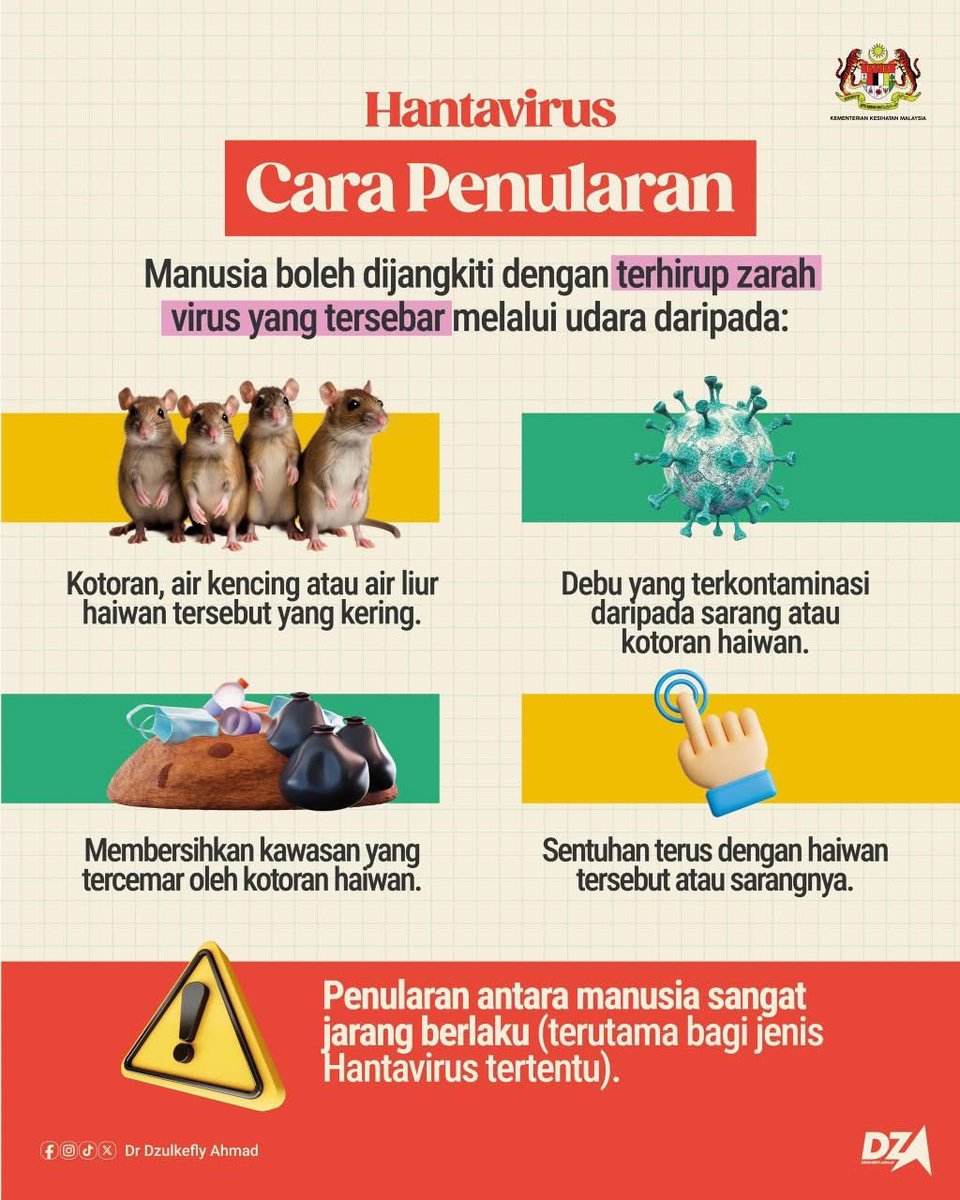
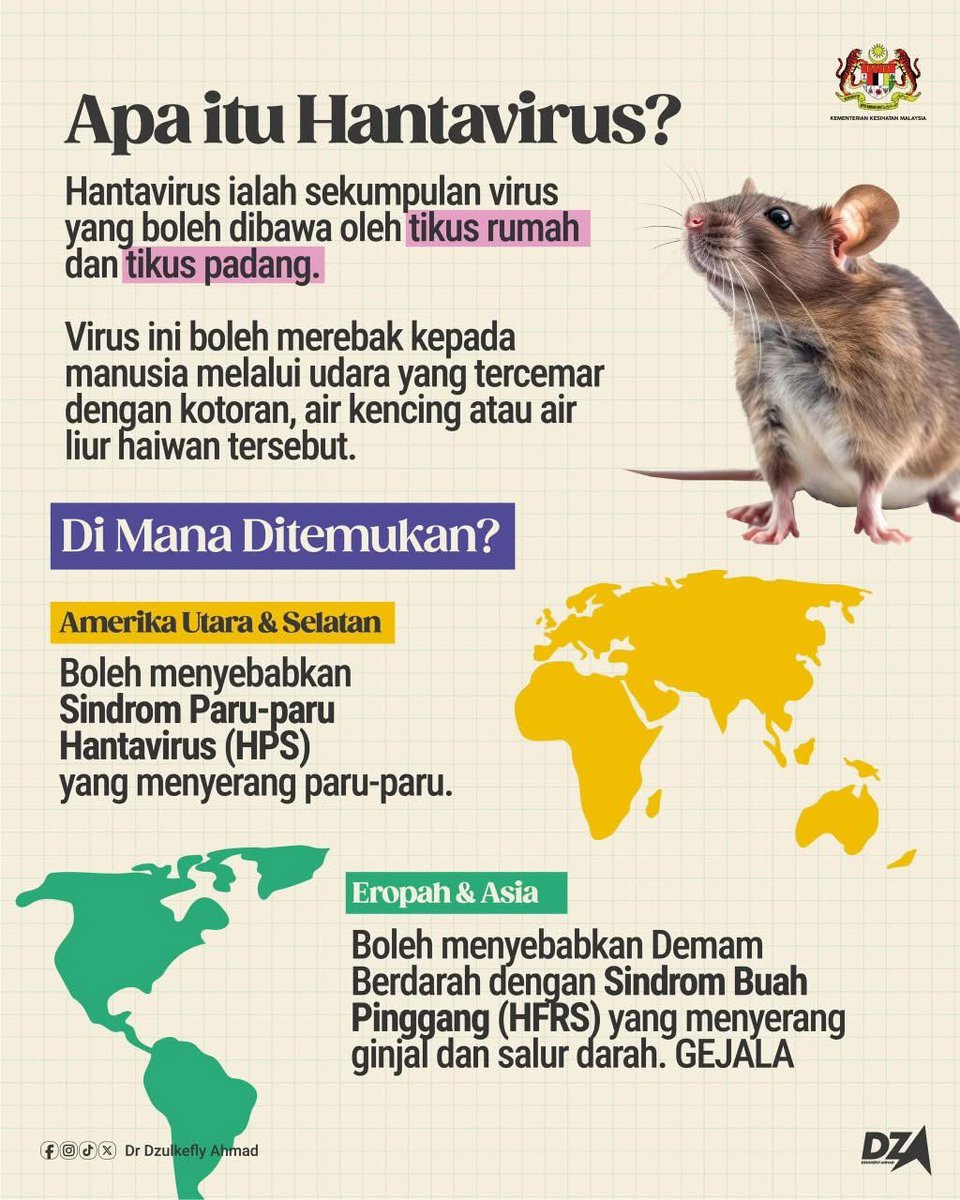
Hantaviruses are zoonotic viruses that naturally infect rodents and can occasionally spread to people.
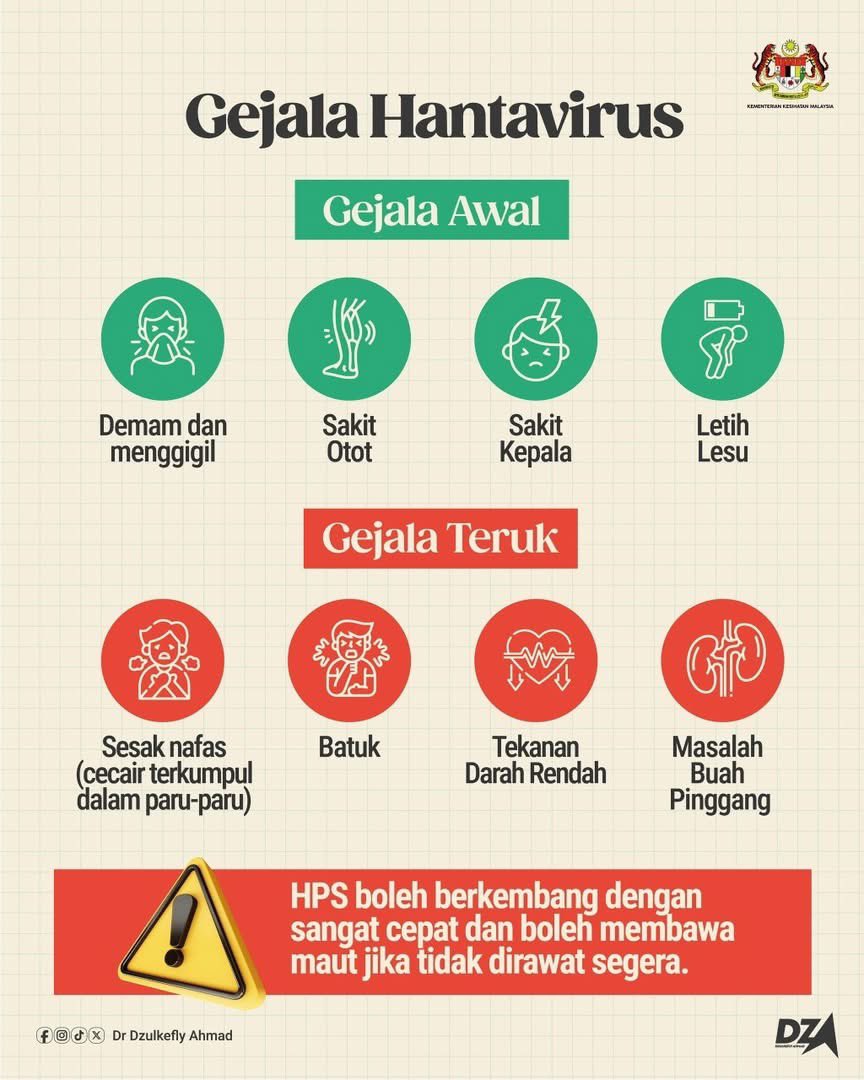
Here’s what you need to know about #hantavirus: What they are, how they spread, the symptoms, and how to prevent infection
Send this to a friend with back pain! And as always, hearing a crack is not necessary…
You'll experience the healing effects of exercises like this without a crack as well 👍
Google Scholar has an AI-powered PDF reader that gives you outlines of research papers.
It's totally free, but many researchers still don't know about it.
1. Go to Chrome Web Store and type in "Google Scholar PDF Reader."
Add it to your Chrome.
Mutakhir ini, Kementerian Kesihatan Malaysia (KKM) mengambil maklum mengenai laporan penularan jangkitan Hantavirus yang berpunca daripada sebuah kapal persiaran antarabangsa. Saya ingin memberi jaminan kepada masyarakat bahawa tiada rakyat Malaysia yang berada di dalam kapal persiaran tersebut.
Susulan komunikasi langsung KKM bersama pihak berkuasa kesihatan Singapura pada pagi ini, turut disahkan bahawa dua kru kapal warganegara mereka telah diuji negatif Hantavirus, manakala proses pengesanan kontak kini sedang giat dijalankan.
Walaupun situasi ini amat terkawal dan tidak melibatkan rakyat kita, KKM akan terus memantau rapi perkembangan wabak ini di peringkat global serta serantau bagi memastikan kesiapsiagaan sempadan dan sistem kesihatan negara berada pada tahap tertinggi.
Untuk makluman bersama, Hantavirus adalah sejenis virus bawaan tikus yang merebak kepada manusia melalui udara yang tercemar dengan sisa kotoran, air kencing, atau air liur haiwan tersebut. Jangkitan ini tidak wajar dipandang remeh kerana komplikasinya berpotensi membawa maut, dengan kadar kematian bagi Sindrom Paru-paru Hantavirus (HPS) boleh mencecah 30 hingga 40 peratus.
Memandangkan tiada ubat antivirus khusus buat masa ini, langkah pencegahan dan kawalan kendiri adalah perisai pertahanan kita yang paling ampuh. Rakyat tidak perlu panik, namun kita mesti kekal berwaspada. Saya menggesa seluruh masyarakat untuk merujuk siri infografik yang disertakan ini dan sentiasa memastikan kebersihan kediaman serta premis kerja terpelihara daripada ancaman haiwan perosak.
📱Sumber: Media Sosial Rasmi YB Datuk Seri Dr. Dzulkefly Ahmad, Menteri Kesihatan
#KKMPrihatin #SihatBersama #MalaysiaSihat #MADANIBekerja
Plagiarism is not always obvious. That is why many people make the mistake without realizing it.
Many people think plagiarism only means copying entire paragraphs.
It does not.
In academic writing, plagiarism can also look like:
↳ careless paraphrasing
↳ missing citations
↳ copying a sentence “temporarily” and forgetting to change it
↳ reusing figures, tables, or text without proper credit
↳ recycling your own previous work without referencing it
That is how small writing habits turn into serious academic problems.
In research, credibility matters.
And protecting that credibility requires careful writing.
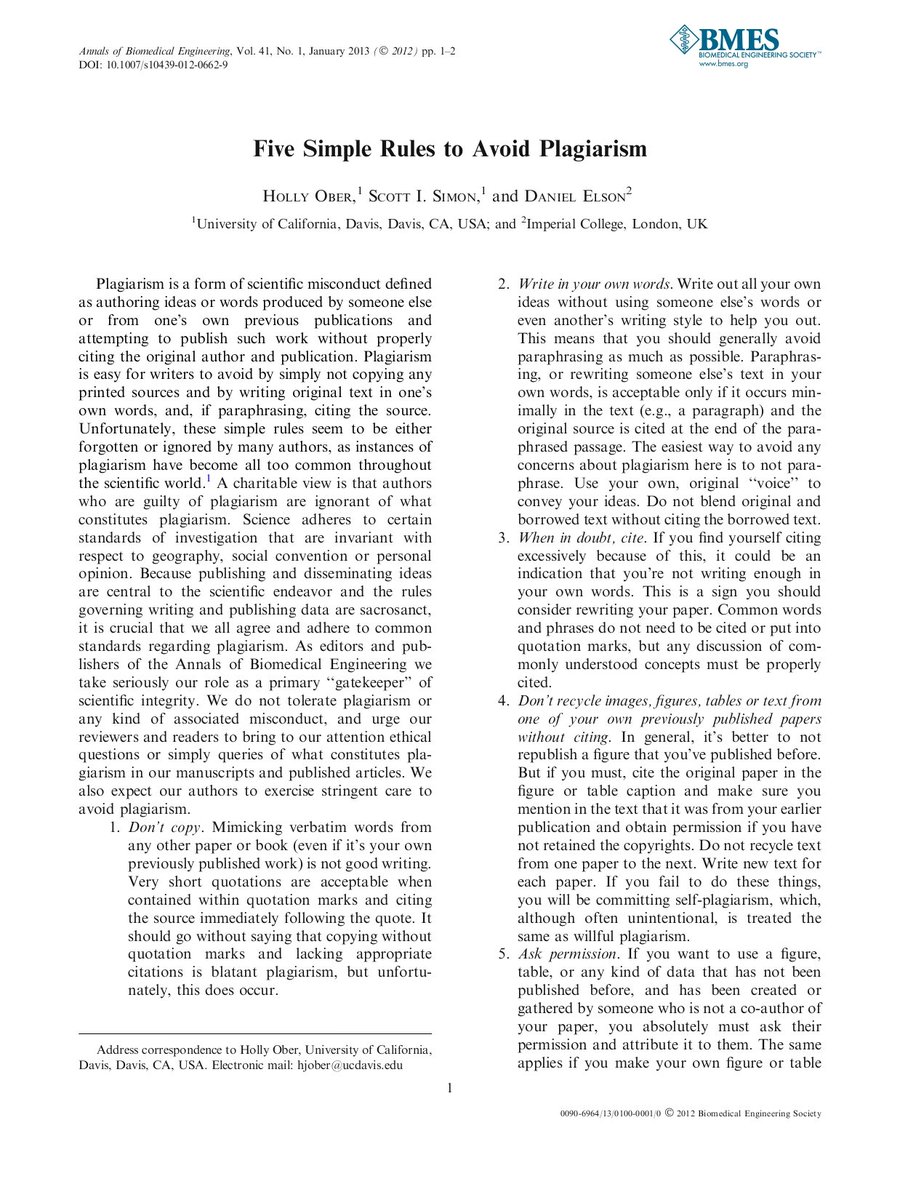
Here are 5 simple rules to avoid plagiarism in scientific writing.
1️⃣ Do not copy text directly
If the words are not yours, do not present them as yours.
If you use a sentence from another source, you must:
↳ place it in quotation marks
↳ cite the source properly
Clear attribution protects both the original author and your own integrity.
⸻
2️⃣ Write ideas in your own words
Understanding an idea means you can explain it clearly in your own language.
Do not simply rearrange a few words from the original text.
Instead:
↳ read the source carefully
↳ step away from the text
↳ explain the idea in your own way
↳ cite the source
Good paraphrasing shows comprehension.
⸻
3️⃣ When in doubt, cite
If you are unsure whether something needs a reference, it is usually safer to include one.
Citations show:
↳ where ideas originated
↳ how your work connects to existing research
↳ that you respect prior scholarship
Clear referencing strengthens your writing.
⸻
4️⃣ Do not recycle your own work carelessly
Reusing material from your previous publications without citation can create problems.
This includes:
↳ text
↳ tables
↳ figures
↳ datasets
Even your own work should be referenced properly.
⸻
5️⃣ Ask permission when required
If you plan to reuse a figure, table, or graphic from another source, permission may be required.
Always:
↳ request permission if necessary
↳ cite the original source clearly
Respecting intellectual ownership is part of responsible scholarship.
⸻
Plagiarism is usually the result of small habits repeated over time.
Good academic writing is careful, transparent, and ethical.
Save this before writing your next paper, thesis, or abstract.
♻️ Repost to help a student or researcher avoid a costly mistake.
———-
Link to Full article in the comments.
Ober, H., Simon, S.I. & Elson, D. Five Simple Rules to Avoid Plagiarism. Ann Biomed Eng 41
#AcademicWriting