Retired journalism prof; parent of 5 lovely adults; lapsed surfer, yearning for the Endless Summer; still rockin' but dealing w/the consequences;Jersey Girl.
COME BE AN NPR INTERN!
The NPR Morning Edition-Washington Desk application is now OPEN.
Deadline to apply is June 21 at midnight. (NPR pays its interns!)
I am one of the hiring managers, so feel free to reach out with any questions. Good luck!
https://t.co/f1aS1loCOZ
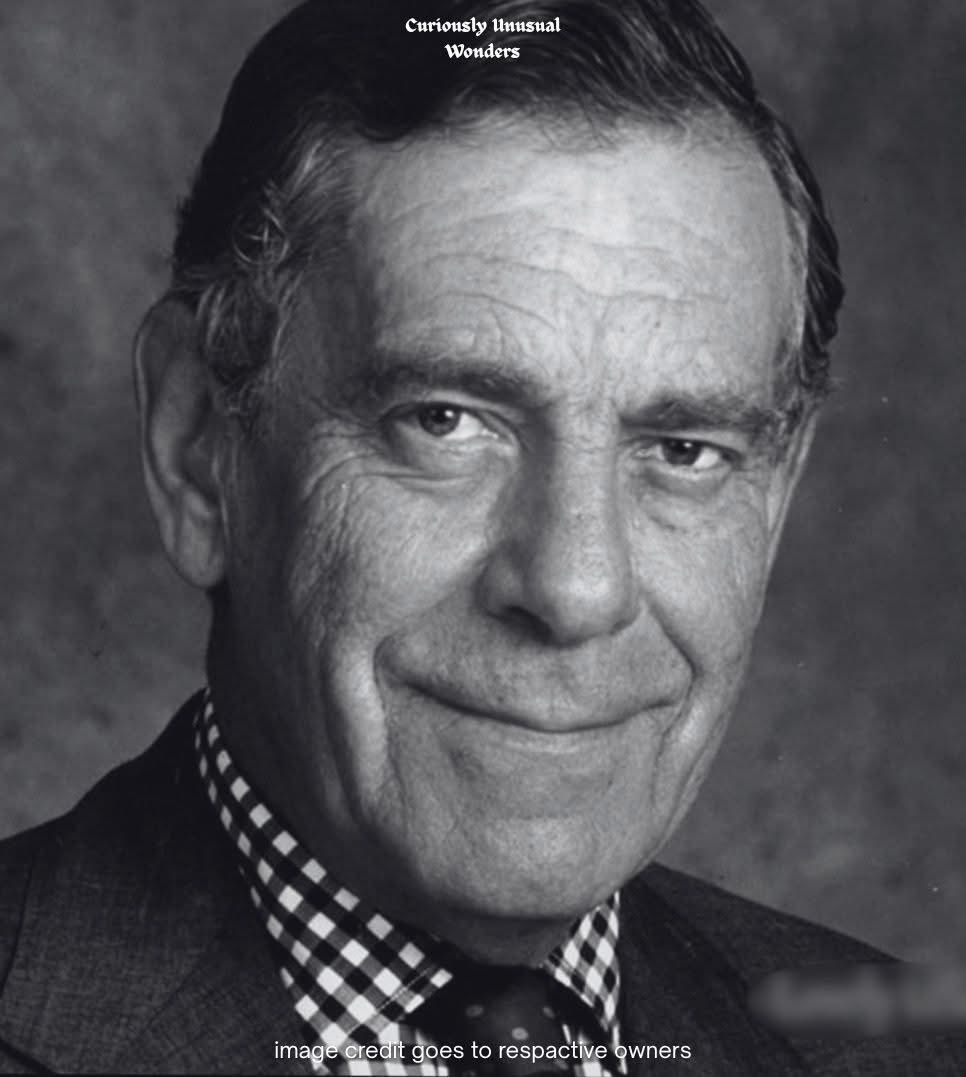
On the morning of August 3, 1965, CBS News correspondent Morley Safer was having coffee with Marine officers in Da Nang, Vietnam, looking for a story to cover. A lieutenant mentioned his unit was heading out on an operation the next morning and invited Safer along. The destination was Cam Ne, a small village in South Vietnam suspected of sheltering Viet Cong fighters. Safer agreed, brought his camera crew, and climbed into an armored vehicle heading toward the village before sunrise.
What he saw when they arrived was not a military battle. It was a village full of women, children, and elderly men.
The Marines moved through Cam Ne methodically. When villagers could not answer their questions, or simply did not understand English, soldiers pulled out cigarette lighters and flamethrowers and began setting the thatched roofs on fire. Old women pleaded with the Marines to wait, begging for time to remove their possessions. Their pleas were ignored. Rice stores were burned. Belongings were burned. By the time the operation ended, 150 homes had been destroyed. Three women were wounded. One baby was killed. The only prisoners taken were four elderly men who could not understand a word of English and had no idea what an identification card was.
Safer kept his cameras rolling through all of it.
That evening, he shipped the film and his narration back to New York, where CBS News president Fred Friendly and anchor Walter Cronkite watched the footage together. Both were stunned. Both agreed it was too important not to broadcast.
On August 5, 1965, the report aired on the CBS Evening News. Within hours, CBS was flooded with letters and phone calls from viewers outraged at the negative portrayal of American troops. Then came the call that no network executive ever wants to receive.
Early the next morning, CBS president Frank Stanton was woken by his telephone. The voice on the other end did not introduce itself politely. It said: "Frank, are you trying to silence me? Frank, this is your president, and yesterday your boys shat on the American flag." Lyndon Johnson was furious. He immediately ordered a background investigation into Safer, personally convinced that a journalist capable of such a report had to be working for the communists. The investigation found nothing. Johnson then ordered an investigation into the Marine officer in charge at Cam Ne, certain Safer must have bribed him to stage the burning. Nothing came of that either. The Pentagon formally demanded that CBS remove Safer from Vietnam entirely. The general commanding the Marine Corps area of operations in South Vietnam banned Safer from entering Marine territory.
CBS refused to pull him.
The network stood behind the report. The ban on Safer was eventually lifted. But the consequences did not disappear. Safer received death threats. He slept with a loaded pistol beside his bed. One night, a drunken voice outside his window screamed accusations and fired a gun into the air.
The military was also forced to respond. After the Cam Ne broadcast, Marines were prohibited from burning villages. Within weeks, General William Westmoreland issued new guidelines explicitly banning the indiscriminate destruction of populated areas. Any future operations near civilians were required to include warning leaflets, loudspeakers, and South Vietnamese troops to help communicate with villagers. A single television report had changed official military policy.
Later, the New York University Department of Journalism named the Cam Ne broadcast one of the top 100 works of journalism in the United States in the entire 20th century.
Morley Safer went on to join 60 Minutes in 1970, where he spent 46 years as the program's longest-serving correspondent. He earned 12 Emmy Awards, three Peabody Awards, and became one of the most recognized faces in American broadcast journalism. He passed away on May 19, 2016, at the age of 84, just days after announcing his retirement.
(More Story in replies)
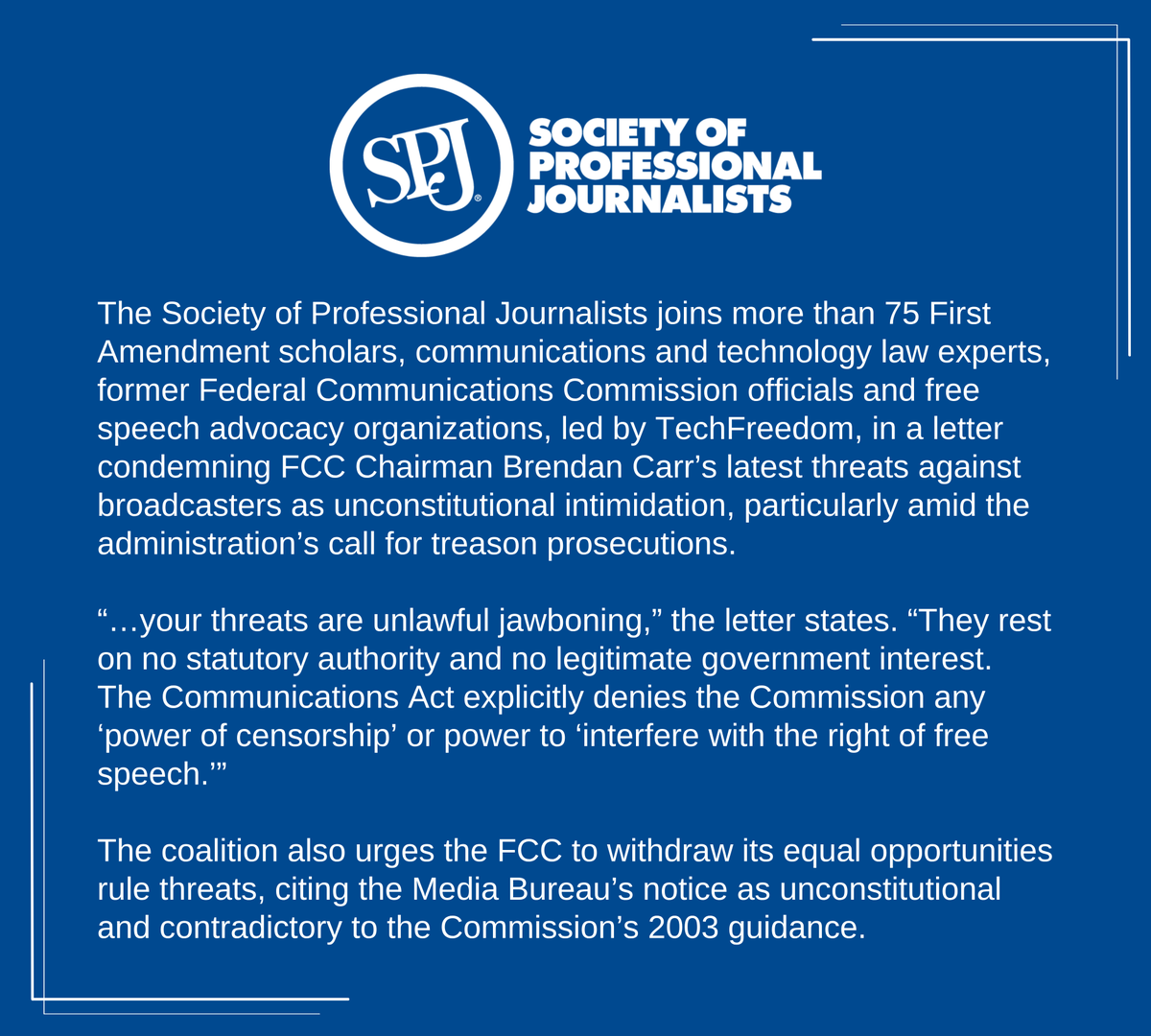
SPJ joins a coalition led by @TechFreedom in a letter condemning FCC Chairman Brendan Carr’s latest threats against broadcasters as unconstitutional intimidation, particularly amid the administration’s call for treason prosecutions.
🔗Read more: https://t.co/2XcUgzfm5p
Here's what the Pentagon Press Association is saying about today's court ruling >>>
The Pentagon Press Association celebrates the decision by a federal judge today that the Pentagon’s press credentialling policy violated the U.S. Constitution.
Since the ruling clearly states that the policy must not be applied to “all regulated parties,” the PPA calls for the immediate reinstatement of the credentials of all PPA members.
This is a great day for freedom of the press in the United States. It is also hopefully a learning opportunity for Pentagon leadership, which took extreme steps to limit press access to information in wartime.
We look forward to returning to the Pentagon and providing the public, including the members of the military currently involved in conflicts around the world, information about why and how the Defense Department is waging war.
Here is the @nytimes statement about today's ruling in favor of the paper in NYT v. Department of Defense:
"The New York Times welcomes today's ruling, which enforces the constitutionally protected rights for the free press in this country. Americans deserve visibility into how their government is being run, and the actions the military is taking in their name and with their tax dollars. Today's ruling reaffirms the right of The Times and other independent media to continue to ask questions on the public's behalf."
A RISING TIDE THAT DOES NOT LIFT ALL BOATS BECOMES A DROWNING TIDE
The Dow hit 50,000 today, and many are celebrating.
Historically, a rising tide lifts all boats. But today, many of our sisters and brothers are in boats with holes in them – and for them, a rising tide can drown.
We are called to remember: the economy is meant to serve people – all people – not the other way around. Economic Justice for All (U.S. Catholic Bishops, 1986).
Let us pray that the moral indicators of our economy – people – begin to matter more to us than the market ones – dollars. 🙏🙏🙏
#CatholicSocialTeaching #EconomicJustice #EconomyForAll #CommonGood #HumanDignity #MoralEconomy #Solidarity #DJIA #CatholicTwitter
❗️Calling all Passaic County, NJ residents❗️
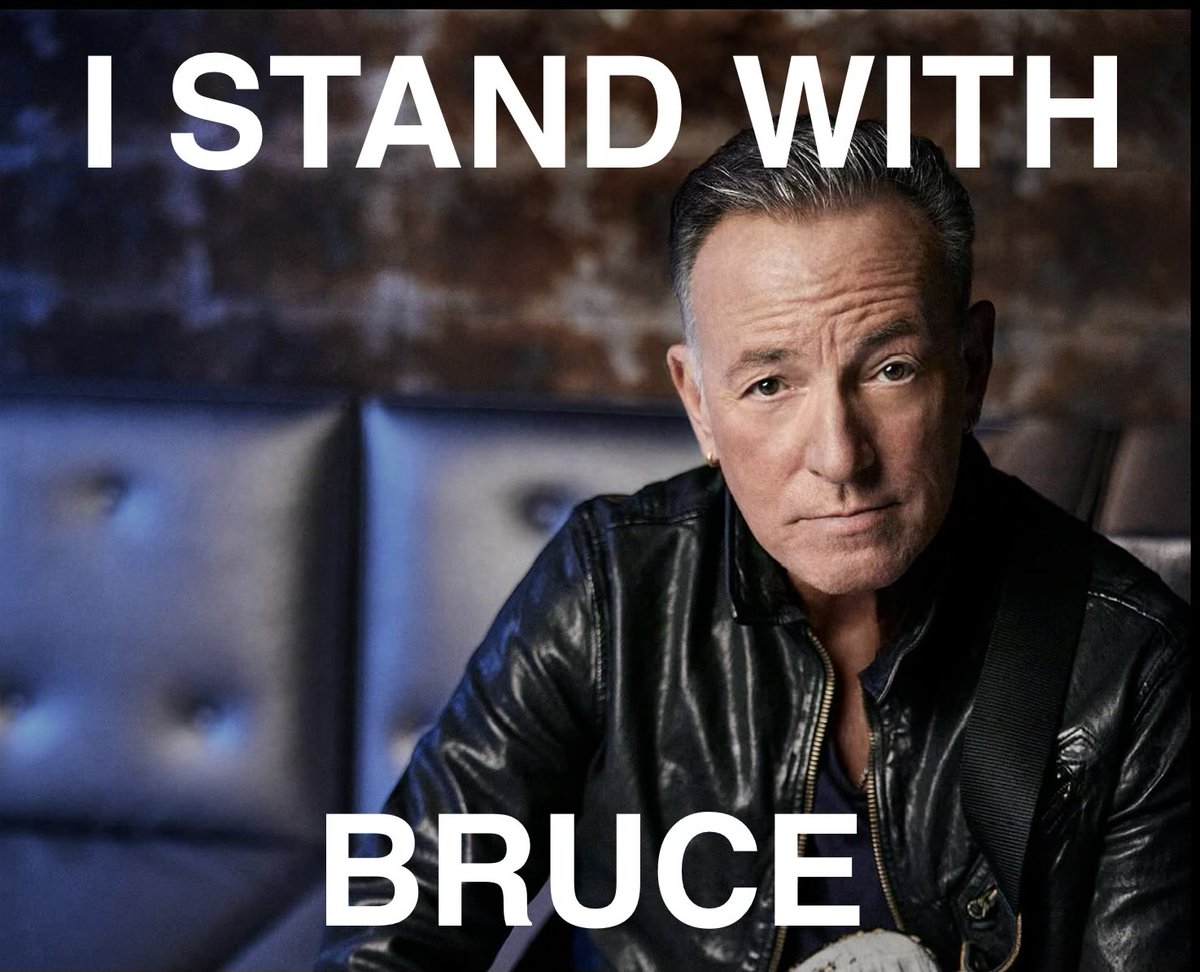
Passaic County is hosting a special exhibit with us to celebrate the 50th Anniversary of Born to Run this February at the Passaic County Arts Center in Hawthorne.