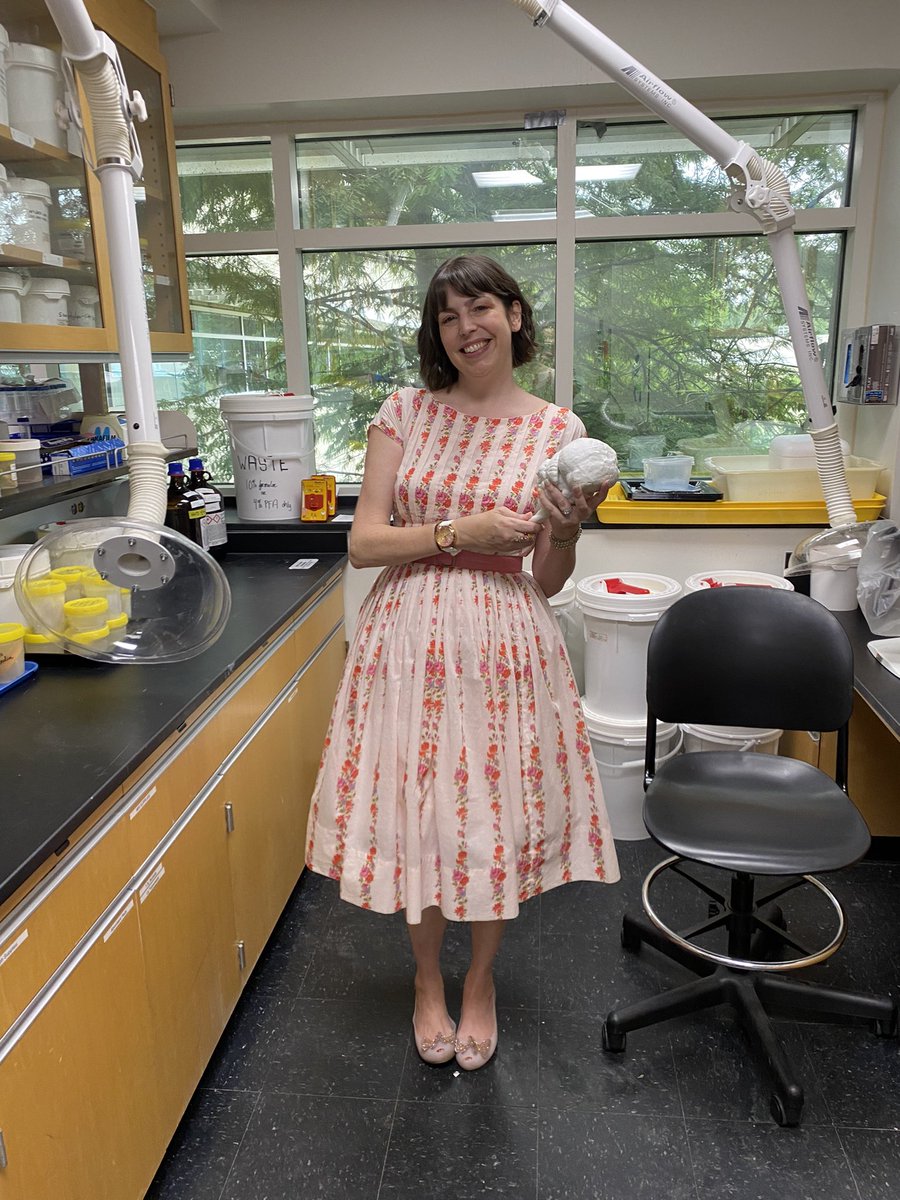
Sharks, brains & laser beams - My lab focuses on comparative neuroanatomy of sharks, batoids, & chimaerids. Director of the @YopakZoMBiELab at @UNCWilmington
Do shark brains differ between different species? Does one species' brain change over its lifespan? How does changing environment change brain development? These are questions @ProfSharkBrain and @YopakZoMBiELab are trying to answer!
https://t.co/5hmAdiMc0K
#DidYouKnow that @ProfSharkBrain and @YopakZoMBiELab have seen 180 species of skates, rays, sharks, and chimera brains? Learn about what she and her Zombie Lab are learning about these brain specimens on the Gills Talk podcast!
We have a new episode of Gills Talk with @ProfSharkBrain herself! Learn if sharks are smart and if that is truly a term we should use to describe their brains! @YopakZoMBiELab
Wow so many publications this month! Congrats to Dr.Steve Kinsey, Dr.Michael Mallin, and Dr.Kara Yopak for their new publications
20-year water quality analysis
https://t.co/yQCrVQafve
Hypoxia Tolerance
https://t.co/G1w4Aj5MAE
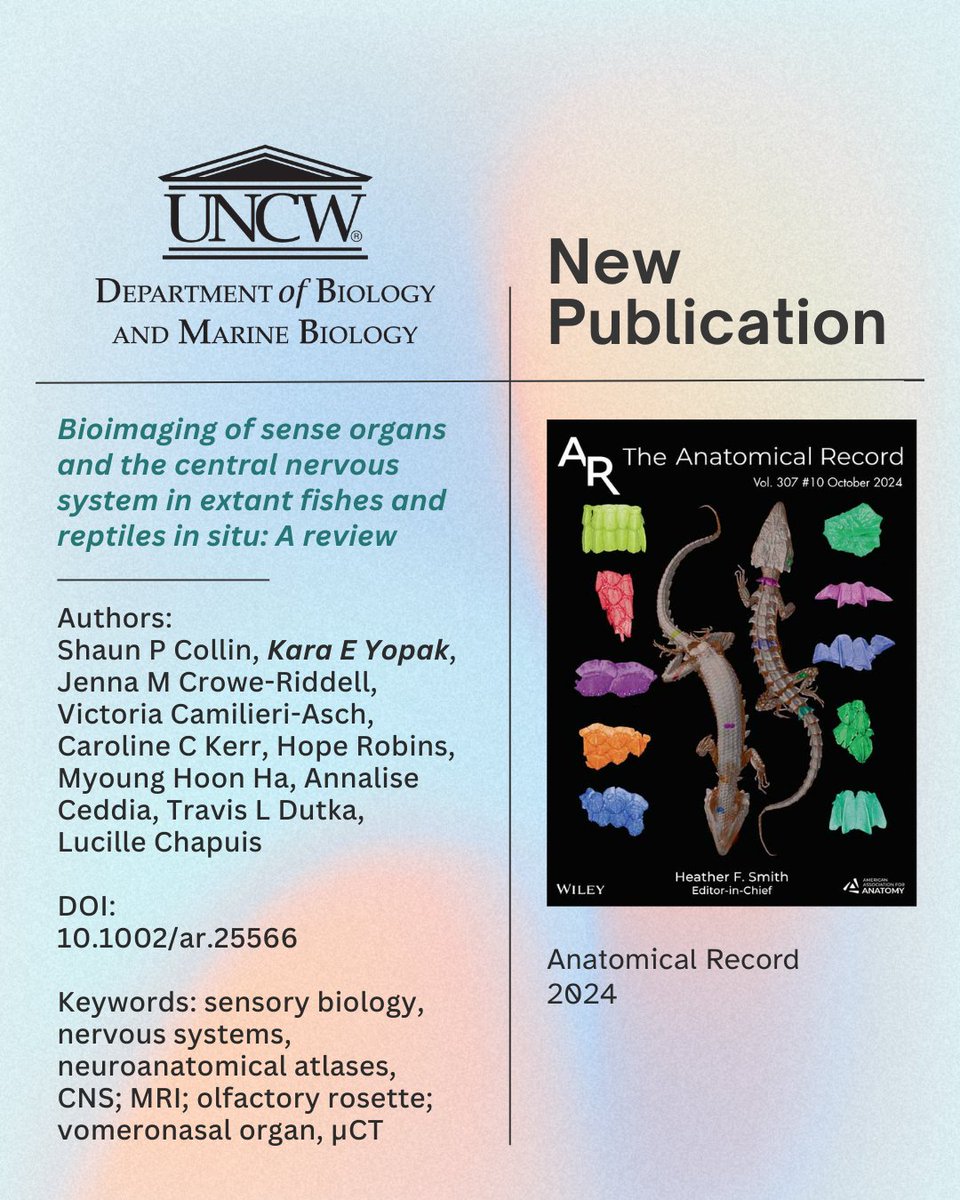
Bioimaging of sense organs
https://t.co/8SLzuCVqeW
🎉New paper🚨 Interested in 3D imaging of the nervous system of fishes or reptiles? Check out @UNCW_BaMB's Kara Yopak's @ProfSharkBrain latest collaborative publication on imaging! https://t.co/g6n6uk3RLu
@AnatRecord
Great to be visiting @ProfSharkBrain of @YopakZoMBiELab at the Centre for Marine Science in Wilmington, North Carolina, talking shark brains & endocasts 🦈 🧠
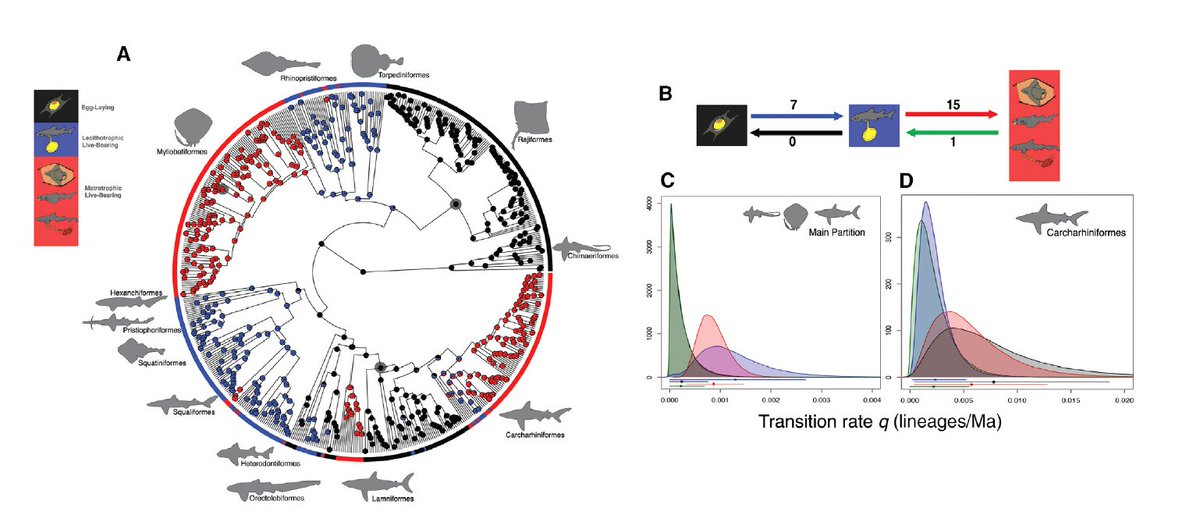
Understanding repro mode evolution in sharks and rays we can test different theories about how these traits relate to diversification dynamics (i.e. rates of speciation and extinction): the Viviparity Driven Conflict Hypothesis and the Novel Ecological Opportunity hypothesis.
Live-bearing and matrotrophy co-evolved with increasing body size, shallower depth, and more tropical distributions. Larger maternal body size accommodates retained embryos, and increased foraging efficiency with reduced predation risk may allow for more maternal investment
Egg-laying is ancestral and live-bearing and matrotrophy (additional maternal nourishment beyond the initial yolk) have evolved multiple times. While some groups are invariant (all skates lay eggs), groups like the requiem sharks exhibit diverse reproductive modes and habitats
The sequence and drivers of the evolution of live-bearing and matrotrophy are fundamental questions in vertebrate macroecology, and sharks and rays with their reproductive diversity (everything from egg-laying to placentas) are an ideal group for addressing these questions.
Hot off the press! Out now in @CurrentBiology "Maternal investment evolves with larger body size
and higher diversification rate in sharks and rays"
Read here:
https://t.co/tgdbNgfC1v
Massive thanks to my co-authors @mwpen@ProfSharkBrain and @NickDulvy
Do sharks have ears? Unlike us, sharks have no need for external ears. Instead, they feel the sound with their whole bodies! In this episode, Dr Lucille Chapuis talks to us about the fascinating topic of shark hearing!
https://t.co/L1raOhEDQt