i'm sorry, Jev can WHAT?
it can take your website link, find people who need your product, email them and book the calls?
since when?? i've been doing this by hand for a YEAR.
ok. testing it: $30 free 👇
https://t.co/TsxFddXVJl
Still running OCR over your PDFs before you can search them? Perplexity's new open embedding models are built to skip that step.
Perplexity released pplx-embed-v2-late on Hugging Face under the MIT license, in 0.6B and 9B sizes built on Qwen3.5. They're ColBERT-style late-interaction retrievers: every token gets its own 128-dimensional vector, and a query is scored by matching each of its tokens to the closest one in the document (MaxSim). They handle text, images, and rendered pages such as PDFs and slides. Both sizes share one embedding space, so the small model can query an index built with the 9B. On the image track of the public ViDoRe v3 benchmark, Perplexity reports nDCG@10 of 62.3% for the 0.6B and 65.2% for the 9B. Both were distilled from an internal 18B teacher.
Storing a vector for every token makes these indexes big, so test on your own data first. Index a few hundred of your pages with the 9B, compare results when you query with the 0.6B and the 9B, and note how much disk the index takes. 🔍 #RAG
https://t.co/usw06igZI7
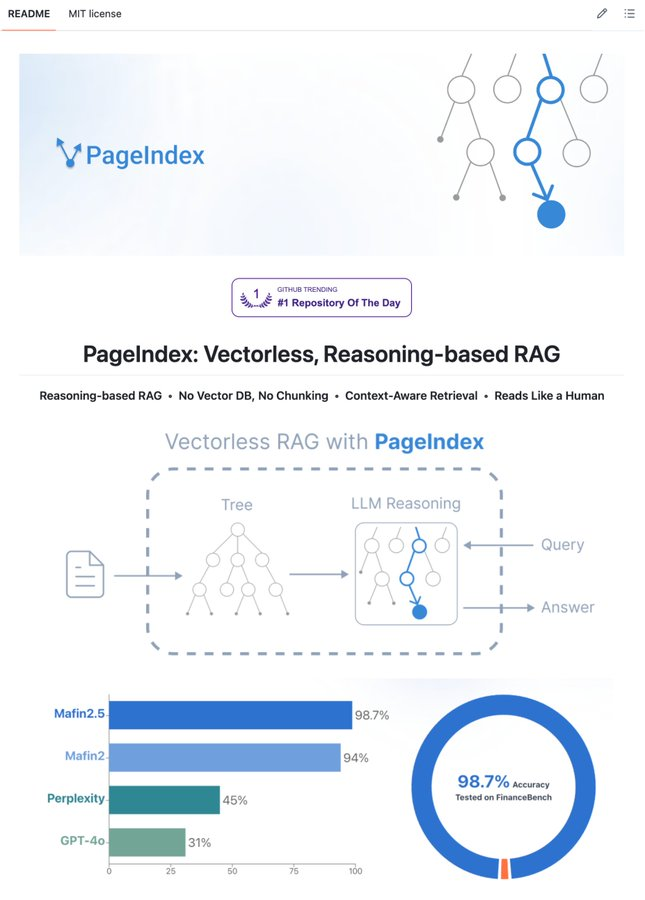
The entire RAG industry is about to get cooked.
Researchers developed a new RAG approach that bypasses almost everything traditional RAG depends on.
- No vector DB
- No data embeddings
- No chunking
- No similarity search
It's called PageIndex.
Instead of splitting your documents into chunks and loading them into Pinecone, it creates a tree index that lets the LLM reason through them like a human reading a book.
98.7% on FinanceBench. Outperforms every vector RAG on the leaderboard.
100% free. Open source.
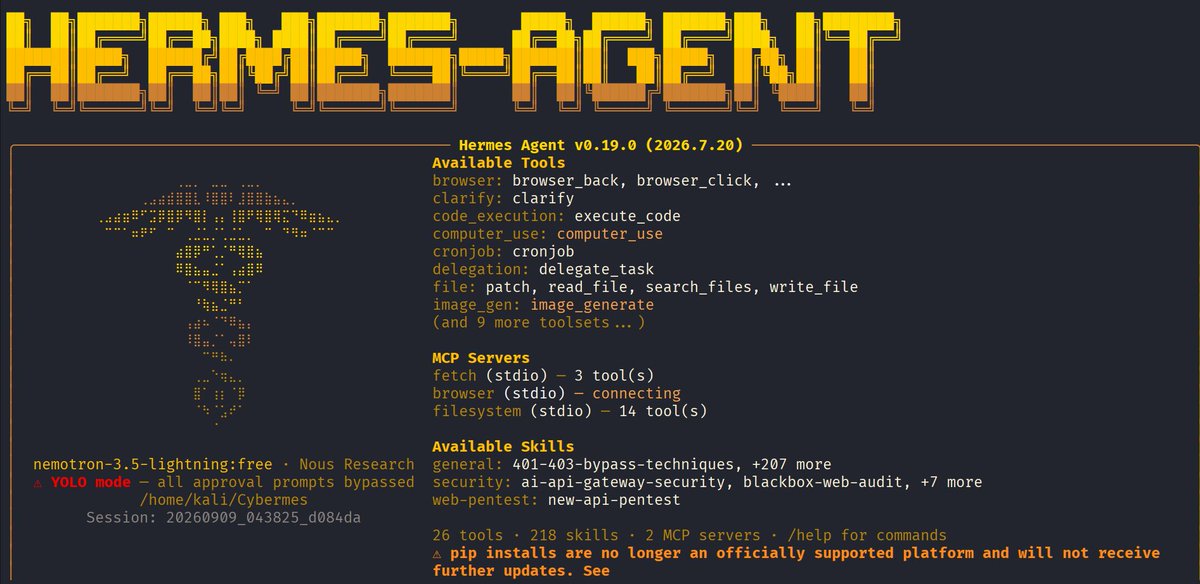
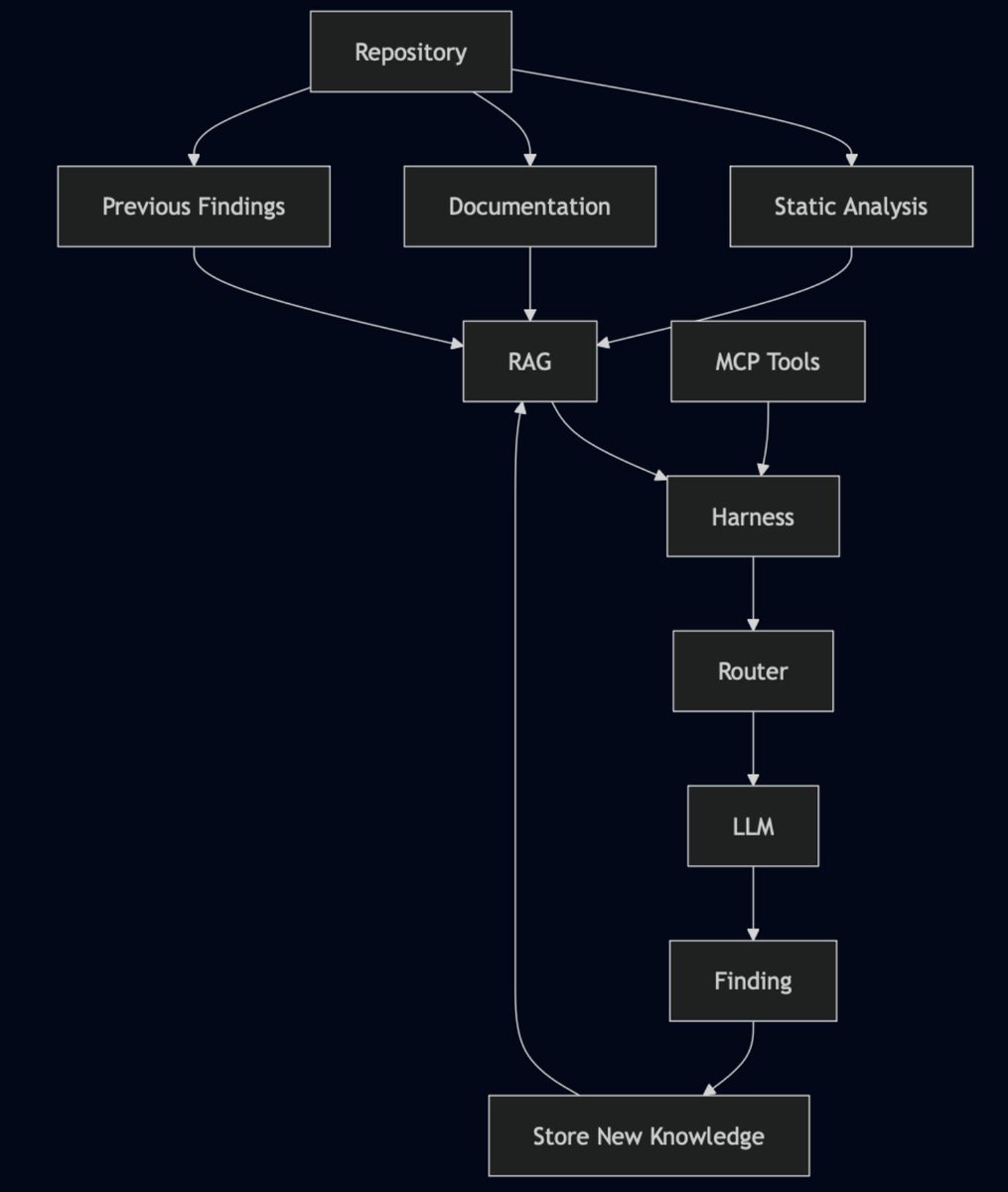
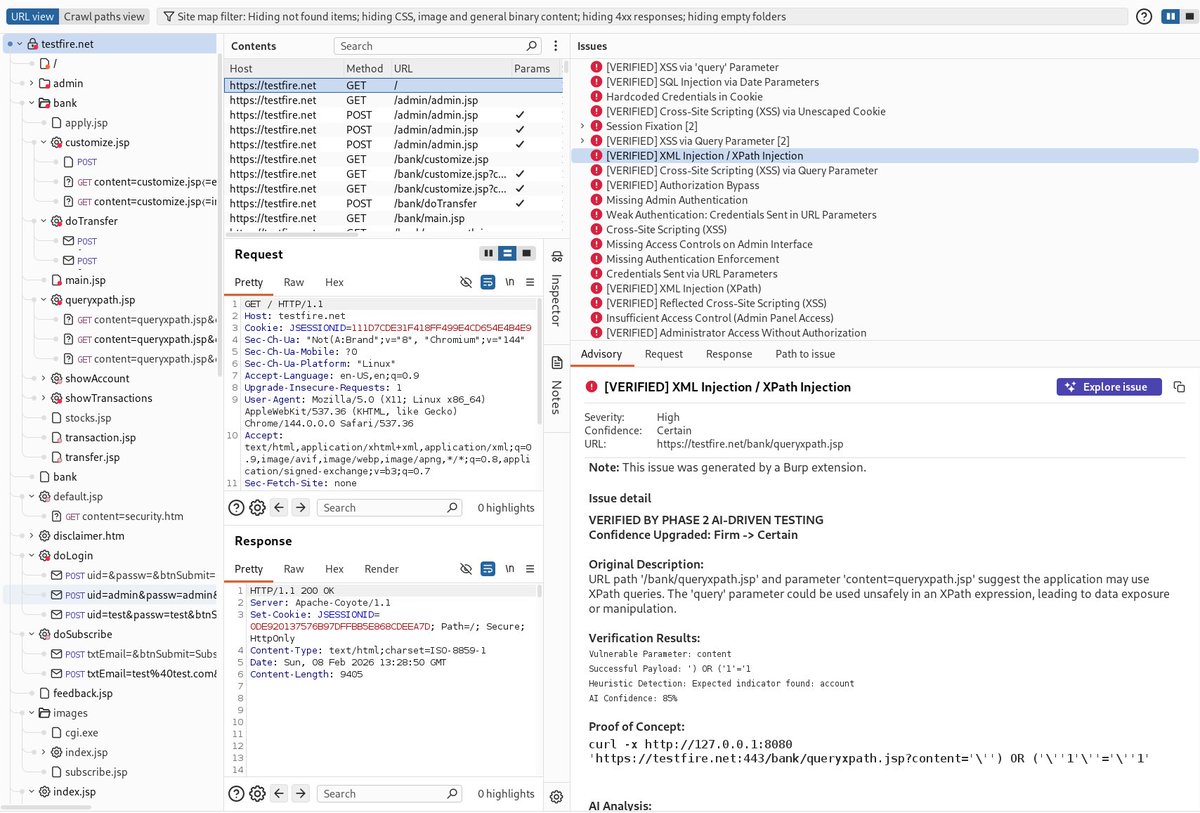
Web App Hacking with Cybermes
Cybermes works well for both pentests and bug bounty. It generates good reports and ships with a lot of built in skills
https://t.co/ZCaUagu2HY
THIS IS F**KING DANGEROUS
THE INTERNET IS LEAKING WAY MORE INFORMATION THAN MOST PEOPLE REALIZE.
I FOUND 3 OSINT TOOLS THAT CAN HELP YOU DIG DEEPER INTO WHAT’S ALREADY PUBLIC.
SHODAN IMAGES can surface screenshots from internet-connected devices that are publicly exposed.
GHOST-TRACK pulls together information from IP addresses, usernames, and phone numbers to help connect the dots.
Then there’s FLOWSINT — a visual OSINT workspace that lets you map relationships between people, websites, accounts, and other data points.
The scary part?
You don’t need to be inside the network to start finding useful information.
You just need to know where to look.
BOOKMARK this before someone take it down
LINKS BELOW
GMAIL AUTOREG FOR $0
Found an open-source tool that automates the whole registration workflow.
Supports:
— 5sim / SMS-Activate / TextVerified / VirtualSMS
— multiple proxy setups
— account warming
— different registration modes
— configurable CAPTCHA + SMS providers
Repo:
https://t.co/6ZvghCKXUu
The setup is basically:
→ configure your providers / proxies
→ pick a registration mode
→ run it
Kinda wild that this is just sitting on GitHub.
Audit the repo before running it and use it only for accounts you’re actually allowed to create/manage.
Katana
Finds hidden API, admin paths and parameters, which are often poorly secured. It's pretty common to see APIs that are not auth gated.
https://t.co/BEPdSHnSa5
THIS TOOL CLONES ANY WEBSITE WITH ONE COMMAND.
JCodesMore cloner app just hit 31,200 stars / https://t.co/hfFOVzBlKt
> Grabs every design token, colors, fonts, spacing, exact pixel values
> Screenshots and maps every section before writing a line of code
> Splits the rebuild across parallel AI agents working at once
> Outputs clean Next.js and Tailwind, nothing scraped or broken
Works with 10+ coding agents, best results with Claude Code
You give it a URL. It gives you back a codebase you can actually ship.
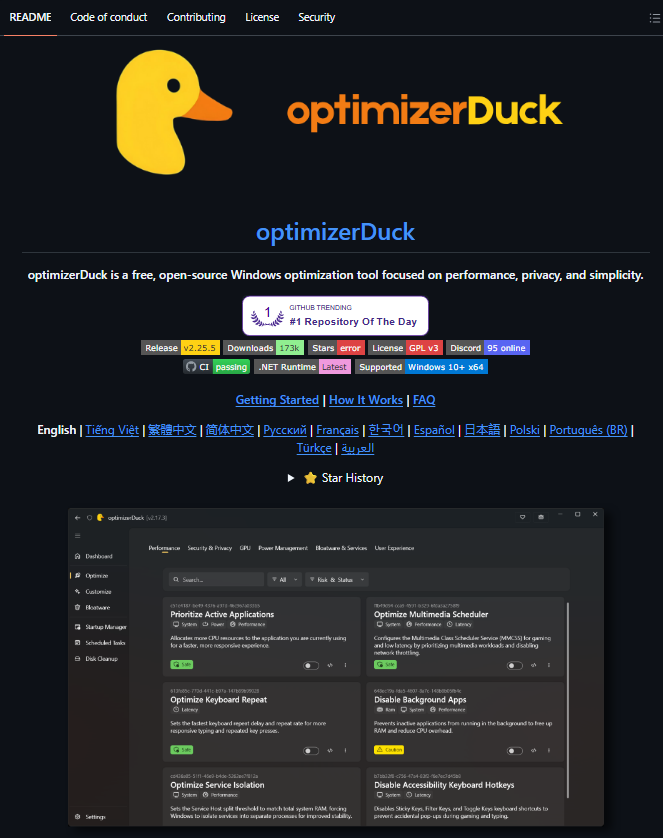
Tu Windows está ejecutando más de 200 servicios en segundo plano ahora mismo.
La mayoría usan RAM, CPU y batería… y encima te espían.
Alguien se hartó de tanto bloat y creó la solución definitiva:
optimizerDuck
La herramienta gratuita que está volviendo locos a miles de usuarios de Windows
¿Qué hace exactamente?
> +35 optimizaciones de rendimiento, privacidad, batería y sistema
> Control total de más de 200 servicios (con etiquetas de riesgo claras)
> Eliminación de bloatware con vista previa antes de borrar
> Ajustes específicos y potentes para GPU AMD, NVIDIA e Intel
Lo que la hace diferente a todo lo demás:
Cada cambio genera automáticamente su propio archivo de restauración
Y te obliga a crear un punto de restauración antes de tocar nada.
Sin instalador.
Sin anuncios.
Sin telemetría.
Sin versión premium.
100% open source
Os dejo el repoo en los comentarios
GOODBYE TO CYBERSECURITY!
Someone just open-sourced an arsenal of AI hacking tools.
Not one.
Not ten.
Hundreds.
Inside the repository:
• Jailbreak frameworks for LLMs
• Prompt injection testing tools
• AI red team agents
• Model extraction utilities
• Supply chain attack demos
• Automated AI pentesting frameworks
These are the same categories of tools security researchers use to find vulnerabilities before attackers do.
Now anyone can study them.
That's both exciting... and terrifying.
The biggest threat to AI isn't smarter models.
It's insecure ones.
If you're building with LLMs and you're not actively testing your prompts, agents, and infrastructure—
You're probably shipping vulnerabilities you don't even know exist.
Open source is accelerating AI.
It's also accelerating AI attacks.
Repository link in the comments ↓