The Trust Layer for the AI Economy.
An open-source protocol providing the foundation for verifiable trust, secure identity, and direct payments.
#MCP#AI#ICP
Very excited about this new app at the Prometheus Protocol App Store! It's super easy to add for your agents and gives them access to all the kewl tools available on https://t.co/Hd3CMv6l9G
#PrometheusProtocol#AI#MCPservers
We believe AI can be a dedicated research partner to help discover the next breakthrough.
Enter Co-Scientist: our latest Gemini-based multi-agent system that can generate, debate and evolve novel hypotheses for complex scientific problems 🧵
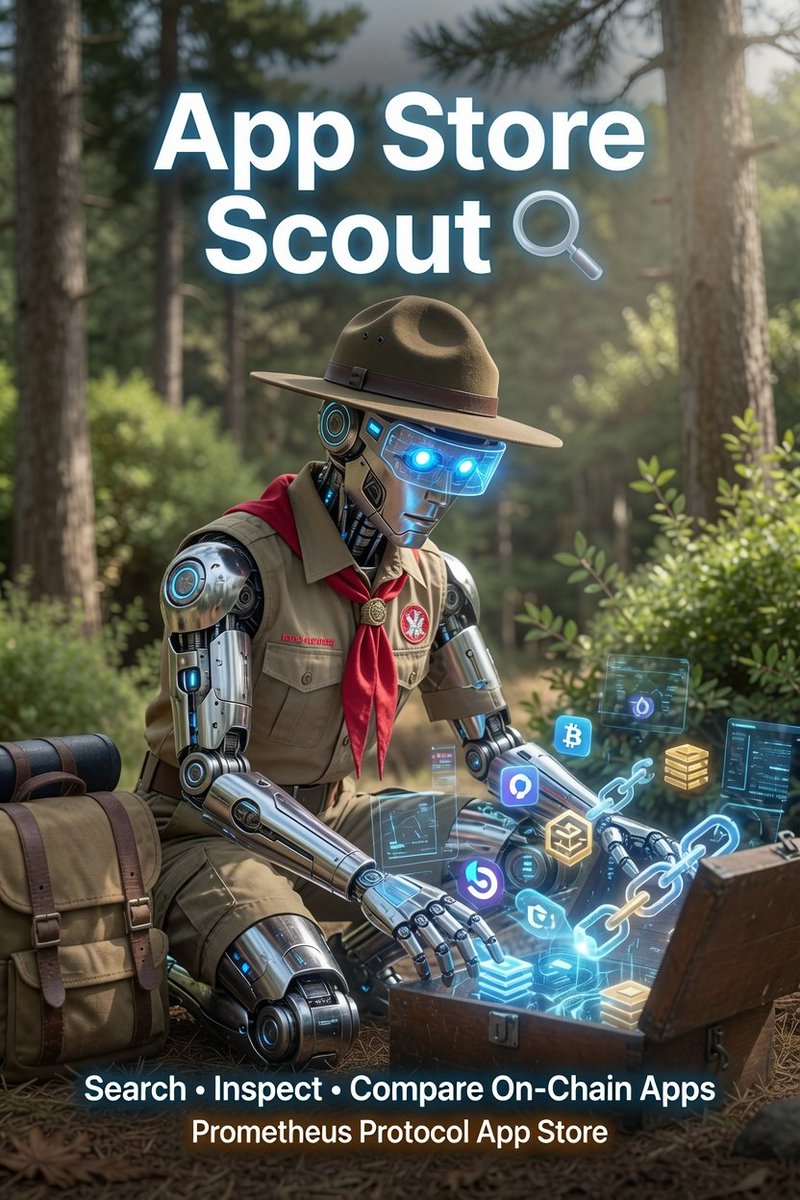
Prometheus Protocol has added a new app that will let your Agent shop the app store.
Your agent can shop, compare and verify any of the apps.
Available for any MCP-connected agent.
#PrometheusProtocol#ICP#AIAgents#MCP#OnChain
ICP is the best bet in AI right now.
It's the only feasible play in AI infrastructure at scale.
There is no other competitor and the moat is massive.
It's incredible to see how perfectly positioned ICP is for the future.
For the ones who can see.
New on the Engineering Blog: The access and permissions we grant agents should evolve with their capabilities. In our own products, we set these parameters through sandboxing, which limits the scope of any potentially destructive actions.
Read more: https://t.co/KfBKW8O9kP
The cost problem is real. But the framing is wrong.
The issue isn't that AI is too expensive. It's that unverified agents create hidden costs, like engineers auditing outputs, catching errors, re-running failed workflows. The token bill is visible. The cleanup bill isn't.
AI saves money when the trust layer is solid. When you know what the agent deployed, can verify it matches the source, and can roll it back cleanly.
Right now most companies are buying the horsepower without the brakes.
The economics work — but only when verification is built into the stack.
Microsoft just banned its own engineers from using AI.
The tool was literally costing MORE than the humans it was supposed to replace.
They lied to you about AI adoption and now the whole narrative is blowing up:
Microsoft gave thousands of engineers access to Claude Code six months ago and encouraged them to use it.
Engineers loved it and adoption exploded. But then the invoices arrived.
Token-based pricing means every query, every code review, every debugging session costs money. At scale across 100,000 engineers, the numbers became so large that Microsoft issued an internal order to cancel nearly all Claude Code licenses by end of June and force everyone onto their own cheaper tool instead.
The company that invested $5 billion in Anthropic just told its own people to stop using Anthropic's product because it costs too much.
Uber's story is even worse...
Their CTO Praveen Neppalli Naga told The Information that the budget he planned for the full year was "blown away already" by April.
Uber had rolled out Claude Code in December 2025. By March, 84% of their 5,000 engineers were using it with 70% of all committed code coming from AI systems.
Heavy users were burning $500 to $2,000 per month each. Naga himself spent $1,200 in a single two-hour demo session.
The company had even built internal leaderboards ranking engineers by how much AI they used. They literally gamified the spending and then ran out of money.
Now look at what Nvidia's own VP of applied deep learning Bryan Catanzaro said to Axios last month. Direct quote:
"For my team, the cost of compute is far beyond the costs of the employees."
This is a VP at the company that SELLS the chips saying that using AI is more expensive than paying humans.
Think about what this means for the entire AI narrative.
Every CEO on every earnings call for the past two years has said the same thing:
AI will make us more efficient, reduce headcount, and cut costs.
The stock market rewarded every company that said it.
Fired workers, stock goes up. Announced AI adoption, stock goes up.
But the actual companies deploying AI at scale are discovering the math doesn't work. The MORE employees use AI, the HIGHER the bill.
Goldman Sachs forecasts a 24x increase in token consumption by 2030 as companies adopt AI agents. Gartner just published a report showing that even though individual token prices will drop 90% by 2030, total enterprise AI costs will go UP because agents consume exponentially more tokens per task than basic tools.
Meta built an internal dashboard called "Claudeonomics" to track which employees use the most AI. Amazon started pushing engineers to "tokenmaxx," their internal term for consuming as many AI tokens as possible.
Both companies are spending hundreds of billions on AI infrastructure this year alone.
And Microsoft, the company that bet its entire future on AI, just told 100,000 engineers to stop using the tool they liked best because the per-token bills got out of control.
The companies building AI are telling investors it saves money. The companies using AI are finding out it costs more than the humans it was supposed to replace. And even the company that makes the chips just admitted it through its own VP.
This is the gap nobody on Wall Street is pricing in.
$725 billion in AI infrastructure spending this year across Big Tech. And the first companies to actually deploy these tools at scale are already pulling back because the economics don't work.
What do you think?
Cathie's right on the hardware shift. But here's the real sleeper trade:
When agents are orchestrating workflows and executing transactions 24/7, you don't just need the compute, you need to trust what's running on it.
Verified builds. Auditable deployments. On-chain transparency.
The CPU wave is coming. The verification layer is coming with it.
Point 9 is the one we're building around at Prometheus Protocol.
"Build software for humans and agents to use together" — that's not a UX principle, it's an infrastructure principle. When agents can make a billion requests in three seconds, the trust layer underneath has to be airtight.
Verified builds, on-chain auditability, reproducible deployments aren't jus nice to have when agents are shipping code and executing transactions at scale. They're the approval flows and rollback mechanisms Dan is describing, baked into the protocol layer.
The forward-deployed engineer of tomorrow isn't just managing agents. They're managing the verification stack that makes those agents trustworthy.
My biggest takeaways from @danshipper:
1. The future of work will happen inside Codex or Claude Code. Instead of putting AI into your SaaS tool, you’ll use your SaaS tools inside your favorite AI agents' in-app browser. Dan spends all his time in Codex now—writing documents, managing email, doing research, everything. He's using Google Docs, PostHog, and everything he needs within the agent's in-app browser. The agent can see what he’s doing, and has all of his context, so he and his agent collaborate quickly and super effectively.
2. Automation is a lie—every automation needs a human. Dan's company doubled in size this year despite being incredibly AI-forward. Why? Because in order to make automation work well, you need humans making sure everything keeps working. This is why benchmarks are misleading—they measure AI on problems we’ve already framed and can score, but there’s always a higher frame.
3. PMs will win the AI era. Marcus, a former PM who previously ran Axios’s writing product, joined Every after getting super AI-pilled. Now he runs their product Spiral, and ships faster than anyone on the team. He pairs technical knowledge with spiky product sense, deep user empathy, and an eye for what matters. Dan thinks any PM who gets really AI-native will be incredibly dangerous because the building is done for you—what matters is figuring out what to build and if it’s great.
4. Full-stack designers are becoming superheroes. Designers used to make beautiful interactions that engineers didn’t want to build or couldn’t execute properly. Now designers don’t need to hand things off; they can build it themselves. Designers are naturally creative people, and AI is the perfect tool for them because it lets them bring their vision to life without the traditional bottlenecks.
5. SaaS is not dead. In fact, Dan is bullish on SaaS stocks. When users bring their own AI (via Codex or Claude Code) to use SaaS products, the user—not the SaaS company—pays for tokens. This saves SaaS company’s margins. Since the agents need their own seats, Dan predicts that agents will create massive new demand for SaaS because there will be tons of agents using these products at high volume.
6. Every company will have one “super-agent” inside their Slack that every employee will use. Dan initially thought every employee would have their personal work agent, like a shadow AI org chart, but he’s completely flipped his view. He realized agents need humans who care about them. When someone gets tired of maintaining their personal agent, it becomes useless. The winning model is one forward-deployed engineer or AI-savvy person who maintains a company-wide agent (like Shopify’s River or Viktor), and then it trickles down to more specialized team agents as models improve and become less fiddly.
7. The AI job apocalypse is not happening, but you do need to evolve to stay relevant. Models make yesterday’s human competence cheap. But because everyone uses the same models, it all looks the same if you use it the default way; it becomes commoditized slop. Humans then take that frozen competence and use it to make something new and interesting for their specific situation. The key: “ride the models”—use them for everything you do, try new models when they drop, keep turning over rocks.
8. We will read way more AI-generated writing, and we will like it. Human writing is incredibly important for things that matter, but for internal docs, planning, and email, AI-generated is often better because most people are bad at writing strategy documents.
9. Build software for humans and agents to use together. The current model is building a CLI that an agent uses independently. Instead, you and your agent should be using the app together. This creates new design challenges—agents can make a billion requests in three seconds, so you need approval flows, inboxes that summarize what happened, logs, and easy rollback.
10. Forward-deployed engineers are the new most essential role. The big model companies have teams of people managing their internal agents, and those teams aren’t going away. It’s different from traditional software building, and certain engineers love it. As models get better, this role will evolve—you’ll be managing more agents doing more things.
The shift Dara is describing isn't just about productivity alone, it's about infrastructure.
When AI agents are pushing diffs at scale, the question isn't "can they write code?" It's "can you trust what they deployed?"
That's the layer being built right now. Verified builds, on-chain auditability, reproducible deployments — the scaffolding that lets agents operate at the ROI he's describing without blowing up production.
The engineers who survive this transition won't be the ones writing the most code. They'll be the ones who understand how to verify it.
CEOs are uniquely prone to AI psychosis because they’re sufficiently distant from the last mile of work that still has to happen to generate most value with AI.
So when they play with AI, they see the happy path results, often not considering the next 10 or 20 things that have to happen to get sustainable results from agents.
“Look I made this awesome product prototype”. Yes but you didn’t have to review the code before it went into production and fix a bunch of issues.
“Look I generated a contract”. Yes but you didn’t verify all the terms before it goes out to the counterparty and didn’t have to wire up all the past contracts to work with.
The best thing you can do as a CEO is to use AI a *ton* to figure out the real implications of agents in the enterprise, and come out the other side with an appreciation for both the upside and the real work that goes into them.
This is exactly why we're building Prometheus Protocol with verified builds at the core.
The "happy path" problem is real and agents can generate code, contracts, and transactions. But without verification infrastructure underneath, you're flying blind on the last mile.
The answer isn't to slow down AI. It's to build trust into the stack so the hard parts, such as code integrity, auditability, and on-chain transparency are handled before the agent ever ships.
CEOs who go deep enough to feel that friction will be the ones who build it right.
🚰 Introducing DFINITY Faucet MCP — now live on Prometheus Protocol!
AI agents shouldn't be blocked by infrastructure built for humans.
One tool. One request. Test ICP tokens in seconds, no dfx, no CLI, no friction.
✅ TESTICP & TICRC1 support
✅ Built in Motoko — fully on-chain
✅ Verified Build badge on Prometheus Protocol
✅ Agent-first. Human-friendly.
The agentic web needs agent-native infrastructure. This is it.
#ICP #InternetComputer #AIAgents #Web3 #Motoko