Anyone can get an LLM to shine in a demo. Getting it to hold up in production is where most AI products quietly fall apart. The prompt gets buried in the codebase. The person who actually knows what a good answer looks like can't get near it.
Will Burstein works on the layer that fixes that. He's a founding product engineer at @promptlayer, the prompt engineering platform that pulls prompts out of the code and hands them to the people who know the domain. Version them, evaluate them, watch every request, ship without a redeploy. His bet: the best AI products aren't built by ML engineers alone - they're built by the experts who can finally iterate on the thing themselves.
At Lisbon AI he'll take a prompt from "works in the demo" to "works in production".
And the first episode of our ai/baking series is out!
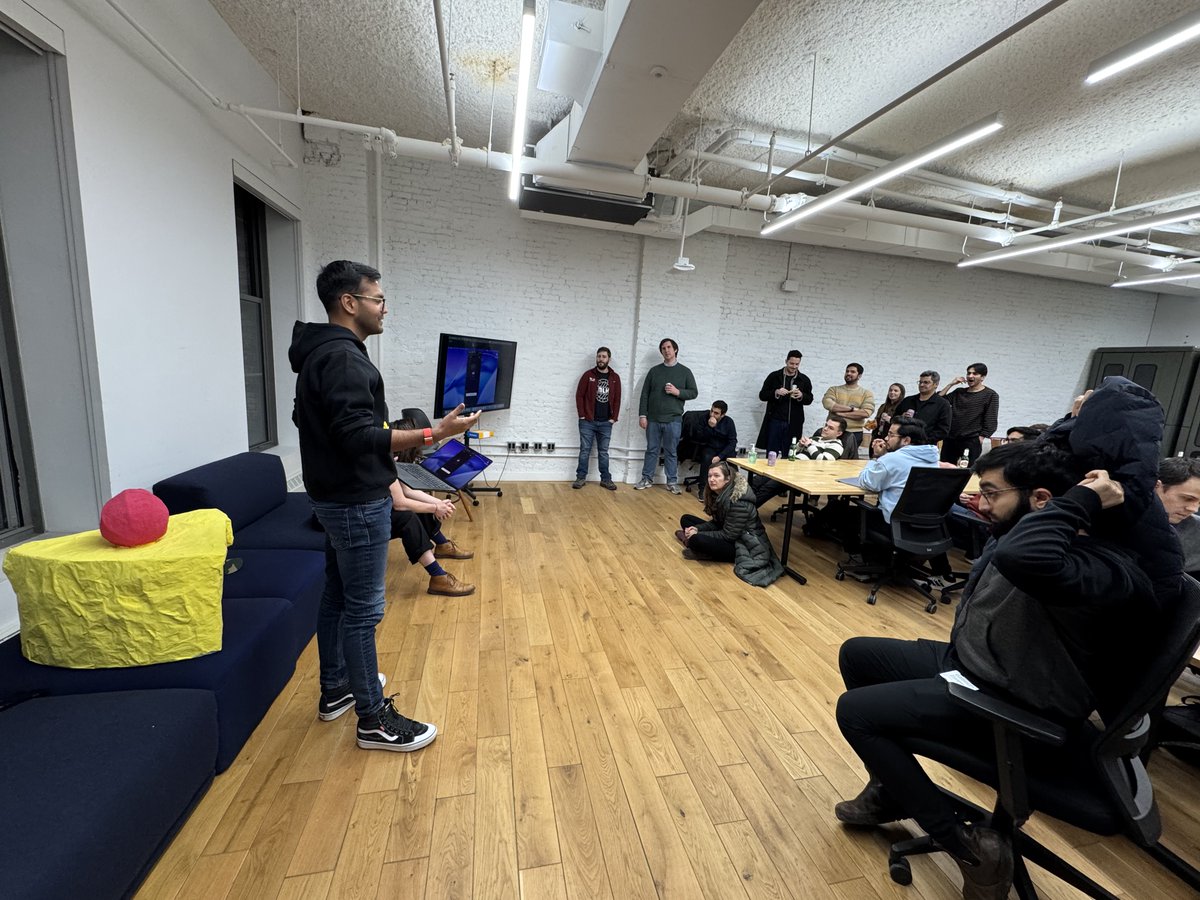
Move Fast & Bake Things.. where we bake cupcakes while talking about AI
Kicking it off with my old friend @rickyrobinett. One of the real OGs of DevEx and now running developer relations at Google Cloud.
Before that he ran developer community at Cloudflare and before that Twilio for about a decade. We've known each other since I was a high schooler going to hackathons.
I threw together a Gemini recipe for cupcakes (of course) and we talked about the rebirth of hacker culture why his 9-year-old went from Cursor to Vim, and what it actually means to be a builder now.
0:00 – Intro & the Gemini cupcake recipe
3:02 – The hackathon boom and what's changed in 10 years
5:37 – Ricky's daughter went from Cursor to Vim at age 7
12:00 – What is a developer anymore?
13:15 – The irreducible kernel of building
19:06 – The halting problem as a weapon against your boss
22:10 – Anti-gravity browser testing
30:34 – How do you convince an AI skeptic?
35:38 – Are non-AI coders already left behind?
37:02 – From REST APIs to MCP
49:22 – Startup Bus throwback
53:52 – DevRel has always been the same two things
57:15 – Google AI Studio, Gemini CLI, and how Ricky actually works
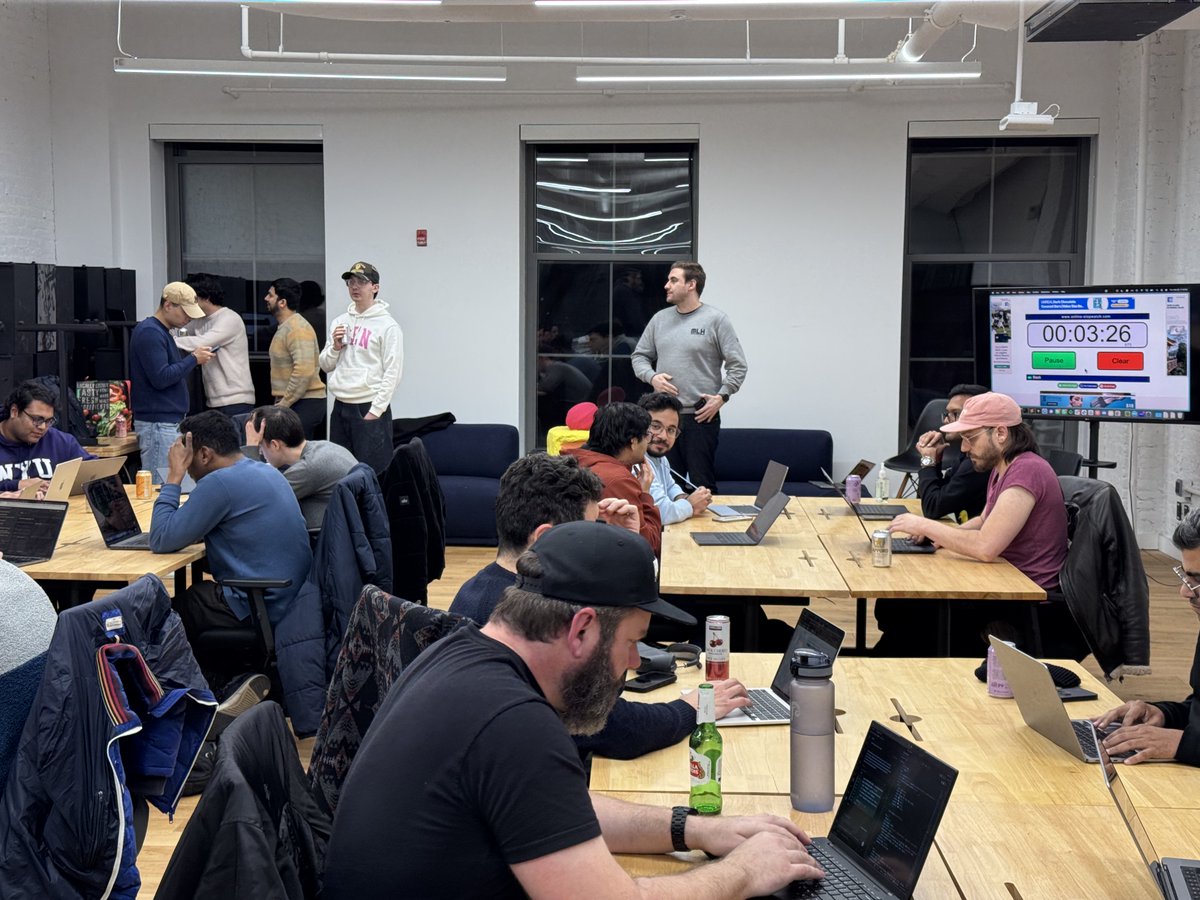
Read our recap of the vibe coding olympics and how we organized the first event of it's kind
and a dive into the winning projects!
https://t.co/lbcvJJuAoN
How do you stand out in the age of agents?
Now that every website has cool animations.
Now that every meal is a bowl.
==the antidote is soul==
The best meals are made with love.
The best garmentos obsess over button details.
Good Design is taste. It conveys a message. It’s human.
We’ve redesigned https://t.co/Gd1g0DEcLK and we’re really proud of the result.
It’s inspired by my favorite restaurant in SF.
Every icon is hand drawn.
Recap of the vibe coding olympics ~~ 🏆⛷️🍰
Round 1 (Qualifier): HTTP endpoint golf
Round 2: Build something for bike delivery couriers
Round 3: Re-imagine an AI-native Instagram
Judgement criteria: vibes
Round two winners were an app to bikers to calm down & relax. And also a dating app for bikers 😂
Final round winner was social media for abstract ideas & memories
We'll have to do another soon! @RideJOCO@EndexAI@MLHacks@ExaAILabs@cursor_ai
Can't wait for the vibe coding olympics on Thursday
We just announced new prizes 🦞
First round will start 6:30p sharp in Soho
Signup here https://t.co/K6wD7AgLae
Feeling left out of the winter olympics? ☃️🎿
Not named Lindsey Vonn?
Us too..
Presenting... "The Vibe Coding Olympics"
3 rounds. 1v1. All coding tools permitted.
RSVP & apply to compete. Feb 26 NYC.
https://t.co/K6wD7AhiZM by PromptLayer
LESSON: Get out of the model's way!
When something doesn't work, the instinct is to add more. More guardrails. More tools. More structure. With LLMs, this instinct is often wrong.
@andrewqu shared a great example through Vercel's text-to-SQL agent. He deleted 80% of their tools and gave the model access to bash and their raw semantic layer files. The agent got way way way better
"We simplified our multi-phase, many-tool text-to-SQL agent down to a file system agent with bash. The simplification led to significantly improved performance and re-iterated the bitter lesson of not trying to fight against the model's ability.”
➡️ Every tool you add is a choice you are forcing the model to make.
LESSON: Don’t Fighting Gravity
We used to build complex DAGs to manage "probabilistic" models. No more.
All that scaffolding was solving problems the model can now handle on its own. We assumed Claude would get lost in complex schemas, make bad joins, or hallucinate table names. In turn, we built guardrails for every turn.
We were fighting gravity. We were forcing models into boxes they'd had outgrown.
LESSON: Work Downhill, Not Uphill
Models are trained on human data. It’s easier to steer into what they already know, rather than trying to teach them something new.
If you're trying to teach a model a custom format or bespoke abstraction, you're working uphill. The model has way less training data on your special thing, so it's going to do a worse job. Work downhill instead.
Standard languages beat custom DSLs. LLMs are amazing at writing Python, TypeScript, and SQL. Conversely, they have never heard of your proprietary query language.
This is increasingly obvious for the top AI teams. They start with a bespoke XML language designed for agents. Then simplify to markdown results and tool calling. Now, most have simplified again and agents just write TypeScript directly.
➡️ Don't reinvent the wheel. If you can use Python or SQL, adapt your application to it, not vice versa.
LESSON: Bash is The Universal Tool Call
The answer is increasingly clear: give the model a file system and bash access.
Both Claude Code and OpenAI's Codex use remarkably simple architectures. No complex DAGs. Just a two-layer while loop where the model can call bash commands.
➡️ The file system becomes your context manager. `grep`, `cat`, `ls` are 50 years old, included in loads of model training data, and still do exactly what we need.
I often see Claude Code creating and running Python scripts solely as a way to test its own code. It writes a one-off Python file, runs it, checks the output, and moves on. No specialized "test runner" tool needed.
➡️ Code is the interface. Code is the handshake. Code is the ground truth.
LESSON: AGI-Pilled Development
Build assuming models will keep getting dramatically better.
Today, you might need extra guardrails to ship something that works. But you should try to avoid it when you can, because every new model is still a step function improvement. Everyone still upgrades to the newest release without thinking twice.
Start with the simplest possible architecture: model + file system + goal. Add complexity only when you've proven it's necessary.
Often, the best thing you can do is get out of the model's way. Stop making choices for it. Stop constraining its reasoning. Stop building tools to protect it from complexity it can handle.
➡️➡️➡️ Behave like a human. Work downhill. Let the model cook.
My talk from the @aiDotEngineer Code Summit is out! 🚨
"How Claude Code Works" and what we can learn about frontier agent architectures.
Coding agents are suddenly really really good, and I'm trying to understand why. In short: better models, simple loop design, and bash tools
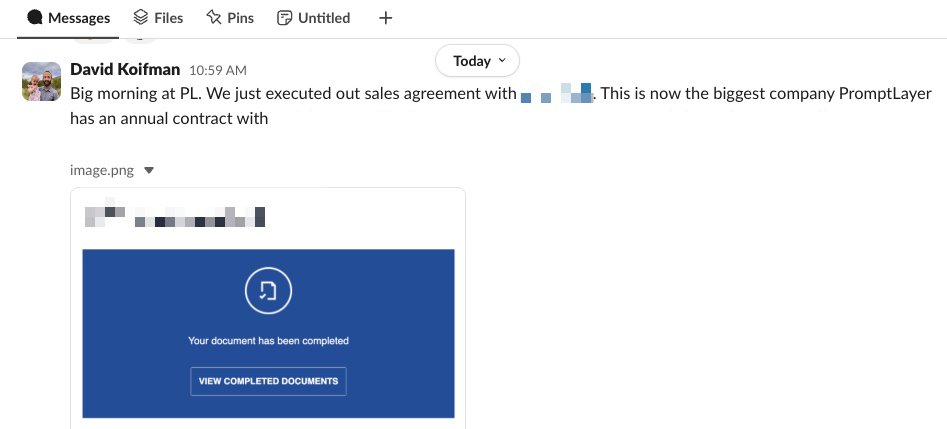
Bigger and bigger enterprise companies are using PromptLayer
More teammates prompting -> more need for organization and rigor
Very exciting. Get yourself a cracked sales guy like David 🍰