Well, it was a unique ending today in Caleb Flynn's trial. Two AI-generated songs Flynn wrote for his mistress were played in the courtroom. Flynn wrote the lyrics, AI composed the songs and the voice. Many in the gallery had a hard time keeping a straight face
The British army once sentenced Daniel Morgan to 500 lashes, a punishment that usually killed a man, for the crime of knocking out an officer who struck him. He survived every stroke. And he spent the rest of his life joking that the drummer had miscounted and only given him 499, so the British still owed him one. He collected that debt at a place called Cowpens.
Morgan was not born to anything. He was a rough, barely educated frontiersman who made his living hauling freight by wagon on the Virginia frontier, a big, powerful, hot-tempered young man. During the French and Indian War, serving as a civilian teamster with the British army, a British lieutenant struck him with the flat of a sword. Morgan answered with his fist and dropped the officer cold. For a colonial to strike a British officer was close to a capital offense, and the court-martial sentenced him to five hundred lashes with the cat-o'-nine-tails, a flogging meant to flay a man and very often to kill him.
They tied him up and laid it on, and Daniel Morgan did not die. He carried the ridged scars on his back for the rest of his life. But instead of breaking him, that brutal punishment forged something. It left him with a cold, permanent hatred of the British army and its contempt for colonial men like him, a hatred he would one day repay with interest. And it gave him his lifelong joke: the drummer lost count and stopped at 499, so the British, he liked to say, were still one lash short of paying him in full.
When the Revolution came, that uneducated wagoner turned out to be a natural soldier of rare gifts. He raised a company of frontier riflemen, crack shots who could kill at distances that terrified British regulars, and he led them north to Saratoga, where his marksmen helped shatter Burgoyne's army and win the turning-point victory of the war. Morgan had a feel for battle that trained European officers lacked, an instinct for ground, for timing, and above all for the men he led. He understood that his militia were not professional soldiers and could not be asked to do what professionals did, so instead of cursing them for it, he built his tactics around what they could do.
That genius reached its peak at the Battle of Cowpens in January 1781, one of the most perfectly fought battles in American history. Facing the dreaded Banastre Tarleton, Morgan set a trap built entirely on human nature. He put his unreliable militia in the front line and asked them only for two volleys, then permission to fall back, which they gladly did. Tarleton's British, seeing the Americans retreat, charged forward in a confident rush straight into Morgan's real line of hardened Continentals, and then Morgan sprang the jaws, hitting the British on both flanks at once in a double envelopment while his cavalry rode down their rear. In minutes Tarleton's command was destroyed, hundreds killed and captured, one of the most crushing and complete victories of the war, and Tarleton himself barely escaped. It was the frontier wagoner out-generaling the darlings of the British army.
So the debt was paid. The boy they tried to flog to death grew up to be the man who methodically dismantled the British in the field, who understood soldiers because he had been treated like dirt as one, and who turned the hard lessons of his own back into some of the finest tactics the Revolution ever saw. Remember Daniel Morgan. The British gave him 499 lashes and made an enemy who never forgot, and he collected the last one at Cowpens, with interest.
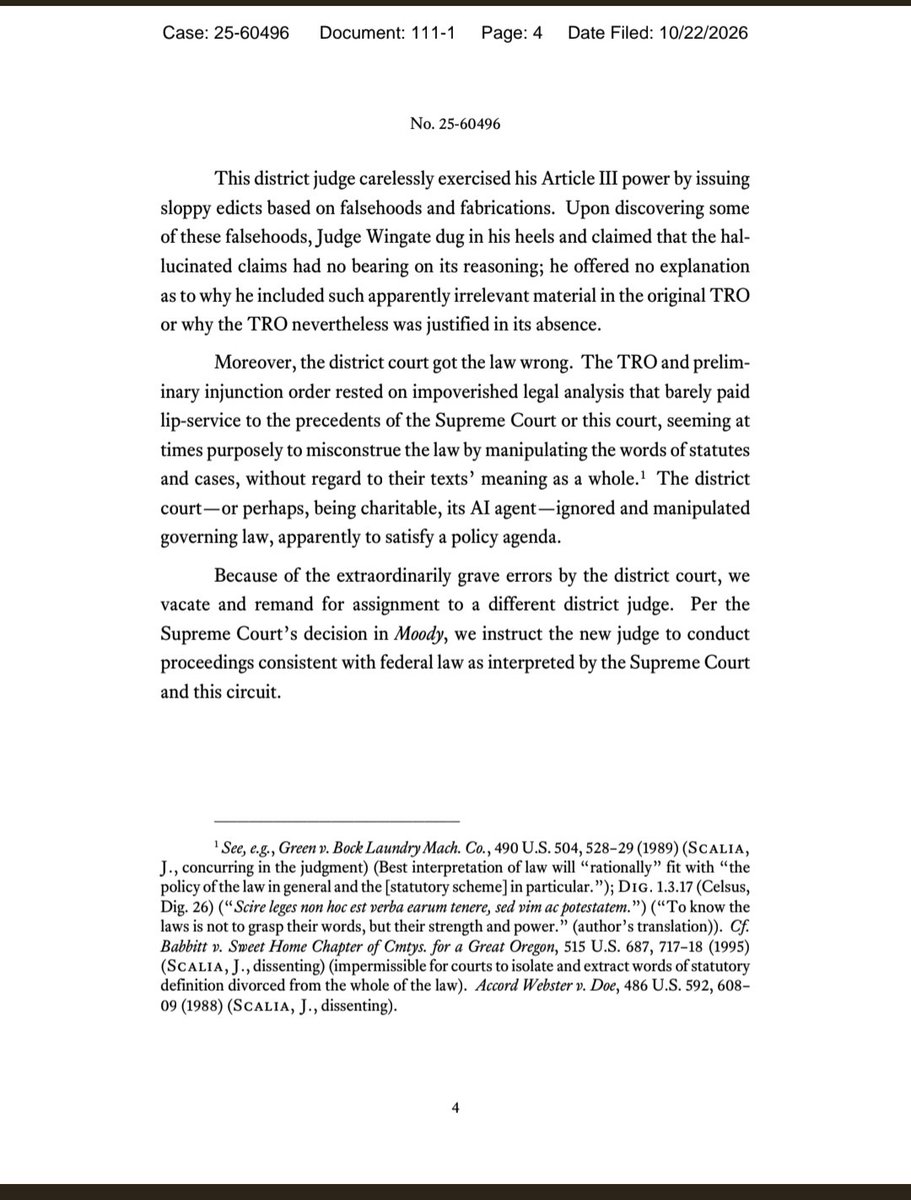
Holy guacamole: In a judicial smackdown, Judge J.E. Smith tears into Judge Wingate for his "careless[] exercise" of judicial power and "sloppy edicts based on falsehoods and fabrications." Mississippi's anti-DEI law can go into effect. Judicial AI use takes a beating. Reassigned.
Beyond the Status Quo w/ Ivan Bates Episode 01 is out now. Thanks again, Maryland Department of Juvenile Services Secretary Betsy Fox Tolentino for joining me.
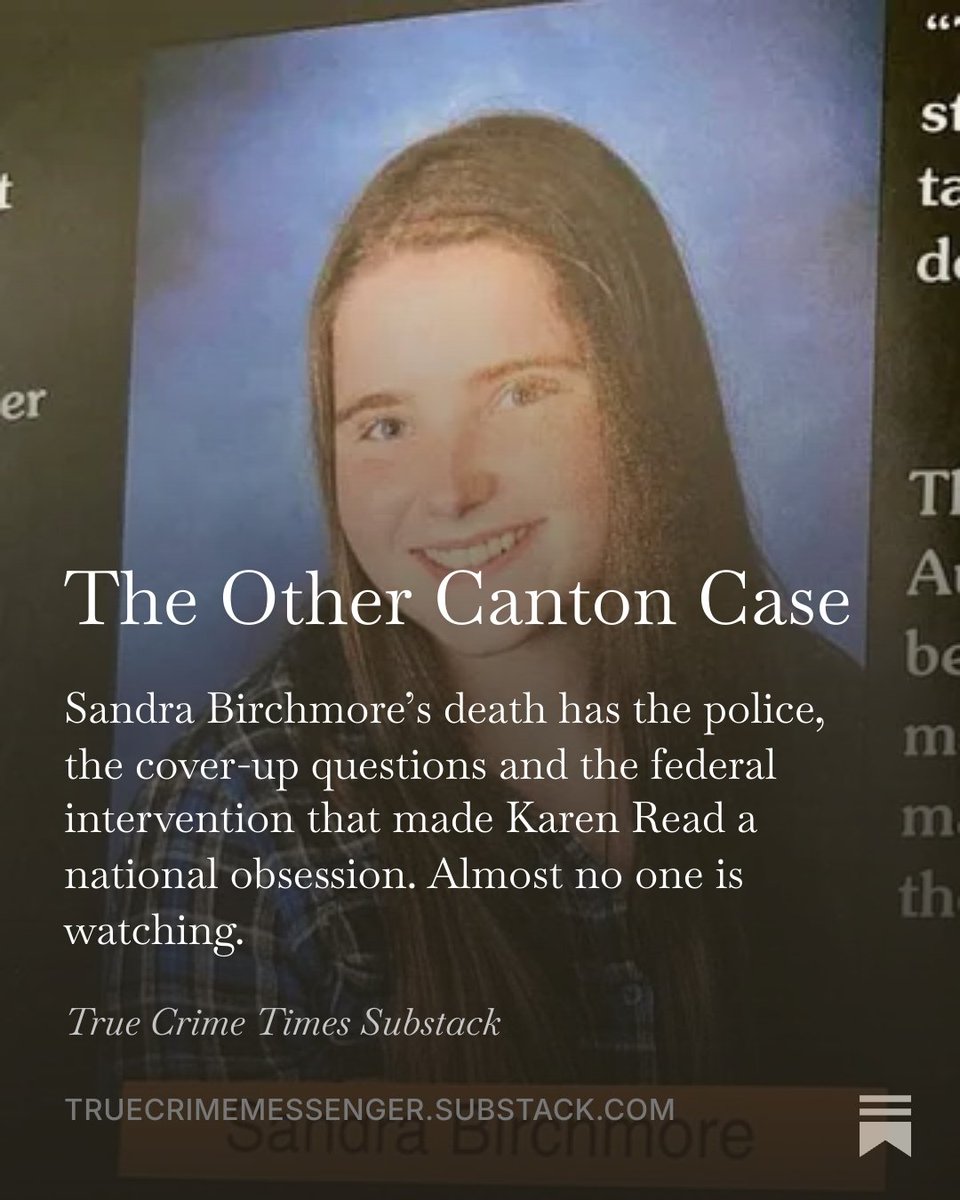
Same town. Same detective unit. A federal trial over the death of a young woman who joined a police youth program at 12.
The Sandra Birchmore case has drawn a fraction of Karen Read's audience. Why, and what we can still do in her name. Read our latest. https://t.co/sseoCMBCKg
@MercuriusFilius Tell them you'll shoot the first one that tries to escape. Thus none of them have a non-zero chance of escaping until someone else gets shot.
Fear fills the gaps where facts are missing. In The Architecture of Dread — Part 2, horror author @ProsecutorsPod host Brett Talley joins me to explore how panic, myth, and conspiracy form when uncertainty takes over — from ancient plagues to modern online chaos.
🎧 https://t.co/SPlcpEdvJm
This is an illegal forward pass, but I don't think it should be. It's forward because it literally moves forward by about six yards. But I think the spirit of the rule (this is the kind of constitutional interpretation you should run from, by the way) is that the a player cannot throw the ball forward from themselves past the line of scrimmage. Here, the ball moves forward because of momentum, but it is behind the "passer," as is the person it is passed to. The game would be more fun if this play were legal.
@RelatablewABS This take is stupid, yes. But also, why are you letting people like this tell you what you should and should not do? Who is this woman to tell you that Christians shouldn't be a fan of horror? Also, this take is stupid.
Good Morning, Baltimore! It's October 20th.
I'm excited to reveal the first episode of my new podcast, Beyond the Status Quo.
This program will be a platform for open and honest discussions about law enforcement, social justice, and other important public policy issues.
It will not include the political bickering and finger-pointing, but rather will focus on fresh ideas that challenge the status quo.