A French engineer who lives quietly in Paris has spent 30 years writing software that the entire internet now runs on without knowing his name.
He wrote the code that streams every YouTube video, every Netflix show, every TikTok clip. He wrote the code that runs the virtual servers underneath AWS, Google Cloud, and Microsoft Azure. He calculated more digits of pi than anyone in history. He has no Twitter. He has no marketing. He just keeps shipping.
His name is Fabrice Bellard.
Here is the story, because almost nobody outside the systems programming world knows what one man has built.
Fabrice was born in 1972 in Grenoble, France. He studied at École Polytechnique, the top French engineering school. He never went to Silicon Valley. He never built a startup empire. He just wrote code.
In 2000 he started a project called FFmpeg, an open-source multimedia framework for encoding, decoding, and streaming video. He was 28. The project did one thing nobody else had done well. It handled every video and audio format that existed, in one library, on every operating system. He led it himself for years.
Today FFmpeg is the invisible engine of the internet. YouTube uses it. Netflix uses it. VLC uses it. Chrome and Firefox use parts of it. Every Android phone, every iPhone, every smart TV, every video editing tool you have ever touched runs FFmpeg somewhere underneath. If you have watched a video on a screen in the last 20 years, Fabrice's code processed it.
He was not done.
In 2003 he started QEMU, a machine emulator and virtualizer. He wrote it solo until version 0.7.1 in 2005. QEMU lets you run any operating system on any other operating system. It became the foundation of modern virtualization. KVM, the Linux kernel hypervisor, runs on top of QEMU. Every major cloud provider, AWS, Google Cloud, Microsoft Azure, IBM Cloud, runs virtual machines on infrastructure built around it. The Quick Emulator is the most cited piece of cloud infrastructure code on Earth.
He kept going.
In 2001 he won the International Obfuscated C Code Contest with a small C compiler that grew into TCC, the Tiny C Compiler. TCC can compile and boot a Linux kernel from source in under 15 seconds. In 2004 he calculated the most digits of pi ever computed at the time, using a personal desktop computer and an algorithm he derived himself called Bellard's formula. In 2011 he wrote a complete PC emulator in pure JavaScript that runs Linux in your browser, a project called JSLinux that engineers still cannot believe is real.
In 2019 he released QuickJS, a small but complete JavaScript engine that fits where V8 cannot. In 2021 he released NNCP, a neural network based lossless data compressor that immediately took the lead on the Large Text Compression Benchmark.
Then he turned his attention to large language models. He built TextSynth Server, a web server with a REST API for running LLMs locally. He released ts_zip and ts_sms, compression utilities that use language models to compress text and short messages at ratios traditional algorithms cannot reach. He released TSAC, a very low bitrate audio compression system. In December 2025 he released Micro QuickJS, a new JavaScript engine for microcontrollers, separate from QuickJS, designed for environments with almost no memory.
Fabrice co-founded a telecom company called Amarisoft in 2012, where he serves as CTO. Amarisoft builds 4G and 5G base station software used by carriers and labs around the world. He has been running it for over a decade while continuing to ship personal projects from his own home page at bellard dot org
He has no Twitter. He has no Instagram. He gives almost no interviews. His personal website is a flat list of projects with no styling, no fonts, no marketing copy. Just titles and links.
A quiet French engineer who never moved to Silicon Valley wrote the code that quietly runs the internet.
He is still shipping.
Amid a searing 46°C heatwave in Bundelkhand’s Hamirpur, a bat collapsed from a tree inside the district court complex, apparently unable to survive the extreme temperatures. Lawyers gathered around the exhausted animal and tried to revive it with water.
1 man found 3 yellow grains in the mud & spent 5 yrs protecting them from wild pigs. A trader named the result after his favorite watch brand to prove its quality, while a university stole the seeds to claim the credit. He fed millions, but worked as a daily wage laborer on his own soil. Discover the Ghost Farmer behind India's favorite thin rice.
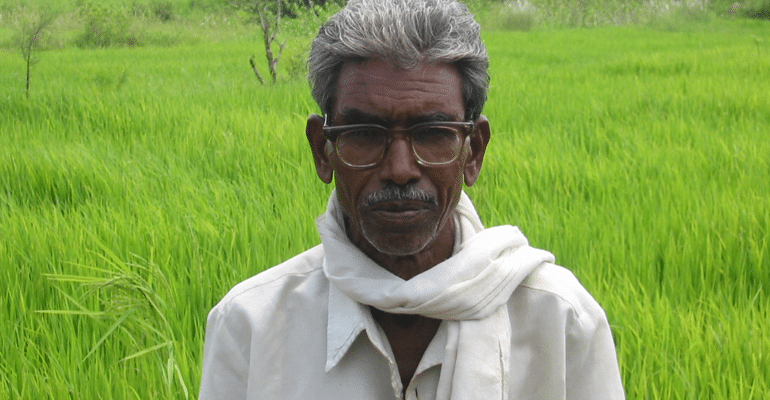
While the world was looking at high-tech labs for the next green revolution, a school dropout named Dadaji Ramaji Khobragade was standing in his small 1.5 acre plot in Nanded, Maharashtra. While harvesting his usual Patel 3 rice, Dadaji noticed 3 yellow-seeded spikes (lomb) that looked different. Most farmers would have ignored them as impurities.
Dadaji picked those 3 spikes & stored them in a simple plastic bag. For the next 5 yrs, he painstakingly bred them in a tiny patch, protecting them from wild pigs with a fence of thorny bushes. He created a variety that was thinner, smelled better, & yielded 80% more than the conventional seeds.
Dadaji did not have a marketing team/a brand name. In 1990, a large landowner bought 150 kg of these seeds & sold the harvest to a local trader. At that time, HMT Watches were the ultimate symbol of Gold Standard & Reliability in India. The trader, who had recently bought a new HMT watch & was obsessed with it, decided to call the rice HMT Rice simply to signal that this rice was as High Quality as the watch.
The name stuck so hard that people today think HMT Rice was developed by the govt corporation (Hindustan Machine Tools), but the company had absolutely nothing to do with it!
In 1994, the Punjabrao Krishi Vidyapeeth (PKV), an agricultural university, approached Dadaji. They took 5 kg of his seeds under the pretext of experimenting. A few yrs later, the university released a new"variety called PKV-HMT. They claimed Dadaji’s original seeds were impure & that they had purified them.
They took the credit, the patents, & the glory. For yrs, the man who actually did the 5 yrs of backbreaking research was left working as a daily wage laborer on other people’s farms just to feed his family.
Dadaji Khobragade lived in poverty for decades while HMT Rice became a multi-crore industry across Maharashtra, Andhra Pradesh, & Chhattisgarh. It was only much later that the National Innovation Foundation (NIF) stepped in. They proved that the university’s new rice was genetically identical to Dadaji’s.
In 2010, Forbes magazine named him 1 of the most powerful Rural Entrepreneurs, & he finally received a National Award. But by then, he had already sold his own land to pay for his son’s medical treatment. Next time you eat a bowl of thin, aromatic HMT rice, remember it is not the product of a sanitized government lab. It is the result of a man who looked at three tiny yellow grains in the mud & saw a future that the PhDs missed.
The HMT in the rice does not stand for Hindustan Machine Tools; it stands for the Honesty of a Marginalized Toiler. Dadaji Khobragade proved that you do not need a degree to be a scientist; you just need an eye that can see the extraordinary in the ordinary.
A trader's love for a wristwatch gave the rice its name, but a farmer’s love for his land gave the rice its soul. 1 became a brand; the other remained a Ghost in his own fields.
Western world has a safe, functional place to go back to after their vacation is over where they have most of what's required for a fulfilling & healthy life. We don't.